Carbohydrates and glycoconjugates
Carbohydrates are organic compounds composed of carbon, hydrogen, and oxygen, with a basic structure formed by monosaccharides. These can combine to form disaccharides, oligosaccharides, or polysaccharides, depending on the number of monomeric units. Carbohydrates play a fundamental role in energy storage, cell structure, and cellular communication. Their derivatives are used in pharmaceutical products, such as sweeteners and excipients.
At CymitQuimica, we offer a wide range of carbohydrates and their derivatives for research and industrial applications.
Found 5010 products of "Carbohydrates and glycoconjugates"
Sort by
Purity (%)
0
100
|
0
|
50
|
90
|
95
|
100
Fructodecasaccharide
<p>Fructodecasaccharide is a methylated, custom-synthesized oligosaccharide that is a polysaccharide with the molecular formula C10H17O11. Fructodecasaccharide is a complex carbohydrate that consists of a monosaccharide and two disaccharides. It has been modified to include fluorine atoms in the glycosidic linkages between the sugar residues. This modification can alter the physical properties of fructodecasaccharide, such as increasing its solubility and stabilizing its structure. Fructodecasaccharide is used in many industries as a high-purity, synthetic product for use in medical applications, including pharmaceuticals and cosmetics.</p>Formula:C60H102O51Purity:Min. 95%Color and Shape:PowderMolecular weight:1,639.42 g/mol2-Hydroxypropyl-b-cyclodextrin - Endotoxin level below 20 EU/g
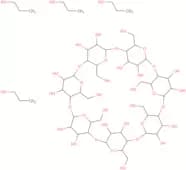
CAS:<p>2-Hydroxypropyl-b-cyclodextrin is a water-soluble drug that is chemically stable in aqueous media. It has been shown to be safe for use in the eye, with no significant side effects. 2-Hydroxypropyl-b-cyclodextrin has been shown to have anti-inflammatory properties and will not cause hemolytic activity. 2-Hydroxypropyl-b-cyclodextrin binds to retinoic acid receptors, which are found on cells of the corneal surface and in human spermatozoa. The binding of retinoic acid inhibits the production of enzymes that break down retinoids and prevents cell proliferation. This agent also interacts with other cellular components such as proteins, lipids, carbohydrates, nucleic acids, and hormones.</p>Formula:C42•(H)70n•O35•(C3H7)nPurity:Min. 95%Tri-guluronic acid sodium salt
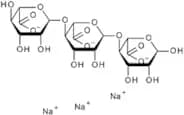
CAS:<p>Tri-guluronic acid sodium salt (1,4-linked α-L-sodium guluronotriose) is one of a number of oligosaccharides obtained from alginate which is a polysaccharide in brown seaweeds containing: blocks of repeating mannuronic acid sequences (M-M-M-M etc), repeating guluronic acid sequences (G-G-G-G etc), and alternating M-G-M-G sequences. This oligosaccharide can be released by acid hydrolysis (Shimokawa, 1996) and a number of biological activities have been discussed in a recent review (Xing, 2020).</p>Formula:C18H23O19Na3Purity:Min. 98 Area-%Color and Shape:White PowderMolecular weight:612.33 g/mol3'-Sialyl Lewis A
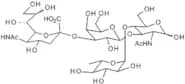
CAS:<p>Tetrasaccharide; tumor-associated antigen; prognostic factor</p>Formula:C31H52N2O23Purity:Min. 95%Color and Shape:White PowderMolecular weight:820.74 g/molN,N',N'',N'''-Tetraacetylchitotetraose
CAS:<p>Tetraose composed of four N-acetylglucosamine residues.</p>Formula:C32H54N4O21Purity:Min. 95 Area-%Color and Shape:White PowderMolecular weight:830.79 g/molFructooctasaccharide
<p>Fructo-octasaccharide (FOS) is a synthetic, high-purity carbohydrate that is used in the production of various food and beverage products. FOS is produced by enzymatic synthesis from sucrose and has been modified to include a fluorination step. FOS can be used as a sugar substitute and is found in many foods such as breads, beverages, yogurt, ice cream, candy, and chewing gum. FOS has been shown to stimulate the growth of beneficial bacteria in the gastrointestinal tract and may help promote healthy digestion.</p>Formula:C48H82O41Purity:Min. 95%Color and Shape:PowderMolecular weight:1,315.14 g/mol1,6-α-D-Mannotriose
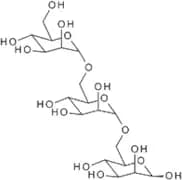
CAS:<p>Produced by the reverse hydrolysis of a mannose substrate</p>Formula:C18H32O16Purity:Min. 94 Area-%Color and Shape:PowderMolecular weight:504.44 g/molN-Acetylneuraminic acid tetramer sodium salt
<p>N-Acetylneuraminic acid tetramer sodium salt is a synthetic carbohydrate that belongs to the group of complex carbohydrates. It is a glycosylation product of N-acetylneuraminic acid and has been modified with fluorine, methylation, and click chemistry. N-Acetylneuraminic acid tetramer sodium salt is used as a reagent in the synthesis of oligosaccharides and has been shown to be useful for structural analysis. The CAS number for this compound is:</p>Formula:C44H66N4O33Na4Purity:Min. 95%Color and Shape:PowderMolecular weight:1,270.96 g/molLewis Y tetrasaccharide
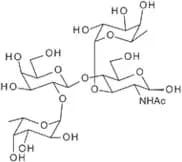
CAS:<p>Lewis Y tetrasaccharide is a type of antigen that is used as a pharmacological agent. It has been shown to be effective in treating carcinoma cell lines and primary sclerosing cholangitis. Lewis Y tetrasaccharide has also been shown to be an antigen for the mouse monoclonal antibody, which is used in cancer research. The Lewis Y tetrasaccharide stimulates the immune system by interacting with certain cells called dendritic cells and macrophages, which are responsible for activating T-cells. This interaction promotes the production of chemoattractant proteins, which are proteins that attract white blood cells to fight infection and promote healing. Lewis Y tetrasaccharide has also been shown to cause cancer cell death by lysing cells through apoptosis or necrosis depending on the tissue type.</p>Formula:C26H45NO19Purity:(%) Min. 95%Color and Shape:PowderMolecular weight:675.64 g/molDigalacturonic acid
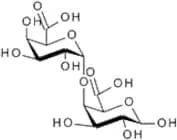
CAS:<p>Digalacturonic acid (DGA) (α-1,4 galacturonobiose), is derived from pectin or pectic acid, by enzymatic or partial acid hydrolysis. It is used in the co-crystallization of enzymes such as proteinase K. It is also used in galacturonic acid metabolism research as a substrate to identify, differentiate, and characterized endo- and exopolygalacturonase(s), and gluconase(s).</p>Formula:C12H18O13Purity:Min. 95%Color and Shape:White PowderMolecular weight:370.26 g/molGala1-3Galb1-3GlcNAc-HSA
<p>Gala1-3Galb1-3GlcNAc-HSA is a synthetic glycosylation product of Galactose, Glucose and Galactosamine with Hexose. It is a complex carbohydrate that can be used to modify proteins with the sugar group. The sugar group is synthesized by the Click modification of a monosaccharide and then methylated. The sugar group is attached to HSA via an N-acetylhexosamine linker. This product has been shown to have high purity and can be used in many applications such as fluorination, methylation, click modification, or complex carbohydrate research.</p>Purity:Min. 95%Lipopolysaccharides - from Escherichia coli O55:B5
CAS:<p>Lipopolysaccharides are a heterogeneous group of molecules that include endotoxins, lipid A, and core oligosaccharide. They are released from the cell wall of gram-negative bacteria as a result of bacterial lysis. Lipopolysaccharides are potent activators of immune cells, inducing the secretion of pro-inflammatory cytokines such as tumor necrosis factor-α (TNF-α) and interleukin-1β (IL-1β). TNF-α is also known to induce the production of other pro-inflammatory cytokines including IL-6, IL-8, IL-10, and IL-12. Lipopolysaccharides have been shown to cause liver damage in animals by increasing plasma alanine aminotransferase levels. This may also be due to their ability to induce the production of malondialdehyde and c-reactive protein.</p>Color and Shape:Off-White PowderDextran 150 - MW: 135,000 to 165,000
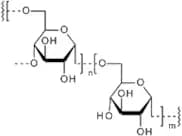
CAS:<p>Complex glucan (a 1-6) from Leuconostoc spp.; extender in blood transfusions</p>Color and Shape:PowderDifucosyllacto-N-hexaose (b)
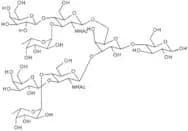
CAS:<p>Neutral octasasaccharide naturally present in human breast milk.</p>Formula:C52H88N2O39Purity:Min. 90 Area-%Color and Shape:PowderMolecular weight:1,365.25 g/molCarboxymethyl-dextran sodium 20-30% COOH - Average molecular weight 70000
CAS:<p>Drug carrier for cancer therapy & imaging, biocompatible, soluble, biodegradable</p>Color and Shape:PowderLewis Y-PAA-biotin
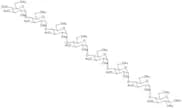
<p>Lewis Y-PAA-biotin is a complex carbohydrate which is synthesized using Click chemistry. This compound has been modified to include a biotin moiety. Lewis Y-PAA-biotin has been shown to be resistant to enzymatic degradation and can be used as a saccharide in the synthesis of polysaccharides. Lewis Y-PAA-biotin is synthesized by attaching poly(acrylamide) (PAA) chains to the sugar moieties of Lewis Y. The carbonyl group on the PAA chains can be fluorinated, which makes it useful for click modification reactions with fluorinated compounds.</p>Purity:Min. 95 Area-%Color and Shape:White PowderMolecular weight:732.7 g/molMaltooctaose hexacosaacetate
CAS:<p>CO2-philic compound; used in pharmaceuticals and CO2-based processes</p>Formula:C100H134O67Purity:Min. 95%Color and Shape:PowderMolecular weight:2,408.09 g/mol2-Acetamido-3-O-(b-D-galactopyranosyl)-2-deoxy-D-thiogalactopyranose
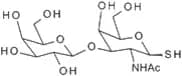
<p>2-Acetamido-3-O-(b-D-galactopyranosyl)-2-deoxy-D-thiogalactopyranose is a synthetic disaccharide analog designed for research in glycoscience and biochemistry, particularly for applications in glycosylation-related studies. This compound is synthesized in the laboratory and is not derived from natural sources, allowing for precise structural modifications that facilitate detailed analyses of glycan interactions.The mode of action of this compound involves its role as a mimic of natural glycans, enabling the examination of carbohydrate-protein interactions, enzymatic activity, and glycan recognition processes with high specificity. It can be leveraged as a probe in structural biology to elucidate the mechanisms underlying biological recognition and signaling events mediated by carbohydrate molecules.This compound finds applications in the study of enzymatic hydrolysis, as an inhibitor of glycosidases, and in the synthesis of glycan-based drugs. It is of particular interest in the field of glycobiology for developing therapeutic agents and probing molecular pathways. The high specificity and structural fidelity of 2-Acetamido-3-O-(b-D-galactopyranosyl)-2-deoxy-D-thiogalactopyranose make it an invaluable tool for advancing our understanding of the intricate roles glycans play in biology.</p>Formula:C14H25NO10SPurity:Min. 95%Molecular weight:399.42 g/molIsomaltohexaose
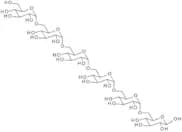
CAS:<p>Produced from high maltose syrup by treatment with transglucosidase</p>Formula:C36H62O31Purity:Min. 90 Area-%Color and Shape:White PowderMolecular weight:990.9 g/molAnti-CD44 Monoclonal Antibody
<p>Antibody Type: Rabbit Monoclonal<br><br>Application: ELISA,FCM<br><br>Reactivity: Human</p>Purity:> 95% as determined by SDS-PAGE.Color and Shape:LiquidMolecular weight:150 kDa