


Carbohydrates and glycoconjugates
Carbohydrates are organic compounds composed of carbon, hydrogen, and oxygen, with a basic structure formed by monosaccharides. These can combine to form disaccharides, oligosaccharides, or polysaccharides, depending on the number of monomeric units. Carbohydrates play a fundamental role in energy storage, cell structure, and cellular communication. Their derivatives are used in pharmaceutical products, such as sweeteners and excipients.
At CymitQuimica, we offer a wide range of carbohydrates and their derivatives for research and industrial applications.
Found 5013 products of "Carbohydrates and glycoconjugates"
Sort by
Purity (%)
0
100
|
0
|
50
|
90
|
95
|
100
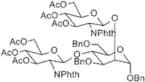
4,6-Di-O-(3,4,6-tri-O-acetyl-2-deoxy-2-phthalimido b-D-glucopyranosyl)-1,3-6-tri-O-benzyl-a-D-mannopyranoside
CAS:<p>4,6-Di-O-(3,4,6-tri-O-acetyl-2-deoxy-2-phthalimido b-D-glucopyranosyl)-1,3-6-tri-O-benzyl a -D -mannopyranoside is a carbohydrate that has been modified with fluorine. It is an oligosaccharide composed of three monosaccharides linked by glycosidic bonds. The modification of the carbohydrate with fluorine was achieved through a click chemistry reaction between the 4’ and 6’ position of the glucose moiety. This product is used in custom synthesis and high purity applications.</p>Formula:C67H68N2O24Purity:Min. 95%Molecular weight:1,285.26 g/molLewis Y tetrasaccharide-sp-biotin
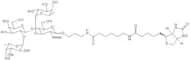
CAS:<p>Lewis Y tetrasaccharide-sp-biotin is a biotinylated oligsaccharide</p>Formula:C45H77N5O22SPurity:Min. 95%Color and Shape:PowderMolecular weight:1,072.18 g/molAgarodecaose
<p>Agarose is a polysaccharide found in red algae, typically Gelidium and Gracilaria. It is a strictly alternating polysaccharide of α-1,3 linked D-galactose and β-1,4 linked L-3,6 anhydrogalactose with occasional sulfation at position 6 of the anhydrogalactose residue. Agaro-oligosaccharides result from cleavage at galactose residues and neoagaro-oligosaccharides from cleavage at 3,6-anhydro residues. A number of publications have suggested that agarodecaose has properties that include: anti-microbial, antiviral, prebiotic, anti-tumoral, immunomodulatory, anti-inflammatory, glucosidase inhibitory, and hepatoprotective properties.</p>Formula:C66H102O51Purity:Min. 95%Color and Shape:SolidMolecular weight:1,711.49 g/mol3',4'-O-Carbonyl-6,6'-di-O-tert-butyldiphenylsilyl lactal
CAS:<p>3',4'-O-Carbonyl-6,6'-di-O-tert-butyldiphenylsilyl lactal is a synthetic oligosaccharide that has been modified with a click modification. It is comprised of 3 different monosaccharides, one saccharide, and one carbonyl group. This carbohydrate is synthesized from the natural sugar D-ribose, which is modified with an O-tert-butyldiphenylsilyl lactal. The synthesis begins with the addition of a methyl group to the sugar's primary hydroxyl group. Then the sugar is reacted with fluorine gas to form an ether bond between the sugar's primary hydroxyl and its secondary hydroxyl. The final step in the synthesis involves glycosylation of the terminal hydroxyl groups on each monosaccharide.</p>Formula:C45H54O10Si2Purity:Min. 95%Molecular weight:811.08 g/molDNS-SGN
<p>DNS-SGN is a synthetic, high purity, methylated, glycosylated, complex carbohydrate. This product is custom synthesized and has been fluorinated with a click modification. DNS-SGN is CAS Number: 598-02-3.</p>Formula:C100H155N9O66SPurity:Min. 95%Molecular weight:2,571.39 g/mol6-O-(a-D-Galactopyranosyl)-D-mannopyranose
<p>The 6-O-(a-D-galactopyranosyl)-D-mannopyranose, also known as epimelibiose, is an oligosaccharide formed by linking an α-D-galactose molecule to a D-mannose molecule. It could be found in various natural products or glycoconjugates, such as glycolipids or glycoproteins. The configuration and linkage of sugars in such molecules often play a crucial role in their biological functions. 6-O-(a-D-galactopyranosyl)-D-mannopyranose can be used in research to modify polysaccharides and glycans. It has a role as a plant metabolite and a mouse metabolite.</p>Formula:C12H22O11Purity:Min. 95%k-Carratriose disulfate disodium salt
<p>k-carrageenan derived trisaccharide disulfate</p>Formula:C18H30O21S2•2NaPurity:Min. 95%Color and Shape:White PowderMolecular weight:692.51 g/mol1,5-α-L-Arabinotetraose
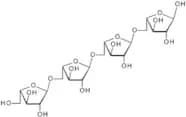
CAS:<p>1,5-alpha-L-Arabinotetraose is a methylated and glycosylated tetrasaccharide with a molecular weight of 720. It is a custom synthesis product with high purity and it can be used for the modification of proteins, polysaccharides, or other compounds. 1,5-alpha-L-Arabinotetraose has been shown to have fluoroquinolone resistance due to its methylation and glycosylation. The compound is an oligosaccharide that is synthesized from arabinose. It can be modified by click chemistry to introduce fluorine atoms at desired positions.</p>Formula:C20H34O17Purity:(%) Min. 95%Color and Shape:Clear Viscous LiquidMolecular weight:546.47 g/molKdo2-Lipid A ammonium
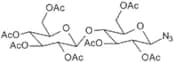
CAS:<p>Please enquire for more information about Kdo2-Lipid A ammonium including the price, delivery time and more detailed product information at the technical inquiry form on this page</p>Formula:C110H202N2O39P2•(NH3)4Purity:Min. 95%Molecular weight:2,306.84 g/mol2,3,6,2',3',4',6'-Hepta-O-acetyl-b-maltosyl azide
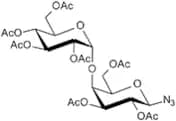
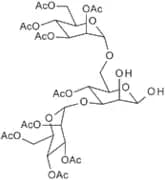
CAS:<p>2,3,6,2',3',4',6'-Hepta-O-acetyl-b-maltosyl azide is a glycosylation agent that can be used in organic synthesis. It is a custom synthesis and can be modified to meet the customer's needs. This product has a CAS number of 33012-49-6 and has high purity with a saccharide content of >99%.</p>Formula:C26H35N3O17Purity:Min. 95%Color and Shape:White PowderMolecular weight:661.57 g/mol4-O-Acetyl-3,6-di-O-(2,3,4,6-tetra-O-acetyl-a-D-mannopyranosyl)-D-mannopyranose
<p>4-O-Acetyl-3,6-di-O-(2,3,4,6-tetra-O-acetyl-a-D-mannopyranosyl)-D-mannopyranose is a synthetic nonreducing sugar that has been modified with an acetate group at C4 and acetyl groups at C3 and C6. This compound is a white to off white crystalline solid. It is soluble in methanol and formamide. The chemical formula of the compound is CHO.</p>Formula:C36H50O25Purity:Min. 95%Molecular weight:882.77 g/molHyaluronic acid hexasaccharide
CAS:<p>Hyaluronic acid is a polysaccharide containing repeating disaccharide units of β-1,3-N-acetyl glucosamine and β-1, 4-glucuronicâ¯acid. A series of unsaturated oligosaccharides (oligouronic acids) are released from hyaluronic acid by the action of hyaluronidase on umbilical cord (Weissman, 1954). This hexasaccharide and other enzymatically produced polymer homologs have been of value in the study of hyaluronic acid metabolism in healthy and diseased tissues (Hascall, 2019).</p>Formula:C42H65N3O34Purity:Min. 95%Color and Shape:White Off-White PowderMolecular weight:1,155.97 g/molGT2-Oligosaccharide
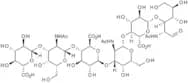
<p>GT2 oligosaccharide (free acid) has a core trisaccharide structure (GalNAcβ1,4Galβ1,4Glc) with three sialic acid residues (NeuAc) linked α2,8/α2,8/α2,3 to the inner galactose residue (Ledeen, 2009). GT2 oligosaccharide is the carbohydrate moiety in the GT2 ganglioside. A key role has been reported for gangliosides, such as, GT1b and GT2 as modulators in the interaction between microglia (resident cells of the brain that regulate brain development) and brain tumors. It is possible that they will be important targets for therapeutical intervention in the near future (Daniele, 2020). In addition, C-series gangliosides, such as GT3, GT2, GQ1c, and CP1c are expressed in normal pancreatic tissue but are practically lost in the pancreas of diabetic animals (Saito, 1999).</p>Formula:C53H83N4O40Na3Purity:Min. 95%Molecular weight:1,485.2 g/molHyaluronate decasaccharide
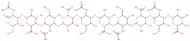
CAS:<p>Hyaluronate decasaccharide is a molecule that belongs to the group of glycosaminoglycans. It is a polysaccharide consisting of 10 disaccharides, which are linked by alternating β-1,4 and β-1,3 glycosidic bonds. The molecular weight of this molecule is about 20 kDa, and it has an average degree of polymerization of about 4. Hyaluronate decasaccharide has been found to be present in the extracellular matrix and plays an important role in cell proliferation and differentiation. This molecule is also involved in the regulation of inflammatory responses and tissue repair processes.</p>Formula:C70H107N5O56Purity:Min. 95%Molecular weight:1,914.6 g/mol2,3,6,2',3',4',6'-Hepta-O-acetyl-b-D-cellobiosyl azide
CAS:<p>2,3,6,2',3',4',6'-Hepta-O-acetyl-b-D-cellobiosyl azide is a sugar that belongs to the group of carbohydrates. It is modified with fluorination and glycosylation. The CAS number for this compound is 33012-50-9. 2,3,6,2',3',4',6'-Hepta-O-acetyl-b-D-cellobiosyl azide has been synthesized and its chemical modification has been studied. This compound has an average degree of polymerization (DP) of 10. The molecular weight of 2,3,6,2',3',4',6'-Hepta-O-acetyl-b -D -cellobiosyl azide is 569.27 g/mol.</p>Formula:C26H35N3O17Purity:Min. 95 Area-%Color and Shape:PowderMolecular weight:661.6 g/mol1,4-b-D-Cellopentaitol
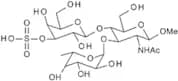
CAS:<p>1,4-B-D-Cellopentaitol is a high purity and custom synthesis sugar. It can be modified with fluorination, glycosylation, methylation, or modification. It has CAS No. 61473-65-2 and is an oligosaccharide with a saccharide backbone consisting of 1,4-linked D-glucopyranosyl units joined by alpha-(1,4) linkages and containing one or more monosaccharides (e.g., glucose) or disaccharides (e.g., cellobiose). The carbohydrate may be in the form of a complex carbohydrate.</p>Formula:C30H54O26Purity:Min. 95%Molecular weight:830.73 g/mol3'-Sulfated Lewis X methyl glycoside
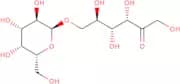
CAS:<p>3'-Sulfated Lewis X methyl glycoside is a synthetic, fluorinated oligosaccharide that can be used as a sugar or as an intermediate in the synthesis of complex carbohydrates. It is available for custom synthesis and modification to meet your specific needs. 3'-Sulfated Lewis X methyl glycoside is a monosaccharide that has been modified with a click reaction to attach sulfate groups. This modification allows for easier saccharide recognition and binding in the body. The CAS number for 3'-sulfated Lewis X methyl glycoside is 386264-50-2.</p>Formula:C21H37NO18SPurity:Min. 95%Molecular weight:623.58 g/molMelibiulose
CAS:<p>Melibiulose is a dietary supplement that has been shown to help maintain the health of the human immune system. It has also been shown to stimulate prostate cancer cells. Melibiose, the sugar molecule found in melibiulose, has been found to be processed by toll-like receptor 2 and 4, which are proteins found on the surface of immune cells. The glycan structure of melibiose may be responsible for its conditioning effects as it binds to proteases and surfactants, preventing them from binding to other molecules. This ternary complex prevents glycosylation reactions and reduces viscosity in detergent compositions.</p>Formula:C12H22O11Purity:Min. 95%Molecular weight:342.3 g/mol6-O-[2-Acetamido-2-deoxy-4-O-(b-D-galactopyranosyl)-b-D-glucopyranosyl]-D-galactopyranose
CAS:<p>The 6-O-[2-acetamido-2-deoxy-4-O-(b-D-galactopyranosyl)-b-D-glucopyranosyl]-D-galactopyranose is a disaccharide carbohydrate that can be found in the blood group H. This particular carbohydrate is an example of a sialic acid, which plays an important role in the immune system and other biological processes. Lectins are proteins that bind to carbohydrates and are often used as probes to study glycan structures. Lectin binding assays have been used to characterize this molecule as well as oligosaccharides, glycans, and biohazards.</p>Formula:C20H35NO16Purity:Min. 95%Color and Shape:SolidMolecular weight:545.49 g/mol





![6-O-[2-Acetamido-2-deoxy-4-O-(b-D-galactopyranosyl)-b-D-glucopyranosyl]-D-galactopyranose](/_next/image/?url=https%3A%2Fstatic.cymitquimica.com%2Fproducts%2F3D%2Fthumb-webp%2FOA06816.webp&w=3840&q=75)