Carbohydrates and glycoconjugates
Carbohydrates are organic compounds composed of carbon, hydrogen, and oxygen, with a basic structure formed by monosaccharides. These can combine to form disaccharides, oligosaccharides, or polysaccharides, depending on the number of monomeric units. Carbohydrates play a fundamental role in energy storage, cell structure, and cellular communication. Their derivatives are used in pharmaceutical products, such as sweeteners and excipients.
At CymitQuimica, we offer a wide range of carbohydrates and their derivatives for research and industrial applications.
Found 5013 products of "Carbohydrates and glycoconjugates"
Sort by
Purity (%)
0
100
|
0
|
50
|
90
|
95
|
100
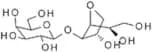
Agarodiitol
<p>Disaccharide alcohol from agarobiose by reduction with Na borohydride</p>Formula:C12H22O10Purity:Min. 95%Molecular weight:326.3 g/molMan-2b N-Glycan
CAS:<p>Man-2b N-glycan is an acidic glycoprotein that is synthesized in the endoplasmic reticulum of mammalian cells. It is a precursor to the oligosaccharide terminal sugar, which connects the glycan to protein. Man-2b N-glycan plays an important role in metabolic disorders such as renal proximal tubule dysfunction and metabolic acidosis by regulating protein synthesis. The Man-2b N-glycan mutation has been shown to lead to changes in cell surface proteins and metabolism, which can be modeled using a glycosylation mutant strain of yeast.</p>Formula:C28H48N2O21Purity:Min. 95%Molecular weight:748.68 g/molLipid A monophosphoryl
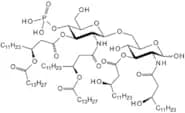
CAS:<p>Lipid A monophosphoryl (MPL) is an adjuvant that stimulates the immune response to vaccines so that optimal protection can be achieved. MPL immunostimulant, a monophosphoryllipid A preparation derived from the lipopolysaccharide (LPS) of Salmonella minnesota R595. MPL is being considered as an adjuvant for a number of human vaccines, and experience to date has shown that it is safe, well tolerated, and able to provide a heightened immune response to coadministered antigens.</p>Formula:C96H181N2O22PPurity:Min. 95%Color and Shape:PowderMolecular weight:1,746.44 g/mol3-O-(2-Acetamido-3,4,6-tri-O-acetyl-2-deoxy-D-glucopyranosyl)-1,2-di-O-benzyl-4,6-O-benzylidene-D-mannopyranoside
<p>3-O-(2-Acetamido-3,4,6-tri-O-acetyl-2-deoxy-D-glucopyranosyl)-1,2-di-O-benzyl-4,6-O-benzylidene--D--mannopyranoside is an oligosaccharide that has a high purity and custom synthesis. This compound is synthesized by Click modification of the sugar with fluorination. The glycosylation and methylation reactions are then carried out to obtain the final product. 3--0-(2--Acetamido--3,4,6--tri--O--acetyl--2--deoxy---D----glucopyranosyl)--1,2--di--O-----benzyl----4,6---O------benzylidene----D--------mannopyranoside is used in the synthesis of oligosaccharides for</p>Formula:C41H47NO14Purity:Min. 95%Molecular weight:777.83 g/molDimeric Lewis X hexasaccharide-APE-HSA
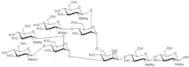
<p>Dimeric Lewis X hexasaccharide-APE-HSA is a carbohydrate molecule that is a modification of a saccharide. It is an oligosaccharide sugar with a CAS number. The monosaccharide sugar in this molecule has been synthetically modified and fluorinated to yield the desired product. This complex carbohydrate has been custom synthesized for high purity and has undergone methylation and glycosylation reactions to achieve the desired modification. The final result of these modifications is a dimeric Lewis X hexasaccharide-APE-HSA, which will be used as an immunogen.</p>Purity:Min. 95%Verbascotetraose
CAS:<p>Verbascotetraose is a disaccharide that is found in plants. Its chemical structure is composed of one glucose molecule and one fructose molecule. Verbascotetraose is produced by the plant tissue through a biosynthetic process, which involves the transfer reactions of phosphorylated hexoses. The resulting product is then converted to stachyose and oligosaccharides by dephosphorylation, glycan synthesis, and chromatographic method.<br>The production of verbascotetraose has been demonstrated in soybean products incubated with cellotriose and glycoside derivatives.</p>Formula:C24H42O21Purity:Min. 95%Molecular weight:666.58 g/mol4-Glucopyranosylmannose
CAS:<p>4-Glucopyranosylmannose is a disaccharide compound, which is a synthetic carbohydrate derived from the enzymatic or chemical glycosylation processes. It consists of glucose and mannose units linked through a glycosidic bond. The compound is sourced through advanced synthetic methodologies involving specific glycosyltransferases or chemical catalysts that facilitate the precise attachment of these sugar moieties.</p>Formula:C12H22O11Purity:Min. 95%Molecular weight:342.3 g/molMethyl b-N-acetyllactosamine
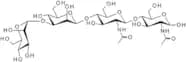
CAS:<p>Methyl b-N-acetyllactosamine is a sulfated glycosaminoglycan (GAG) that is expressed in the brain and is involved in the development of myelin. This compound has been shown to inhibit the transfer of sulfate groups, which are essential for the synthesis of GAGs. Methyl b-N-acetyllactosamine inhibits transglycosylation reactions, which is a process by which sugar moieties are transferred from one molecule to another. This inhibition results in decreased cross-coupling reactions and decreases the production of GAGs. Methyl b-N-acetyllactosamine has been shown to have potent inhibitory properties against sulfonylating enzymes, such as regiospecifically catalyzed sulfonylation and transglycosylation. It also has been shown to inhibit the transition state in an enzymatic reaction involving triazoles.</p>Formula:C15H27NO11Purity:Min. 95%Molecular weight:397.38 g/molNGA4 N-Glycan
CAS:<p>NGA4 N-glycan is a monosaccharide that is methylated and glycosylated to form an oligosaccharide. It has a molecular weight of 1205 g/mol. This product can be used in the production of glycoconjugates, which are used in the treatment of cancer and inflammatory diseases.</p>Formula:C66H110N6O46Purity:Min. 95%Color and Shape:PowderMolecular weight:1,723.59 g/mol4-Methoxyphenyl 3-O-(methyl 5-acetamido-4,7,8,9-tetra-O-acetyl-3,5-dideoxy-D-glycero-a-D-galacto-2-nonulopyranosylonate)-2,6-di-O-be nzyl-b-D-galactopyranoside
<p>4-Methoxyphenyl 3-O-(methyl 5-acetamido-4,7,8,9-tetra-O-acetyl-3,5-dideoxy-D-glycero-a-D-galacto-2-nonulopyranosylonate)-2,6 -di--Obenzyl b--D--galactopyranoside is a synthetic carbohydrate. This compound has been custom synthesized for research purposes. The chemical structure of this compound is a methylated oligosaccharide with the following modifications: click modification and fluorination.</p>Purity:Min. 95%Hyaluronate fluorescein - Molecular Weight - 1500kDa
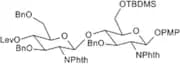
<p>Hyaluronate fluorescein is a synthetic, high purity complex carbohydrate with a molecular weight of 1500kDa. It is a modification of the naturally occurring polysaccharide hyaluronan. It is composed of repeating units of the monosaccharide D-glucuronic acid and the disaccharide N-acetyl-D-glucosamine. Hyaluronate fluorescein is synthesized by methylation and glycosylation of D-glucuronic acid, followed by fluorination to produce the fluorinated saccharide hexafluoro-D-glucuronic acid, which reacts with N-acetyl-D-glucosamine in an amidation reaction. The product can then be modified to produce hyaluronate fluorescein.</p>Purity:Min. 95%4-Methoxyphenyl 4-O-(3,6-di-O-benzyl-2-deoxy-4-O-levulinoyl-2-phthalimido-b-D-glucopyranosyl)-3-O-benzyl-6-O-tert-butyldimethylsilyl -2-deoxy-2-phthalimido-b-D-glucopyranoside
<p>4-Methoxyphenyl 4-O-(3,6-di-O-benzyl-2-deoxy-4-O-levulinoyl-2-phthalimido-b-D-glucopyranosyl)-3,6,3'-tri O -benzylidene -2,4′-(1,3,5) triazine -6,7′-[1,3]dioxane</p>Formula:C67H72N2O16SiPurity:Min. 95%Molecular weight:1,189.38 g/molGentiobiulose
CAS:<p>Gentiobiulose is a natural sweetener that is made from the sugar glucose and has a low glycemic index. It is produced by the enzymatic reaction of glucose with an acid catalyst in the presence of c1-6 alkyl groups. Gentiobiulose has a diameter of 0.5-2 micrometers and is used as a prebiotic, which promotes the growth and activity of beneficial bacteria in the gut. In addition, gentiobiulose can be used as an ingredient for detergent compositions because it has a high viscosity and particle size.</p>Formula:C12H22O11Purity:Min. 95%Color and Shape:SolidMolecular weight:342.3 g/molAgarononaose
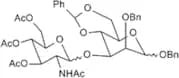
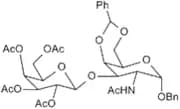
CAS:<p>Agarose is a polysaccharide found in red algae, typically Gelidium and Gracilaria. It is a strictly alternating polysaccharide of α-1,3 linked D-galactose and β-1,4 linked L-3,6 anhydrogalactose with occasional sulfation at position 6 of the anhydrogalactose residue. Agaro-oligosaccharides result from cleavage at galactose residues and neoagaro-oligosaccharides from cleavage at 3,6-anhydro residues. A number of publications have suggested that agaroheptaose has properties that include: anti-microbial, antiviral, prebiotic, anti-tumoral, immunomodulatory, anti-inflammatory, glucosidase inhibitory, and hepatoprotective properties.</p>Formula:C54H84O42Purity:Min. 95%Color and Shape:SolidMolecular weight:1,405.22 g/molBenzyl 2-acetamido-4,6-O-benzylidene-3-O-(2,3,4,6-tetra-O-acetyl-b-D-galactopyranosyl)-2-deoxy-a-D-glucopyranoside
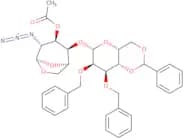
CAS:<p>The compound is a synthetic fluorinated carbohydrate that contains an acetamido group. It has been shown to inhibit the growth of Mycobacterium tuberculosis and Mycobacterium avium complex in vitro. The compound has shown anti-inflammatory properties and immunomodulatory effects, which may be due to its ability to bind to the CD1d receptor on macrophages.</p>Formula:C36H43NO15Purity:Min. 95%Molecular weight:729.72 g/mol3-O-Acetyl-1,6-anhydro-2-azido-2',3'-di-O-benzyl-4',6'-O-benzylidene-2-deoxy-b-D-cellobiose
CAS:<p>3-O-Acetyl-1,6-anhydro-2-azido-2',3'-di-O-benzyl-4',6'-O-benzylidene-2-deoxy-b,D cellobiose is a fluorinated oligosaccharide that can be customized for a variety of applications. The sugar unit contains an acetyl group on the C1 position and an azido group at the C2 position. This compound has been subjected to click chemistry in order to form a covalent bond with 4,6'-O-benzylidene 2,3'-dideoxy b,D cellobiose.</p>Formula:C35H37N3O10Purity:Min. 95%Molecular weight:659.68 g/mol2-Acetamido-6-O-(a-2-N-acetylneuraminyl)-2-deoxy-a-D-galactopyranose-sp-biotin
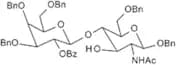
<p>2-Acetamido-6-O-(a-2-N-acetylneuraminyl)-2-deoxy-a-D-galactopyranose (Neu5Ac) is a methylated saccharide that is synthesized by the enzyme glycosylase. The acetamido group on the sugar reacts with the amino group at position 6 of the sugar to form a Schiff base, which then undergoes an elimination reaction to generate 2,6-dideoxygalactose. This product can be modified using click chemistry or other modification techniques such as Glycosylation, High purity, Carbohydrate, sugar, Synthetic, Fluorination and more.</p>Purity:Min. 95%Color and Shape:Solid2-Acetamido-4-O-(2-O-benzoyl-3,4,6-tri-O-benzyl-b-D-galactopyranosyl)-1,6-di-O-benzyl-2-deoxy-b-D-glucopyranoside
<p>This is a synthetic sugar that can be used for glycosylation, oligosaccharides, and saccharides. It has been modified with fluorination, methylation, and click chemistry. This product is available in custom synthesis upon request.</p>Formula:C56H59NO12Purity:Min. 95%Molecular weight:938.07 g/molBenzyl 3'-sulfo-b-D-lactoside sodium salt
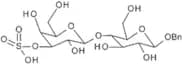
CAS:<p>Synthetic building block for oligosaccharide synthesis</p>Formula:C19H28O14S·xNaPurity:Min. 95%Color and Shape:PowderMolecular weight:512.48 g/molNGA3F N-Glycan
CAS:<p>NGA3F N-Glycan is a custom synthesis product that has been fluorinated, methylated, and modified with a click modification. It is a monosaccharide that can be found in the form of polysaccharides or glycosylations. This product is made of saccharides, which are carbohydrates that have been modified with glycosylation or polysaccharide modifications. NGA3F N-Glycan can be used in a variety of applications such as pharmaceuticals, food additives, and cosmetics.</p>Formula:C64H107N5O45Purity:Min. 95%Molecular weight:1,666.54 g/mol