Carbohydrates and glycoconjugates
Carbohydrates are organic compounds composed of carbon, hydrogen, and oxygen, with a basic structure formed by monosaccharides. These can combine to form disaccharides, oligosaccharides, or polysaccharides, depending on the number of monomeric units. Carbohydrates play a fundamental role in energy storage, cell structure, and cellular communication. Their derivatives are used in pharmaceutical products, such as sweeteners and excipients.
At CymitQuimica, we offer a wide range of carbohydrates and their derivatives for research and industrial applications.
Found 5014 products of "Carbohydrates and glycoconjugates"
Sort by
Purity (%)
0
100
|
0
|
50
|
90
|
95
|
100
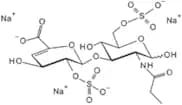
Heparin disaccharide I-P trisodium salt
CAS:<p>Heparin disaccharide I-P trisodium salt is a synthetic, highly pure, custom-synthesized heparin derivative with a unique sequence of saccharides. It has been fluorinated and methylated to increase its stability and resistance to degradation by enzymes. Heparin disaccharide I-P trisodium salt is glycosylated, which increases its solubility in water and reduces the risk of precipitation. This product is also modified using click chemistry to introduce an oligosaccharide at one end of the molecule.</p>Formula:C15H20NO17S2Na3Purity:Min. 95%Color and Shape:White To Off-White SolidMolecular weight:619.42 g/molAsialo-GM1-pentasaccharide-APD-HSA
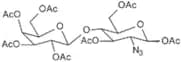
<p>Asialo-GM1-pentasaccharide-APD-HSA is a complex carbohydrate that is custom synthesized. It has high purity and CAS No. This product is a monosaccharide, methylated, glycosylated, polysaccharide with sugar and fluorinated saccharides.</p>Purity:Min. 95%1,3,6-Tri-O-acetyl-4-O-(2,3,4,6-tetra-O-acetyl-b-D-galactopyranosyl)-2-azido-2-deoxy-D-glucopyranose
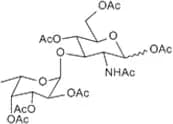
<p>1,3,6-Tri-O-acetyl-4-O-(2,3,4,6-tetra-O-acetyl-b-D-galactopyranosyl)-2-azido-2-deoxy--D--glucopyranose is a modification of a natural sugar. It is an oligosaccharide that is composed of one monosaccharide and two disaccharides. The triacetate group on the first saccharide provides protection against hydrolysis and methylation reactions. This compound has been shown to be synthesized chemically in high purity and with high yield.</p>Formula:C26H35N3O17Purity:Min. 95%Molecular weight:661.57 g/mol2-Acetamido-2-deoxy-1,4,6-tri-O-acetyl-3-O-(2,3,4-tri-O-acetyl-a-L-fucopyranosyl)-D-glucopyranose
CAS:<p>The chemical name of this product is 2-Acetamido-2-deoxy-1,4,6-tri-O-acetyl-3-O-(2,3,4-tri-O-acetyl-a-L-fucopyranosyl)-D--glucopyranose. This product is a synthetic carbohydrate that has been custom synthesized and modified. It is a complex carbohydrate with an acetamido group on the nonreducing end and an acetylated sugar moiety on the reducing end. This product can be used in methylation or glycosylation processes. The CAS number for this product is 309263-13--6 and it has a molecular weight of 569.</p>Formula:C26H37NO16Purity:Min. 95%Molecular weight:619.57 g/molLinear B-6 trisaccharide 1-O-n-pentylamine
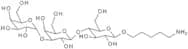
<p>Linear B-6 trisaccharide 1-O-n-pentylamine is a glycosylated, fluorinated, saccharide that can be custom synthesized. This compound can be modified with methyl groups, click chemistry, or fluorination. It has a CAS number of 188768-84-0 and is soluble in methanol, ethanol, and water. Linear B-6 trisaccharide 1-O-n-pentylamine is a monosaccharide with a molecular weight of 258.</p>Formula:C23H43NO16Purity:Min. 95%Molecular weight:589.58 g/molMethyl 4-O-(a-D-galactopyranosyl)-b-D-galactopyranoside
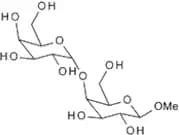
<p>Methyl 4-O-(a-D-galactopyranosyl)-b-D-galactopyranoside is a modification of a sugar molecule. It is an oligosaccharide that is a complex carbohydrate. This product can be custom synthesized to order with high purity and CAS number. The chemical name for this product is methyl 4-O-(a-D-galactopyranosyl)-b-D-galactopyranoside, which is a monosaccharide. Methyl 4-O-(a-D-galactopyranosyl)-b-D-galactopyranoside has glycosylation and polysaccharides. This product can be fluorinated or saccharified with methylation.</p>Formula:C13H24O11Purity:Min. 95%Molecular weight:356.32 g/molPinoresinol diglucopyranoside
CAS:<p>Pinoresinol diglucopyranoside is a natural compound found in Chinese herb. It has been shown to have an anti-atherosclerotic effect, which may be due to the inhibition of nuclear factor kappa-light-chain-enhancer (NF-κB) and matrix metalloproteinase (MMP)-9. Pinoresinol diglucopyranoside also inhibits collagenase activity in vitro and reduces inflammation in vivo. The molecular mechanism of this compound may involve the toll-like receptor 4 (TLR4) pathway, which is responsible for immune responses to bacterial products. Pinoresinol diglucopyranoside has been shown to inhibit the transcription and polymerization of DNA by binding to DNA gyrase and topoisomerase IV, respectively.</p>Formula:C32H42O16Purity:Min. 96.0 Area-%Molecular weight:682.67 g/molRef: 3D-Q-100734
1gTo inquire5gTo inquire250mgTo inquire500mgTo inquire2500mgTo inquire-Unit-ggTo inquireLacto-N-fucopentaose III-APD-HSA
<p>Lacto-N-fucopentaose III-APD-HSA is a custom synthesis, complex carbohydrate that has been modified with methylation and glycosylation. It is an oligosaccharide that is found in human serum albumin. Lacto-N-fucopentaose III-APD-HSA has been shown to have antitumor activity. It also inhibits the growth of bacteria by binding to bacterial DNA gyrase and topoisomerase IV, which are enzymes that maintain the integrity of bacterial DNA. This compound binds to two sites on the 16S ribosomal RNA of bacteria and can inhibit protein synthesis, leading to cell death by inhibiting production of proteins vital for cell division. Lacto-N-fucopentaose III-APD-HSA has undergone fluorination and click modification.<br>Methylation: A process whereby a methyl group (-CH3) is added to an organic molecule via a chemical</p>Purity:Min. 95%1,2,3,6-Tetra-O-acetyl-4-O-(2,3,4,6-tetra-O-acetyl-b-D-mannopyranosyl)-D-glucopyranose
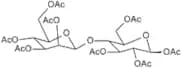
CAS:<p>1,2,3,6-Tetra-O-acetyl-4-O-(2,3,4,6-tetra-O-acetyl-b-D-mannopyranosyl)-D-glucopyranose is a synthetic sugar that has been modified by the methylation of the hydroxyl groups at C1 and C6 with acetaldehyde. This sugar is used in glycosylation reactions to modify proteins and other biomolecules. The product is a white crystalline solid that has a CAS number of 132341-46-9. It can be custom synthesized for research purposes or as a high purity material for commercial use.</p>Formula:C28H38O19Purity:Min. 95%Molecular weight:678.59 g/molBlood Group A type I linear trisaccharide
CAS:<p>GalNAca1-3Galb1-3GlcNAc</p>Formula:C22H38N2O16Purity:Min. 95%Molecular weight:586.54 g/molGQ1b-Ganglioside ammonium
CAS:<p>GQ1b ganglioside (ammonium salt) has a core tetrasaccharide structure (Galβ1,3GalNAcβ1,4Galβ1,4Glc) with two sialic acids (NeuAc) linked α2,3/α2,8 to the inner galactose residue, two sialic acids (NeuAc) linked α2,3/α2,8 to the terminal galactose residue, and ceramide linked β to position 1 on the reducing terminal glucose residue (Ledeen, 2009). Anti-GQ1b ganglioside antibody is associated with Miller Fisher syndrome and is also found in patients with related conditions that may share the same pathogenic mechanism, such as, Bickerstaff brainstem encephalitis. Thus, the measurement of anti-GQ1b antibody in suspected cases of Miller Fisher syndrome is a useful diagnostic marker (Paparounas, 2004). It has been found that GQ1b ganglioside contributes to synaptic transmissions and synapse formation. Low concentrations of GQ1b ganglioside, evoked dopamine (DA) release from laboratory tissues (Chen, 2018).</p>Formula:C106H182N6O56·xNH4Purity:Min. 95%b-D-Lactosyltrichloroacetimidate heptaacetate
CAS:<p>b-D-Lactosyltrichloroacetimidate heptaacetate is a glycosylation product of the b-D-lactose and trichloroacetic anhydride. This compound is used in the synthesis of oligosaccharides and polysaccharides. It has been shown to be a fluorinated, methylated, or click modified monosaccharide or disaccharide which can be prepared through custom synthesis, or by modification of existing saccharides. This compound has been found to have high purity with a CAS number of 1142022-76-1.</p>Formula:C28H36Cl3NO18Purity:Min. 95%Molecular weight:780.94 g/molIso-lactosamine HCl
CAS:<p>Iso-lactosamine HCl is a synthetic monosaccharide, glycosylation product of galactose and lactic acid. It is used in the production of oligosaccharides and complex carbohydrates. Iso-lactosamine HCl is a white powder that can be dissolved in water or ethanol.</p>Formula:C12H23NO10·HClPurity:Min. 95%Molecular weight:377.77 g/molHyaluronate fluorescein - Molecular Weight - 20kDa
<p>Hyaluronate fluorescein is a fluorinated carbohydrate that has been modified for use in the detection of methylation. It contains an oligosaccharide and polysaccharide that are attached to a 20kDa fluorinated saccharide. This product is available in high purity and is custom synthesized for your specific needs.</p>Purity:Min. 95%3,4,2',3',4'-Penta-O-acetylsucrose
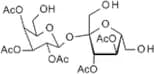
CAS:<p>3,4,2',3',4'-Penta-O-acetylsucrose (PAS) is a carbohydrate that has been found to be a potent inhibitor of the enzyme glycogen phosphorylase. The reductive elimination of the acetyl groups from PAS produces 2,3,4'-tri-O-acetylsucrose (TAS), which is also an inhibitor of glycogen phosphorylase. TAS inhibits this enzyme by binding to the active site and blocking access to the substrate. TAS also inhibits gluconeogenesis in liver cells by competing with glucose for uptake into the cell. In vitro studies have shown that TAS binds to boron trifluoride and lithium aluminum hydride more effectively than it does to diazomethane or detritylation.</p>Formula:C22H32O16Purity:Min. 95%Molecular weight:552.49 g/molO-(Methyl b-D-glucopyranosyluronate)-(1,3)-2-deoxy-2-trichloroacetamido-D-galactopyranose
<p>Methyl b-D-glucopyranosyluronate- (1,3)-2-deoxy-2-trichloroacetamido-D-galactopyranose is a fluorinated sugar that is synthesized from the glycosylation of methyl 2,3,4,6-tetrafluoro-b-D-(1,3) glucopyranoside with trichloroacetyl D-(1,3) galactopyranose. This compound is soluble in water and has a CAS number of 1058858. This product can be used as a reagent for glycosylation reactions such as Click chemistry and Methylation. It also has applications in carbohydrate modification and high purity custom synthesis.</p>Purity:Min. 95%1,3-a-1,6-a-D-Mannotriosyl trichloroacetimidate
<p>1,3-α-D-mannopyranosyl trichloroacetimidate (1,3-α-DMTCA) is a fluorinated monosaccharide that is used as a building block for the synthesis of oligosaccharides and polysaccharides. The synthesis of 1,3-α-DMTCA involves the reaction of α,β-unsaturated chloral hydrate with mannose in aqueous solution. This produces an intermediate product that undergoes glycosylation with glycosylation reagents like glycosyl chloride to yield 1,3-α-DMTCA. The chemical structure of 1,3-α-DMTCA can be modified by various reactions including methylation or click modification. 1,3 DMTCA is also available as a high purity material.<br>1,3 α - D - mannosyltetrahydrochlorofonuimidoksyl</p>Purity:Min. 95%6-O-(a-D-Galactopyranosyl)-D-mannopyranose
<p>The 6-O-(a-D-galactopyranosyl)-D-mannopyranose, also known as epimelibiose, is an oligosaccharide formed by linking an α-D-galactose molecule to a D-mannose molecule. It could be found in various natural products or glycoconjugates, such as glycolipids or glycoproteins. The configuration and linkage of sugars in such molecules often play a crucial role in their biological functions. 6-O-(a-D-galactopyranosyl)-D-mannopyranose can be used in research to modify polysaccharides and glycans. It has a role as a plant metabolite and a mouse metabolite.</p>Formula:C12H22O11Purity:Min. 95%Lewis X trisaccharide 4-methylumbelliferyl glycoside
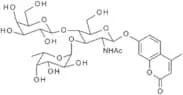
CAS:<p>The Lewis X trisaccharide 4-methylumbelliferyl glycoside is a high purity, custom synthesis sugar that has been fluorinated and glycosylated. This product is a complex carbohydrate that can be used for various purposes. The CAS number for this product is 359436-57-0.</p>Formula:C30H41NO17Purity:Min. 95 Area-%Color and Shape:PowderMolecular weight:687.64 g/molMethyl 3,6-di-O-(a-D-mannopyranosyl)-a-D-mannopyranoside
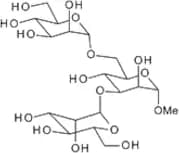
CAS:<p>Used for structural and conformational studies and as enzyme substrates</p>Formula:C19H34O16Purity:Min. 95%Color and Shape:PowderMolecular weight:518.46 g/mol