Carbohydrates and glycoconjugates
Carbohydrates are organic compounds composed of carbon, hydrogen, and oxygen, with a basic structure formed by monosaccharides. These can combine to form disaccharides, oligosaccharides, or polysaccharides, depending on the number of monomeric units. Carbohydrates play a fundamental role in energy storage, cell structure, and cellular communication. Their derivatives are used in pharmaceutical products, such as sweeteners and excipients.
At CymitQuimica, we offer a wide range of carbohydrates and their derivatives for research and industrial applications.
Found 5010 products of "Carbohydrates and glycoconjugates"
Sort by
Purity (%)
0
100
|
0
|
50
|
90
|
95
|
100
Maltotridecaose
CAS:<p>Maltotridecaose is a sugar alcohol with an acceptor group that can be introduced into a cavity in a molecule. It is a sweetener that has been shown to have oligosaccharide properties, which are the molecules that comprise dietary carbohydrates. Maltotridecaose can be found as an unlabeled ingredient in foods such as sugar-free chewing gum, chocolate, and ice cream. The debranching of maltotridecaose occurs by way of glucans and licheniformis.</p>Formula:C78H132O66Purity:Min. 95%Color and Shape:White/Off-White SolidMolecular weight:2,125.84 g/molNeoagarooctaose
CAS:<p>Agarose is a polysaccharide found in red algae, typically Gelidium and Gracilaria. It is a strictly alternating polysaccharide of α-1,3 linked D-galactose and β-1,4 linked L-3,6 anhydrogalactose with occasional sulfation at position 6 of the anhydrogalactose residue. Agaro-oligosaccharides result from cleavage at galactose residues and neoagaro-oligosaccharides from cleavage at 3,6-anhydro residues. Neoagarooctaose is reported to have potential for novel cosmeceuticals.</p>Formula:C48H74O37Purity:Min. 98 Area-%Color and Shape:White PowderMolecular weight:1,243.08 g/mol6-deoxy-6-mercapto-γ-cyclodextrin,octakis
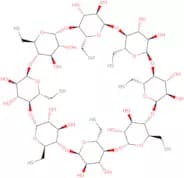
CAS:<p>6-Deoxy-6-mercapto-gamma-cyclodextrin, octakis (Methyl 6DG) is a novel and unique sugar with two methyl groups on the C6 hydroxyl position. It has been synthesized from glucose by a click modification reaction and can be used as an alternative to 6DG for the production of oligosaccharides and polysaccharides. The high purity of Methyl 6DG makes it suitable for use in analytical research, such as fluorescence resonance energy transfer measurements.</p>Formula:C48H80O32S8Purity:Min. 95%Molecular weight:1,425.66 g/molMonofucosyllacto-N-hexaose II
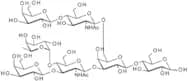
CAS:<p>Monofucosyllacto-N-hexaose II is a tetraol that is used as a reagent in the synthesis of enantioenriched and synthetically tetrasaccharidic products. Monofucosyllacto-N-hexaose II can be obtained by the reaction of Grignard reagents with glucose or by stereoselective reduction of an alpha, beta unsaturated ketone. The presence of the glucose residue in Monofucosyllacto-N-hexaose II makes it an acceptor for esterification reactions. This compound has chiral centers due to its two stereogenic centers at C2 and C3, which are both beta positions on the glucose residue. Monofucosyllacto-N-hexaose II also has a free hydroxyl group at C5 that can be esterified to produce chiral esters.</p>Formula:C46H78N2O35Purity:Min. 95%Molecular weight:1,219.1 g/molMethyl 2-hydroxyethyl cellulose
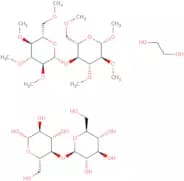
CAS:Controlled Product<p>Methyl 2-hydroxyethyl cellulose (MEC) is a synthetic substance that is used as a thickening and emulsifying agent in many products, including foods, pharmaceuticals, and cosmetics. MEC has been shown to inhibit the activity of certain enzymes, such as amylase, lipase, and protease. In addition to these properties, MEC is also known for its high degree of thermal stability and light resistance. This product can be used in a wide range of applications due to its versatility and low cost.</p>Formula:C34H66O24Purity:Min. 95%Color and Shape:White/Off-White SolidMolecular weight:858.87 g/molBlood Group B type II linear trisaccharide
CAS:<p>Core antigen fragment in ABO blood group system</p>Formula:C20H35NO16Purity:Min. 95%Color and Shape:PowderMolecular weight:545.49 g/molD-Melibiose anhydrous
CAS:<p>D-Melibiose anhydrous is a disaccharide that is used as an excipient in the pharmaceutical industry. It has been shown to be an active enzyme, which may be due to its ability to sequester galactose. D-Melibiose anhydrous has a redox potential of -0.2 V, indicating that it has a high number of oxidizable groups. The molecular weight of this sugar is 324.14 g/mol, and it has a polarizability of 0.16 D, which classifies it as a polyol with hydrogen bonding properties. This sugar is not soluble in water but can be dissolved in ethanol or propylene glycol. D-Melibiose anhydrous also has carbohydrate properties and may be considered a sugar alcohol because it contains six carbon atoms and one oxygen atom.</p>Formula:C12H22O11Purity:Min. 95%Color and Shape:PowderMolecular weight:342.3 g/molBlood group B trisaccharide 8-methoxycarbonyloctyl ester
CAS:<p>8-methoxycarbonyl ester of Gal-a1-3(Fuc-a1-2)Gal</p>Formula:C28H50O17Purity:Min. 95%Color and Shape:PowderMolecular weight:658.69 g/molSucrose cocoate
CAS:<p>Blend of sucrose esters with fatty acid esters from coconut oil used in Cosmetic industry applications.</p>Purity:Min. 95%D-Maltose monohydrate
CAS:<p>Please enquire for more information about D-Maltose monohydrate including the price, delivery time and more detailed product information at the technical inquiry form on this page</p>Formula:C12H24O12Purity:Min. 98 Area-%Color and Shape:White PowderMolecular weight:360.31 g/molSafflor Yellow A
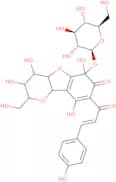
CAS:<p>Safflor Yellow A is a natural drug that has been shown to have hypoglycemic effects. It is a potent inhibitor of glucose-6-phosphatase and glucose-6-phosphate dehydrogenase, which are enzymes involved in the conversion of glucose to glycogen. Safflor Yellow A also inhibits neuronal death, as it blocks the enzyme activities that lead to neuronal cell death. This drug has also shown antitumor activity, as it induces apoptosis in tumor cells. Safflor Yellow A also has antihyperlipidemic effects and can be used for the treatment of coronary heart disease. Low doses of this drug have been shown to reduce systolic pressure in rats and improve blood coagulation. The mechanism of action for this drug is not yet known but may involve toll-like receptor 4 signaling pathways or polymerase chain reaction (PCR).</p>Formula:C27H30O15Purity:Min. 95%Color and Shape:PowderMolecular weight:594.52 g/molDigalactosyldiacylglycerol - 10mg/ml in Chloroform-Methanol
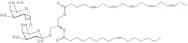
CAS:<p>In plants and algae, the two main galactolipids, monogalactosyldiacyglycerol (MGDG) and digalactosyldiacyglycerol (DGDG), are synthesized by galactosyltransferases in the plastid envelope. They have been linked to the anti-inflammatory and cancer benefits of a green leafy vegetable diet in humans due to their ability to regulate the levels of free radicals like nitric oxide (NO)</p>Formula:C51H84O15Purity:Min. 95%Color and Shape:PowderMolecular weight:937.2 g/molDifucosyl-para-lacto-N-hexaose II
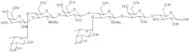
CAS:<p>Difucosyl-para-lacto-N-hexaose II is a blood group oligosaccharide</p>Formula:C52H88N2O39Purity:Min. 95%Color and Shape:White Off-White PowderMolecular weight:1,365.25 g/molDFP00173
CAS:<p>DFP00173: Potent, selective AQP3 inhibitor; IC50 ~0.1-0.4 μM; less effective on AQP7, AQP9.</p>Formula:C11H7Cl2N3O3SPurity:99.53% - 99.53%Color and Shape:SolidMolecular weight:332.16Heparin derived disaccharide sodium salt
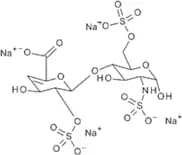
CAS:<p>Heparin derived disaccharide sodium salt is a salt form of heparin. It is a heterogenous mixture of low molecular weight compounds that are composed of sugar residues and sulfation. Heparin derived disaccharide sodium salt has been used for the treatment of thrombocytopenic purpura, thrombotic thrombocytopenic purpura, and other bleeding disorders. This drug also has been used to prevent blood coagulation in patients undergoing surgery.</p>Formula:C12H15NO19S3·Na4Purity:Min. 95%Color and Shape:PowderMolecular weight:665.4 g/molBlood Group H type II trisaccharide-PAA-biotin
<p>Blood group antigen conjugated to spacer and biotin</p>Purity:Min. 95 Area-%Color and Shape:PowderMolecular weight:586.6 g/mol(5aS,10aS)-Tetrahydrodipyrrolo[1,2-a:1',2'-d]pyrazine-3,5,8,10(2H,5aH)-tetraone
CAS:<p>The objective of this project is to design a microcontroller-based system that can monitor and diagnose the level of damage in a composite material. The system will consist of an array of sensors, actuators, and microcontrollers that are connected by a wireless network. The sensors will measure the levels of damage at each point within the composite material. The actuators will provide feedback to the sensors, adjusting their frequency and amplitude based on the level of damage detected. Microcontrollers will be responsible for analyzing data from the sensors and diagnosing any faults in the system. A miniaturized dry skin patch could be used as an alternative to traditional wet skin tests for monitoring skin health.</p>Formula:C10H10N2O4Purity:Min. 95%Molecular weight:222.2 g/mol2-Acetamido-3-O-(2-acetamido-2-deoxy-b-D-glucopyranosyl)-2-deoxy-D-galactopyranose
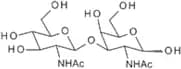
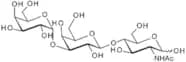
CAS:<p>2-Acetamido-3-O-(2-acetamido-2-deoxy-b-D-glucopyranosyl)-2-deoxy-D-galactopyranose is a methylated, saccharide, Polysaccharide. It is a custom synthesis of a carbohydrate sugar. It is fluorinated to increase its bioavailability. 2 Acetamido 3 O 2 acetamido 2 deoxy b D glucopyranosyl 2 deoxy D galactopyranose has CAS No. 95673 98 6 and the molecular weight is 524.87 g/mol. It has a purity of >99% and comes in powder form.</p>Formula:C16H28N2O11Purity:Min. 95%Color and Shape:White PowderMolecular weight:424.4 g/molZopolrestat
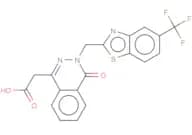
CAS:<p>Zopolrestat (CP 73850) is a potent inhibitor of aldose reductase (IC50 = 3.1 nM).</p>Formula:C19H12F3N3O3SPurity:99.74%Color and Shape:SolidMolecular weight:419.38Miglustat hydrochloride
CAS:<p>Miglustat hydrochloride (N-Butyldeoxynojirimycin hydrochloride) is an inhibitor of glucosylceramide synthase and can be used for studies about Type I Gaucher</p>Formula:C10H22ClNO4Purity:99.85%Color and Shape:SolidMolecular weight:255.74







![(5aS,10aS)-Tetrahydrodipyrrolo[1,2-a:1',2'-d]pyrazine-3,5,8,10(2H,5aH)-tetraone](/_next/image/?url=https%3A%2Fstatic.cymitquimica.com%2Fproducts%2F3D%2Fthumb-webp%2FIT145577.webp&w=3840&q=75)