Carbohydrates and glycoconjugates
Carbohydrates are organic compounds composed of carbon, hydrogen, and oxygen, with a basic structure formed by monosaccharides. These can combine to form disaccharides, oligosaccharides, or polysaccharides, depending on the number of monomeric units. Carbohydrates play a fundamental role in energy storage, cell structure, and cellular communication. Their derivatives are used in pharmaceutical products, such as sweeteners and excipients.
At CymitQuimica, we offer a wide range of carbohydrates and their derivatives for research and industrial applications.
Found 5012 products of "Carbohydrates and glycoconjugates"
Sort by
Purity (%)
0
100
|
0
|
50
|
90
|
95
|
100
3,4-Di-O-acetyl-2,6-di-O-(3,4,6-tri-O-acetyl-2-deoxy-2-phthalimido-β-D-glucopyranosyl)-α-D-mannopyranose
<p>3,4-Di-O-acetyl-2,6-di-O-(3,4,6-tri-O-acetyl-2-deoxy-2-phthalimido-b-D-glucopyranosyl)-a-D mannopyranose is a modification of the carbohydrate oligosaccharide. It is a custom synthesis that has high purity and CAS number. The structure of the molecule is an Oligosaccharide with a Carbohydrate. This molecule is an example of a complex carbohydrate. The monosaccharide in this compound is glucose and it has been methylated and glycosylated. This molecule also has a polysaccharide sugar which can be fluorinated or saccharided.</p>Formula:C50H54N2O26Purity:Min. 95%Molecular weight:1,098.96 g/mol4-O-(a-D-Galactopyranosyl)-D-glucopyranose
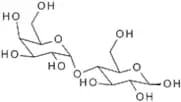
CAS:<p>Disaccharide is a carbohydrate with two simple sugars. It is soluble in water and has a density of 1.621 g/ml. Disaccharides are found in the tissues of many plants and animals, where they can be hydrolyzed by various enzymes to release monosaccharides. Disaccharides are also found in certain types of lichen and algae, where they are produced through photosynthesis. The most common disaccharides are sucrose, lactose, maltose, trehalose, and cellobiose. The simplest type of disaccharide is called a monosaccharide or sugar molecule. Monosaccarides have the same chemical formula but different physical forms that depend on their molecular mass (i.e., they may be a solid or liquid). Disaccharides can be classified as either sulfuric or organic solvent-soluble depending on whether they dissolve in sulfuric acid or an organic solvent such as ethanol or</p>Formula:C12H22O11Purity:Min. 95%Color and Shape:PowderMolecular weight:342.3 g/molMonosialyl, monofucosyl-(1-2)-lacto-N-hexaose
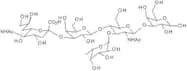
<p>Monosialyl, monofucosyl-(1-2)-lacto-N-hexaose is a synthetic, fluorinated monosaccharide that is used to modify complex carbohydrates. It can be used for the synthesis of oligosaccharides and polysaccharides with a variety of sugar modifications. Monosialyl, monofucosyl-(1-2)-lacto-N-hexaose has the CAS Registry Number 111832-43-9.</p>Purity:Min. 95%LacDiNAc dimer ethylazide
<p>LacDiNAc dimer ethylazide is a modified form of LacdiNAc that has been iodinated. It is synthesized by the reaction of two molecules of LacdiNAc with ethylazide. The product has an average molecular weight of 2,000 and is the most highly purified synthetic carbohydrate available. It can be used in a wide range of applications, including click chemistry, glycosylation reactions, and fluorination synthesis.</p>Formula:C34H57N7O21Purity:Min. 95%Molecular weight:899.85 g/mol1,2,3,6,2',3',6'-Hepta-O-acetyl-4'-O-(2,3,4,6-tetra-O-acetyl-a-D-galactopyranosyl)-b-D-lactopyranoside
<p>1,2,3,6,2',3',6'-Hepta-O-acetyl-4'-O-(2,3,4,6-tetra-O-acetyl-a-D-galactopyranosyl)-b-D-lactopyranoside is a custom synthesis of a complex carbohydrate. It is an Oligosaccharide and a Polysaccharide. 1,2,3,6,2',3',6'-Hepta-O-acetyl-4'-O-(2,3,4,6-tetra-O-acetyl-a-D-galactopyranosyl)-b -D -lactopyranoside has CAS No. and a Methylation and Glycosylation modification. This product is Modification and saccharide with High purity and Fluorination. 1,2,3,6,2',3',</p>Purity:Min. 95%Dextran 60, MW: 54,000 to 66,000
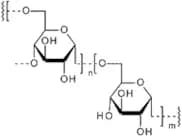
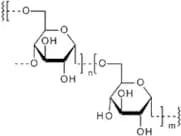
CAS:<p>Complex glucan (a 1-6) from Leuconostoc spp.; extender in blood transfusions</p>Formula:(C6H10O5)nColor and Shape:White Powder4-Aminobutyl 1,3-a-1,6-a-D-mannotriose
<p>4-Aminobutyl 1,3-a-1,6-a-D-mannotriose is a custom synthesis that belongs to the category of oligosaccharides and polysaccharides. It is an aminotriose with a methyl group at the C4 position. The fluorinated glucose moiety and the 4-aminobutylic acid residue are in an alpha configuration. This oligosaccharide has been modified by click chemistry and features high purity. The modification was carried out by condensing the sugar with a boronic acid and then reacting this with an azide group. The resulting product is then reacted with a maleimide to create a conjugate that can be used in bioconjugation reactions.</p>Purity:Min. 95%Sialyl lewis X pentaose
<p>The blood group antigen Sialyl Lewis X (SLeX) is an oligosaccharide which plays a vital role in cell-cell recognition processes. SLeX is a terminal residue on glycolipids that are present on the surface of white blood cells and plays a key role in inflamation processes (Collins, 2006). The inital adhesion of white blood cells to a site of injury is mediated by E-selectins which specifically interact with SLeX. Cell-cell recognition between leukocytes and endothelial cells in blood is believed to occur in part through interactions between lectins and oligosaccharide ligands (Munro, 1992).</p>Formula:C37H61N2O28NaPurity:Min. 70%Color and Shape:PowderMolecular weight:1,004.87 g/molBlood group A-BSA
<p>A-BSA is an antibody that competes with the blood group antigen for binding to erythrocytes. The A-BSA is immobilized on a microtitre plate and incubated with the blood group antigen and human blood group antiserum. The concentration of A-BSA in the solution is determined by measuring the enzyme-linked immunosorbent assay (ELISA) signal using a spectrophotometer. This measurement is used to determine the concentration of blood group antigen in the sample.</p>Purity:Min. 95%Color and Shape:Powder6-O-(b-D-Mannopyranosyl)-D-mannose
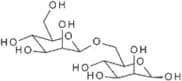
CAS:<p>Isolated from the products of the acid reversion of D-mannose</p>Formula:C12H22O11Purity:Min. 98 Area-%Color and Shape:PowderMolecular weight:342.3 g/molIsomalto oligomers (Dp 4-8)
<p>Isomalto oligomers are a custom synthesis of polysaccharide oligosaccharides. These compounds are modified with methylation, glycosylation, and fluorination to create a high purity product that is free of undesirable contaminants. Isomalto oligomers (DP 4-8) are synthesized from sugars and can be used in the modification of saccharide chains during glycosylation reactions. This product also has the ability to produce click chemistry modifications.</p>Purity:ReportedColor and Shape:PowderDextran 250 - MW: 225,000 to 275,000
CAS:<p>Complex glucan (a 1-6) from Leuconostoc spp.; extender in blood transfusions</p>Color and Shape:Powder3-O-(b-D-Mannopyranosyl)-D-mannopyranose
CAS:<p>Synthesized by the 4,6-O-benzylidene acetal-controlled method of Crich</p>Formula:C12H22O11Purity:Min. 95%Color and Shape:PowderMolecular weight:342.3 g/molTrifucosyl (1-2,1-2,1-3)-iso-lacto-N-octaose
CAS:<p>Trifucosyl (1-2,1-2,1-3)-iso-lacto-N-octaose is a custom synthesis that is a complex carbohydrate. It is an oligosaccharide that contains three monosaccharides linked by alpha glycosidic bonds. This compound has been modified using methylation and glycosylation reactions. Trifucosyl (1-2,1-2,1-3)-iso-lacto-N-octaose has been fluorinated at the C6 position of the sugar ring to increase its solubility in water and enhance its stability in acid conditions. The product is a high purity synthetic compound.</p>Formula:C72H121N3O53Purity:Min. 95%Color and Shape:White PowderMolecular weight:1,876.72 g/mol4-O-(2-Acetamido-2-deoxy-β-D-glucopyranosyl)ribitol
CAS:<p>4-O-(2-Acetamido-2-deoxy-b-D-glucopyranosyl)ribitol is a disaccharide that is antigenic and has been shown to elicit an antibody response in rabbits. The carbohydrate is a determinant for the staphylococcus group A antigen and is an epitope for the S. aureus group D antigen. 4-O-(2-Acetamido-2-deoxy-b-D-glucopyranosyl)ribitol also shows inhibitory activity against bacterial growth, including Staphylococcus aureus and Staphylococcus.</p>Formula:C13H25NO10Purity:Min. 95%Molecular weight:355.34 g/mol2-(3,4-Dihydroxyphenyl)-5,7-dihydroxy-4-oxo-4H-1-benzopyran-3-yl O-b-D-galactopyranosyl-b-D-glucopyranosiduronic acid
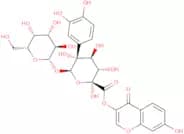
CAS:<p>This is a custom synthesis that is a complex carbohydrate. It has been modified, glycosylated, and methylated to create a saccharide with an Oligosaccharide and Polysaccharide. This product is fluorinated, custom synthesized, and has high purity. The CAS number for this product is 77154-70-2.</p>Formula:C27H28O18Purity:Min. 95%Molecular weight:640.5 g/molGlycyl-disialyllacto-N-tetraose
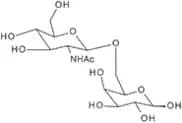
<p>Glycyl-disialyllacto-N-tetraose is a complex carbohydrate that contains a glycosidic bond between two monosaccharides. It has the molecular formula C9H18O4N2O8 and CAS number 327977-92-3. This compound can be modified with methylation, glycosylation, or fluorination to increase solubility and stability. Glycyl-disialyllacto-N-tetraose is also known as Oligosaccharide, CAS No., Polysaccharide, Modification, saccharide, Methylation, Glycosylation, Click modification and Carbohydrate.</p>Formula:C50H83N5O37Purity:Min. 95%Molecular weight:1,346.21 g/mol6-O-(2-Acetamido-2-deoxy-β-D-glucopyranosyl)-D-galactopyranose
CAS:<p>6-O-(2-Acetamido-2-deoxy-b-D-glucopyranosyl)-D-galactopyranose is a disaccharide that has been shown to have anti-inflammatory activities. It contains an acetamide group and a hydroxy group. The acetamide group is substituted by a hydroxy group, which may be responsible for its anti-inflammatory activity. 6-O-(2-Acetamido-2-deoxy-b-D-glucopyranosyl)-D-galactopyranose has also been shown to inhibit the production of proinflammatory cytokines such as tumor necrosis factor alpha (TNFα) and interleukin beta (ILβ).</p>Formula:C14H25NO11Purity:Min. 95%Color and Shape:White PowderMolecular weight:383.36 g/molLacto-N-biose
CAS:<p>Neutral disaccharide naturally present in human breast milk and possible bifidus factor, acceptor for the Helicobacter pylori enzyme α1,2-fucosyltransferase and disaccharide involved in the expression of Lewis blood group antigens.</p>Formula:C14H25NO11Purity:Min. 90%Color and Shape:White PowderMolecular weight:383.35 g/molMaltotetraose
CAS:<p>Maltotetraose is the shortest chain oligosaccharide that can be classified as a maltodextrin. It’s a component of liquid glucose (a commercial sweetener composed of glucose, maltose, maltotriose and maltotetraose), used in bread-making industry.</p>Formula:C24H42O21Purity:Min. 95 Area-%Color and Shape:White PowderMolecular weight:666.58 g/mol