Carbohydrates and glycoconjugates
Carbohydrates are organic compounds composed of carbon, hydrogen, and oxygen, with a basic structure formed by monosaccharides. These can combine to form disaccharides, oligosaccharides, or polysaccharides, depending on the number of monomeric units. Carbohydrates play a fundamental role in energy storage, cell structure, and cellular communication. Their derivatives are used in pharmaceutical products, such as sweeteners and excipients.
At CymitQuimica, we offer a wide range of carbohydrates and their derivatives for research and industrial applications.
Found 5010 products of "Carbohydrates and glycoconjugates"
Sort by
Purity (%)
0
100
|
0
|
50
|
90
|
95
|
100
1,2,3,6-Tetra-O-acetyl-4-O-{2,3,6-tri-O-acetyl-4-O-[2,3,6-tri-O-acetyl-4-O-(2,3,4,6-tetra-O-acetyl b-D-glucopyranosyl)-b-D-glucopyra nosyl]-b-D-glucopyranosyl}-b-D-thioglucopyranose
<p>1,2,3,6-Tetra-O-acetyl-4-O-[2,3,6-tri-O-acetyl-4-O-(2,3,4,6 tetra-O-acetyl bDglucopyranosyl)-bDglucopyra nosyl]-bDthioglucopyranose (1) is a sugar with the chemical formula C36H62N8O24. It was first synthesized by the group of L. W. F. Heckel in 1956 and its structure was elucidated by X. Miettinen in 1957. 1 is a complex carbohydrate with a glycosidic linkage to 4 as well as an acetate ester at position 6. The compound has been modified with methyl groups at positions 2 and 3 to form 1,2,3,6 tetra O acetyl 4 O methyl 2 O methyl 3 O methyl 6 O eth</p>Formula:C52H70O34SPurity:Min. 95%Molecular weight:1,271.16 g/molGlycyl-sialyllacto-N-tetraose c
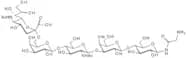
<p>Glycyl-sialyllacto-N-tetraose c is a custom synthesis of the carbohydrate polysaccharide glycyl-sialyllacto-N-tetraose. It is a complex carbohydrate that has been modified for use in biochemical research. Glycyl-sialyllacto-N-tetraose c contains four sugars, including erythrose and threose, and has been fluorinated at the C5 position. The modification of this carbohydrate was achieved through a click reaction. This product has been purified to be greater than 95% pure and is ready for use as an organic solvent or chemical reagent in laboratory experiments.</p>Formula:C39H66N4O29Purity:Min. 95%Molecular weight:1,054.95 g/molIsomaltotetraose
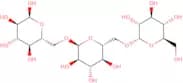
CAS:<p>Produced from high maltose syrup by treatment with transglucosidase</p>Formula:C24H42O21Purity:Min. 95%Color and Shape:White PowderMolecular weight:666.58 g/molHeparin derived dp4 saccharide ammonium
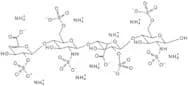
CAS:<p>Heparin is a linear sulphated polysaccharide comprising contiguous disaccharide units of a uronic acid and a derivative of 2-amino-2-deoxy-D-glucose. The heparin tetrasaccharide can be obtained from the degradation of heparin with the lyase enzymes isolated from Flavobacterium heparinum, which yields oligosaccharides terminated at the non-reducing end by the unsaturated unit, 4-deoxy-α-L-threo-hex-4-enopyranosyl uronic acid or its 2-0-sulphated derivative. The major product following lyase degradation is the trisulphated derivative DUA-2S + GlcNS-6S (unsaturated disaccharide). Other oligosaccharides such as the tetrasaccharide, illustrated below, can be produced by the lytic degradation of heparin (Moffat, 1991).</p>Formula:C24H40N2O39S6•(NH3)xPurity:Of Main Disaccharide Unit Approx. 75%Color and Shape:PowderMolecular weight:Av 1200Dextran 2000 - MW: 1,500,000 to 3,500,000
CAS:<p>Dextran 2000 is a high molecular weight biocompatible polymer with transport properties. It is used in a variety of medical applications, such as red blood cell transfusions and the prevention of post-surgical adhesions. Dextran 2000 has been shown to be a safe and effective means of preventing hemolysis during red blood cell transfusion. This agent binds to amine groups on the surface of erythrocytes, which prevents complement activation and subsequent lysis. Additionally, dextran 2000 has been shown to exhibit low cytotoxicity against neuronal cells in vitro.</p>Purity:Min. 95%Color and Shape:White Off-White PowderTridecyl β-D-maltopyranoside
CAS:<p>Tridecyl beta-D-maltopyranoside is a synthetic saccharide that has been modified with fluorination and methylation. The carbohydrate can be used in the synthesis of glycosylated proteins. The product is available for custom synthesis, and it is offered in high purity form.</p>Formula:C25H48O11Purity:Min. 97 Area-%Molecular weight:524.64 g/mol4-Aminobutyl 6-O-(a-D-mannopyranosyl)-a-D-mannopyranoside
<p>4-Aminobutyl 6-O-(a-D-mannopyranosyl)-a-D-mannopyranoside is a synthetic saccharide that can be used as a substituent in the synthesis of complex carbohydrates. It is an aminobutyric acid methyl ester derivative of D-mannose with a pyranose ring. 4-Aminobutyl 6-O-(a-D-mannopyranosyl)-a-D-mannopyranoside has been shown to react with acetic anhydride and diazomethane to yield methylated derivatives of D-glucal, D-sorbitol, and DMPG. It is also used for the synthesis of oligosaccharides, glycosylations, and fluorinations.</p>Purity:Min. 95%Blood Group B type III/IV linear trisaccharide
<p>The blood group B type III/IV linear trisaccharide is a synthetic oligosaccharide. The methylation of the saccharide and click modification of the polysaccharide molecule allow for fast, efficient synthesis. This product has been custom synthesized to be free of impurities, high in purity, and available in glycosylation form. It can be modified with fluorination or other modifications to meet your needs.</p>Formula:C20H35NO16Purity:Min. 95%Molecular weight:545.49 g/molFA2B Glycan, 2-AB labelled
<p>This is a monosaccharide with 2-AB labelled. It is a modification of the oligosaccharide, carbohydrate, complex carbohydrate, and custom synthesis. This product has high purity and CAS No. It is methylated and glycosylated. The product is fluorinated and saccharide.</p>Purity:Min. 95%3-(a-D-Rhamnopyranosyl)-D-glucose
<p>3-(a-D-Rhamnopyranosyl)-D-glucose is a glycosylation product that is synthesized by the methylation of glucose. It is a complex carbohydrate with a high purity, CAS number and custom synthesis. 3-(a-D-Rhamnopyranosyl)-D-glucose has been modified by fluorination and click chemistry to produce a versatile reagent for glycosylation reactions.</p>Purity:Min. 95%Globo-H BSA conjugate
<p>Useful for study of immune response in cancer vaccine development</p>Color and Shape:PowderMolecular weight:1539.56Dextran 750 - MW: 500,000 to 1,000,000
CAS:<p>Dextran is a polysaccharide that is used as an antimicrobial agent and as a volume expander in the treatment of bowel disease, myocardial infarct, and other diseases. Dextran sulfate is a linear polymer with a molecular weight of 500,000 to 1,000,000. It has minimal toxicity and does not interfere with iron homeostasis or cause fluid overload. Dextran sulfate can be used for the treatment of bowel disease because it has been shown to have anti-inflammatory effects in experimental models. The mechanism by which dextran sulfate inhibits inflammation is unknown, but may involve its ability to bind to macrophages and neutrophils in the gut wall. Dextran sulfate also binds to bacteria and prevents their growth. This binding may prevent bacterial penetration into epithelial cells or block bacterial attachment to cell surfaces. The efficacy of dextran sulfate against pathogenic mechanisms such as inflammation has been demonstrated in experimental models.</p>Purity:Min. 95%Color and Shape:White Powdera,a-D-Trehalose dihydrate endotoxin free
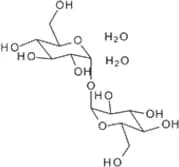
CAS:<p>Trehalose is a non-reducing sugar that is naturally found in some plants and animals. It is a disaccharide formed by two glucose molecules linked together with an alpha,alpha glycosidic bond. Trehalose has been shown to inhibit the growth of bacteria through the inhibition of fatty acid biosynthesis and the production of lactic acid. Trehalose has also been shown to have excipients that are used as lubricants or suspending agents in pharmaceuticals, cosmetics, food products, and animal feed. Trehalose can be used as a substitute for propionate in order to create endotoxin-free aqueous solutions.</p>Formula:C12H22O11·2H2OPurity:Min. 98 Area-%Color and Shape:White PowderMolecular weight:378.33 g/molMan-5 Glycan, 2-AB labelled
<p>Man-5 Glycan, 2-AB labelled is a synthetic oligosaccharide that contains a mannose and a galactose moiety. It has been synthesized by click chemistry with the use of 2-aminobenzaldehyde and glycosylation with methylated and fluorinated mannose. This compound is used as a standard for the detection of carbohydrate binding proteins.</p>Purity:Min. 95%[UL-¹³C₁₂]Sucrose
CAS:<p>Sucrose is a sugar that is used as a food additive. It is the disaccharide of glucose and fructose, which are two monosaccharides. Sucrose can be synthesized by the glycosylation of glucose and fructose in an α-1,2 linkage. Sucrose can also be synthesized by the fluorination of sucrose followed by methylation with methylamine. The synthesis of sucrose starts with the reaction of acrylonitrile with formaldehyde to produce acrylonitrile trimer, which is then reacted with methanol to produce methyl 3-hydroxybutyrate. This product undergoes a series of reactions to form sucrose.</p>Formula:C12H22O11Purity:Min. 98 Area-%Color and Shape:PowderMolecular weight:354.21 g/molSialyl Lewis X methyl glycoside sodium salt
CAS:<p>Glycoside of Sialyl Lewis X</p>Formula:C32H54N2O23Purity:Min. 95%Color and Shape:White PowderMolecular weight:834.77 g/molGD1b-Ganglioside sodium
CAS:<p>GD1b (shown as sodium salt) is one of the major gangliosides in neuronal and glial membranes. It has a core tetrasaccharide structure (Galβ1,3GalNAcβ1,4Galβ1,4Glc) with itâs two sialic acids linked α2,3/α2,8 to the inner galactose residue and ceramide linked β to position 1 on the reducing terminal glucose residue (Ledeen, 2009). GD1b acts as a receptor for BK virus as well as for heat-labile LTII-a toxin, produced by enteropathogenicâ¯E. coli. GD1b ganglioside also interacts with tetanus neurotoxin (TeNT) and is crucial for its entry into cells (Kolter, 2012).</p>Purity:Min. 95%Color and Shape:PowderGalNAc-b-1-4-Gal-b-1-4-Glc-b-ethylazide
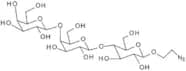
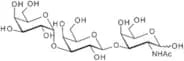
<p>GalNAc-b-1-4-Gal-b-1-4-Glc-b-ethylazide is a custom synthesis, modification, and fluorination of a monosaccharide. It is a polysaccharide that has been synthesized using the click chemistry modification. The CAS number for GalNAc-b-1-4-Gal-b-1-4-Glc-b is 203359. GalNAc is an oligosaccharide that contains one or more sugars linked together by glycosyl bonds. This carbohydrate is made up of galactose and N acetylgalactosamine as its two monomers. The complex carbohydrate can be found in natural sources such as milk, egg white, and soybeans.</p>Purity:Min. 95%a,a-D-Trehalose dihydrate
CAS:<p>Please enquire for more information about a,a-D-Trehalose dihydrate including the price, delivery time and more detailed product information at the technical inquiry form on this page</p>Formula:C12H26O13Purity:Min. 98 Area-%Molecular weight:378.33 g/mol1,6-Anhydro-2-azido-3-O-benzoyl-4-O-(2,3-di-O-benzyl-6-methyl-b-D-glucopyranuronosyl)-b-D-glucopyranose
<p>1,6-Anhydro-2-azido-3-O-benzoyl-4-O-(2,3-di-O-benzyl-6-methyl-b-Dglucopyranosyl)-bDglucopyranose is a custom synthesis that is an oligosaccharide with a molecular weight of 672.1 Da. It is a complex carbohydrate that has been modified to include saccharides and sugars, with the addition of methylation and glycosylation. This molecule has been fluorinated for the purpose of synthesizing a synthetic molecule.</p>Purity:Min. 95%





![[UL-¹³C₁₂]Sucrose](/_next/image/?url=https%3A%2Fstatic.cymitquimica.com%2Fproducts%2F3D%2Fthumb-webp%2FOS29120.webp&w=3840&q=75)