Carbohydrates and glycoconjugates
Carbohydrates are organic compounds composed of carbon, hydrogen, and oxygen, with a basic structure formed by monosaccharides. These can combine to form disaccharides, oligosaccharides, or polysaccharides, depending on the number of monomeric units. Carbohydrates play a fundamental role in energy storage, cell structure, and cellular communication. Their derivatives are used in pharmaceutical products, such as sweeteners and excipients.
At CymitQuimica, we offer a wide range of carbohydrates and their derivatives for research and industrial applications.
Found 5010 products of "Carbohydrates and glycoconjugates"
Sort by
Purity (%)
0
100
|
0
|
50
|
90
|
95
|
100
Lactobionic acid ethyl ester
<p>Lactobionic acid ethyl ester is a custom synthesis of an oligosaccharide that is modified by fluorination, methylation, and click modification. Lactobionic acid ethyl ester is synthesized from the sugar D-glucose and the monosaccharide D-galactose. This product can be used as a substitute for sucrose in food products as it has similar taste, texture and sweetness. It also has many other applications such as being used in the manufacture of polysaccharides and complex carbohydrates.</p>Purity:Min. 95%Chitotriose trihydrochloride
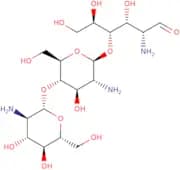
CAS:<p>Chitotriose trihydrochloride is a modification of chitin, an oligosaccharide. Chitotriose trihydrochloride is a synthetic carbohydrate which is used as a raw material for the production of fibers, films, and adhesives. It can be used in the synthesis of complex carbohydrates such as starch and glycogen. Chitotriose trihydrochloride is a high purity carbohydrate with CAS No. 41708-93-4 that can be used to produce glycosylated proteins or polysaccharides.</p>Formula:C18H35N3O13·3HClPurity:Min. 95 Area-%Color and Shape:PowderMolecular weight:610.87 g/mol2-O-a-D-Glucopyranosyl-D-galactopyranose
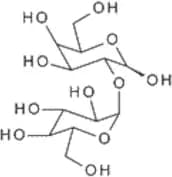
CAS:<p>2-O-a-D-Glucopyranosyl-D-galactopyranose is a synthetic monosaccharide that can be used as a glycosylate building block in the synthesis of oligosaccharides. It has been fluorinated, methylated, and click modified. This high purity material is available for custom synthesis. 2-O-a-D-Glucopyranosyl-D-galactopyranose is also known by its CAS number 7368-73-2.</p>Formula:C12H22O11Purity:Min. 95%Color and Shape:White PowderMolecular weight:342.3 g/molD-Cello-oligosaccharides
<p>This mixture contains all the members of the series up to DP9</p>Purity:Min. 90 Area-%Color and Shape:White Powder1,2-a-1,2-a-L-Rhamnotriose
<p>1,2-a-1,2-a-L-Rhamnotriose is a carbohydrate that can be modified to suit your needs. It has a CAS number of 57749-83-5. This oligosaccharide is a sugar made up of two monosaccharides joined by an alpha 1,2 glycosidic bond. The product can be custom synthesized and its purity is high. It can be fluorinated or methylated and it can also be glycosylated. Click modification is also possible with this product.</p>Formula:C18H32O13Purity:Min. 95%Color and Shape:White PowderMolecular weight:456.44 g/molRutinose
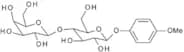
CAS:<p>Rutinose is a naturally occurring polyphenol found in many plants, including the leaves and bark of rue plants. It is a glycoside derivative that has been shown to inhibit human colorectal adenocarcinoma cells (HL-60) by binding to DNA and inhibiting RNA synthesis. Rutinose also has been shown to have anti-inflammatory effects and has been used in the treatment of metabolic disorders such as diabetes mellitus. Rutinose is a bioactive compound with antioxidant properties that may be related to its ability to bind metal ions, including calcium ions at physiological pH levels. Rutinose also has been shown to have a signal peptide sequence that targets it for secretion into the blood stream, where it may act on brain functions.</p>Formula:C12H22O10Purity:Min. 90%Color and Shape:White PowderMolecular weight:326.3 g/mol4-Methoxyphenyl 4-O-(b-D-galactopyranosyl)-b-D-glucopyranoside
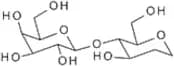
CAS:<p>4-Methoxyphenyl 4-O-(b-D-galactopyranosyl)-b-D-glucopyranoside is a carbohydrate with the CAS number 150412-80-9. It is an Oligosaccharide that is synthesized from monosaccharides and saccharides. This product can be custom synthesized to produce high purity, methylated, glycosylated and fluorinated products. There are many modifications that can be made to this carbohydrate using Click chemistry.</p>Formula:C19H28O12Purity:Min. 95%Color and Shape:PowderMolecular weight:448.42 g/molLacto-N-triose I
CAS:<p>Lacto-N-triose I is a carbohydrate antigen that is used as an acceptor in the synthesis of trisaccharides. Lacto-N-triose I has been shown to have acidic hydrolysis and gel permeation chromatography. It can be used for the synthesis of oligosaccharides, which are important for glycosylation reactions. Lacto-N-triose I also has a glycosylation reaction that can be activated by desulfurization.</p>Formula:C20H35NO16Purity:Min. 95%Molecular weight:545.49 g/mol2,4,6-Tri-O-(3,4,6-tri-O-benzyl-2-deoxy-2-phthalimido-β-D-glucopyranosyl)-3-O-benzyl-α-D-mannopyranose
<p>2,4,6-Tri-O-(3,4,6-tri-O-benzyl-2-deoxy-2-phthalimido-b-D-glucopyranosyl)-3-O-benzyl a -D -mannopyranose is a synthetic oligosaccharide that is synthesized by the click chemistry reaction. It is an example of a glycosylation reaction, in which the sugar is conjugated to an amine group on the triphosphate moiety of uridine diphosphate glucose. The product has been modified with fluorination and methylation to improve its stability.</p>Formula:C118H111N3O24Purity:Min. 95%Molecular weight:1,955.15 g/mol4-O-Methyl-α-D-glucurono-β-D-xylan
CAS:<p>4-O-Methyl-alpha-D-glucurono-beta-D-xylan is produced by the hydrolysis of xylan. It can be used in studies to find new soluble chromogenic substrates for the assay of xylanases and glucanases.</p>Color and Shape:PowderN-Acetylneuraminic acid-OVA
<p>N-Acetylneuraminic acid-OVA refers to ovalbumin that has been conjugated with N-acetylneuraminic acid (Neu5Ac), a type of sialic acid. Sialic acids are important components of glycan structures and play various roles in biological processes, such as cell-cell interactions, immune response, and pathogen recognition. Conjugation of ovalbumin with N-acetylneuraminic acid can be used as a tool to study sialic acid-mediated biological phenomena or as an immunogen to elicit a specific immune response.</p>Color and Shape:PowderGA1-Ganglioside
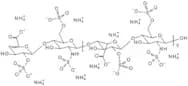
CAS:<p>GA1-ganglioside is also known as asialo-GM1 ganglioside. Autoimmune responses to GA1 ganglioside and high titers of anti-GA1 antibodies have been associated with neuromotor disorders, such as, motor neuron disease, multifocal motor neuropathy, and Guillain-Barré syndrome (Kolter, 2006). Anti-GA1 antibodies are also associated withâ¯Borrelia burgdorferiâ¯infection and Lyme disease (Djellaoui, 2016).</p>Formula:C62H114N2O23Purity:Min. 95%Color and Shape:PowderMolecular weight:1,255.57 g/molHeparin derived dp12 Saccharide ammonium salt
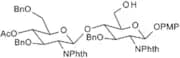
<p>Heparin is a carbohydrate that is derived from the mucopolysaccharide heparin. It is a complex carbohydrate that consists of a chain of alternating N-acetylglucosamine and glucuronic acid. Heparin is used as an anticoagulant to prevent blood clotting, which may occur due to injury or during surgery. Heparin's use in medicine has been limited by its low solubility and rapid clearance from the body. Recently, it has been modified with a fluorine atom on the sugar ring, which increases their solubility and bioavailability. Click chemistry can be used to attach other molecules to the saccharide ammonium salt in order to modify the properties of heparin. This modification can be done with methyl groups or glycosyl groups, and it can also be done with other sugars such as galactose or glucose.</p>Purity:Min. 95%Color and Shape:PowderMolecular weight:~3550 (Average)4-Methoxyphenyl 4-O-(4-O-acetyl-3,6-di-O-benzyl-2-deoxy-2-phthalimido-b-D-glucopyranosyl)-3-O-benzyl-2-deoxy-2-phthalimido-b-D-gluco pyranoside
<p>4-Methoxyphenyl 4-O-(4-O-acetyl-3,6-di-O-benzyl-2-deoxy-2-phthalimido-b-D-glucopyranosyl)-3,6,2′,4′″triphosphate (4MPP) is a methylated saccharide. It can be modified with click chemistry and has been shown to inhibit the synthesis of glycogen in the liver. 4MPP is a high purity product that has been synthesized from naturally occurring carbohydrates. It is also fluorinated for use in research.</p>Formula:C58H54N2O15Purity:Min. 95%Molecular weight:1,019.05 g/molAllyl-D-lactose
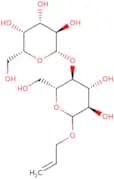
CAS:<p>1-O-Allyl-D-lactose is a fluorinated carbohydrate with the chemical formula C6H12O5. It is an oligosaccharide that can be synthesized in high purity and custom synthesis. 1-O-Allyl-D-lactose is a modified saccharide that has been fluorinated at the 1 position and methylated at the 2 position. It can be used as a substrate for glycosylation or click chemistry reactions.</p>Formula:C15H26O11Purity:Min. 95%Color and Shape:White PowderMolecular weight:382.36 g/molMethyl 3-O-(2-acetamido-2-deoxy-b-D-galactopyranosyl)-a-D-galactopyranoside
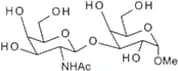
CAS:<p>Methyl 3-O-(2-acetamido-2-deoxy-b-D-galactopyranosyl)-a-D-galactopyranoside is a sugar that is synthesized by the Click modification of 3,4,6-trihydroxybenzoic acid and 2,3,6,7,8-pentahydroxyacetophenone. This sugar is used in glycosylation reactions to modify proteins or peptides.</p>Formula:C15H27NO11Purity:Min. 95%Color and Shape:White PowderMolecular weight:397.38 g/molLactobionate hydrazide
<p>Lactobionate hydrazide is a custom synthesis of an oligosaccharide. It is a complex carbohydrate with CAS No. that has been modified by glycosylation, methylation and fluorination. Lactobionate hydrazide is a polysaccharide which has been synthesized by click chemistry and contains high purity with a sugar content of over 99%. This oligosaccharide is not saccharide-bound and can be modified to produce different chemical structures. Lactobionate hydrazide has been used for glycogen storage disorders, as well as for the synthesis of oligosaccharides for the treatment of cancer cells.</p>Purity:Min. 95%D-Lactal
CAS:<p>D-Lactal is a dibutyltin oxide that is used in the synthesis of n-acetyllactosamine, disaccharides and trisaccharides. D-Lactal has been shown to have high resistance to chloride ion, which is one of the most common reagents for cleavage. It can also be used as a synthetic precursor for other glycoside derivatives by reacting with triflic acid or trisaccharide. Triflic acid and trisaccharide react with chloride to form a stereoselective glycosidic bond. D-Lactal is also able to bind lectins, carbohydrate chemistry and carbohydrate chemistry reagents.</p>Formula:C12H20O9Purity:Min. 95%Color and Shape:White/Off-White SolidMolecular weight:308.28 g/molMaltotriose - Ultrapure
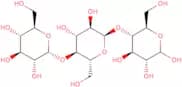
CAS:<p>linear a-(1,4) trisaccharide produced from starch by acid or enzyme hydrolysis</p>Formula:C18H32O16Purity:Min. 95.0 Area-%Color and Shape:PowderMolecular weight:504.44 g/molSucrose palmitate
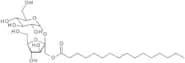
CAS:<p>The ‘tallowate’ esters are probably the best known derivatives of sucrose and many attempts have been made to commercialise them in order to exploit their excellent surfactant functionalities. The most functional products are the mono- and diesters of the tallow acids (stearic, palmitic, oleic) with hydrophile-lipophile balance (HLB) values that lend themselves to surfactant applications in foods and cosmetics. They also have other uses, for example in coating fruits with a semipermeable membrane that acts as a preservative. Manufacturing economics have prevented these products from mass production and they remain in niche applications.</p>Formula:C28H52O12Purity:(%) Min. 90.0%Color and Shape:White PowderMolecular weight:508.72 g/mol