Carbohydrates and glycoconjugates
Carbohydrates are organic compounds composed of carbon, hydrogen, and oxygen, with a basic structure formed by monosaccharides. These can combine to form disaccharides, oligosaccharides, or polysaccharides, depending on the number of monomeric units. Carbohydrates play a fundamental role in energy storage, cell structure, and cellular communication. Their derivatives are used in pharmaceutical products, such as sweeteners and excipients.
At CymitQuimica, we offer a wide range of carbohydrates and their derivatives for research and industrial applications.
Found 5013 products of "Carbohydrates and glycoconjugates"
Sort by
Purity (%)
0
100
|
0
|
50
|
90
|
95
|
100
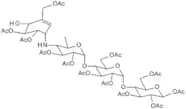
Acarbose tridecaacetate
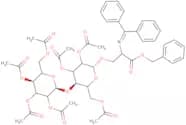
CAS:<p>Acarbose tridecaacetate is a bacterial extract that has been shown to inhibit the growth of various strains of bacteria. This extract was extracted from the fields and contains aluminum oxide impurities. Acarbose tridecaacetate has shown efficacy in seed culture and actinomyces, which are two types of bacteria. The sequence of this extract has been determined using aluminum oxide. Acarbose tridecaacetate is soluble in a variety of solvents, including organic solvents and solvents. It can be purified by chromatography to remove any bulk drug or organic solvent that may be present.</p>Formula:C51H69NO31Purity:Min. 95%Color and Shape:White PowderMolecular weight:1,192.08 g/molN-Diphenylmethylene-O-(2,3,6,2',3',4',6'-hepta-O-acetyl-b-D-lactosyl)-L-serine, benzyl ester
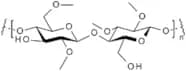
CAS:<p>N-Diphenylmethylene-O-(2,3,6,2',3',4',6'-hepta-O-acetyl-b-D-lactosyl)-L-serine, benzyl ester is a complex carbohydrate that is used for the modification of saccharides. This compound has been synthesized using Click chemistry and NMR spectroscopy. It has a CAS number of 337903-59-0 and is an off white solid with a melting point of 155°C to 158°C.</p>Formula:C49H55NO20Purity:Min. 95%Molecular weight:977.96 g/molMethyl cellulose - viscosity 400 cP
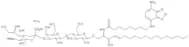
CAS:<p>Cellulose derivative, food thickener and emulsifier, bulk forming laxative</p>Purity:Min. 95%GM3-Ganglioside labelled by NBD ammonium
<p>GM3-ganglioside NBD (ammonium salt) has a core disaccharide structure (Galβ1,4Glc) with sialic acid linked α2,3 to the galactose residue with nitrobenzoxadiazole (NBD) linked β to position 1 on the reducing terminal glucose residue, in place of the ceramide fatty acid (Ledeen, 2009). Ganglioside GM3 is strongly associated with human tumors, such as, lung, brain, and melanomas, where it is frequently found to be overexpressed. GM3 ganglioside is seen as a possible tumor-associated carbohydrate antigen for cancer immunotherapy (Changping, 2019). GM3 ganglioside is implicated in various other diseases involving chronic inflammation, such as: insulin resistance, leptin resistance, T-cell function, and immune disorders (e.g. allergic asthma). It has also been shown to play an essential role in murine and human auditory systems, and is a common pathological feature of GM3S deficiency is deafness (Inokuchi, 2018).</p>Formula:C55H90N6O24·H3NPurity:Min. 95%Color and Shape:PowderMolecular weight:1,236.36 g/mol1,5-a-L-Arabinoheptaose
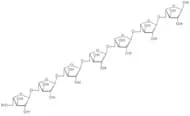
CAS:<p>1,5-a-L-Arabinoheptaose is a sugar that is found in the cell walls of bacteria. The chemical modification of this sugar has been studied extensively. The modification of this sugar with methyl groups and click chemistry has been shown to alter its properties, such as binding affinity and solubility. This modified sugar can be used for glycosylation reactions or custom synthesis. 1,5-a-L-Arabinoheptaose is also available in high purity and with a custom synthesis.</p>Formula:C35H58O29Purity:Min. 95%Color and Shape:PowderMolecular weight:942.82 g/molMethyl 2-acetamido-3-O-(2,3,4,6-tetra-O-acetyl-b-D-galactopyranosyl)-2-deoxy-4,6-O-(4-methoxybenzylidene)-a-D-galactopyranoside
CAS:<p>Methyl 2-acetamido-3-O-(2,3,4,6-tetra-O-acetyl-b-D-galactopyranosyl)-2-deoxy-4,6-O-(4-methoxybenzylidene)-a-D-galactopyranoside is a custom synthesis of an oligosaccharide with a polysaccharide. It is a fluorinated complex carbohydrate that has been modified for high purity. Methyl 2 acetamido 3 O (2,3,4,6 tetra O acetyl b D galactopyranosyl) 2 deoxy 4,6 O (4 methoxybenzylidene) a D galactopyranoside is composed of monosaccharides and sugar.</p>Formula:C31H41NO16Purity:Min. 95%Molecular weight:683.65 g/molBenzyl 3'-sulfo-b-D-lactoside sodium salt
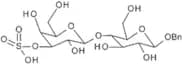
CAS:<p>Synthetic building block for oligosaccharide synthesis</p>Formula:C19H28O14S·xNaPurity:Min. 95%Color and Shape:PowderMolecular weight:512.48 g/molBlood Group A type I linear trisaccharide
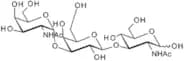
CAS:<p>GalNAca1-3Galb1-3GlcNAc</p>Formula:C22H38N2O16Purity:Min. 95%Molecular weight:586.54 g/mol3'3-a-L-Arabinofuranosyl-xylotetraose
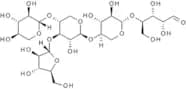
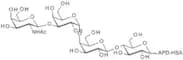
CAS:<p>3'3-a-L-Arabinofuranosyl-xylotetraose is a custom synthesis of an oligosaccharide. It is a polysaccharide that is modified by methylation, glycosylation and carbamoylation. This carbohydrate has been fluorinated at the 3'3 position. The monosaccharide composition of this molecule is erythrose, arabinose and xylose.</p>Formula:C25H42O21Purity:Min. 95 Area-%Color and Shape:White PowderMolecular weight:678.59 g/molGlobo-N-tetraose-APD-HSA
<p>Globo-N-tetraose conjugated to HSA with acetyl-phenylenediamine spacer</p>Purity:Min. 95%4-Methoxyphenyl 4-O-[6-O-(methyl 5-acetamido-4,7,8,9-tetra-O-acetyl-3,5-dideoxy-D-glycero-a-D-galacto-2-nonulopyranosylonate)-2,3-di -O-benzyl-b-D-galactopyranosyl]-2,3,6-tri-O-benzyl-b-D-glucopyranoside
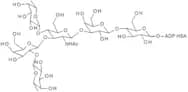
<p>This is a custom synthesis of a polysaccharide.</p>Formula:C74H85NO24Purity:Min. 95%Molecular weight:1,372.46 g/molLacto-N-difucohexaose I-APD-HSA
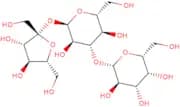
<p>Lacto-N-difucohexaose I-APD-HSA is a custom synthesis of an oligosaccharide with a molecular weight of 5,000 Da. It is modified with fluorine and methyl groups at the C6 and C1 positions. Lacto-N-difucohexaose I-APD-HSA is synthesized by click chemistry and has been shown to be effective in inhibiting the growth of cancer cells. This sugar can be modified by glycosylation or carbohydrate modification.</p>Purity:Min. 95%3-O-b-D-Galactosylsucrose
CAS:<p>3-O-b-D-Galactosylsucrose is a synthetic, fluorinated, high purity, oligosaccharide. It is a complex carbohydrate that contains an O-linked glycosylated monosaccharide. This product has been modified with a click modification. The CAS number for this product is 686717-73-7 and it can be synthesized to order.</p>Formula:C18H32O16Purity:Min. 95%Color and Shape:PowderMolecular weight:504.44 g/molGM1-Lysoganglioside sodium
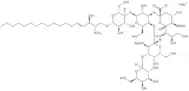
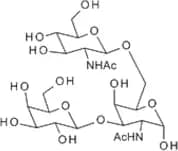
CAS:<p>GM1-Lysoganglioside (sodium salt) has the core tetrasaccharide structure (Galβ1,3GalNAcβ1,4Galβ1,4Glc) with sialic acid linked α2,3 to the inner galactose residue and sphingosine linked β to position 1 on the reducing terminal glucose residue (Ledeen, 2009). GM1 lysoganglioside has been shown that it is capable of binding amyloid-β proteins and can act as a seed for amyloid fibril formation, in early stages of Alzheimerâs disease (Chiricozzi, 2020).</p>Formula:C55H97N3O30·xNaPurity:Min. 95%Color and Shape:White PowderMolecular weight:1,280.36 g/mol2-Acetamido-6-O-(2-acetamido-2-deoxy-b-D-glucopyranosyl)-3-O-(b-D-galactopyranosyl)-2-deoxy-a-D-galactopyranose
CAS:<p>2-Acetamido-6-O-(2-acetamido-2-deoxy-β-D-glucopyranosyl)-3-O-(β-D-galactopyranosyl)-2,6-dideoxy--a,D--galactopyranose is a trisaccharide that is anomeric with n acetylglucosamine and a residue.</p>Formula:C22H38N2O16Purity:Min. 95%Molecular weight:586.54 g/molLewis A tetrasaccharide-BSA
<p>Lewis A tetrasaccharide-BSA is a synthetic oligosaccharide complex carbohydrate. It is a high purity custom synthesis that has been modified with click chemistry, methylation, and fluorination. Lewis A tetrasaccharide-BSA is a glycosylated polysaccharide that has been shown to have antiviral activity against human cytomegalovirus. This product can be used in research as a model for studying the structure of glycoproteins, including their interactions with other molecules in biological systems.</p>Color and Shape:White Powder3-O-Methyl-4-O-(3-O-methyl-a-D-mannopyranosyl)-D-mannopyranose
<p>3-O-Methyl-4-O-(3-O-methyl-a-D-mannopyranosyl)-D-mannopyranose is a synthetic sugar that can be modified to synthesize various oligosaccharides, polysaccharides, and complex carbohydrates. This fluorinated sugar has been modified with methyl groups at the 3' and 4' positions. It can be used for fluoroamination of glycosylation, Click chemistry, or other modifications. 3OM4OM3OM is soluble in water and glycerol, making it ideal for use in biological experiments. The chemical name for this compound is O-(3′,4′-dimethoxytrityl)-β--D--mannopyranosyl) -α--D--mannopyranoside and its CAS Registry Number is 836896-81-1.</p>Purity:Min. 95%a1,3-Mannobiose-BSA
<p>Methylation is the addition of a methyl group to a molecule. The mannobiose-BSA is a methylated derivative of mannobiose, which has been modified by adding BSA. The modification of mannobiose-BSA with BSA facilitates its use in glycosylation reactions and as an intermediate in the synthesis of other complex carbohydrates. Methylation is also used to modify saccharides, polysaccharides, and oligosaccharides. Methyl groups are typically added using an organic chemical called dimethylamine or using an enzymatic reaction with SAM-dependent methyltransferases.</p>Purity:Min. 95%2,3,6,2',3',4',6'-Hepta-O-benzoyl-D-lactose
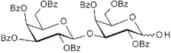
CAS:<p>2,3,6,2',3',4',6'-Hepta-O-benzoyl-D-lactose is a custom synthesis that can be modified in a variety of ways. It has a high degree of fluorination and methylation to provide protection against degradation by enzymes. The monosaccharide units are synthesized and then assembled into oligosaccharides with glycosylations. Modifications can include glycosylation at any position on the molecule as well as the addition of complex carbohydrates.<br>2,3,6,2',3',4',6'-Hepta-O-benzoyl-D-lactose is an example of a polysaccharide consisting of glucose units with other hexoses such as galactose or mannose.</p>Formula:C61H50O18Purity:Min. 95%Molecular weight:1,071.04 g/molLacto-N-fucopentaose II-BSA
<p>Lacto-N-fucopentaose II-BSA is a glycosylation agent that is derived from the natural substrate N-acetylgalactosamine. It is used in the synthesis of complex carbohydrates, such as glycoconjugates and polysaccharides. Lacto-N-fucopentaose II-BSA can be modified with methyl groups or fluorine atoms to generate derivatives, which are useful for studying glycosylation reactions. The CAS number for this product is 46645-96-8. This product is synthesized using custom methods and has been purified to high purity levels.</p>Purity:Min. 95%