Ketones and derivatives
Found 2399 products of "Ketones and derivatives"
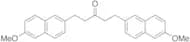
Nabumetone Dimer Impurity
CAS:Controlled ProductImpurity Nabumetone Dimer Impurity
Applications An impurity in a Nabumetone (N200500) drug substance.
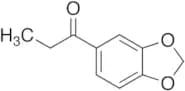
References Friedel, H., et al.: Drugs, 35, 504 (1988), Davies, N., et al.: Clin. Pharmacokinet., 33, 403 (1997),Formula:C27H26O3Color and Shape:NeatMolecular weight:398.493,4-Methylenedioxy Propiophenone
CAS:Controlled ProductApplications Intermediate in the production of Isosafrole and Ethylone.
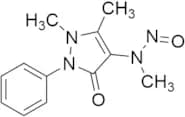
References Katoch-Rouse, R., et al.: J. Med. Chem., 46, 642 (2003), Andrade, E., et al.: Chem. Biodivers., 5, 197 (2008),Formula:C10H10O3Color and Shape:NeatMolecular weight:178.18N-(1,5-Dimethyl-3-oxo-2-phenyl-2,3-dihydro-1H-pyrazol-4-yl)-N-methylnitrous amide
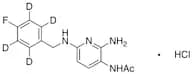
CAS:Controlled ProductFormula:C12H14N4O2Color and Shape:NeatMolecular weight:246.27D 13223-d4 (Flupirtine Metabolite)
CAS:Controlled ProductApplications The major active labelled metabolite of Flupirtine in human plasma. A potassium channel opener
References Niebch, G., et al.: Arzneim.-Forsch., 42, 1343 (1992), Friedel, H., et al.: Drugs, 45, 548 (1993), Fu, I., et al.: J. Pharm. Biomed. Anal., 18, 347 (1998),Formula:C14H12D4ClFN4OColor and Shape:NeatMolecular weight:314.78Acetaminophen-d3
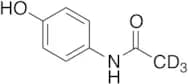
CAS:Controlled ProductApplications Acetaminophen-d3 is deuterium labeled Acetaminophen (A161220), an analgesic and antipyretic agent used as a pain reliever to treat headache, muscle aches, and arthritis (1,2,3).
References (1) McGill, M. R. and Jaeschke, H. Pharm Res. 30, 2174 (2013)(2) Fairbrother, J.E., et al.: Anal. Profiles Drug Subs., 3, 1 (1974) (3) Hinson, J.A., et al.: Rev. Biochem. Toxicol., 2, 103 (1980)Formula:C82H3H6NO2Color and Shape:WhiteMolecular weight:154.183-Methylbenzophenone
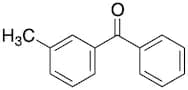
CAS:Applications 3-Methylbenzophenone (cas# 643-65-2) is a useful research chemical.
Formula:C14H12OColor and Shape:NeatMolecular weight:196.2416,17-Dehydro Capsaicin
CAS:Controlled ProductStability Light Sensitive
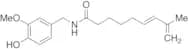
Applications A dehydrogenated metabolite of Capsaicin (C175680).
Not a dangerous good if item is equal to or less than 1g/ml and there is less than 100g/ml in the package
References Glinsukon, T., et al.: Toxicon, 18, 215 (1980), Obach, R., et al.: Drug Metab. Dispos., 29, 1599 (2001), Reilly, C., et al.: Toxicol. Sci., 73, 170 (2003),Formula:C18H25NO3Color and Shape:Off-White To BrownMolecular weight:303.4(+)-N,O-Didesmethyl Tramadol
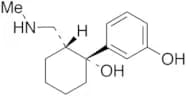
CAS:Controlled ProductApplications An optically active metabolite of Tramadol.
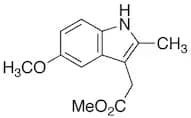
References Garrido, M., et al.: J. Pharmacol. Exp. Ther., 305, 710 (2003), Pedersen, R., et al.: Eur. J. Clin. Pharmacol., 62, 513 (2006),Formula:C14H21NO2Color and Shape:NeatMolecular weight:235.32Methyl 5-Methoxy-2-methylindole-3-acetate
CAS:Controlled ProductApplications Intermediate in the preparation of Indomethacin
References Kalgutkar, A.S., et al.: Bioorg. Med. Chem., 13, 6810 (2005),Formula:C13H15NO3Color and Shape:NeatMolecular weight:233.264-Acetaminophen-d3 Sulfate Potassium Salt
CAS:Controlled ProductApplications 4-Acetaminophen-d3 Sulfate Potassium Salt is a deuterium labeled metabolite of Acetaminophen (A161220) (1,2,3).
References (1) Lloyd, A., et al.: Biochim. Biophys. Acta., 52, 413 (1961)(2) Purohit, A., et al.: J. Steroid Biochem. Mol. Biol., 86, 423 (2003) (3) Winum, J., et al.: J. Med. Chem., 46, 2197 (2003)Formula:C8H5D3KNO5SColor and Shape:NeatMolecular weight:272.335-Benzoyl-2,3-dihydro-1H-pyrrolizine-1-carboxylic acid - Racemic
CAS:5-Benzoyl-2,3-dihydro-1H-pyrrolizine-1-carboxylic acid - Racemic (5BPC) is a drug that is used for the treatment of pain. It has been shown to be safe and effective in treating postoperative pain when given by intravenous infusion or as an oral tablet. 5BPC has minimal toxicity and is metabolized primarily by the liver with a half life of 2.6 hours. The drug has been found to have pharmacokinetic properties that allow it to be used safely in patients with hepatic impairment and in those recovering from abdominal surgery. 5BPC is a prodrug that undergoes biotransformation by esterases into its active form, pyrrolizidine alkaloid (PA). PA acts as a nonsteroidal anti-inflammatory agent and inhibits prostaglandin synthesis, which leads to analgesia. This drug also has minimal drug interactions becauseFormula:C15H13O3NPurity:Min. 95%Molecular weight:255.27 g/molPelubiprofen
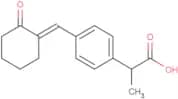
CAS:Pelubiprofen is a non-steroidal anti-inflammatory agent and a COX-2 inhibitor, which effectively reduces PGE(2) production by inhibiting COX activity.Formula:C16H18O3Purity:99.69%Color and Shape:SolidMolecular weight:258.313-Carboxy-a-methyl-benzeneacetic acid
CAS:3-Carboxy-a-methyl-benzeneacetic acid (3CMA) is an impurity in the synthesis of 3,4-methylenedioxyphenylacetone. It is a preservative that has been analysed as a potential source of contamination in pharmaceutical preparations. 3CMA has been shown to be effective at inhibiting the growth of bacteria, yeast and moulds. The analysis time for 3CMA is typically 8 hours or less. The parameters that are used to analyse 3CMA include the use of acetonitrile, optimal porosity and efficiency. The analytical methods used for 3CMA include chromatographic and chromolith methods.
Formula:C10H10O4Purity:Min. 95%Molecular weight:194.18 g/molN-(4-Hydroxyphenyl)propanamide
CAS:The N-(4-hydroxyphenyl)propionamide (HPPA) is a synthetic drug that binds to the human liver. It has been shown to be effective in preventing implantation of fertilized eggs, and can be used as a diagnostic agent for determining the presence of HPPA in human liver tissue. HPPA is also used as a diluent for other drugs. The HPPA binds to chromatographic components and can be detected using electrochemical detection, which allows it to be used as a targetable probe for cancer research. HPPA is also used to study iontophoretic transport of ions across reconstituted membranes in vitro.Formula:C9H11NO2Purity:(%) Min. 97%Molecular weight:165.19 g/molN-(4-Hydroxyphenyl)acetamide sulfate-d3 sodium
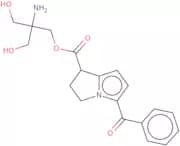
CAS:Controlled ProductPlease enquire for more information about N-(4-Hydroxyphenyl)acetamide sulfate-d3 sodium including the price, delivery time and more detailed product information at the technical inquiry form on this pageFormula:C8H6D3NO5S•NaPurity:Min. 95%Molecular weight:257.24 g/mol(2-Amino-2-(hydroxymethyl)propane-3-ol-1-yl) (5-benzoyl-2,3-dihydro-1H-pyrrolizine-1-carboxylate), racemic
Racemic 2-amino-2-(hydroxymethyl)propane-3-ol-1-yl (5-benzoyl-2,3-dihydro-1H-pyrrolizine-1-carboxylate) is a synthetic drug product. It is used in research and development as an impurity standard. It is also used to synthesize drug products, which are custom synthesis and not commercially available. The racemate is a metabolite of the natural compound "Lysergic acid" and has been studied for its effects on metabolism.Formula:C19H22N2O5Purity:Min. 95%Molecular weight:358.39 g/molNabumetone dimer
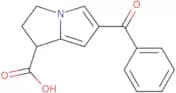
CAS:Nabumetone is a nonsteroidal anti-inflammatory drug that is metabolized by the liver to form a dimer. The major metabolite of nabumetone is the dimer, which has been used as an impurity standard for this drug. Nabumetone has been shown to inhibit prostaglandin synthesis, and its metabolites have been studied for their effects on various enzymes.Formula:C27H26O3Purity:Min. 95%Molecular weight:398.49 g/mol6-Benzoyl-2,3-dihydro-1H-pyrrolizine-1-carboxylic acid, racemic
CAS:6-Benzoyl-2,3-dihydro-1H-pyrrolizine-1-carboxylic acid, racemic is a drug product that is used as an analytical standard in the development of new drugs. It is also used to study the metabolism of drugs. 6BPDC has been shown to inhibit bacterial growth by binding to DNA and RNA, thereby preventing transcription and replication. This metabolite can be synthesized in the laboratory.Formula:C15H13NO3Purity:Min. 95%Molecular weight:255.27 g/molTramadol Related Compound A CIV ((RS,SR)-1-(3-Methoxyphenyl)-2-(dimethylaminomethyl)cyclohexanol hydrochloride)
CAS:Controlled ProductAromatic amino-alcohol-phenols, aromatic amino-acid-phenols and other aromatic amino compounds with oxygen functionFormula:C16H25NO2·HClColor and Shape:White PowderMolecular weight:263.18853