Benzimidazole and Imidazole Derivatives
Benzimidazole is a compound consisting of a benzene ring fused to an imidazole ring, a five-membered structure containing two nitrogen atoms. Benzimidazole derivatives, such as albendazole, are known for their antiparasitic and antifungal activity, used in the treatment of parasitic infections and certain parasitic diseases in animals and humans. Imidazole, on the other hand, is a five-membered structure with two nitrogen atoms found in various biologically active compounds. Imidazole derivatives, such as metronidazole, have antimicrobial and antiparasitic properties. These compounds are also used in the pharmaceutical industry for treating bacterial infections, parasitic diseases, and some fungal infections, as well as in organic chemistry as catalysts.
At CymitQuimica, we offer high-purity benzimidazoles and imidazoles for research in medicinal chemistry, pharmacology, and biotechnology.
Found 10376 products of "Benzimidazole and Imidazole Derivatives"
Sort by
Purity (%)
0
100
|
0
|
50
|
90
|
95
|
100
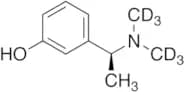
N-Desethyl N-Methyl Rivastigmine
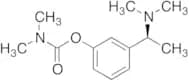
CAS:Controlled Product<p>Impurity Rivastigmine EP Impurity B<br>Applications N-Desethyl N-Methyl Rivastigmine (Rivastigmine EP Impurity B) is an impurity of Rivastigmine (R541000), a brain selective acetylcholinesterase inhibitor. Nootropic.<br>References Rosler, M., et al.: Brit. Med. J., 318, 633 (1999), Enz, A., et al.: Prog. Brain Res., 98, 431 (1993),<br></p>Formula:C13H20N2O2Color and Shape:NeatMolecular weight:236.3210-Acetyloxy Oxcarbazepine
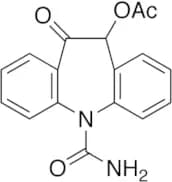
CAS:Controlled Product<p>Applications An intermediate in the preparation of Carbamazepine metabolites.<br>References Heckendorn, R., et al.: Helv. Chimica Acta, 70, 1955 (1987),<br></p>Formula:C17H14N2O4Color and Shape:NeatMolecular weight:310.30N-Carbamoyl Carbamazepine
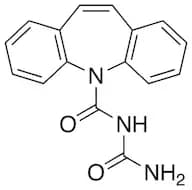
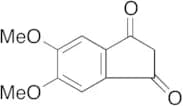
CAS:Controlled Product<p>Impurity Carbamazepine EP Impurity C<br>Applications Carbamazepine (C175840) impurity.<br></p>Formula:C16H13N3O2Color and Shape:NeatMolecular weight:279.295,6-Dimethoxyindane-1,3-dione
CAS:Controlled ProductFormula:C11H10O4Color and Shape:NeatMolecular weight:206.192-(Chloromethyl)-3,5-dimethylpyridine Hydrochloride
CAS:Controlled Product<p>Applications Intermediate in the preparation of Omeprazole metabolites<br></p>Formula:C8H10ClN·ClHColor and Shape:NeatMolecular weight:192.094-{[4-(4-Methyloxyphenyl)-piperazin-1-yl]-phenyl}-2,4-dihydro-[1,2,4]-triazol-3-one
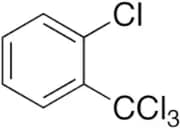
CAS:Controlled Product<p>Applications 4-{[4-(4-Methyloxyphenyl)-piperazin-1-yl]-phenyl}-2,4-dihydro-[1,2,4]-triazol-3-one, is an intermediate for the synthesis of Itraconazole (I937500), an Antifungal.<br></p>Formula:C19H21N5O2Color and Shape:NeatMolecular weight:351.402-Chlorobenzotrichloride
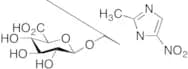
CAS:Controlled Product<p>Applications 2-Chlorobenzotrichloride is a chlorinated toluene with mutagenicity.<br>References Mineki, S. et al.: Mat. technol., 23, 413 (2005); Matsushita, H. et al.: Indust. Health., 17, 199 (1979);<br></p>Formula:C7H4Cl4Color and Shape:NeatMolecular weight:229.92Metronidazole β-D-Glucuronide
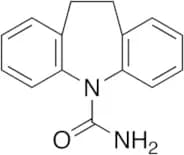
CAS:Controlled Product<p>Stability Hygroscopic<br>Applications A metabolite of Metronidazole.<br>References Kokwaro, G.O., et al.: Biochem. Pharmacol., 45, 1243 (1993), Sidelmann, U.G. , et al.: Xenobiotica, 26, 709 (1996),<br></p>Formula:C12H17N3O9Color and Shape:NeatMolecular weight:347.2810,11-Dihydro Carbamazepine
CAS:Controlled ProductFormula:C15H14N2OColor and Shape:WhiteMolecular weight:238.281-(1H-Benzo[d]imidazol-2-yl)-3-methyl-4-oxo-1,4-dihydropyridine-2-carboxylic acid Sodium Salt
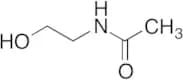
CAS:<p>Applications 1-(1H-Benzo[d]imidazol-2-yl)-3-methyl-4-oxo-1,4-dihydropyridine-2-carboxylic acid is an impurity of Rabeprazole. It is also a degradation product formed in stressed tablets of Rabeprazole sodium.<br>References Kommanaboyina, B., et al.: Drug Dev. Ind. Pharm., 25, 857 (1999); Carswel, C., et al.: Drugs, 61, 2327 (2001); Garcia, C., et al.: J. Pharm. Biomed. Anal., 46, 88 (2008)<br></p>Formula:C14H10N3NaO3Color and Shape:NeatMolecular weight:291.24N-Acetylethanolamine
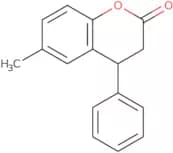
CAS:<p>Applications N-Acetylethanolamine can be used as an antistatic agent, foam boosting agent, hair conditioning humectant, skin conditioning surfactant and viscosity controlling agent in cosmetics industry. It is a non-tacky glycerine alternative for use in skin and hair care.<br>References Hough, L., et al.: J. Chem. Soc., 7923994-3997 (1957); Auzanneau, F-I, et al.: J. Chem. Soc., 10, 2831-2834 (1990);<br></p>Formula:C4H9NO2Purity:~90%Color and Shape:NeatMolecular weight:103.126-Methyl-4-phenyl-3,4-dihydro-1-benzopyran-2-one
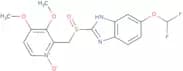
CAS:<p>6-Methyl-4-phenyl-3,4-dihydro-1-benzopyran-2-one is an analog of the natural product zearalenone, which can be used as an acid catalyst for the synthesis of various pharmaceuticals. It has a linear range and is structurally similar to a number of other analogs. The chloride ion is involved in the optimization of the extraction parameters and can be replaced by other c1-4 alkyl groups. 6-Methyl-4-phenyl-3,4-dihydro-1 -benzopyran 2 one is typically prepared using a preparative high performance liquid chromatography technique that involves dehydration.</p>Formula:C16H14O2Purity:Min. 95%Molecular weight:238.28 g/molPantoprazole N-oxide
CAS:<p>Pantoprazole is a proton pump inhibitor that inhibits the gastric acid secretion by blocking the hydrogen/potassium ATPase enzyme in the stomach. Pantoprazole N-oxide, a prodrug of pantoprazole, is converted to pantoprazole after administration and has been shown to be more stable than pantoprazole. It has been shown to have tissue-specific effects, with high concentrations found in gastrointestinal tissues such as the abomasum, ileum, and colon. Pantoprazole N-oxide is also found in plasma samples at low levels. This drug may be useful for ulceration because it prevents heartburn caused by excess stomach acid.</p>Formula:C16H15F2N3O5SPurity:Min. 95%Color and Shape:PowderMolecular weight:399.37 g/molLansoprazole impurity H
CAS:<p>Lansoprazole impurity H is a metabolite of lansoprazole, a proton pump inhibitor that inhibits the production of stomach acid. Lansoprazole impurity H is used in research and development as an analytical standard to measure lansoprazole concentrations in drug products. It is also used as an impurity standard for pharmacopoeia purposes. Lansoprazole impurity H is not known to be toxic, but it has not been evaluated for carcinogenicity or reproductive toxicity.</p>Formula:C23H16F3N5OSPurity:90%MinMolecular weight:467.47 g/mol2-Methoxy-5-methyl-γ-phenylbenzenepropanol
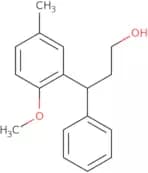
CAS:<p>2-Methoxy-5-methyl-gamma-phenylbenzenepropanol is a synthetic compound that is used as an intermediate in the synthesis of coumarin derivatives. Reaction with sulfonating agents produces sulfones, and reaction with borohydride reagents produces boronates. The synthesis of 2-methoxy-5-methyl-gamma-phenylbenzenepropanol can be accomplished by the reduction of diphenyl ethers with lithium aluminum hydride or borohydride. The reduction can also be carried out using lanthanum oxide and potassium borohydride. The reaction proceeds smoothly at room temperature in nonpolar solvents.<br>2-Methoxy-5-methyl-gamma-phenylbenzenepropanol reacts with chloride to produce the corresponding chlorides, which are useful intermediates for the synthesis of tolterodine tartrate, a drug used to treat urinary inc</p>Formula:C17H20O2Purity:Min. 95%Molecular weight:256.34 g/molSolifenacin Impurity D
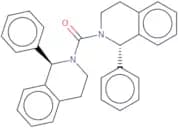
CAS:<p>Solifenacin Impurity D is a synthetic impurity of solifenacin. Solifenacin is an anti-cholinergic drug used to treat overactive bladder and urinary incontinence. The purity of this product is 99%. It is soluble in methanol, ethanol, chloroform, and acetone. Solifenacin Impurity D can be used as a reference material for analytical purposes or as an impurity standard in the development of new drugs.</p>Formula:C31H28N2OPurity:Min. 96 Area-%Color and Shape:White PowderMolecular weight:444.57 g/molPantoprazole sulfone N-oxide
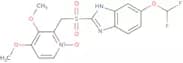
CAS:<p>Pantoprazole sulfone N-oxide is a prodrug that is converted to the active form pantoprazole in the stomach where it inhibits gastric acid secretion. Pantoprazole sulfone N-oxide has been shown to be genotoxic, and can cause polyvinyl chloride to degrade when stored together. Reconstituted solution of this drug should be used within 24 hours after reconstitution, as the chemical stability of this drug decreases rapidly. Validation studies have been conducted on different analytical methods for determining pantoprazole concentrations in reconstituted solutions, and these methods have been harmonized with those published by the United States Pharmacopeia (USP). The pump inhibitor activity of pantoprazole sulfone N-oxide has been demonstrated in dogs, and it is also useful for treating acid reflux disease in humans. Pantoprazole sulfone N-oxide is unstable at high temperatures (>25°C), so should not be refrigerated or</p>Formula:C16H15F2N3O6SPurity:Min. 95%Molecular weight:415.37 g/molSolifenacin impurity C
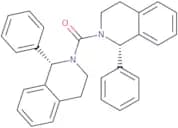
CAS:<p>Solifenacin impurity C is an impurity that is found in the drug product Solifenacin. It has been shown to be a natural metabolite and has been detected in human urine. Solifenacin impurity C is used as an analytical standard for HPLC analyses of solifenacin, and can also be used as a reference material for pharmacopoeia. The purity of this compound is 99%.</p>Formula:C31H28N2OPurity:Min. 95 Area-%Color and Shape:White PowderMolecular weight:444.57 g/mol2-Methoxy-5-methyL-N,N-bis(1-methyLethyL)-γ-phenyLbenzenepropanamine fumarate
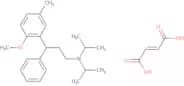
CAS:<p>2-Methoxy-5-methyL-N,N-bis(1-methyLethyl)-gamma-phenyLbenzenepropanamine fumarate (DMXBPC) is an analgesic that has been shown to be a potent inhibitor of the cytosolic phospholipase A2 and is also cytotoxic. DMXBPC has significant cholinergic activity and can inhibit the synthesis of prostaglandins in the prostate gland. DMXBPC binds to the pyridine ring of DOPA and inhibits its conversion to dopamine. The enantiomers of DMXBPC have different effects on inhibition of phospholipase A2, with the (+) form being more potent than the (-) form. This is due to the fact that (+)DMXBPC binds more tightly to the enzyme than (-)DMXBPC does.</p>Formula:C23H33NOPurity:Min. 95%Molecular weight:339.51 g/mol


![4-{[4-(4-Methyloxyphenyl)-piperazin-1-yl]-phenyl}-2,4-dihydro-[1,2,4]-triazol-3-one](/_next/image/?url=https%3A%2Fstatic.cymitquimica.com%2Fproducts%2FTR%2Fthumb-webp%2FM266245.webp&w=3840&q=75)
![1-(1H-Benzo[d]imidazol-2-yl)-3-methyl-4-oxo-1,4-dihydropyridine-2-carboxylic acid Sodium Salt](/_next/image/?url=https%3A%2Fstatic.cymitquimica.com%2Fproducts%2FTR%2Fthumb-webp%2FB203965.webp&w=3840&q=75)