


Benzimidazole and Imidazole Derivatives
Benzimidazole is a compound consisting of a benzene ring fused to an imidazole ring, a five-membered structure containing two nitrogen atoms. Benzimidazole derivatives, such as albendazole, are known for their antiparasitic and antifungal activity, used in the treatment of parasitic infections and certain parasitic diseases in animals and humans. Imidazole, on the other hand, is a five-membered structure with two nitrogen atoms found in various biologically active compounds. Imidazole derivatives, such as metronidazole, have antimicrobial and antiparasitic properties. These compounds are also used in the pharmaceutical industry for treating bacterial infections, parasitic diseases, and some fungal infections, as well as in organic chemistry as catalysts.
At CymitQuimica, we offer high-purity benzimidazoles and imidazoles for research in medicinal chemistry, pharmacology, and biotechnology.
Found 10376 products of "Benzimidazole and Imidazole Derivatives"
Sort by
Purity (%)
0
100
|
0
|
50
|
90
|
95
|
100
Methyl 5-((4-bromo-2-fluorophenyl)amino)-4-fluoro-1-methyl-1H-benzo[d]imidazole-6-carboxylate
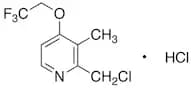
Purity:95%Molecular weight:396.19198608398442-Chloromethyl-3-methyl-4-(2,2,2-trifluoroethoxy)pyridine, Hydrochloride
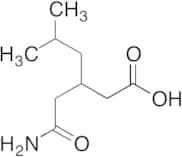
CAS:Controlled ProductFormula:C9H9ClF3NO·ClHColor and Shape:NeatMolecular weight:276.083-(2-Amino-2-oxoethyl)-5-methylhexanoic Acid
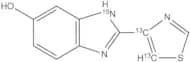
CAS:Formula:C9H17NO3Color and Shape:NeatMolecular weight:187.245-Hydroxy Thiabendazole-13C2,15N
CAS:Controlled Product<p>Applications Labelled 5-Hydroxy Thiabendazole (H961200). 5-Hydroxy Thiabendazole is the major metabolite of Thiabendazole (T344150).<br> Not a dangerous good if item is equal to or less than 1g/ml and there is less than 100g/ml in the package<br>References Fujitani, T., et al.: Food Chem. Toxicol., 29, 265 (1991), Mizutani, T., et al.: Chem. Res. Toxicol., 6, 174 (1993), Dalvie, D., et al.: J. Agric. Food Chem., 42, 2964 (2006),<br></p>Formula:C813C2H7N215NOSColor and Shape:NeatMolecular weight:220.23Methyl 5-Hydroxy-2-benzimidazolecarbamate
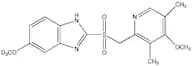
CAS:Formula:C9H9N3O3Color and Shape:NeatMolecular weight:207.19Omeprazole-d3 Sulfone
CAS:Controlled ProductFormula:C17H16D3N3O4SColor and Shape:NeatMolecular weight:364.43N-[3-Methyl-4-(2,2,2-trifluoroethoxy)-2-pyridinyl]methyl Lansoprazole
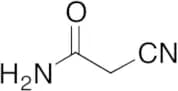
CAS:Controlled Product<p>Applications Lansoprazole (L175000) impurity.<br>References Wallmark, B., et al.: J. Gastroenterol., 20, 37 (1985), Barradell, L., et al.: Drugs, 44, 225 (1992), Reddy, K., et al.: Pharmazie, 65, 994 (2006),<br></p>Formula:C25H22F6N4O3SColor and Shape:Beige To Light BrownMolecular weight:572.52Cyanoacetamide
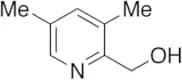
CAS:<p>Applications Cyanoacetamide has been used in photometric and fluorimetric postcolumn labeling.<br>References Honda S., et. al.: Anal. biochem., 134, 483(1983)<br></p>Formula:C3H4N2OColor and Shape:NeatMolecular weight:84.07673,5-Dimethyl-2-pyridinemethanol
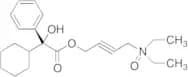
CAS:Controlled Product<p>Applications Intermediate in the preparation of Omeprazole metabolites<br></p>Formula:C8H11NOColor and Shape:Colourless To BrownMolecular weight:137.179Oxybutynin N-Oxide 90%
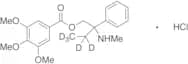
CAS:Controlled Product<p>Applications A metabolite of Oxybutynin.<br>References Hughes, K., et al.: Xenobiotica, 22, 859 (1992), Oki, T., et al.: Biol. Pharm. Bull., 24, 491 (2001), Fetscher, C., et al.: Br. J. Pharmacol., 136, 64 (2002), Zobrist, R., et al.: Pharm. Res., 20, 103 (2003)<br></p>Formula:C22H31NO4Purity:90%Color and Shape:NeatMolecular weight:373.49N-Demethyl Trimebutine-d5 Hydrochloride
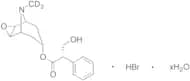
CAS:Controlled Product<p>Applications The main bioactive labelled metabolite of Trimebutine.<br>References Miura, Y., et al.: Drug Metab. Dispos., 17, 455 (1989), Xue, L., et al.: Eur. J. Pharmacol., 294, 75 (1995), Roman, F., et al.: J. Pharmacol. Exp. Ther., 289, 1391 (1999), Kayser, V., et al.: Life Sci., 66, 433 (2000),<br></p>Formula:C21H22D5NO5·HClColor and Shape:NeatMolecular weight:414.93Scopolamine-d3 Hydrobromide Hydrate
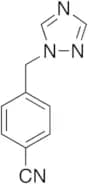
CAS:Controlled Product<p>Stability Hygroscopic<br>Applications An acetylcholine antagonist. Used in treatment of motion sickness; antiemetic; antispasmodic; mydriatic; preanesthetic medicant.<br> Not a dangerous good if item is equal to or less than 1g/ml and there is less than 100g/ml in the package<br>References Brand, J.J., et al.: Lancet, 2, 232 (1970), Bowles, J.B., et al.: Anaesthesia, 34, 476 (1979), Clissold, S.P., et al.: Drugs, 29, 189 (1985), Muhtadi, F.J., et al.: Anal. Profiles Drug Subs., 19, 477 (1990),<br></p>Formula:C17H18D3NO4·BrH·xH2OColor and Shape:NeatMolecular weight:387.284-(1H-1,2,4-Triazol-1-ylmethyl)benzonitrile
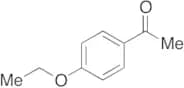
CAS:Controlled ProductFormula:C10H8N4Color and Shape:WhiteMolecular weight:184.204'-Ethoxyacetophenone
CAS:<p>Applications 4'-Ethoxyacetophenone, is an acetophenone derivative that can be used as an antibacterial agent. It is a reagent for plymerization. It can also be used as a flavoring agent in fabricating cigarettes with flavored filter tips.<br>References Sivakumar, P., et al.: Chem. Bio. Drug Design, 72, 303 (2008); Mathis, D. E., Beitraege zur Tabakforschung Int., 12, 1 (1983);<br></p>Formula:C10H12O2Color and Shape:White To Off-WhiteMolecular weight:164.20Rufinamide
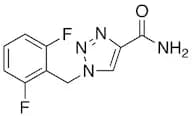
CAS:<p>Applications Antiepileptic triazole derivative which decreases firing by neurons at sodium channels. Anticonvulsant. Neuroprotective & Neuroresearch Product.<br>References Cheung, W.K., et al.: Pharm. Res., 12, 1878 (1995), Cardot, J.-M., et al.: Biopharm. Drug Dispos., 19, 259 (1998), Palhagen, S., et al.: Epilepsy Res., 43, 115 (2001),<br></p>Formula:C10H8F2N4OColor and Shape:White To Off-WhiteMolecular weight:238.19Atropine Sulfate Monohydrate
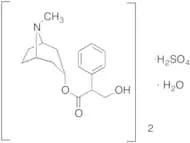
CAS:Controlled Product<p>Applications Mydriatic; antispasmodic; used in preanesthetic medication.<br> Not a dangerous good if item is equal to or less than 1g/ml and there is less than 100g/ml in the package<br>References Brown, R.V., et al.: Br. J. Pharmacol., 15, 170 (1960), Shutt, L.E., et al.: Anaesthesia, 34, 476 (1979), Hinderling, P.H., et al.: J. Pharm. Sci., 74, 703 (1985),<br></p>Formula:C17H23NO3·H2O·H2O4SColor and Shape:White To Light YellowMolecular weight:694.834-Descarboxamido Rufinamide 4-Methyl Ester
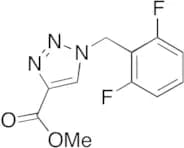
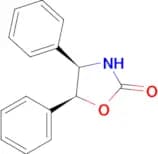
CAS:Controlled Product<p>Applications 4-Descarboxamido Rufinamide 4-Methyl Ester is an impurity in the synthesis of Rufinamide (R701550), an antiepileptic triazole derivative which decreases firing by neurons at sodium channels. Anticonvulsant.<br>References Cheung, W.K., et al.: Pharm. Res., 12, 1878 (1995), Cardot, J.-M., et al.: Biopharm. Drug Dispos., 19, 259 (1998), Palhagen, S., et al.: Epilepsy Res., 43, 115 (2001),<br></p>Formula:C11H9F2N3O2Color and Shape:NeatMolecular weight:253.20(4R,5S)-cis-4,5-Diphenyloxazolidin-2-one
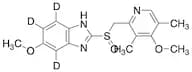
CAS:Purity:95.0%Color and Shape:SolidMolecular weight:239.2740020751953Omeprazole-d3 (benzimidazole-4,6,7-d3)
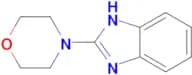
CAS:Controlled Product<p>Applications Omeprazole-d3 (benzimidazole-4,6,7-d3) (CAS# 934293-92-2) is a useful isotopically labeled research compound.<br></p>Formula:C17H16D3N3O3SColor and Shape:Light BrownMolecular weight:348.442-(4-Morpholinyl)-1H-benzimidazole
CAS:Purity:95.0%Color and Shape:Solid, White powderMolecular weight:203.24499511718751-isopropyl-2-(pyrrolidin-2-yl)-1H-benzo[d]imidazole dihydrochloride
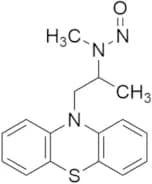
CAS:Purity:95.0%Molecular weight:302.239990234375N-Desmethyl,-N-nitroso-promethazine
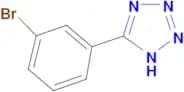
CAS:Controlled ProductFormula:C16H17N3OSColor and Shape:NeatMolecular weight:299.395-(3-BROMOPHENYL)-1H-TETRAZOLE
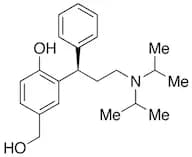
CAS:Formula:C7H5BrN4Purity:98%Color and Shape:SolidMolecular weight:225.049(R)-5-Hydroxymethyl Tolterodine
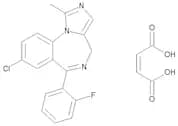
CAS:Controlled Product<p>Applications A metabolite of Tolterodine (T535800), a muscarinic receptor antagonist used in the treatment of urinary incontinence.<br>References Palmer, L., et al.: J. Pharm. Biomed. Anal., 16, 155 (1997), Hills, C., et al.: Drugs, 55, 813 (1998), Wefer, J., et al.: World J. Urol., 19, 312 (2001),<br></p>Formula:C22H31NO2Color and Shape:NeatMolecular weight:341.49Midazolam Maleate
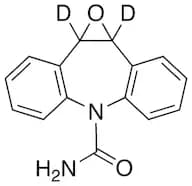
CAS:Controlled ProductFormula:C18H13ClFN3·C4H4O4Color and Shape:White To Off-WhiteMolecular weight:441.84Carbamazepine 10,11-Epoxide-d2 (Major)
CAS:Controlled Product<p>Applications A labelled metabolite of Carbamazepine (C175840).<br>References Bellucci, G., et al.: J. Med. Chem., 30, 768 (1987), Johannessen, S., et al.: Ther. Drug. Monit., 27, 710 (2005), Bialer, M., et al.: Expert Opin. Invest. Drugs, 15, 637 (2006), Williams, J., et al.: J. Clin. Pharmacol., 46, 258 (2006),<br></p>Formula:C15H10D2N2O2Color and Shape:NeatMolecular weight:254.28rac 5-Hydroxymethyl Tolterodine-d14
CAS:Controlled ProductFormula:C22H17D14NO2Purity:90%Color and Shape:NeatMolecular weight:355.572-Chlorobenzophenone
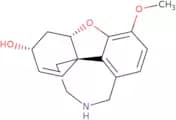
CAS:<p>Impurity Clotrimazole EP Impurity E<br>Applications 2-Chlorobenzophenone (Clotrimazole EP Impurity E) is a metabolite of Clofedanol (C586920). Chlorobenzophenone is also used as a catalyst in the photocrosslinking of polyethylenes.<br>References Qu, B. et al.: J. Appl. Polym. Sci., 48, 701 (1993); Eckhardt, G. et al.: J. Clin. Chem. Clin. Biochem., 15, 687 (1977);<br></p>Formula:C13H9ClOColor and Shape:NeatMolecular weight:216.66N-Desmethyl galanthamine
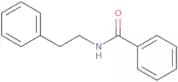
CAS:Controlled Product<p>N-Desmethyl galanthamine is a plant alkaloid that is found in the Huperzia serrata plant. It has been shown to have cholinergic activity and calcium binding properties. N-Desmethyl galanthamine inhibits acetylcholinesterase, an enzyme responsible for the breakdown of acetylcholine, which is a neurotransmitter. This inhibition leads to increased levels of acetylcholine, which results in increased neuron stimulation and improved memory function. N-Desmethyl galanthamine also binds to β2 nicotinic receptor sites and blocks the binding of nicotine, leading to decreased nicotine dependence.</p>Formula:C16H19NO3Purity:Min. 95%Molecular weight:273.33 g/molN-(2-Phenethyl)benzamide
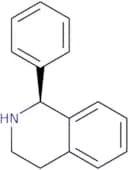
CAS:<p>N-(2-Phenethyl)benzamide (NPEB) is a molecule that belongs to the group of reactive molecules. It has been shown to be toxic to gram-positive bacteria, such as Staphylococcus aureus and Bacillus subtilis, but not gram-negative bacteria such as Escherichia coli. NPEB also has been shown to have locomotor activity in animals, which may be due to its ability to inhibit the mitochondrial electron transport chain and inhibit ATP production. NPEB's biological properties are well characterized. FTIR spectroscopy showed that this molecule has an amide functional group and is a small molecule with a molecular weight of 176.4 g/mol. This molecule was also found to be able to bind to mitochondria in animals.</p>Formula:C15H15NOPurity:Min. 97 Area-%Color and Shape:PowderMolecular weight:225.29 g/mol(1S)-1-Phenyl-1,2,3,4-tetrahydroisoquinoline
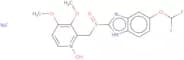
CAS:<p>(1S)-1-Phenyl-1,2,3,4-tetrahydroisoquinoline is a drug used to treat depression. It is an antidepressant drug that inhibits the reuptake of serotonin and norepinephrine in the brain by blocking their transport into the nerve cells. The drug acts as a weak inhibitor of monoamine oxidase (MAO). It also has an effect on bladder function. This compound is synthesized from 1-phenyl-2,5-dihydrothiazole by way of a sequence of reactions that includes the formation of an amine salt via reaction with phosphorus pentoxide and chloroacetic acid followed by conversion to the chloride with thionyl chloride.</p>Formula:C15H15NPurity:Min. 95%Color and Shape:White PowderMolecular weight:209.29 g/molPantoprazole N-oxide sodium
CAS:<p>Pantoprazole N-oxide sodium is a custom synthesis drug product that is being developed as an impurity standard in the synthesis of Pantoprazole. The compound is also used as a pharmacopoeia analytical standard and a HPLC standard.</p>Formula:C16H15F2N3O5S·NaPurity:Min. 95%Color and Shape:PowderMolecular weight:422.36 g/molOmeprazole impurity F and G
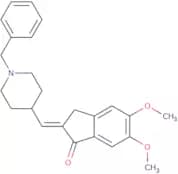
CAS:<p>Omeprazole is a proton pump inhibitor that inhibits the H+/K+-ATPase enzyme in gastric parietal cells. Omeprazole impurity F and G are metabolites of omeprazole. Omeprazole impurity F is a metabolite of omeprazole that forms by oxidation of the methylthio group in omeprazole to form a sulfoxide. Omeprazole impurity G is formed by hydrolysis of the methylthio group in omeprazole to form an alcohol. The purity of this product is high and can be custom synthesized based on customer's needs. It is also available as an HPLC standard or as an API impurity for use in metabolism studies.</p>Formula:C16H13N3O2SPurity:Min. 95%Color and Shape:Red PowderMolecular weight:311.36 g/mol1-Benzyl-4-(5,6-dimethoxy-1-oxoindan-2-ylidene)methylpiperidine
CAS:<p>1-Benzyl-4-(5,6-dimethoxy-1-oxoindan-2-ylidene)methylpiperidine is an analytical standard and a drug product. It is a synthetic compound that has been shown to have pharmacological effects similar to those of the analgesic or opioid drugs. 1-Benzyl-4-(5,6-dimethoxy-1-oxoindan-2-ylidene)methylpiperidine can be used as an impurity standard for HPLC analyses as well as metabolic studies. This compound is also known to have potential interactions with other drugs.</p>Formula:C24H27NO3Purity:Min. 98 Area-%Color and Shape:PowderMolecular weight:377.48 g/mol(1R,3S,5S)-8-Methyl-8-azabicyclo[3.2.1]oct-6-en-3-yl-2'-hydroxy-2',2'-di(thiophen-2''-yl)acetate
CAS:<p>Tanshinone IIA is an enantioselective hydroxamic acid that inhibits matrix metalloproteinase. It is a structural analogue of the hydroxamic acid Tanshinone I and has been shown to inhibit aggrecanase, which is an enzyme that hydrolyzes the glycosaminoglycan aggrecan. It also has anti-cancer effects due to its inhibition of cell proliferation in cancer cells. Tanshinone IIA can be used as a chiral synthon for polymerase chain reactions (PCR) because it contains a stereogenic centre in its structure.</p>Formula:C18H19NO3S2Purity:Min. 95%Color and Shape:PowderMolecular weight:361.48 g/molRabeprazole Impurity 2
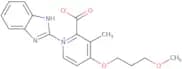
CAS:<p>Rabeprazole Impurity 2 is a research and development impurity standard that is used for qualitative analysis. It can be custom synthesized to meet specific needs, and it can also be used in drug product synthesis. Rabeprazole Impurity 2 is a high purity synthetic compound that has been pharmacopoeia-qualified. It can also be used as a metabolite or analytical standard, and it has been studied for its metabolism studies with HPLC-MS. Rabeprazole Impurity 2 has CAS No. 1807988-36-8.</p>Formula:C18H19N3O4Purity:Min. 95%Molecular weight:341.36 g/mol2-[[[(4-Methoxypropoxy)-3-methyl-2-pyridinyl]methyl]sulfonyl]-1H-benzimidazole
CAS:<p>2-[[[(4-Methoxypropoxy)-3-methyl-2-pyridinyl]methyl]sulfonyl]-1H-benzimidazole is a protonated sulfonamide that is used as an analytical method to detect the presence of other drugs in human liver tissue. It has been shown to inhibit the activity of cytochrome P450 3A4 (CYP3A4), one of the enzymes responsible for metabolizing many drugs. Bromoenol lactone and powder diffraction spectrum are two additional analytical methods that can be used to detect 2-[([(4-methoxypropoxy)-3-methyl-2-pyridinyl]methyl]sulfonyl]-1H-benzimidazole.</p>Formula:C18H21N3O4SPurity:Min. 95%Color and Shape:White/Off-White SolidMolecular weight:375.44 g/mol2-[[[4-(3-Methoxypropoxy)-3-methyl-2-pyridinyl]methyl]thio]-1H-benzimidazole
CAS:<p>Rabeprazole is a proton pump inhibitor that is used to treat acid-related disorders such as gastroesophageal reflux disease and peptic ulcers. Rabeprazole inhibits the production of gastric acid by blocking the hydrogen/potassium ATPase that is found in the parietal cells of the stomach. The main mechanism of action for rabeprazole is competitive inhibition of the proton pump, which leads to decreased gastric acid secretion. Rabeprazole can be administered orally or intravenously, with a half-life of about 2 hours. It has been shown to have an effect on human liver cytochrome P450s, but does not affect the activity of recombinant cytochrome P450 3A4 (CYP3A4). In clinical studies, rabeprazole was shown to have no adverse effects on CYP3A4 activity and may even increase it slightly.</p>Formula:C18H21N3O2SPurity:Min. 95%Color and Shape:White PowderMolecular weight:343.44 g/molPantoprazole sulfide N-oxide
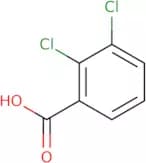
CAS:<p>Pantoprazole sulfide N-oxide is a metabolite of pantoprazole, which is a proton pump inhibitor used to reduce stomach acid production. Pantoprazole sulfide N-oxide is an impurity in pantoprazole that can be detected by HPLC. It has been shown to have about the same biological activity as pantoprazole when given orally.</p>Formula:C16H15F2N3O4SPurity:Min. 95%Color and Shape:Off-White To Yellow SolidMolecular weight:383.37 g/mol2,3-Dichlorobenzoic acid
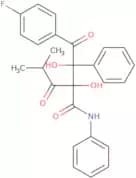
CAS:<p>2,3-Dichlorobenzoic acid is an organic compound that belongs to the class of carboxylates. It is used as a drug substance in the treatment of mycobacterial infections. 2,3-Dichlorobenzoic acid has been shown to have antimicrobial activity against Mycobacterium tuberculosis and other mycobacteria. The sensitivity index for this compound was determined using a chromatographic method with human erythrocytes as the test organism. 2,3-Dichlorobenzoic acid displays its antibacterial activity by inhibiting protein synthesis and cell division. This drug also forms crystalline solids that are soluble in organic solvents such as chloroform or benzene.</p>Formula:C7H4Cl2O2Purity:Min. 95%Color and Shape:PowderMolecular weight:191.01 g/molDihydroxy diketo atorvastatin impurity
CAS:<p>Dihydroxy diketo atorvastatin impurity is a synthetic impurity that is generated by the metabolism of atorvastatin. This drug product is an analytical standard for the determination of purity, and can also be used to develop high purity drugs.</p>Formula:C26H24FNO5Purity:Min. 95%Molecular weight:449.47 g/mol5-Methoxy-2-[[(4-Chloro-3,5-dimethyl-2-pyridinyl)methyl]sulfinyl]-5-methoxy-1H-benzimidazole
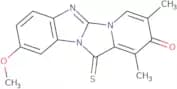
CAS:<p>5-Methoxy-2-[(4-chloro-3,5-dimethyl-2-pyridinyl)methyl]sulfinyl]-5-methoxy-1H benzimidazole is a synthetic drug product. It has been used as a positive control in metabolism studies and as an impurity standard. 5-Methoxy 2-[(4-chloro 3,5 dimethyl 2 pyridinyl)methyl]sulfinyl]-5 methoxy 1H benzimidazole is also a metabolite of the active pharmaceutical ingredient (API) which is used to develop drugs. This chemical is synthesized by custom synthesis and can be obtained at high purity levels. The metabolite of this compound is 5 methoxy 2-[(4 chloro 3,5 dimethyl 2 pyridinyl)methyl]sulfonyl]-5 methoxy 1H benzimidazole.</p>Formula:C16H16ClN3O2SPurity:Min. 95%Color and Shape:PowderMolecular weight:349.84 g/mol2-[[[3-Methyl-4-(methylthio)-2-pyridinyl]methyl]sulfinyl]-1H-benzimidazole
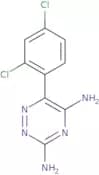
CAS:<p>2-[[[3-Methyl-4-(methylthio)-2-pyridinyl]methyl]sulfinyl]-1H-benzimidazole is a synthetic, nonsteroidal anti-inflammatory drug. It is soluble in methanol and ethanol, not soluble in water. The impurity standard of 2-[[[3-Methyl-4-(methylthio)-2-pyridinyl]methyl]sulfinyl]-1H-benzimidazole is 3-[2-[(3,4,5-trimethoxyphenyl)amino]-1H-benzimidazolium methyl sulfate].</p>Formula:C15H15N3OS2Purity:Min. 95%Molecular weight:317.43 g/mol6-(2,4-Dichlorophenyl)-1,2,4-triazine-3,5-diamine
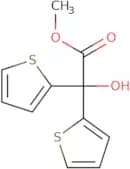
CAS:<p>6-(2,4-Dichlorophenyl)-1,2,4-triazine-3,5-diamine is a metabolite that can be found in the urine and blood of humans. It has been shown to have cytotoxic effects on human lymphocytes and erythrocytes. 6-(2,4-Dichlorophenyl)-1,2,4-triazine-3,5-diamine is used as an impurity standard for HPLC analysis and as a reference compound for pharmacopoeia. This chemical is also used in the synthesis of some drugs. 6-(2,4-Dichlorophenyl)-1,2,4-triazine-3,5-diamine is not listed in any pharmacopoeia or natural product database.</p>Formula:C9H7Cl2N5Purity:Min. 95%Color and Shape:White PowderMolecular weight:256.09 g/molMethyl 2,2-dithienylglycolate
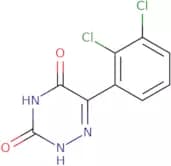
CAS:<p>Intermediate for tiotropium bromide synthesis</p>Formula:C11H10O3S2Purity:Min. 95%Color and Shape:White PowderMolecular weight:254.33 g/mol6-(2,3-Dichlorophenyl)-1,2,4-triazine-3,5(2H,4H)-dione
CAS:<p>6-(2,3-Dichlorophenyl)-1,2,4-triazine-3,5(2H,4H)-dione is a chlorinating agent that converts alcohols to alkyl chlorides. It is used for the conversion of diazotizable aromatic compounds to diazo compounds. This compound has been shown to be neuroprotective in animal models and provides protection against glutamate excitotoxicity. 6-(2,3-Dichlorophenyl)-1,2,4-triazine-3,5(2H,4H)-dione also reacts with nitrite ions to form the corresponding nitroso derivatives. These derivatives can cause DNA damage and are mutagenic. 6-(2,3-Dichlorophenyl)-1,2,4-triazine-3,5(2H,4H)-dione has been shown to react with aminoguanidine to produce a chromat</p>Formula:C9H5Cl2N3O2Purity:Min. 95%Color and Shape:PowderMolecular weight:258.06 g/mol5-Methoxy-2-[[(4-methoxy-3,5-dimethyl-2-pyridinyl)methyl]sulfonyl]-1H-benzimidazole
CAS:<p>5-Methoxy-2-[[(4-methoxy-3,5-dimethyl-2-pyridinyl)methyl]sulfonyl]-1H-benzimidazole is an inhibitor of cytochrome P450 2C19. It has been shown to inhibit the activity of this enzyme in a concentration dependent manner and to enhance the activity of omeprazole by inhibiting its metabolism. 5-Methoxy-2-[(4-methoxy, 3,5 dimethylpyridiniumyl)methyl]sulfonyl]-1H benzimidazole is used as a model system for studying drug interactions due to its ability to inhibit cytochrome P450 2C19 and CYP2C19 protein expression. 5 METHOXY - 2 - [[ ( 4 - METHOXY - 3 , 5 - DIMETHYL - 2 - PYRIDINYL ) M</p>Formula:C17H19N3O4SPurity:Min. 95%Color and Shape:White Off-White PowderMolecular weight:361.42 g/mol2-Hydroxybenzimidazole
CAS:<p>2-Hydroxybenzimidazole is a benzimidazole compound that is used in the treatment of nervous system diseases. It has been shown to have anti-inflammatory properties and can be used in the treatment of syncytial virus infection. 2-Hydroxybenzimidazole inhibits the production of reactive oxygen species and nitric oxide, which are involved in neurodegenerative disorders. The mechanism of action for 2-Hydroxybenzimidazole involves the formation of hydrogen bonds with hydroxyl groups on proteins. It also has been shown to reduce locomotor activity and increase sleep time in mice, which may be due to inhibition of acetylcholine release from cholinergic neurons.</p>Formula:C7H6N2OPurity:Min. 97.5 Area-%Color and Shape:Off-White PowderMolecular weight:134.14 g/mol
![Methyl 5-((4-bromo-2-fluorophenyl)amino)-4-fluoro-1-methyl-1H-benzo[d]imidazole-6-carboxylate](/_next/image/?url=https%3A%2Fstatic.cymitquimica.com%2Fproducts%2F10%2Fthumb-webp%2FF789431.webp&w=3840&q=75)



![N-[3-Methyl-4-(2,2,2-trifluoroethoxy)-2-pyridinyl]methyl Lansoprazole](/_next/image/?url=https%3A%2Fstatic.cymitquimica.com%2Fproducts%2FTR%2Fthumb-webp%2FM331010.webp&w=3840&q=75)
![1-isopropyl-2-(pyrrolidin-2-yl)-1H-benzo[d]imidazole dihydrochloride](/_next/image/?url=https%3A%2Fstatic.cymitquimica.com%2Fproducts%2F10%2Fthumb-webp%2FF495132.webp&w=3840&q=75)



![(1R,3S,5S)-8-Methyl-8-azabicyclo[3.2.1]oct-6-en-3-yl-2'-hydroxy-2',2'-di(thiophen-2''-yl)acetate](/_next/image/?url=https%3A%2Fstatic.cymitquimica.com%2Fproducts%2F3D%2Fthumb-webp%2FIM42883.webp&w=3840&q=75)
![2-[[[(4-Methoxypropoxy)-3-methyl-2-pyridinyl]methyl]sulfonyl]-1H-benzimidazole](/_next/image/?url=https%3A%2Fstatic.cymitquimica.com%2Fproducts%2F3D%2Fthumb-webp%2FIM57866.webp&w=3840&q=75)
![2-[[[4-(3-Methoxypropoxy)-3-methyl-2-pyridinyl]methyl]thio]-1H-benzimidazole](/_next/image/?url=https%3A%2Fstatic.cymitquimica.com%2Fproducts%2F3D%2Fthumb-webp%2FIM57863.webp&w=3840&q=75)

![5-Methoxy-2-[[(4-Chloro-3,5-dimethyl-2-pyridinyl)methyl]sulfinyl]-5-methoxy-1H-benzimidazole](/_next/image/?url=https%3A%2Fstatic.cymitquimica.com%2Fproducts%2F3D%2Fthumb-webp%2FIM57916.webp&w=3840&q=75)
![2-[[[3-Methyl-4-(methylthio)-2-pyridinyl]methyl]sulfinyl]-1H-benzimidazole](/_next/image/?url=https%3A%2Fstatic.cymitquimica.com%2Fproducts%2F3D%2Fthumb-webp%2FIM21229.webp&w=3840&q=75)
![5-Methoxy-2-[[(4-methoxy-3,5-dimethyl-2-pyridinyl)methyl]sulfonyl]-1H-benzimidazole](/_next/image/?url=https%3A%2Fstatic.cymitquimica.com%2Fproducts%2F3D%2Fthumb-webp%2FIM57926.webp&w=3840&q=75)
