


Benzimidazole and Imidazole Derivatives
Benzimidazole is a compound consisting of a benzene ring fused to an imidazole ring, a five-membered structure containing two nitrogen atoms. Benzimidazole derivatives, such as albendazole, are known for their antiparasitic and antifungal activity, used in the treatment of parasitic infections and certain parasitic diseases in animals and humans. Imidazole, on the other hand, is a five-membered structure with two nitrogen atoms found in various biologically active compounds. Imidazole derivatives, such as metronidazole, have antimicrobial and antiparasitic properties. These compounds are also used in the pharmaceutical industry for treating bacterial infections, parasitic diseases, and some fungal infections, as well as in organic chemistry as catalysts.
At CymitQuimica, we offer high-purity benzimidazoles and imidazoles for research in medicinal chemistry, pharmacology, and biotechnology.
Found 10376 products of "Benzimidazole and Imidazole Derivatives"
Sort by
Purity (%)
0
100
|
0
|
50
|
90
|
95
|
100
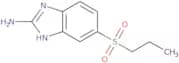
Amino albendazole sulfone
CAS:<p>Amino albendazole sulfone is an anthelmintic drug that is used to treat worm infestations in animals. It is the active metabolite of fenbendazole sulfone and has a terminal half-life of 12 hours in humans. Amino albendazole sulfone can be prepared by chromatographic methods, such as liquid chromatography or gas chromatography, and it can be analyzed with a fluorescence detector. This drug has been shown to have a concentration–time curve following administration to rats and results in an increase in the number of worms eliminated from the body.</p>Formula:C10H13N3O2SPurity:Min. 95%Molecular weight:239.3 g/molPregabalin impurity PD 0312236 and Pregabalin impurity PD 0312237 (mixture of tautomeric isomers)
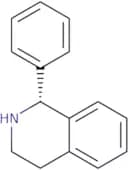
CAS:<p>Lactose conjugate degradation product of pregabalin</p>Formula:C20H35NO11Purity:Min. 95%Molecular weight:465.49 g/mol(R)-1-Phenyl-1,2,3,4-tetrahydroisoquinoline
CAS:<p>(R)-1-Phenyl-1,2,3,4-tetrahydroisoquinoline is a chiral molecule with four stereocenters. It is synthesized by the reaction of sulfamic acid and cyclohexene in the presence of p-toluenesulfonic acid. The product formed is then dehydrogenated to produce (R)-1-phenyl-1,2,3,4-tetrahydroisoquinoline. This compound is soluble in organic solvents such as benzene and ethane and can be used as an acceptor for chiral stationary phases.</p>Formula:C15H15NPurity:Min. 95%Color and Shape:PowderMolecular weight:209.29 g/mol1-[[4-(3-Methoxypropoxy)-3-methyl-2-pyridinyl]methyl]-2-[[[4-(3-methoxypropoxy)-3-methyl-2-pyridinyl]methyl]sulfonyl]-1H-benzimidazo le
CAS:<p>1-[[4-(3-Methoxypropoxy)-3-methyl-2-pyridinyl]methyl]-2-[(4-(3-methoxypropoxy)-3-methyl-2-pyridinyl)methylsulfonyl]-1H-benzimidazole (MKC1807) is a synthetic drug product. MKC1807 is an analytical standard in the HPLC assay for the determination of Epiandrosterone sulfate and its metabolites. 1-[4-(3-Methoxypropoxy)-3,5,6,7,8 -pentamethylcyclohexyl]methyl 2-[(4-(3 -methoxypropoxy) 3,5,6,7,8 -pentamethylcyclohexyl)methylsulfonyl]-1H benzimidazole has been shown to be a natural metabolite of Epiandrosterone sulfate. This compound</p>Formula:C29H36N4O6SPurity:Min. 95%Molecular weight:568.69 g/molN-Desalkyl itraconazole
CAS:<p>N-Desalkyl itraconazole is a triazole antifungal drug that belongs to the group of medicines. It is used in the treatment of systemic mycoses, including blastomycosis and histoplasmosis. N-Desalkyl itraconazole has been shown to inhibit the growth of fungi by interfering with their cell membranes and inhibiting their production of ergosterol. Calibration studies have shown that this drug binds to human liver microsomes and plasma proteins, as well as transporters such as P-glycoprotein. These interactions may influence its pharmacokinetics, which can be determined using a bioanalytical method.</p>Formula:C31H30Cl2N8O4Purity:Min. 95%Molecular weight:649.53 g/molN-Methyl omeprazole (Mixture of isomers with the methylated nitrogens of imidazole)
<p>Please enquire for more information about N-Methyl omeprazole (Mixture of isomers with the methylated nitrogens of imidazole) including the price, delivery time and more detailed product information at the technical inquiry form on this page</p>Formula:C18H21N3O3SPurity:Min. 95%Molecular weight:359.44 g/molcis-(±)-4-[4-[4-[4-[[2-(2,4-Dichlorophenyl)-2-(1H-1,2,4-triazol-1-ylmethyl)-1,3-dioxolan-4-yl]methoxy]phenyl]-1-piperazinyl]phenyl]- 2,4-dihydro-2-propyl-3H-1,2,4-triazol-3-one
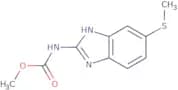
CAS:<p>cis-(±)-4-[4-[4-[4-[[2-(2,4-Dichlorophenyl)-2-(1H-1,2,4-triazol-1-ylmethyl)-1,3-dioxolan-4-yl]methoxy]phenyl]-1-piperazinyl]phenyl]- 2,4-dihydro-2-propyl-3H-1,2,4-triazol-3-one is a drug product that is used as a research and development tool. It is an impurity standard for HPLC. This compound has a chemical name of cis-(±)-4-[4-[4-[4-(hydroxymethyl)phenyl]-1piperazinyl]phenyl]-2, 4dihydro 2propyl 3H 1 2 4 triazol 3one. The CAS number for this compound is 7485591 7. This compound</p>Formula:C34H36Cl2N8O4Purity:Min. 95%Molecular weight:691.61 g/molAlbendazole impurity F
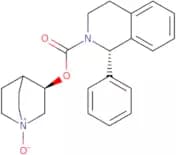
CAS:<p>Albendazole is an anti-helminthic drug that is structurally classified as a benzimidazole. It has been shown to be effective against a variety of helminths, including roundworms, pinworms, hookworms, and tapeworms. Albendazole impurity F is an analytical standard for the determination of albendazole in pharmaceutical products by HPLC. It also serves as a reference substance to establish the purity of drug products containing albendazole and its metabolites. Albendazole impurity F is not considered to be a metabolite of albendazole because it has been shown to be stable under acidic conditions and can be synthesized from other starting materials.</p>Formula:C10H11N3O2SPurity:Min. 95%Molecular weight:237.28 g/molSolifenacin N-oxide
CAS:<p>Solifenacin N-oxide is an anti-cholinergic agent that has been shown to be effective in the treatment of overactive bladder. Solifenacin N-oxide is a prodrug that is hydrolyzed in vivo to solifenacin, its active form. The compound reversibly binds to muscarinic receptors and inhibits the release of acetylcholine. Solifenacin N-oxide has been shown to have low levels of impurities and is highly soluble in water. It was also found to be stable when stored at room temperature for two months. This drug has a high flow rate and moderate retention time, which makes it suitable for reversed-phase liquid chromatography (RPLC). RPLC is a chromatographic technique that separates compounds by size, hydrophobicity, or charge.</p>Formula:C23H26N2O3Purity:Min. 95%Color and Shape:White PowderMolecular weight:378.46 g/mol(R,R)-Solifenacin succinate
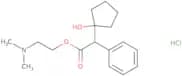
CAS:<p>(R,R)-Solifenacin succinate is a pharmaceutical agent that acts as an antimuscarinic drug. It has been shown to be effective in wastewater treatment, where it was found to reduce the amount of solifenacin and optimised organic chemicals in the water. This drug has also been shown to have antagonist properties against the muscarinic receptor M3.</p>Formula:C23H26N2O2•C4H6O4Purity:Min. 95%Color and Shape:PowderMolecular weight:480.55 g/molN,N-Dimethylaminoethyl-a-(1-Hydroxycyclopentyl)phenylacetate hydrochloride
CAS:Controlled Product<p>N,N-Dimethylaminoethyl-a-(1-Hydroxycyclopentyl)phenylacetate hydrochloride (DMAEA) is a drug that is used as an ophthalmic. It has been shown to be safe and effective in patients with chronic open angle glaucoma, and it may also have some efficacy for the treatment of other conditions such as uveitis and retinal detachment. DMAEA is thought to work by binding to the DNA in the eye’s optic nerve cells and blocking the production of leukotrienes. This drug has also been shown to have anti-inflammatory properties.</p>Formula:C17H26ClNO3Purity:Min. 95%Color and Shape:PowderMolecular weight:327.85 g/molSolifenacin EP impurity F succinate
CAS:<p>Solifenacin is an anti-cholinergic drug that has been shown to have a potent antagonistic effect on muscarinic receptors. It is used in the treatment of overactive bladder, urinary incontinence, and irritable bowel syndrome. Solifenacin succinate is a metabolite of solifenacin and it has been found to be an antagonist of M3 muscarinic receptors. The presence of solifenacin and its metabolites in wastewater can interfere with treatment processes by inhibiting the removal of other organic chemicals such as tamsulosin hydrochloride. Optimisation studies for solifenacin production have shown that famotidine can be used as a process aid to reduce solifenacin impurities. Famotidine is also an antagonist of M3 muscarinic receptors and can be used to remove solifenacin from wastewater. Analytes detected in wastewater samples include solifenacin, famot</p>Formula:C27H32N2O6Purity:Min. 95%Molecular weight:480.55 g/molTiotropium Bromide EP Impurity G
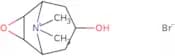
CAS:<p>Tiotropium Bromide EP Impurity G is an anticholinergic bronchodilator that is used in the treatment of asthma. Tiotropium Bromide EP Impurity G has been shown to have long-acting properties, with a half-life of about 20 hours. It has a high affinity for the muscarinic receptor and acts as a competitive antagonist at this site. Tiotropium Bromide EP Impurity G also has a cavity, which may be necessary for its activity.</p>Formula:C9H6BrNO2Purity:Min. 95%Molecular weight:240.05 g/mol2-Methoxy-5-methyL-N,N-bis(1-methyLethyL)-γ-phenyLbenzenepropanamine fumarate
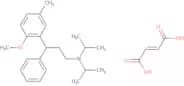
CAS:<p>2-Methoxy-5-methyL-N,N-bis(1-methyLethyl)-gamma-phenyLbenzenepropanamine fumarate (DMXBPC) is an analgesic that has been shown to be a potent inhibitor of the cytosolic phospholipase A2 and is also cytotoxic. DMXBPC has significant cholinergic activity and can inhibit the synthesis of prostaglandins in the prostate gland. DMXBPC binds to the pyridine ring of DOPA and inhibits its conversion to dopamine. The enantiomers of DMXBPC have different effects on inhibition of phospholipase A2, with the (+) form being more potent than the (-) form. This is due to the fact that (+)DMXBPC binds more tightly to the enzyme than (-)DMXBPC does.</p>Formula:C23H33NOPurity:Min. 95%Molecular weight:339.51 g/mol2-Hydroxy-5-methyl-γ-phenylbenzenepropanol
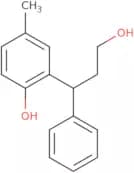
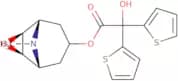
CAS:<p>2-Hydroxy-5-methylphenylbenzenepropanol is an aliphatic phenol that is used as a treatment for benzene poisoning. It is also used as a precursor to other compounds, such as the chlorides and alkylates of 2-hydroxy-5-methylphenylbenzenepropanol. This compound can be synthesized by reacting ethyl benzoylacetate with diisopropylamine in the presence of oxygen and chlorine gas. It is often immobilized using nutrients, l-tartaric acid, or cinnamic acid.</p>Formula:C16H18O2Purity:Min. 95%Molecular weight:242.31 g/molScopine-2,2-dithienyl glycolate
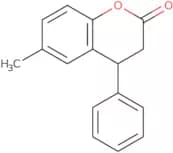
CAS:<p>Scopine-2,2-dithienyl glycolate is a catalyst that belongs to the class of dithienyl glycolates. Scopine-2,2-dithienyl glycolate is used in the pharmaceutical industry as an average catalyst for reactions and can be used to recover dimethylbenzene. The method of detection for scopine-2,2-dithienyl glycolate is based on its ability to absorb light at a wavelength of 360 nm. The reaction solution must be monitored carefully during the synthetic process because it has been shown that it can react with water or air and form hydrogen sulfide gas. If this happens, the reaction solution will become cloudy or turbid. This product is a white crystalline solid that appears as tiny needles and has a melting point of 173 degrees Celsius (340 degrees Fahrenheit).</p>Formula:C18H19NO4S2Purity:Min. 95%Molecular weight:377.48 g/mol6-Methyl-4-phenyl-3,4-dihydro-1-benzopyran-2-one
CAS:<p>6-Methyl-4-phenyl-3,4-dihydro-1-benzopyran-2-one is an analog of the natural product zearalenone, which can be used as an acid catalyst for the synthesis of various pharmaceuticals. It has a linear range and is structurally similar to a number of other analogs. The chloride ion is involved in the optimization of the extraction parameters and can be replaced by other c1-4 alkyl groups. 6-Methyl-4-phenyl-3,4-dihydro-1 -benzopyran 2 one is typically prepared using a preparative high performance liquid chromatography technique that involves dehydration.</p>Formula:C16H14O2Purity:Min. 95%Molecular weight:238.28 g/molDehydrodeoxy donepezil
CAS:<p>Dehydrodeoxy donepezil is an analytical standard that is used in the manufacture of pharmaceuticals. It is a synthetic drug impurity, and its CAS number is 120013-45-8. Dehydrodeoxy donepezil can be found in the API impurity grade of various drugs, including those that are manufactured by Custom synthesis and natural synthesis. The pharmacopoeia states that dehydrodeoxy donepezil has a purity level of 98% or greater. This product can also be found as a metabolite in humans, with its half-life being approximately 40 minutes.</p>Formula:C24H29NO2Purity:Min. 95%Molecular weight:363.49 g/mol2-[(4-Chloro-3-methyl-2-pyridinyl)methylthio]-1H-benzimidazole
CAS:<p>2-[(4-Chloro-3-methyl-2-pyridinyl)methylthio]-1H-benzimidazole is a drug product. It is an impurity standard for the analytical determination of 2-[(4-chloro-3-methylpyridin)-2yl]thiohydantoin in pharmaceuticals and other chemical products. This compound is also used as a research and development (R&D) metabolite and impurity standard for the synthesis of 4-(4,5,6,7-tetrahydrobenzo[b]thiophen-2-yl)pyridine. The CAS number for this compound is 103312-62-5./END></p>Formula:C14H12ClN3SPurity:Min. 95%Molecular weight:289.78 g/mol(1R,3S,5S)-3-(2-Hydroxy-2,2-di(thiophen-2-yl)acetoxy)-8,8-dimethyl-8-azabicyclo[3.2.1]oct-6-en bromide
CAS:<p>The human red blood cell (RBC) is a non-nucleated cell in the human blood that carries oxygen to the body's cells. The erythrocyte is characterized by its biconcave shape and its lack of organelles. It has a volume of about 80 fL, and a diameter of about 7 micrometers. The RBCs are produced in bone marrow from precursor cells that differentiate into erythroid progenitor cells. This drug binds to the hemoglobin molecules in the red blood cells and alters their shape, causing an increase in their deformability. In addition, this drug decreases the viscosity of the plasma outside of the red blood cell, which increases its extravascular sensitivity. Evaluations have been performed on low doses to evaluate sensitivities within capillaries with microscopy parameters such as magnification and resolution. These evaluations have shown that this drug can be used for quantifying changes in capillary size due to low doses (</p>Formula:C19H22NO3S2·BrPurity:Min. 95%Molecular weight:456.42 g/mol


![1-[[4-(3-Methoxypropoxy)-3-methyl-2-pyridinyl]methyl]-2-[[[4-(3-methoxypropoxy)-3-methyl-2-pyridin…](/_next/image/?url=https%3A%2Fstatic.cymitquimica.com%2Fproducts%2F3D%2Fthumb-webp%2FIM25352.webp&w=3840&q=75)


![cis-(±)-4-[4-[4-[4-[[2-(2,4-Dichlorophenyl)-2-(1H-1,2,4-triazol-1-ylmethyl)-1,3-dioxolan-4-yl]meth…](/_next/image/?url=https%3A%2Fstatic.cymitquimica.com%2Fproducts%2F3D%2Fthumb-webp%2FID27219.webp&w=3840&q=75)



![2-[(4-Chloro-3-methyl-2-pyridinyl)methylthio]-1H-benzimidazole](/_next/image/?url=https%3A%2Fstatic.cymitquimica.com%2Fproducts%2F3D%2Fthumb-webp%2FIC21227.webp&w=3840&q=75)
![(1R,3S,5S)-3-(2-Hydroxy-2,2-di(thiophen-2-yl)acetoxy)-8,8-dimethyl-8-azabicyclo[3.2.1]oct-6-en bro…](/_next/image/?url=https%3A%2Fstatic.cymitquimica.com%2Fproducts%2F3D%2Fthumb-webp%2FIH42882.webp&w=3840&q=75)