Flavonoids and Polyphenols
Flavonoids are phenolic compounds that contain a structure of 15 carbon atoms, consisting of two aromatic rings linked by a three-carbon bridge. Polyphenols are a broader class of organic compounds containing multiple phenolic groups. Both groups have potent antioxidant properties, allowing them to protect cells from damage caused by free radicals. Flavonoids are commonly found in fruits, vegetables, and tea and are associated with improved cardiovascular health and the prevention of chronic diseases. Polyphenols also have applications in cancer prevention and brain health promotion.
At CymitQuimica, we offer high-quality flavonoids and polyphenols for research in chemistry, pharmacology, and biomedicine.
Found 17085 products of "Flavonoids and Polyphenols"
Sort by
Purity (%)
0
100
|
0
|
50
|
90
|
95
|
100
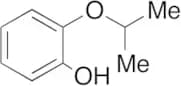
o-Isopropoxyphenol
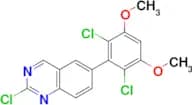
CAS:Controlled Product<p>Applications o-Isopropoxyphenol is used in the synthesis of α1-adrenoreceptor antagonist activity of tamsulosin analogues. Also used in the preparation of 5-HT1A receptor agonists.<br>References Sagratini, G. et al.: Eur. J. Med. Chem., 45, 5800 (2010); Franchini, S. et al.: Bioorg. Med. Chem. Lett., 2017 (2010);<br></p>Formula:C9H12O2Color and Shape:ColourlessMolecular weight:152.192-chloro-6-(2,6-dichloro-3,5-dimethoxyphenyl)quinazoline
CAS:Purity:97.0%Molecular weight:369.6300048828125Ref: 10-F519250
1gTo inquire5gTo inquire10gTo inquire25gTo inquire100mgTo inquire250mgTo inquire500mgTo inquire(2E)-3-[4-(benzyloxy)phenyl]-1-(4-methoxyphenyl)prop-2-en-1-one
CAS:Purity:95.0%Molecular weight:344.4100036621094Eugenol
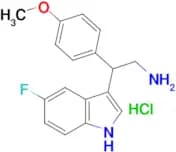
CAS:Controlled Product<p>Stability Light Sensitive<br>Applications Eugenol is used in perfumes, flavorings, and essential oils. It is also used as a local antiseptic and anaesthetic. Eugenol is a dental compound which shows cytotoxicity to human oral squamous cell carcinoma and oral cells. When glucosylated, this compound exhibits anti-inflammatory activity.<br>References Koh, T. et al.: In Vivo, 27, 85 (2013); Zhang, P. et al.: Arch. Pharm. Res., 36, 109 (2013);<br></p>Formula:C10H12O2Color and Shape:YellowMolecular weight:164.202-(5-fluoro-1H-indol-3-yl)-2-(4-methoxyphenyl)ethanamine hydrochloride
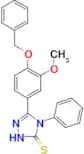
Molecular weight:320.79000854492193-(4-Benzyloxy-3-methoxyphenyl)-4-phenyl-1,2,4-triazoline-5-thione, 95%
Molecular weight:389.47000122070312-Methoxy-5-{[(2E)-1-oxo-1,2,3,4-tetrahydronaphthalen-2-ylidene]methyl}benzene-1-sulfonic acid
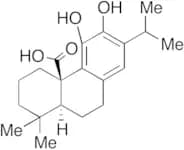
CAS:Purity:95.0%Molecular weight:344.3800048828125Carnosic Acid
CAS:<p>Applications Carnosic Acid is a phenolic component of rosemary. It acts as a potent antioxdant and also has UV protective activity. Specifically protection for UV-A radiation and damage. Carnosic Acid also inhibits the free-radical chain reaction that leads to the oxidation of fats and oils, thereby stabilizing and increasing the shelf life of meats.<br>References Frankel, E. et al.: J. Agri. Food Chem., 44, 131 (1996); Offord, E. et al.: Free Rad Biol. Med., 32, 1293 (2002); Chem. and Eng. News Feb. 10, 2014 p. 13<br></p>Formula:C20H28O4Color and Shape:Yellow SolidMolecular weight:332.43Ref: 10-F793053
1gTo inquire5gTo inquire25gTo inquire10mgTo inquire50mgTo inquire100mgTo inquire250mgTo inquire4-(2,4-dimethoxyphenyl)-3H,4H,5H,6H,7H-imidazo[4,5-c]pyridine-6-carboxylic acid
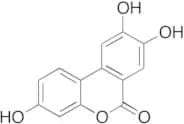
CAS:Purity:95.0%Molecular weight:303.3179931640625Urolithin C
CAS:<p>Stability Hygroscopic<br>Applications Urolithin C is used in biological studies to evaluate the metabolite antioxidant activity.<br>References Ishimoto, H., et. al.: Bioorg. Med. Chem. Lett., 21, 5901 (2011);<br></p>Formula:C13H8O5Color and Shape:NeatMolecular weight:244.2Hydroxy Tyrosol-d4
CAS:Controlled Product<p>Stability Light Sensitive<br>Applications Labelled Tyrosol (T947800) metabolite.<br>References Perez-Trujillo, M., et al.: J. Agric. Food Chem., 58, 9129 (2010), Gregus, P., et al.: J. Pharm. Biomed. Anal., 53, 674 (2010), Garcia-Villalba, R., et al.: Anal. Bioanal. Chem., 398, 463 (2010),<br></p>Formula:C8D4H6O3Color and Shape:NeatMolecular weight:158.188Paeoniflorin (>80%)
CAS:Controlled Product<p>Applications Paeoniflorin is an active compound of the Paeonia root. Paeoniflorin inhibits Aβ25-35-induced mitochondrial dysfunction, which includes decreased mitochondrial membrane potential, increased Bax/Bcl-2 ratio, cytochrome c release and activity of caspase-3 and caspase-9. Paeoniflorin could attenuate or restore the viability loss, apoptotic increase, and ROS production induced by Aβ25-35 in SH-SY5Y cells.<br>References Yuan,Y., et. al.: Int. J. Mol. Sci., 14, 18502 (2013); Wang, K., et. al.: Cell Mol. Neurobiol., 34, 227 (2014)<br></p>Formula:C23H28O11Purity:>80%Color and Shape:NeatMolecular weight:480.46


![(2E)-3-[4-(benzyloxy)phenyl]-1-(4-methoxyphenyl)prop-2-en-1-one](/_next/image/?url=https%3A%2Fstatic.cymitquimica.com%2Fproducts%2F10%2Fthumb-webp%2FF523604.webp&w=3840&q=75)

![2-Methoxy-5-{[(2E)-1-oxo-1,2,3,4-tetrahydronaphthalen-2-ylidene]methyl}benzene-1-sulfonic acid](/_next/image/?url=https%3A%2Fstatic.cymitquimica.com%2Fproducts%2F10%2Fthumb-webp%2FF183076.webp&w=3840&q=75)


![4-(2,4-dimethoxyphenyl)-3H,4H,5H,6H,7H-imidazo[4,5-c]pyridine-6-carboxylic acid](/_next/image/?url=https%3A%2Fstatic.cymitquimica.com%2Fproducts%2F10%2Fthumb-webp%2FF522514.webp&w=3840&q=75)