Flavonoids and Polyphenols
Flavonoids are phenolic compounds that contain a structure of 15 carbon atoms, consisting of two aromatic rings linked by a three-carbon bridge. Polyphenols are a broader class of organic compounds containing multiple phenolic groups. Both groups have potent antioxidant properties, allowing them to protect cells from damage caused by free radicals. Flavonoids are commonly found in fruits, vegetables, and tea and are associated with improved cardiovascular health and the prevention of chronic diseases. Polyphenols also have applications in cancer prevention and brain health promotion.
At CymitQuimica, we offer high-quality flavonoids and polyphenols for research in chemistry, pharmacology, and biomedicine.
Found 17075 products of "Flavonoids and Polyphenols"
Sort by
Purity (%)
0
100
|
0
|
50
|
90
|
95
|
100
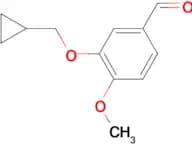
3-Cyclopropylmethoxy-4-methoxybenzaldehyde
CAS:Purity:95.0%Color and Shape:SolidMolecular weight:206.240997314453122-Amino-4-(3-methoxy-phenyl)-thiophene-3-carboxylic acid methyl ester
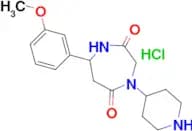
CAS:Formula:C13H13NO3SPurity:98%Color and Shape:SolidMolecular weight:263.317-(3-methoxyphenyl)-4-piperidin-4-yl-1,4-diazepane-2,5-dione hydrochloride
Molecular weight:353.85000610351564-(4-methoxybenzoyl)-1-oxa-4-azaspiro[4.5]decane-3-carboxylic acid
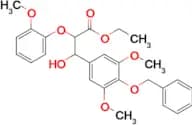
CAS:Purity:95.0%Molecular weight:319.35699462890625Ethyl 3-(4-(benzyloxy)-3,5-dimethoxyphenyl)-3-hydroxy-2-(2-methoxyphenoxy)propanoate
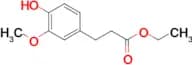
CAS:Purity:98%Molecular weight:482.52899169921875Ethyl 3-(4-hydroxy-3-methoxyphenyl)propionate
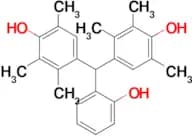
CAS:Formula:C12H16O4Purity:99.0%Color and Shape:LiquidMolecular weight:224.2564,4'-((2-Hydroxyphenyl)methylene)bis(2,3,6-trimethylphenol)
CAS:Purity:95.0%Molecular weight:376.4960021972656Methyl 2-fluoro-5-hydroxybenzoate
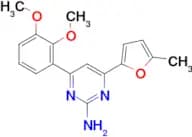
CAS:Formula:C8H7FO3Purity:95%Color and Shape:SolidMolecular weight:170.1394-(2,3-dimethoxyphenyl)-6-(5-methylfuran-2-yl)pyrimidin-2-amine
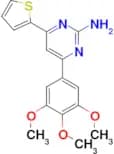
CAS:Purity:95.0%Molecular weight:311.341003417968754-(thiophen-2-yl)-6-(3,4,5-trimethoxyphenyl)pyrimidin-2-amine
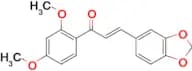
CAS:Purity:95.0%Molecular weight:343.3999938964844(2E)-3-(2H-1,3-benzodioxol-5-yl)-1-(2,4-dimethoxyphenyl)prop-2-en-1-one
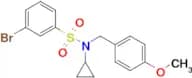
CAS:Purity:95.0%Color and Shape:Liquid, No data available.Molecular weight:312.32101440429693-Bromo-N-cyclopropyl-N-(4-methoxybenzyl)benzenesulfonamide
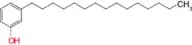
CAS:Purity:95%Molecular weight:396.299987792968753-Pentadecylphenol
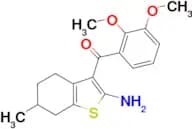
CAS:Formula:C21H36OPurity:≥90%Color and Shape:Liquid, No data available.Molecular weight:304.518(2-amino-6-methyl-4,5,6,7-tetrahydro-1-benzothien-3-yl)(2,3-dimethoxyphenyl)methanone
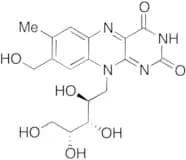
Molecular weight:331.429992675781258-Hydroxymethyl Riboflavin
CAS:Applications 8-Hydroxymethyl Riboflavin is an impurity of Riboflavin (R414995), a nutritional factor found in milk, eggs, malted barley, liver, kidney, heart, leafy vegetables. Richest natural source is yeast. Minute amounts present in all plant and animal cells. Vitamin (enzyme cofactor).
References Unna, K., et al.: J. Pharmacol. Exp. Ther., 76, 75 (1942); Rivlin, et al.: N. Engl. J. Med., 283, 463 (1970); Al-Shammary, F.J., et al.: Anal. Profiles Drug Subs., 19, 429 (1990)Formula:C17H20N4O7Color and Shape:Orange To Dark OrangeMolecular weight:392.36


![4-(4-methoxybenzoyl)-1-oxa-4-azaspiro[4.5]decane-3-carboxylic acid](/_next/image/?url=https%3A%2Fstatic.cymitquimica.com%2Fproducts%2F10%2Fthumb-webp%2FF525514.webp&w=3840&q=75)
![4-(BENZO[D]THIAZOL-2-YL)PHENOL](/_next/image/?url=https%3A%2Fstatic.cymitquimica.com%2Fproducts%2F10%2Fthumb-webp%2FF302884.webp&w=3840&q=75)