Flavonoids and Polyphenols
Flavonoids are phenolic compounds that contain a structure of 15 carbon atoms, consisting of two aromatic rings linked by a three-carbon bridge. Polyphenols are a broader class of organic compounds containing multiple phenolic groups. Both groups have potent antioxidant properties, allowing them to protect cells from damage caused by free radicals. Flavonoids are commonly found in fruits, vegetables, and tea and are associated with improved cardiovascular health and the prevention of chronic diseases. Polyphenols also have applications in cancer prevention and brain health promotion.
At CymitQuimica, we offer high-quality flavonoids and polyphenols for research in chemistry, pharmacology, and biomedicine.
Found 16999 products of "Flavonoids and Polyphenols"
Sort by
Purity (%)
0
100
|
0
|
50
|
90
|
95
|
100
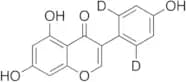
Genistein-2’,6’-d2
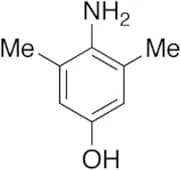
CAS:Controlled Product<p>Applications Exhibits specific inhibitory activity against tyrosine kinases,including autophosphorylation of epidermal growth factor receptor kinase (IC50 - 2.6uM). Also inhibits other protein kinases through competitive inhibition of ATP. Inhibits tumor cell proliferation and induces tumor cell differentiation. Produces cell-cycle arrest and apoptosis in Jurat T-leukemia cells. However, it prevents anti-CD3 monoclonal antibody-induced thymic apoptosis. Genistein also inhibits topoisomerase II activity in vitro. Genistein has also been shown to inhibit the action of GABA on recombinant GABAA receptors2. uv(max)ethanol: 262.5 nm (e= 138). moderately sol. in hot alcohol<br>References Akiyama, T., et al.: J. Biol. Chem., 262, 5592 (1987), O'Dell, T.J., et al.: Nature, 353, 588 (1991), Aharonovits, O., et al.: Biochim Biophys. Acta, 1112, 181 (1992), Platanias, L.C., et al.: J. Biol. Chem., 267, 24053 (1992), Yoshida, H., et al.: Biochim. Biophys. Acta, 1137, 321 (1992), Uckun, F.M., et al.: Science, 267, 886 (1995)Merck Index 12th ed. 43952. Huang, R.Q.; Fang, M.J.; Dillon, G.H., Mol. Brain Res. 67: 177-183 (1999)<br></p>Formula:C152H2H8O5Color and Shape:NeatMolecular weight:272.254-Amino-3,5-xylenol
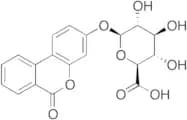
CAS:Controlled Product<p>Applications A major Lidocaine metabolite.<br> Not a dangerous good if item is equal to or less than 1g/ml and there is less than 100g/ml in the package<br>References Falany, C., et al.: Drug Metab. Disposition, 27, 1057 (1999), Gan, J., et al.: Chem. Res. Toxicol., 14, 672 (2001), Lienert, J., et al.: Envir. Sci. Technol., 41, 4471 (2007),<br></p>Formula:C8H11NOColor and Shape:NeatMolecular weight:137.18Urolithin B Glucuronide
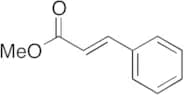
CAS:Controlled Product<p>Stability Light Sensitive<br>Applications Urolithin B Glucuronide counteracts trimethylamine-N-oxide (TMAO)-induced cell damage and other detrimental effects of the cardiovascular systems triggered by TMAO.<br>References Savi, M., et al.: Molecules, 23, 549 (2018)<br></p>Formula:C19H16O9Color and Shape:NeatMolecular weight:388.3249Methyl trans-Cinnamate
CAS:Controlled Product<p>Applications Methyl trans-Cinnamate is one of the odour active compounds of Tahitian vanilla flavour and basil oil. Methyl trans-Cinnamate is naturally found in Magnolia liliflora oil, which is used to create a variety of nematicides. Methyl trans-Cinnamate also inhibits mushroom tyrosinase and has antimicrobial effects against Escherechia coli in food.<br>References Adams, A., et al.: J. Am. Oil Chem. Soc., 88, 201 (2011); Blank, A., et al.: Ind. Crop. Prod., 38, 93 (2012); Brunschwig, C., et al.: Food Res. Int., 46, 148 (2012); Huang, Q., et al.: J. Agr. Food Chem., 57, 2565 (2009)<br></p>Formula:C10H10O2Color and Shape:NeatMolecular weight:162.192-Chloro-3,5-dimethylphenol
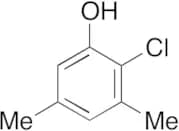
CAS:Controlled Product<p>Applications 2-Chloro-3,5-dimethylphenol is an impurity in the synthesis of Chloroxylenol (C427950) an antiseptic and germicide. Chloroxylenol is used for mildew prevention. Chloroxylenol is also an antibacterial; antiseptic (topical and urinary).<br>References Heberer, T., et al.: Toxicol. Lett., 131, 5 (2002), Nikolaou, A., et al.: Anal. Bioanal. Chem., 387, 1225 (2007), Focazio, M., et al.: Sci. Total Environ., 402, 201 (2008), Miege, C., et al.: Environ. Pollut., 157, 1721 (2009),<br></p>Formula:C8H9ClOColor and Shape:White To Light Orange Colour Light BrownMolecular weight:156.61Triclosan O-Sulfate Sodium Salt
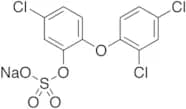
CAS:Controlled Product<p>Stability Hygroscopic, Moisture Sensitive<br>Applications Triclosan O-Sulfate is a metabolite of the bacteriostat, Triclosan (T774250).<br>References Wu, J. et al.: Sepu, 27, 724 (2009);<br></p>Formula:C12H6Cl3NaO5SColor and Shape:NeatMolecular weight:391.592,4,5-Trichlorophenol-d2
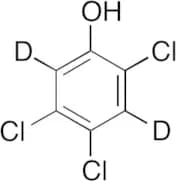
CAS:Controlled Product<p>Applications 2,4,5-Trichlorophenol-d2 is the labelled analogue of 2,4,5-Trichlorophenol (T774145), which is used as a broad range pesticide against insects, fungi, vegetation and bacteria. It has become a common environmental contaminant and probable human carcinogen.<br> Not a dangerous good if item is equal to or less than 1g/ml and there is less than 100g/ml in the package<br>References Amer, S. et al.: Cytologia, 39, 633 (1974); Xu, X. wt l.: Occup. Environ. Med., 68, 557 (2011); Sinclair, C.J. et al.: Environ. Sci. Technol., 37, 4617 (2003);<br></p>Formula:C62H2HCl3OColor and Shape:NeatMolecular weight:199.46Bis(3,5-di-tert-butylphen-4-ol) Disulfide
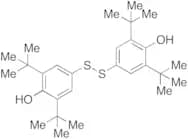
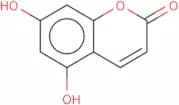
CAS:Controlled ProductFormula:C28H42O2S2Color and Shape:NeatMolecular weight:474.765,7-Dihydroxycoumarin
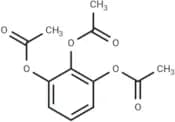
CAS:<p>5,7-Dihydroxycoumarin is a natural product isolated from the dichloromethane extract of the inflorescences of Macaranga triloba.</p>Formula:C9H6O4Purity:98.76%Color and Shape:SolidMolecular weight:178.14Pyrogallol triacetate
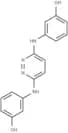
CAS:<p>Pyrogallol triacetate is used as an antiasthmatic.</p>Formula:C12H12O6Purity:98%Color and Shape:SolidMolecular weight:252.22RS-0406
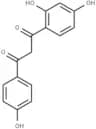
CAS:<p>RS-0406: A β-flake blocker, reverses Aβ toxicity, protects in vitro, and halts behavior decline in vivo.</p>Formula:C16H14N4O2Color and Shape:SolidMolecular weight:294.31Licodione
CAS:<p>Licodione is a Cytochrome P450 Monooxygenase Catalyzing 2-Hydroxylation of 5-Deoxyflavanone.</p>Formula:C15H12O5Color and Shape:SolidMolecular weight:272.25(E)-Cinnamamide
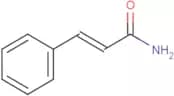
CAS:<p>(E)-Cinnamamide (trans-Cinnamamide) is the less active isomer of Cinnamamide which is an effective non-lethal chemical repellent suitable for reducing avian</p>Formula:C9H9NOPurity:99.21%Color and Shape:SolidMolecular weight:147.17Riboflavin Tetrabutyrate
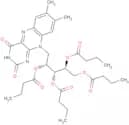
CAS:<p>Riboflavin Tetrabutyrate is a lipophilic flavin derivative. Riboflavin Tetrabutyrate has antioxidative and lipid peroxide-removing activity.</p>Formula:C33H44N4O10Purity:99.10%Color and Shape:SolidMolecular weight:656.72Isosalipurposide
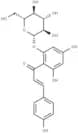
CAS:<p>Isosalipurposide, a chalcone compound, exerts a cytoprotective effect against oxidative injury via Nrf2 activation.</p>Formula:C21H22O10Color and Shape:SolidMolecular weight:434.39Leptospermone
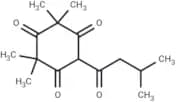
CAS:<p>Leptospermone is an essential oil from Leptospermum scoparium (manuka oil).</p>Formula:C15H22O4Color and Shape:SolidMolecular weight:266.33Ensaculin
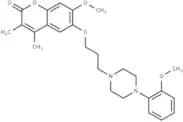
CAS:<p>Ensaculin, a benzopyrone-piperazine compound, enhances memory, protects neurons, and may treat dementia.</p>Formula:C26H32N2O5Purity:99.17% - 99.67%Color and Shape:SolidMolecular weight:452.54Luteolin 7-sulfate
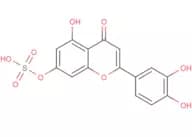
CAS:<p>Luteolin 7-sulfate from Phyllospadix iwatensis inhibits melanin production by disrupting CREB/MITF signaling.</p>Formula:C15H10O9SPurity:98%Color and Shape:SolidMolecular weight:366.3Malvone A
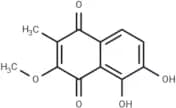
CAS:<p>Malvone A is a compound with antifungal properties found in Malva sylvestris, with an ED50 of 24 μg/mL against V. dahliae. It is applicable in research focused on anti-infective solutions.</p>Formula:C12H10O5Color and Shape:SolidMolecular weight:234.205Equisetin
CAS:<p>Equisetin: a QSI from Fusarium equiseti, curbs P. aeruginosa virulence, fights Gram-positive bacteria & HIV-1 integrase; not antibacterial to Gram-negative.</p>Formula:C22H31NO4Purity:98%Color and Shape:SolidMolecular weight:373.49