Quinones and Derivatives
Quinones are aromatic compounds containing a benzene ring system with two carbonyl groups in specific positions, forming a cyclohexene structure with oxygen. They are derived from compounds such as anthraquinone and 1,4-benzoquinone, which play important biological roles, including electron transfer in metabolic processes. Quinone derivatives, such as hydroquinones and antirheumatic agents, have applications in the pharmaceutical industry due to their antioxidant, antimicrobial, and anticancer properties. Additionally, quinones are used in the production of dyes and cosmetic products.
At CymitQuimica, we offer quinones and their derivatives for applications in organic chemistry, pharmaceuticals, and the cosmetic industry.
Found 24231 products of "Quinones and Derivatives"
Sort by
Purity (%)
0
100
|
0
|
50
|
90
|
95
|
100
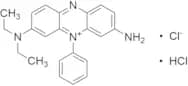
Methylene Violet 3RAX (~90%)
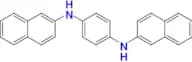
CAS:Controlled Product<p>Applications Methylene Violet 3RAX (CAS# 4569-86-2) is a useful research chemical compound.<br></p>Formula:C22H23N4·ClPurity:~90%Color and Shape:NeatMolecular weight:378.9N1,N4-Di(naphthalen-2-yl)benzene-1,4-diamine
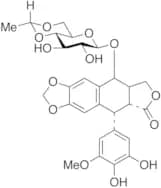
CAS:Purity:96.0%Color and Shape:Liquid, No data available.Molecular weight:360.45999145507813’-O-Desmethyl Etoposide
CAS:Controlled Product<p>Applications An Etoposide (E933750) metabolite<br>References Relling, M., et al.: Mol. Pharmacol., 45, 352 (1994), Lovett, B., et al.: Biochem., 40, 1159 (2001), Zhuo, X., et al.: Drug Metab. Disposition, 32, 993 (2004), Fan, Y., et al.: Chem. Res. Toxicol., 19, 937 (2006),<br></p>Formula:C28H30O13Color and Shape:NeatMolecular weight:574.53Thymoquinone
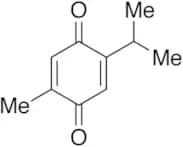
CAS:<p>Applications Thymoquinone is a phytochemical compound found in the plant Nigella sativa. Thymoquinone has antioxidant effects and has been shown to protect against heart, liver and kidney damage in animal studies, as well as having possible anti-cancer effects. Thymoquinone also has analgesic and anticonvulsant effects in animal models. Thymoquinone is an angiogenesis inhibitor. An IRAK1 inhibitor with in vivo and in vitro anti-inflammatory activities. Dyes and metabolites.<br>References Badary, O., et al.: Toxicology, 143, 219 (2000); Alas, S., et al.: Clin. Cancer Res., 8, 836 (2002); Huang, Y., et al.: Cancer Cell, 5, 1 (2004); Alhosin, M., et al.: Biochem. Pharmacol., 79, 1251 (2010);<br></p>Formula:C10H12O2Color and Shape:Light Yellow To Dark OrangeMolecular weight:164.20Vanillic Acid
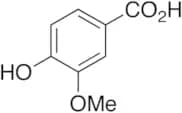
CAS:Controlled Product<p>Applications Vanillin, a compound widely used in foods, beverages, cosmetics and drugs, has been reported to exhibit multifunctional effects such as antimutagenic, antiangiogenetic, anti-colitis, anti-sickling, and antianalgesic effects. However, results of studies on the antioxidant activity of vanillin are not consistent.<br>References Ohta, T., et al.: Food Chem. Toxicol., 24, 51 (1986), Zhou, Y., et al.: Biochem. Pharmacol., 42, 1177 (1991), Santos, J., et al.: Mutat. Res., 444, 355 (1999),<br></p>Formula:C8H8O4Color and Shape:NeatMolecular weight:168.15Acenocoumarol
CAS:Controlled Product<p>Applications Vitamin K antagonist; structurally similar to Warfarin. Anticoagulant.<br>References Leroux, M., et al.: Therapie, 11, 85 (1956), Wheeler, C.R., et al.: J. Med. Chem., 22, 1122 (1979),<br></p>Formula:C19H15NO6Color and Shape:Off-WhiteMolecular weight:353.331-Ethyl-4-vinylbenzene (>80%)
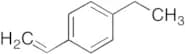
CAS:<p>Applications 1-Ethyl-4-vinylbenzene is a pollutant that comes from pyrolysis and combustion of waste lubricant oil from diesel cars.<br>References Fuentes, M., et al.: J. Anal. Appl. Pyrolysis, 79, 215 (2007); Molto, J., et al.: J. Anal. Appl. Pyrolysis, 84, 68 (2009);<br></p>Formula:C10H12Purity:>80%Color and Shape:NeatMolecular weight:132.20Indeno[1,2,3-cd]pyrene
CAS:<p>Applications Indeno[1,2,3-cd]pyrene is a polycyclic aromatic hydrocarbon (PAH) and a known carcinogen. Indeno[ 1,2,3-cd]pyrene is listed as a priority pollutant by the Environmental Protection Agency (EPA). Indeno[1,2,3-cd]pyrene has been detected in automobile engine exhaust, charcoal broiled foods, ground water, river sediments as well as cigarette smoke condensate.<br>References Rice, J.E. et al.: J. Org. Chem., 51, 2428 (1986); Smith, C.J. et al.: Food Clin. Toxicol., 38, 637 (2000); Panalaks, T.: J. Environ. Sci. Health. Part B Pest. Food Cont. Agric. Wastes, B11, 299 (1976);<br></p>Formula:C22H12Color and Shape:Light Yellow To Dark OrangeMolecular weight:276.33Trifloxystrobin
CAS:Controlled Product<p>Stability Moisture Sensitive<br>Applications Trifloxystrobin is a broad-spectrum foliar fungicide used in plant pritection. Trifloxystrobin functions by inhibiting fungal spore germination. Useful in cannabis testing kits as a component of pesticide mixes (P698235).<br> Not a dangerous good if item is equal to or less than 1g/ml and there is less than 100g/ml in the package<br>References Margot, P. et al.: Bright. Crop Prot. Conf. Pest Dis., 2, 375 (1998); Karadimos, D.A. et al.: Crop Prot., 24, 23 (2005); Prom, L.K. et al.: Plant Dis., 87, 252 (2003);<br></p>Formula:C20H19F3N2O4Color and Shape:NeatMolecular weight:408.372,2'-Binaphthalene-6,6'-dicarboxylic Acid
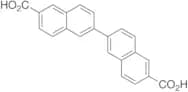
CAS:Controlled ProductFormula:C22H14O4Color and Shape:NeatMolecular weight:342.341,2,3,6,7,8-Hexachlorodibenzofuran
CAS:<p>Applications 1,2,3,6,7,8-Hexachlorodibenzofuran, is a toxic polychlorinated dibenzofurans (PCDD/F), detected in domestic meat and poultry. It can be used as purified standards for analytical, toxic, and biological studies of these environmental contaminants.<br> Not a dangerous good if item is equal to or less than 1g/ml and there is less than 100g/ml in the package<br>References Huwe, J., et al.: Food Addit. Contam., 21, 182 (2004), Llobet, J., et al.: Toxicol. Lett., 178, 117 (2008); Feil, V., et al.: J. Agric. Food Chem., 48, 6163 (2000); Safe, S. H., et al.: J. Agric. Food Chem., 32, 68 (1984);<br></p>Formula:C12H2Cl6OColor and Shape:NeatMolecular weight:374.86Idebenone-13C,d3
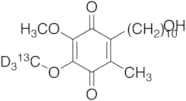
CAS:Controlled ProductFormula:C1813CH27D3O5Color and Shape:NeatMolecular weight:342.45Chlorzoxazone
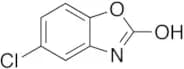
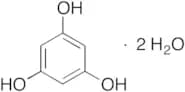
CAS:Controlled Product<p>Applications Muscle relaxant (skeletal).<br>References Twele, R., et al.: Arzneim.-Forsch., 32, 759 (1982), Stewart, J.T., et al.: Anal. Profiles Drug Subs.,16, 119 (1987),<br></p>Formula:C7H4ClNO2Color and Shape:WhiteMolecular weight:169.57Phloroglucinol Dihydrate
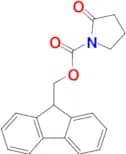
CAS:<p>Applications Phloroglucinol Dihydrate is a reactant used in the synthesis of [2-13C, 4-13C]-(2R,3S)-catechin and [2-13C, 4-13C]-(2R,3R)-epicatechin.<br>References Sharma, P.K., et. al.: J. Labelled Compd. Rad., 53, 605 (2010)<br></p>Formula:C6H6O3·2H2OColor and Shape:Yellow SolidMolecular weight:162.14(9H-FLUOREN-9-YL)METHYL 2-OXOPYRROLIDINE-1-CARBOXYLATE
CAS:Purity:95.0%Molecular weight:307.3489990234375Ref: 10-F505705
1gTo inquire2gTo inquire5gTo inquire10gTo inquire25gTo inquire50gTo inquire100mgTo inquire250mgTo inquire500mgTo inquireEmodin
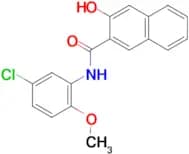
CAS:Controlled Product<p>Applications Emodin occurs mostly as the rhamnoside (see Frangulin) in rhubarb root. Cathartic.<br>References Pan, X., et al.: Biochem. Eng. J., 5, 173 (2000), Srinivas, G., et al.: Eur. J. Pharmacol., 473, 117 (2003), Xiang, H., et al.: Chin. Pharm. J., 40, 96 (2005), Mokhtarani, B., et al.: Biochem. Eng. J., 38, 241 (2008),<br></p>Formula:C15H10O5Color and Shape:NeatMolecular weight:270.24N-(5-Chloro-2-methoxyphenyl)-3-hydroxynaphthalene-2-carboxamide
CAS:Purity:95.0%Color and Shape:SolidMolecular weight:327.760009765625



![Indeno[1,2,3-cd]pyrene](/_next/image/?url=https%3A%2Fstatic.cymitquimica.com%2Fproducts%2FTR%2Fthumb-webp%2FI510960.webp&w=3840&q=75)