


Quinones and Derivatives
Quinones are aromatic compounds containing a benzene ring system with two carbonyl groups in specific positions, forming a cyclohexene structure with oxygen. They are derived from compounds such as anthraquinone and 1,4-benzoquinone, which play important biological roles, including electron transfer in metabolic processes. Quinone derivatives, such as hydroquinones and antirheumatic agents, have applications in the pharmaceutical industry due to their antioxidant, antimicrobial, and anticancer properties. Additionally, quinones are used in the production of dyes and cosmetic products.
At CymitQuimica, we offer quinones and their derivatives for applications in organic chemistry, pharmaceuticals, and the cosmetic industry.
Found 24191 products of "Quinones and Derivatives"
Sort by
Purity (%)
0
100
|
0
|
50
|
90
|
95
|
100
Patulin
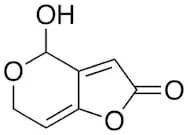
CAS:<p>Stability Hygroscopic<br>Applications Patulin (PAT), a mycotoxin produced by certain species of Penicillium, Aspergillus, and Byssochlamys, is mainly found in ripe apple and apple products. Patulin-induced genotoxicity and modulation of glutathione in Hep G2 cells. Patulin is an antibiotic. Patulin-induced nephropathy and gastrointestinal tract malfunction have been demonstrated in several animal models. The oral LD50 value of patulin ranges between 29 and 55 mg/kg body weight in rodents and 170 mg/kg body weight in poultry. The World Health Organization considers patulin cytotoxic and established a safety level of patulin in apple juice at 50 μM. At 100-200 μM, patulin can directly increase intracellular oxidative stress in HEK293 and HL-60 cells. In 1944, this compound was tested in a clinical trial for potential antibiotic<br> Not a dangerous good if item is equal to or less than 1g/ml and there is less than 100g/ml in the package<br>References Scott, P., et al.: J. Agric. Food Chem., 20, 450 (1972), Aden, D., et al.: Nature, 282, 615 (1979), Surralles, J., et al.: Mutat. Res., 341, 169 (1995), Alves, I., et al.: Mutagenesis, 15, 229 (2000), Liu, B., et al.: Toxicol. Appl. Pharmacol., 191, 255 (2003), Puel, O., Galtier, P., and Oswald, I.P. Biosynthesis and toxicological effects of patulin. Toxins 2(4) 613-631 (2010). Liu, B., Wu, T., Yu, F., et al. Induction of oxidative stress response by the mycotoxin patulin in mammalian cells. Toxicol Sci 95(2) 340-347 (2007). Chalmers, I., and Clarke, M. Commentary: The 1994 patulin trial: The first properly controlled multicentre trial conducted under the aegis of the British Medical Research Council. Int J Epidemiol 32 253-260 (2004).<br></p>Formula:C7H6O4Color and Shape:Off-White To YellowMolecular weight:154.12(-)-Citrinin
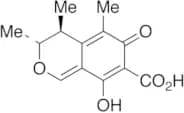
CAS:<p>Stability Hygroscopic<br>Applications Antibiotic substance produced by a white spore aspergilus which has been placed under the species name Aspergillus niveus. Also produced in small quantities by Penicillium citrinum.<br> Not a dangerous good if item is equal to or less than 1g/ml and there is less than 100g/ml in the package<br>References Ciegler, A., et al.: Appl. Microbiol., 26, 271 (1973), Creppy, E., et al.: Toxicol. Lett., 28, 29 (1985), DeGroene, E., et al.: Cancer Res., 56, 299 (1996),<br></p>Formula:C13H14O5Color and Shape:YellowMolecular weight:250.25Podophyllotoxin
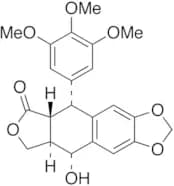
CAS:Controlled Product<p>Stability Very Hygroscopic<br>Applications Skin treatment for genital warts caused by some types of HPVs.<br> Not a dangerous good if item is equal to or less than 1g/ml and there is less than 100g/ml in the package<br>References Kelly, M.G. & Hartwell, J.L.; J. of the Nat'l Cancer Inst., 14, 967 (1954), Gupta, R.S.; Somatic Cell Genetics, 7, 59 (1981), Gupta, R.S.; Cancer Research, 43, 505 (1983a)<br></p>Formula:C22H22O8Color and Shape:White To Off-WhiteMolecular weight:414.414'-Demethylepipodophyllotoxin
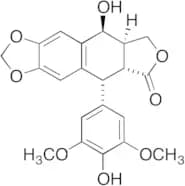
CAS:Controlled Product<p>Applications A potent inhibitor of microtubule assembly.<br></p>Formula:C21H20O8Color and Shape:NeatMolecular weight:400.38(-)-Altenuene
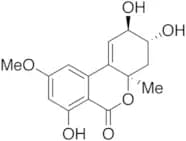
CAS:Controlled Product<p>Applications (-)-Altenuene is a mycotoxin isolated from the fungus Alternaria tenuis. (-)-Altenuene is structurally related to Alternariol (A575760).<br>References Pero, W.R. et al.: Biochim. Biophys. Acta, 230, 170 (1971); Altemoller, M. et al.: J. Nat. Prod., 72, 1288 (2009);<br></p>Formula:C15H16O6Color and Shape:White To Off-WhiteMolecular weight:292.28N-Hydroxy-2-(N-isopropoxy-[1,1'-biphenyl]-4-ylsulfonamido)acetamide
CAS:Purity:95.0%Molecular weight:364.4200134277344Benzovindiflupyr
CAS:<p>Benzovindiflupyr: a fungicide that inhibits SDH (IC50=5.2nM), halts S. sclerotiorum growth (EC50=0.011μg/ml), and protects crops like eggplants.</p>Formula:C18H15Cl2F2N3OColor and Shape:SolidMolecular weight:398.23


![5,6-Dibromo-1H-benzo[d][1,2,3]triazole](/_next/image/?url=https%3A%2Fstatic.cymitquimica.com%2Fproducts%2F10%2Fthumb-webp%2FF547026.webp&w=3840&q=75)
![N-Hydroxy-2-(N-isopropoxy-[1,1'-biphenyl]-4-ylsulfonamido)acetamide](/_next/image/?url=https%3A%2Fstatic.cymitquimica.com%2Fproducts%2F10%2Fthumb-webp%2FF227599.webp&w=3840&q=75)

