Organic Sulphonates and Sulphates
Sulphonates are compounds that contain a functional -SO₃ group, where a sulphur atom is bonded to three oxygen atoms, with one of them linked to an alkyl or aryl group. These compounds are used in API formulation due to their ability to enhance the solubility and stability of active ingredients. Their structure can also confer antimicrobial or anti-inflammatory properties.
Organic sulphates are derivatives of sulphuric acid, where the -OSO₃ group is attached to a carbon atom within an organic structure. They are employed in the manufacture of certain APIs to modify the solubility and bioactivity of compounds. Sulphates are also useful for improving the bioavailability of certain active ingredients in pharmaceutical treatments.
At CymitQuimica, we offer high-purity sulphonates and organic sulphates for use in pharmaceutical formulations, fine chemistry, and biotechnology.
Found 10404 products of "Organic Sulphonates and Sulphates"
Sort by
Purity (%)
0
100
|
0
|
50
|
90
|
95
|
100
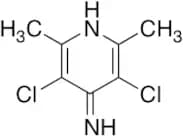
3,5-Dichloro-2,6-dimethylpyridin-4-amine
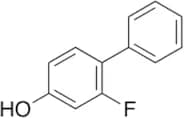
CAS:Controlled ProductFormula:C7H8Cl2N2Color and Shape:Light YellowMolecular weight:191.063-Fluoro-4-phenylphenol
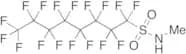
CAS:Controlled Product<p>Applications 3-Fluoro-4-phenylphenol (cas# 477860-13-2) is a useful research chemical.<br> Not a dangerous good if item is equal to or less than 1g/ml and there is less than 100g/ml in the package<br></p>Formula:C12H9FOColor and Shape:NeatMolecular weight:188.20N-Methylperfluorooctanesulfonamide
CAS:Controlled Product<p>Applications N-Methylperfluorooctanesulfonamide is a derivative of Perfluorooctanesulfonamide (FOSA) (P286245), which represents an important subgroup of the environmental contaminants known as perfluorinated compounds (PFCs).<br>References Hradkova, P., et al.: Czech J. Food Sci., 28, 333 (2010); Del Gobbo, L., et al.: J. Agr. Food Chem., 56, 7551 (2008)<br></p>Formula:C9H4F17NO2SColor and Shape:White To Off-WhiteMolecular weight:513.17O-Ethyl Flunixin
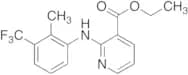
CAS:Controlled Product<p>Applications O-Ethyl Flunixin is an impurity of Flunixin Meglumine (F455400), a cyclooxigenase inhibitor. Anti-inflammatory; analgesic; antipyretic.<br>References McLellan, R., et al.: Drug Metab. Dispos., 24, 1134 (1996), Hannan, P., et al.: Antimicrob. Agents Chemother., 41, 2037 (1997), Tasker, S., et al.: J. Microbiol. Methods., 56, 63 (2004), Regmi, N., et al.: J. Vet. Pharmacol. Therap., 28, 553 (2005),<br></p>Formula:C16H15F3N2O2Color and Shape:NeatMolecular weight:324.304,6-Dichloro-5-(2-methoxyphenoxy)-2,2’-bipyrimidine
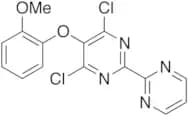
CAS:Controlled Product<p>Impurity Bosentan USP Related Compound D<br>Applications Bosentan USP Related Compound D<br>References Morimoto, H., et al.: J. Med. Chem., 44, 3369 (2001),<br></p>Formula:C15H10Cl2N4O2Color and Shape:NeatMolecular weight:349.17Ensulizole
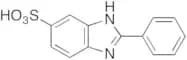
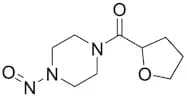
CAS:Controlled Product<p>Applications Ensulizole is s UV filter used in sunscreen formulations allowing for protection from harmful ultraviolet light.<br>References Grabicova, K. et al.: Ecotox. Env. Safety., 96, 41 (2013); Kim, D. et al.: J. Cosmet. Sci., 63, 103 (2012);<br></p>Formula:C13H10N2O3SColor and Shape:NeatMolecular weight:274.30N-Nitroso Tetrahydrofuroylpiprazine
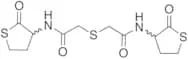
CAS:Controlled ProductFormula:C9H15N3O3Color and Shape:NeatMolecular weight:213.234Erdosteine Bis-N-(2-Oxo-3-tetrahydrothienyl) Impurity (Erdosteine EP21506)
CAS:Controlled Product<p>Impurity Erdosteine EP21506 Impurity<br>Stability Hygroscopic<br>Applications An impurity of the mucolytic Erdosteine (E596050).<br></p>Formula:C12H16N2O4S3Color and Shape:NeatMolecular weight:348.462-(4-Amino-1,3,5-triazin-2-yl)sulfanylethanesulfonic Acid Potassium Salt
CAS:Controlled Product<p>Applications 2-(4-Amino-1,3,5-triazin-2-yl)sulfanylethanesulfonic acid is an impurity of Mesna (M225750).<br></p>Formula:C5H7KN4O3S2Color and Shape:NeatMolecular weight:274.36N-[6-Chloro-5-(2-methoxyphenoxy)-(2,2-bipyrimidine)4-4-yl]-(1,1-dimethylethyl)-benzenesulfonamide
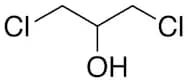
CAS:<p>Impurity Bosentan USP Related Compound A<br>Applications An intermediate of Bosentan, which is a mixed endothelin receptor antagonist. Bosentan USP Related Compound A.<br></p>Formula:C25H24ClN5O4SColor and Shape:NeatMolecular weight:526.011,3-Dichloro-2-propanol
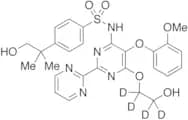
CAS:Controlled Product<p>Applications A chloropropanol which shows toxic effects.<br> Not a dangerous good if item is equal to or less than 1g/ml and there is less than 100g/ml in the package<br>References Andersen, H., et al.: Toxicology, 136, 67 (1999), Fry, J., et al.: Food Chem. Toxicol., 37, 351 (1999), Garle, M., et al.: Xenobiotica, 29, 533 (1999),<br></p>Formula:C3H6Cl2OColor and Shape:NeatMolecular weight:128.99Hydroxy Bosentan-d4
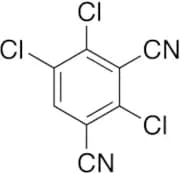
CAS:Controlled Product<p>Applications A labelled analogue of the active metabolite of Bosentan, a mixed endothelin receptor antagonist which is used as a vasodilator.<br>References Clozel, M., et al.: J. Pharmacol. Exp. Ther., 270, 228 (1994), Gutsch, G., et al.: Cardiovasc. Drugs Ther., 10, 717 (1996), Weber, C., et al.: Clin Pharmacol. Ther., 60, 124 (1996), Krum, H., et al.: N. Engl. J. Med., 338, 784 (1998)<br></p>Formula:C272H4H25N5O7SColor and Shape:NeatMolecular weight:571.642,4,5-Trichloro-1,3-benzenedicarbonitrile
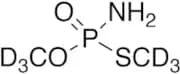
CAS:Controlled Product<p>Stability Light Sensitive<br>Applications 2,4,5-Trichloro-1,3-benzenedicarbonitrile is a degradation product of Chlorothalonil (C411250).<br> Not a dangerous good if item is equal to or less than 1g/ml and there is less than 100g/ml in the package<br>References Bakke, J., et al.: Science, 210, 433 (1980), Aschbacher, P., et al.: Xenobiotica, 17, 1047 (1987), Chadwick, R., et al.: Drug Metab. Dispos., 24, 425 (1992), Wallin, A., et al.: Toxicol. Pathol., 21, 443 (1993),<br></p>Formula:C8HCl3N2Color and Shape:NeatMolecular weight:231.47Metamidophos-d6
CAS:Controlled Product<p>Applications Isotope labelled Metamidophos (M258840) is an organophosphate insecticide used in great quantities in rice fields in rice-producing countries.<br>References Sipes, N.S., et al.: Chem. Res. Toxiciol., 26, 878 (2013); Mineau, P., et al.: Environ. Toxicol. Pharmacol., 34, 416 (2012);<br></p>Formula:C22H6H2NO2PSColor and Shape:NeatMolecular weight:147.171,4-Di-2-furoylpiperazine
CAS:<p>1,4-Di-2-furoylpiperazine is a synthetic compound that has been shown to have anti-inflammatory and analgesic properties. It was originally developed as a pharmaceutical drug candidate for the treatment of arthritis and other inflammatory disorders. 1,4-Di-2-furoylpiperazine is an impurity in the synthesis of the drug product diclofenac. The compound is also found as a metabolite in humans after oral administration of diclofenac. 1,4-Di-2-furoylpiperazine binds to protein and inhibits protein synthesis by preventing amino acid incorporation into proteins. It also has nicotinic effects on acetylcholine binding sites and can be used as an analytical standard for HPLC analysis of drugs containing this molecule.</p>Formula:C14H14N2O4Purity:Min. 95%Molecular weight:274.27 g/mol1,4-Bis[(tetrahydro-2-furanyl)carbonyl]-piperazine
CAS:<p>1,4-Bis[(tetrahydro-2-furanyl)carbonyl]-piperazine is a synthetic drug product. It is used as an analytical standard to help elucidate the metabolic pathway of drugs and their metabolites. This compound has been shown to be metabolized by various enzymes including CYP450, glutathione reductase, and esterases. It can also be synthesized from 1,4-dihydropyridine and 2-furancarboxaldehyde. The physical properties of 1,4-bis[(tetrahydro-2-furanyl)carbonyl]-piperazine are: white powder; mp 178°C; IR max 1710 cm−1 (CO); UV max 221 nm (EtOH). The impurities in this product are: 1-(2H)-Quinolinone (CAS No. 2467-94-1) which may have a maximum concentration</p>Formula:C14H22N2O4Purity:Min. 95%Molecular weight:282.34 g/molBucillamine
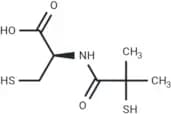
CAS:<p>Bucillamine (DE019) protects against Ischemia/reperfusion injury in high-risk organ transplants and inhibits the production of VEGF.</p>Formula:C7H13NO3S2Purity:99.47%Color and Shape:SolidMolecular weight:223.31N,S-Carboxymethyl cysteine hydrochloride
CAS:<p>N,S-Carboxymethyl cysteine hydrochloride (NCC) is a drug product that is synthesized from cysteine. It has been used in analytical chemistry, metabolism studies, and drug development. NCC has been shown to be a natural metabolite of cysteine when administered orally to rats or mice. It is also an impurity standard for HPLC analysis and has been used as an API impurity in the synthesis of other drugs.<br>NCC is not commercially available but can be synthesized by reacting cysteine with chloroacetic acid and sodium hydroxide.</p>Formula:C7H11NO6S·HClPurity:Min. 95%Molecular weight:273.69 g/mol


![N-[6-Chloro-5-(2-methoxyphenoxy)-(2,2-bipyrimidine)4-4-yl]-(1,1-dimethylethyl)-benzenesulfonamide](/_next/image/?url=https%3A%2Fstatic.cymitquimica.com%2Fproducts%2FTR%2Fthumb-webp%2FC368750.webp&w=3840&q=75)

![1,4-Bis[(tetrahydro-2-furanyl)carbonyl]-piperazine](/_next/image/?url=https%3A%2Fstatic.cymitquimica.com%2Fproducts%2F3D%2Fthumb-webp%2FIB63853.webp&w=3840&q=75)