


Fatty Acids and Lypidic Derivatives
Found 32360 products of "Fatty Acids and Lypidic Derivatives"
5-Bromo-2-(methylthio)pyrimidine-carboxylic acid
CAS:Formula:C6H5BrN2O2SPurity:96%Color and Shape:Solid, Crystalline Powder or PowderMolecular weight:249.08(1R,2S,5S)-6,6-Dimethyl-3-[(2-methylpropan-2-yl)oxycarbonyl]-3-azabicyclo[3.1.0]hexane-2-carboxylic acid
CAS:Purity:97%Molecular weight:255.31399543-Chloro-2-methoxyisonicotinic acid
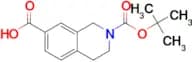
CAS:Formula:C7H6ClNO3Purity:95%Color and Shape:SolidMolecular weight:187.58N-Boc-1,2,3,4-Tetrahydroisoquinoline-7-carboxylic acid
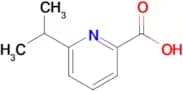
CAS:Formula:C15H19NO4Purity:98%Color and Shape:SolidMolecular weight:277.326-Isopropylpicolinic acid
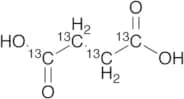
CAS:Formula:C9H11NO2Purity:98%Color and Shape:SolidMolecular weight:165.192Succinic Acid-13C4
CAS:Applications Succinic Acid-13C4 is a compound useful in organic synthesis.
Formula:C4H6O4Color and Shape:NeatMolecular weight:122.06gamma-Linolenic Acid
CAS:Controlled ProductStability Light Sensitive
Applications γ-Linolenic Acid is a fatty acid found mainly in vegetable oil. Studies suggest that γ-Linolenic Acid may have immune regulating and anti-inflammatory effects. γ-Linolenic Acid has also been used in the treatment of atopic eczeme although its efficacy is disputed.
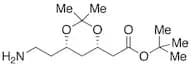
References Ziboh, V. et al.: Fatty Acids Food Health Implic., 791 (2008); Kapoor, R. et al.: Curr. Phar, Biotechnol., 7, 531 (2006); Horrobin, D. et al.: Am. J. Nutrit., 71, 367S (2000);Formula:C18H30O2Color and Shape:NeatMolecular weight:278.43(4S,cis)-1,1-Dimethylethyl-6-aminoethyl-2,2-dimethyl-1,3-dioxane-4-acetate
CAS:Controlled ProductApplications An impurity of Atorvastatin.
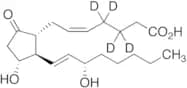
References Graul, A., et al.: Drugs Fut. 22, 956 (1997),Formula:C14H27NO4Color and Shape:NeatMolecular weight:273.37Prostaglandin E2-d4
CAS:Controlled ProductApplications Labelled analogue of Prostaglandin E2. The most common and most biologically potent of mammalian prostaglandins. Isolated from sheep prostate. Oxytocic; abortifacient.
References Van Dorp, D.A. et al.: Biochem. Biopphys. Acta, 90, 204 (1964); Hamberg, M. et al.: J. Biol. Chem., 246, 6713 (1971);Formula:C20H28D4O5Color and Shape:NeatMolecular weight:356.5Pyridinium Chlorochromate
CAS:Controlled ProductApplications Pyridinium Chlorochromate is used in the synthesis of potent antitumor antibiotics and agents.
Not a dangerous good if item is equal to or less than 1g/ml and there is less than 100g/ml in the package
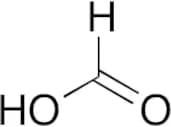
References Hurley, L. et al.: Chem. Res. Toxicol., 1, 258 (1988);Formula:C5H5N·ClCrO3·HColor and Shape:NeatMolecular weight:215.56Formic Acid, 85%
CAS:Controlled ProductApplications Formic Acid is used as a potential energy source in the preparation of fuel cells. Also used in chemical synthesis of various anti-inflammatory and anti-microbial agents.
Not a dangerous good if item is equal to or less than 1g/ml and there is less than 100g/ml in the package
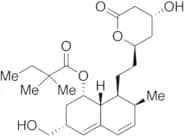
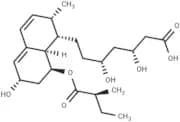
References Yu, X. et al.: J. Power Source., 182, 124 (2008); Bekhit, A. et al.: Bioorg. Med. Chem., 12, 1935 (2004);Formula:CH2O2Purity:85%Color and Shape:NeatMolecular weight:46.03Pravastatin
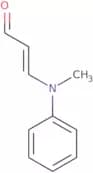
CAS:Pravastatin (CS-514) is a competitive HMG-CoA reductase inhibitor with an IC50 of 5.6 μM for sterol synthesis, capable of lowering serum cholesterol.Formula:C23H36O7Purity:99.99%Color and Shape:White PowderMolecular weight:424.533-(N-Phenyl-N-methyl)aminoacrolein
CAS:3-(N-Phenyl-N-methyl)aminoacrolein is a hydrophobic compound that has been shown to reversibly bind to serum albumin. This binding leads to a decrease in the lipid content of lipoproteins and a decrease in the rate of their metabolism. These effects are mediated by hydrophobic interactions with the hydrophobic regions of serum albumin. 3-(N-Phenyl-N-methyl)aminoacrolein also interacts with human serum albumin, which is involved in lipid transport and metabolism, and can be used as a contrast agent for X-ray diffraction studies.
Formula:C10H11NOPurity:Min. 97 Area-%Color and Shape:PowderMolecular weight:161.2 g/mol3-(4-Fluorophenoxy)propionic acid
CAS:Formula:C9H9FO3Purity:97.0%Color and Shape:SolidMolecular weight:184.166Boc-Amino-4-carboxytetrahydrothiopyran
CAS:Formula:C11H19NO4SColor and Shape:White powderMolecular weight:261.346-[2-Chloro-4-(methylthio)phenyl]-6-oxohexanoic acid
CAS:Formula:C13H15ClO3SPurity:97.0%Molecular weight:286.77


![(1R,2S,5S)-6,6-Dimethyl-3-[(2-methylpropan-2-yl)oxycarbonyl]-3-azabicyclo[3.1.0]hexane-2-carboxyli…](/_next/image/?url=https%3A%2Fstatic.cymitquimica.com%2Fproducts%2F10%2Fthumb-webp%2FF609816.webp&w=3840&q=75)









![6-[2-Chloro-4-(methylthio)phenyl]-6-oxohexanoic acid](/_next/image/?url=https%3A%2Fstatic.cymitquimica.com%2Fproducts%2F10%2Fthumb-webp%2FF207476.webp&w=3840&q=75)