Detergents
Subcategories of "Detergents"
Found 745 products of "Detergents"
N,N-Bis[3-D-Gluconamidopropyl]cholamide
CAS:Stability Hygroscopic
Applications Homogeneous nonionic detergent with bile acid hydrophobic group. Useful in solubilization of functional opiate receptor.
References Hjelmeland, L.M., et al.: Anal. Biochem., 130, 485 (1983), Buhler, H., et al.: Biochim. et Biophys. Acta., 1075, 206 (1991)Formula:C42H75N3O16Color and Shape:White To Off-WhiteMolecular weight:878.06N-(3-Aminopropyl)-n-dodecylpropane-1,3-diamine
CAS:Controlled ProductStability Hygroscopic
Applications N-(3-Aminopropyl)-n-dodecylpropane-1,3-diamine is a reactant used in the synthesis of gluconamide derivatives as cationic surfactants with antimicrobial properties.
Not a dangerous good if item is equal to or less than 1g/ml and there is less than 100g/ml in the package
References Prieto-Blanco, M. et al.: J. Chrom., 1431, 176 (2016); Zhi, L. et al.: J. Surf. Deter., 19, 337 (2016);Formula:C18H41N3Color and Shape:ColourlessMolecular weight:299.5417-(4-Nonylphenoxy)-3,6,9,12,15-pentaoxaheptadecan-1-ol
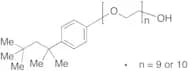
CAS:Formula:C27H48O7Color and Shape:NeatMolecular weight:484.67Triton X-100
CAS:Applications Triton-X 100 is a non-ionic surfactant. Used in the enhancement of film porosity in conducting polymers.
Not a dangerous good if item is equal to or less than 1g/ml and there is less than 100g/ml in the package
References Tevi, T. et al.: Synth. Mat., 191, 59 (2014); Zhang, L. et al.: Nano Lett., 14, 4189 (2014);Formula:C14H22O·(OCH2CH2)nColor and Shape:ColourlessMolecular weight:250.38N-Methyl-N-octanoylglucamine
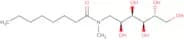
CAS:N-Methyl-N-octanoylglucamine is a chemical compound that inhibits the activity of the enzyme diacylglycerol lipase, which breaks down the lipid diacylglycerol. This leads to an accumulation of diacylglycerols in the cellular membrane and increased permeability of the cell, which results in physiological effects such as increased release of neurotransmitters. N-Methyl-N-octanoylglucamine has been shown to bind to peptides and inhibit their proteolytic degradation by peptidases. It also has been shown to have an effect on monoclonal antibodies with a high affinity for fatty acids. This compound is used for sample preparation prior to analysis by MALDI mass spectrometry.Formula:C15H31NO6Purity:Min. 95 Area-%Color and Shape:White PowderMolecular weight:321.41 g/molHexadecyl 2-acetamido-2-deoxy-b-D-glucopyranoside
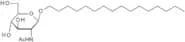
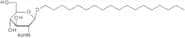
CAS:Hexadecyl 2-acetamido-2-deoxy-b-D-glucopyranoside is a monosaccharide that is mediated by the enzyme 2,3-bisphosphoglycerate (2,3BPG) synthase. It is a key intermediate in the synthesis of glycerol 3 phosphate, which is a precursor for glycerol and phosphoglycerides in plants. Hexadecyl 2-acetamido-2-deoxy-b-D-glucopyranoside can be found in chloroplasts and leaves. This compound is also used as a spacer in liposomes, as well as to clone DNA sequences.Formula:C24H47NO6Purity:Min. 95%Molecular weight:445.63 g/mol2-((4,4,5,5,5-Pentafluoropentyl)oxy)octyl b-D-maltopyranoside
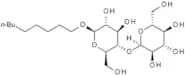
2-((4,4,5,5,5-Pentafluoropentyl)oxy)octyl ?-D-maltopyranoside is a fluorinated surfactant that can be used as a substitute for traditional detergents in holding membranes proteins in the soluble fraction and improve their stability.Formula:C25H43F5O12Purity:Min. 95%Color and Shape:SolidMolecular weight:630.59 g/molNonyl b-D-maltopyranoside
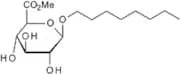
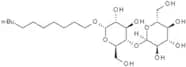
CAS:Nonyl b-D-maltopyranoside is a high purity custom synthesis sugar. The CAS number is 106402-05-5 and the molecular weight is 396.2 g/mol. This product has been synthesized using Click modification, Fluorination, Glycosylation, Synthetic, Methylation, Modification, Oligosaccharide, Monosaccharide and saccharide. This product can be used in the preparation of complex carbohydrate.Formula:C21H40O11Purity:Min. 95%Color and Shape:White/Off-White SolidMolecular weight:468.54 g/molOctyl D-glucuronide methyl ester
CAS:Octyl D-glucuronide methyl ester is a modification of the oligosaccharide octyl glucuronide. Octyl D-glucuronide methyl ester is a white to off-white solid with a molecular weight of 787. It has been synthesized using a custom synthesis, and is available in high purity and with high purity. The CAS number for this compound is 1423035-40-8.Formula:C15H28O7Purity:Min. 95%Color and Shape:White PowderMolecular weight:320.39 g/molDecyl b-D-thioglucopyranoside
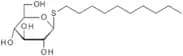
CAS:Decyl b-D-thioglucopyranoside is a saccharide that is a methylated derivative of the sugar glucose. It is used in the synthesis of oligosaccharides, glycosylations, and fluorinated carbohydrates. The compound can be custom synthesized to suit specific needs and has high purity.Formula:C16H32O5SPurity:Min. 95%Color and Shape:PowderMolecular weight:336.49 g/molDecyl b-D-thiomaltopyranoside
CAS:Decyl b-D-thiomaltopyranoside is a glycosylation product of the monosaccharide, maltose. It is a complex carbohydrate that consists of two glucose molecules linked by alpha (1-4) glycosidic bonds. Decyl b-D-thiomaltopyranoside has been modified with methyl groups and fluorine atoms. This product is CAS No. 148565-56-4, and it can be custom synthesized to meet your specifications. The purity of this product ranges from 98% to 99%.
Formula:C22H42O10SPurity:Min. 95%Color and Shape:White To Off-White SolidMolecular weight:498.63 g/molDecyl β-D-maltopyranoside
CAS:Non-ionic detergent; solubilises proteins for SDS-PAGE analysisFormula:C22H42O11Purity:Min. 97 Area-%Color and Shape:White PowderMolecular weight:482.56 g/molOctyl a-D-thiomannopyranoside
CAS:Octyl a-D-thiomannopyranoside is an oligosaccharide which is a member of the mannose family. It is a high purity, custom synthesis that has been modified with fluorination and glycosylation. This product can be used for Click modification, fluoroethylation, methylation, and carbohydrate modification. Octyl a-D-thiomannopyranoside has CAS No. 163955-47-3 and is synthetically produced and can be used for oligosaccharide, monosaccharide, saccharide, carbohydrate complex carbohydrate research.Formula:C14H28O5SPurity:Min. 95%Molecular weight:308.44 g/molDodecyl b-D-thiomaltopyranoside
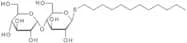
CAS:Dodecyl b-D-thiomaltopyranoside is a surfactant that is used in the formulation of multilayer tablets. It is a glycosidic surfactant and an adsorbent. Dodecyl b-D-thiomaltopyranoside has been shown to form micelles in solution and on electrodes, with the size of the micelle depending on the concentration. The surface area of micelles can be increased by increasing the concentration of electrolytes. Dodecyl b-D-thiomaltopyranoside may also form monolayers at low concentrations, which are less effective for adsorption than micelles.Formula:C24H46O10SPurity:Min. 95%Color and Shape:PowderMolecular weight:526.68 g/molHeptyl 2-acetamido-3,4,6-tri-O-acetyl-2-deoxy-b-D-glucopyranoside
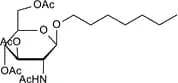
CAS:Heptyl 2-acetamido-3,4,6-tri-O-acetyl-2-deoxy-b-D-glucopyranoside is a chemical compound that binds to the promoter region of genes and regulates their expression. It has been shown to regulate gene expression levels in a variety of cells, including humans. Heptyl 2-acetamido-3,4,6-tri-O-acetyl-2 deoxy -b D glucopyranoside binds to the promoter region of genes and alters their expression levels. The regulation of these genes can be used for research purposes or as a potential treatment for disease.Formula:C21H35NO9Purity:Min. 95%Molecular weight:445.5 g/molOctyldecyl 2-acetamido-2-deoxy-b-D-glucopyranoside
CAS:Octyldecyl 2-acetamido-2-deoxy-b-D-glucopyranoside is a custom synthesis and modification product. It is a high purity, complex carbohydrate with saccharide units that are modified with fluorination. This product has been modified using methylation and click chemistry to produce an oligosaccharide. Octyldecyl 2-acetamido-2-deoxy-b-D-glucopyranoside can be used as a glycosylation substrate in the synthesis of polysaccharides.Formula:C26H51NO6Purity:Min. 95%Color and Shape:White/Off-White SolidMolecular weight:473.69 g/molUndecyl a-D-maltopyranoside
CAS:Undecyl a-D-maltopyranoside is a fluorescent dye that is used in immunohistochemical and immunocytochemical techniques. It has been shown to have excellent photostability, and is also useful for the detection of sulfides. This dye emits light at 520 nm when excited with laser light. The emission spectrum can be changed by adding other dyes, such as fluorescein or rhodamine, to the molecule. The addition of these dyes can also increase its photostability, which makes it an excellent candidate for use in confocal microscopy techniques. Undecyl a-D-maltopyranoside has been shown to react with proteins through an immunoreaction technique.Formula:C23H44O11Purity:Min. 95%Color and Shape:PowderMolecular weight:496.59 g/molN-Decanoyl-N-methylglucamine
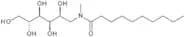
CAS:N-Decanoyl-N-methylglucamine is a fatty acid that is used as a cationic surfactant in detergents and cleaning products. It has been shown to have conformational properties that can be influenced by the acyl chain length. N-Decanoyl-N-methylglucamine has also been shown to bind to antibodies and other proteins, which may lead to antibody response or changes in their conformation. N-Decanoyl-N-methylglucamine binds to receptors on cells, triggering cell lysis and monoclonal antibody production. The optimum pH for this chemical is between 5 and 6, and it has been shown to undergo titration calorimetry at temperatures greater than 100°C.Formula:C17H35NO6Purity:Min. 95%Color and Shape:White PowderMolecular weight:349.47 g/moln-Dodecyl-beta-D-glucopyranoside
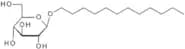
CAS:Non-ionic detergent; solubilises membrane-bound proteins
Formula:C18H36O6Color and Shape:White PowderMolecular weight:348.47 g/molHexadecyl b-D-maltopyranoside
CAS:Hexadecyl b-D-maltopyranoside is a lamellar liquid crystal composed of octadecanol and hexadecyl b-D-maltopyranoside. It is an inorganic, crystalline polymorph that forms monomers and micelles with surfactant properties. Hexadecyl b-D-maltopyranoside has been shown to transduce x-ray data, which can be used in techniques such as microscopy. The lamellar phase of this compound may be metastable and depend on additives.Formula:C28H54O11Purity:Min. 95%Color and Shape:PowderMolecular weight:566.72 g/mol
![N,N-Bis[3-D-Gluconamidopropyl]cholamide](/_next/image/?url=https%3A%2Fstatic.cymitquimica.com%2Fproducts%2FTR%2Fthumb-webp%2FB438500.webp&w=3840&q=75)