Detergents
Subcategories of "Detergents"
Found 745 products of "Detergents"
Hexadecyl b-D-maltopyranoside
CAS:Hexadecyl b-D-maltopyranoside is a lamellar liquid crystal composed of octadecanol and hexadecyl b-D-maltopyranoside. It is an inorganic, crystalline polymorph that forms monomers and micelles with surfactant properties. Hexadecyl b-D-maltopyranoside has been shown to transduce x-ray data, which can be used in techniques such as microscopy. The lamellar phase of this compound may be metastable and depend on additives.Formula:C28H54O11Purity:Min. 95%Color and Shape:PowderMolecular weight:566.72 g/molOctyl D-glucuronide methyl ester
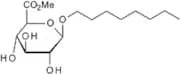
CAS:Octyl D-glucuronide methyl ester is a modification of the oligosaccharide octyl glucuronide. Octyl D-glucuronide methyl ester is a white to off-white solid with a molecular weight of 787. It has been synthesized using a custom synthesis, and is available in high purity and with high purity. The CAS number for this compound is 1423035-40-8.Formula:C15H28O7Purity:Min. 95%Color and Shape:White PowderMolecular weight:320.39 g/molDecyl b-D-thioglucopyranoside
CAS:Decyl b-D-thioglucopyranoside is a saccharide that is a methylated derivative of the sugar glucose. It is used in the synthesis of oligosaccharides, glycosylations, and fluorinated carbohydrates. The compound can be custom synthesized to suit specific needs and has high purity.Formula:C16H32O5SPurity:Min. 95%Color and Shape:PowderMolecular weight:336.49 g/molDecyl b-D-thiomaltopyranoside
CAS:Decyl b-D-thiomaltopyranoside is a glycosylation product of the monosaccharide, maltose. It is a complex carbohydrate that consists of two glucose molecules linked by alpha (1-4) glycosidic bonds. Decyl b-D-thiomaltopyranoside has been modified with methyl groups and fluorine atoms. This product is CAS No. 148565-56-4, and it can be custom synthesized to meet your specifications. The purity of this product ranges from 98% to 99%.
Formula:C22H42O10SPurity:Min. 95%Color and Shape:White To Off-White SolidMolecular weight:498.63 g/molCYMAL-7 neopentyl glycol
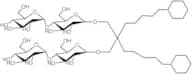
CAS:CYMAL-7 neopentyl glycol is a custom synthesis and is not commercially available. It is a complex carbohydrate that has been modified by methylation, glycosylation, and carbamate formation. CYMAL-7 neopentyl glycol has been modified with a fluorination reaction to give it high purity. This product has CAS No. 1423310-08-0 and is classified as an Oligosaccharide or Polysaccharide.Formula:C49H88O22Purity:Min. 98 Area-%Color and Shape:PowderMolecular weight:1,029.21 g/molDodecyl b-D-galactopyranoside
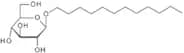
Dodecyl b-D-galactopyranoside is a methylated sugar that can be used to modify glycoproteins and polysaccharides. Dodecyl b-D-galactopyranoside has been shown to be useful for the synthesis of complex carbohydrate oligosaccharides, as well as for click chemistry, which involves the use of copper (II) ions. This product is available in custom synthesis, high purity, and fluorination.Formula:C18H36O6Purity:Min. 95%Molecular weight:348.48 g/molDodecyl b-D-thiomaltopyranoside
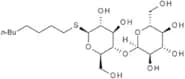
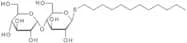
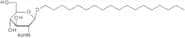
CAS:Dodecyl b-D-thiomaltopyranoside is a surfactant that is used in the formulation of multilayer tablets. It is a glycosidic surfactant and an adsorbent. Dodecyl b-D-thiomaltopyranoside has been shown to form micelles in solution and on electrodes, with the size of the micelle depending on the concentration. The surface area of micelles can be increased by increasing the concentration of electrolytes. Dodecyl b-D-thiomaltopyranoside may also form monolayers at low concentrations, which are less effective for adsorption than micelles.Formula:C24H46O10SPurity:Min. 95%Color and Shape:PowderMolecular weight:526.68 g/molOctyldecyl 2-acetamido-2-deoxy-b-D-glucopyranoside
CAS:Octyldecyl 2-acetamido-2-deoxy-b-D-glucopyranoside is a custom synthesis and modification product. It is a high purity, complex carbohydrate with saccharide units that are modified with fluorination. This product has been modified using methylation and click chemistry to produce an oligosaccharide. Octyldecyl 2-acetamido-2-deoxy-b-D-glucopyranoside can be used as a glycosylation substrate in the synthesis of polysaccharides.Formula:C26H51NO6Purity:Min. 95%Color and Shape:White/Off-White SolidMolecular weight:473.69 g/molHeptyl 2-acetamido-3,4,6-tri-O-acetyl-2-deoxy-b-D-glucopyranoside
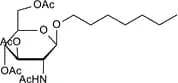
CAS:Heptyl 2-acetamido-3,4,6-tri-O-acetyl-2-deoxy-b-D-glucopyranoside is a chemical compound that binds to the promoter region of genes and regulates their expression. It has been shown to regulate gene expression levels in a variety of cells, including humans. Heptyl 2-acetamido-3,4,6-tri-O-acetyl-2 deoxy -b D glucopyranoside binds to the promoter region of genes and alters their expression levels. The regulation of these genes can be used for research purposes or as a potential treatment for disease.Formula:C21H35NO9Purity:Min. 95%Molecular weight:445.5 g/molOctyl 4-O-(b-D-galactopyranosyl)-b-D-glucopyranoside
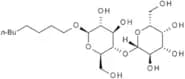
CAS:Octyl 4-O-(b-D-galactopyranosyl)-b-D-glucopyranoside is a galactose derivative of octyl 4-O-(b-D-glucopyranosyl)-b-D-glucopyranoside. It has been used to immobilize the enzyme phospholipase A2 in an exothermic reaction. This product is a white solid that is soluble in water. Octyl 4-O-(b-D-galactopyranosyl)-b-D-glucopyranoside has been shown to be effective against mycobacteria such as Mycobacterium avium complex and Mycobacterium tuberculosis, but not against other bacteria. This product may be useful for the treatment of mycobacterial infections because it exhibits excisional activity and can cleave phospholipid membranes.Formula:C20H38O11Purity:Min. 95%Color and Shape:PowderMolecular weight:454.51 g/mol2-((4,4,5,5,5-Pentafluoropentyl)oxy)dodecanyl b-D-maltopyranoside
2-((4,4,5,5,5-Pentafluoropentyl)oxy)dodecanyl ?-D-maltopyranoside is a fluorinated form of Dodecyl ?-D-maltopyranoside (DDM). Fluorinated detergents are extremely bulky and hydrophobic. These types of detergents are not necessarily suitable for membrane protein extraction, but can stabilize proteins during the purification stages and during crystallization.Formula:C29F5H52O12Purity:Min. 95%Color and Shape:SolidMolecular weight:687.71 g/molOctyl 3,6-di-O-(a-D-mannopyranosyl)-b-D-mannopyranoside
CAS:Octyl 3,6-di-O-(a-D-mannopyranosyl)-b-D-mannopyranoside is an anti-infective agent that belongs to the functional group of mannosides. It is used as a model system for investigating the inhibitory effects of chemical structures on enzymatic activity. Octyl 3,6-di-O-(a-D-mannopyranosyl)-b-D-mannopyranoside has been shown to have inhibitory effects on alzheimer's disease and other neurodegenerative diseases. The octyl 3,6 di O-(a D mannopyranosyl) b D mannopyranoside molecule can be broken down into two parts: octyl 3,6 di O-(a D mannopyranosyl) b D mannose and octyl 6 b D manno pyranose. The octyl 6 b D manno pyrFormula:C26H48O16Purity:Min. 95%Color and Shape:White To Off-White SolidMolecular weight:616.65 g/molOctadecylthioethyl 4-O-(4-O[6-O-a-D-glucopyranosyl-a-D-glucopyranosyl]-a-D-glucopyranosyl)-b-D-glucopyranoside
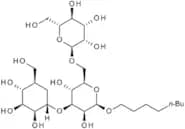
CAS:Octadecylthioethyl 4-O-(4-O[6-O-a-D-glucopyranosyl-a-D-glucopyranosyl]-a-D-glucopyranosyl)-b-D-glucopyranoside is a methylated, fluorinated complex carbohydrate that has been custom synthesized. It is an oligosaccharide with a saccharide and monosaccharides. The chemical name for this compound is 2-[2-(2,3,4,6,7,8,9,10,11,12,13) -octadecylthioethyl] -1-[(6Z)-6-[(4Z)-4-[(4E)-4-(3S)-3-[(R)-1-(2S) -2-(2S) -3-(2S) -5(R) -5(R) -5(R) -Formula:C44H82O21SPurity:Min. 95%Color and Shape:SolidMolecular weight:979.18 g/molOctyl α-D-mannopyranoside
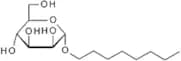
CAS:Octyl α-D-mannopyranoside is an organic chemical compound that is a methylated saccharide. It is the product of the reaction of octanol with mannose and can be used for glycosylation, fluorination, and complex carbohydrate synthesis. This product has high purity, custom synthesis, and CAS No. 124650-29-9. It is also a methylated saccharide that belongs to the group of Polysaccharides. Octyl α-D-mannopyranoside can also be modified by click chemistry or Click modification.Formula:C14H28O6Purity:Min. 95%Color and Shape:White PowderMolecular weight:292.37 g/molNonyl β-D-glucopyranoside
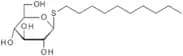
CAS:Nonyl β-D-glucopyranoside is an alkylglycoside non-ionic mild detergent used for cell lysis and membrane protein isolation. As it is uncharged it is unlikely to cause protein denaturation or refolding issues, allowing for the isolation of intact macromolecular complexes without affecting protein-protein interactions. Nonyl β-D-glucopyranoside is useful for the solubilization and crystallization of many biological membrane proteins and isolation of membrane-bound proteins. It has also been used for enantiomeric separation by capillary electrophoresis. Nonyl β-D-glucopyranoside is also known as B-Nonylglucoside or Nonyl D-glucoside and has an aggregation number of 133. It is dialyzable from membrane protein preparations and has a Critical Micelle Concentration (CMC) of 6.5mM.
Formula:C15H30O6Purity:Min. 95%Color and Shape:PowderMolecular weight:306.4 g/molHeptyl b-D-glucopyranoside
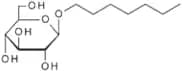
CAS:Heptyl b-D-glucopyranoside is a natural product that belongs to the class of 5HT agonists. It was originally isolated from plants and has been shown to have antiinflammatory activity. It has also been observed to have effects on human serum, lymphocyte transformation, high salt, polymerase chain reaction (PCR), and kinetic energy. Heptyl b-D-glucopyranoside is synthesized by reacting heptanol with 5-hydroxybenzaldehyde in the presence of an acid catalyst.
Formula:C13H26O6Purity:Min. 95%Color and Shape:White PowderMolecular weight:278.34 g/molOctyl b-D-thiomaltopyranoside
CAS:Octyl b-D-thiomaltopyranoside is a colorless to yellow liquid with a sweet, malty odor. It is soluble in alcohol and ether. This product has been used as an analytical reagent in the analysis of sulfur compounds for GC/MS and LC/MS. It can be used to determine the concentration of dimethylsulfide (DMS) in marine systems. Octyl b-D-thiomaltopyranoside has also been used as a cycling agent for column chromatography, as well as an additive for animal injection compositions. Octyl b-D-thiomaltopyranoside is not toxic to animals at concentrations up to 2000 mg/kg body weight.Formula:C20H38O10SPurity:Min. 95%Molecular weight:470.58 g/molOctyl a-D-thiomannopyranoside
CAS:Octyl a-D-thiomannopyranoside is an oligosaccharide which is a member of the mannose family. It is a high purity, custom synthesis that has been modified with fluorination and glycosylation. This product can be used for Click modification, fluoroethylation, methylation, and carbohydrate modification. Octyl a-D-thiomannopyranoside has CAS No. 163955-47-3 and is synthetically produced and can be used for oligosaccharide, monosaccharide, saccharide, carbohydrate complex carbohydrate research.Formula:C14H28O5SPurity:Min. 95%Molecular weight:308.44 g/molDecyl β-D-maltopyranoside
CAS:Non-ionic detergent; solubilises proteins for SDS-PAGE analysisFormula:C22H42O11Purity:Min. 97 Area-%Color and Shape:White PowderMolecular weight:482.56 g/molSodium dioctylsulfosuccinate (AOT), min. 95%
CAS:Sodium dioctylsulfosuccinate (AOT), min. 95%
Formula:C20H37N9O7SPurity:min. 95%Color and Shape:white pwdr.Molecular weight:444.56




![Octadecylthioethyl 4-O-(4-O[6-O-a-D-glucopyranosyl-a-D-glucopyranosyl]-a-D-glucopyranosyl)-b-D-glu…](/_next/image/?url=https%3A%2Fstatic.cymitquimica.com%2Fproducts%2F3D%2Fthumb-webp%2FDO05214.webp&w=3840&q=75)