Detergents
Detergents, classified under surfactants and detergents, are essential compounds designed to reduce surface tension in various products, facilitating the cleaning and emulsification processes. This section includes a diverse range of surfactants, known for their high efficacy in altering surface properties. Among them, zwitterionic detergents stand out due to their milder, non-denaturing nature, making them ideal for applications requiring gentle yet effective action. These detergents are crucial in both industrial and laboratory settings, where they aid in cleaning, emulsifying, and stabilizing products without compromising their integrity. Their versatility and effectiveness make them indispensable in numerous applications, from household cleaning products to specialized laboratory reagents.
Subcategories of "Detergents"
Found 745 products of "Detergents"
Sort by
Purity (%)
0
100
|
0
|
50
|
90
|
95
|
100
(1S,4aR,8R,8aR)-1-Methyl-3-oxo-8-[(2R,3S,4R,5R,6S)-3,4,5-trihydroxy-6-[[(E)-3-phenylprop-2-enoyl]oxymethyl]oxan-2-yl]oxy-4,4a,8,8a-t etrahydro-1H-pyrano[3,4-c]pyran-5-carboxylic acid
CAS:(1S,4aR,8R,8aR)-1-Methyl-3-oxo-8-[(2R,3S,4R,5R,6S)-3,4,5-trihydroxy-6-[[(E)-3-phenylprop-2-enoyl]oxymethyl]oxan-2-yl]oxy-4,4a,8,8a -tetrahydro-1H-pyrano[3,4c]pyran 5 carboxylic acid is a carbohydrate. It is a complex carbohydrate with high purity and custom synthesis. The methylation and glycosylation of this product make it highly effective in the modification of saccharides in oligosaccharides. This product is synthesized from fluoroquinolones and has complex structures with methylation and glycosylations.Formula:C25H28O12Purity:Min. 95%Molecular weight:520.5 g/molUndecylenyl b-D-maltoside
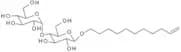
Undecylenyl b-D-maltoside is a high purity sugar that can be custom synthesized. It is fluorinated at the hydroxyl group, glycosylated, and methylated. This product is also available in various configurations including oligosaccharides, monosaccharides, and complex carbohydrates. Undecylenyl b-D-maltoside is a carbohydrate that can be used as a synthetic building block for the synthesis of other sugars. It can also be used for glycosylation reactions to create new glycoconjugates with improved properties. Undecylenyl b-D-maltoside is an oligosaccharide with a saccharide chain consisting of 10 units of D-glucose and one unit of D-mannose. The individual units are linked together by alpha 1,6 bonds.Formula:C23H42O11Purity:Min. 95%Molecular weight:494.57 g/molHeptyl b-D-thioglucopyranoside
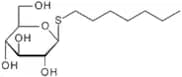
CAS:Heptyl b-D-thioglucopyranoside is a small molecule that is used as a regulator of the phosphatase enzyme (PP1). PP1 is an important enzyme in the regulation of cellular signaling pathways. Heptyl b-D-thioglucopyranoside interacts with the regulatory domain of PP1, which is required for its activity. The ligand binds to an antenna on the regulatory domain and induces conformational changes in the protein, leading to increased phosphatase activity. This small molecule also has two binding sites for ATP and L-phenylalanine, which are required for its regulatory function.Formula:C13H26O5SPurity:Min. 95%Molecular weight:294.41 g/molRhamnolipids C12
CAS:Rhamnose based 'green' surfactantFormula:C18H34O7Purity:Min. 95%Molecular weight:362.46 g/molRhamnolipids C10
CAS:Rhamnose based 'green' surfactantFormula:C32H58O13Purity:Min. 95%Color and Shape:PowderMolecular weight:650.8 g/molUndecanoyl-N-hydroxyethylglucamide
CAS:Undecanoyl-N-hydroxyethylglucamide is a custom synthesis that has been modified with fluorination, methylation, and click modification. It has a carbohydrate chain of monosaccharides and oligosaccharides. The saccharide is glycosylated to form a complex carbohydrate.Formula:C19H39NO7Purity:Min. 95%Molecular weight:393.52 g/molNonyl 2-acetamido-3,4,6-tri-O-acetyl-2-deoxy-b-D-glucopyranoside
CAS:Nonyl 2-acetamido-3,4,6-tri-O-acetyl-2-deoxy-b-D-glucopyranoside is a novel compound that has been shown to be a potent inhibitor of the bacterial enzyme nicotianamine synthase. This enzyme is responsible for the synthesis of nicotianamine, an important component in siderophore biosynthesis. Nicotianamine is a central component of phytosiderophores, which are compounds that can bind to ferric iron and make it available for uptake by plants. This compound has also been shown to inhibit carboxyl synthase and aminoglycoside acetyltransferase enzymes. Nonyl 2-acetamido-3,4,6-tri-O-acetyl-2-deoxy b -D glucopyranoside has significant stereoselectivity as well as excellent chemical stability and high solubility in water.Formula:C23H39NO9Purity:Min. 95%Molecular weight:473.56 g/molNonanoyl-N-Hydroxyethylglucamide
CAS:Nonanoyl-N-Hydroxyethylglucamide is a novel methylation and click modification reagent that has been shown to be highly effective for the methylation of carbohydrates. It is also a potent fluorinating agent, which can be used for the preparation of complex carbohydrates, such as oligosaccharides and polysaccharides. Nonanoyl-N-Hydroxyethylglucamide is available in high purity and with various modifications.Formula:C17H35NO7Purity:Min. 95%Molecular weight:365.46 g/molRhamnolipids C14-C14
CAS:Rhamnose based 'green' surfactantFormula:C34H64O9Purity:Min. 95%Color and Shape:PowderMolecular weight:616.88 g/molUndecyl b-D-thiomaltopyranoside
CAS:Undecyl b-D-thiomaltopyranoside is a high purity, custom synthesis, methylated and glycosylated carbohydrate that can be used as a fluorinated sugar. It is an oligosaccharide with 4 glucose units, 1 of which has been modified by the addition of an undecyl group. This modification inhibits the enzyme maltase from hydrolyzing the saccharide. Undecyl b-D-thiomaltopyranoside has CAS No. 148565-57-5 and can be synthesized in high purity for research purposes.Formula:C23H44O10SPurity:Min. 95%Color and Shape:PowderMolecular weight:512.66 g/molOctyl 2,3,4,6-tetra-O-acetyl-b-D-thioglucopyranoside
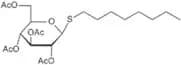
CAS:Octyl 2,3,4,6-tetra-O-acetyl-b-D-thioglucopyranoside is a chemical that is used to evaluate renal injury. It is typically detected in the urine of patients with renal injury and can be correlated with prognosis. Octyl 2,3,4,6-tetra-O-acetyl-b-D-thioglucopyranoside has been shown to be useful for the diagnosis of renal injury by detecting protein or body fluid in the reagents and assays. This substance is also used to detect protein in body fluids such as urine.Formula:C22H36O9SPurity:Min. 95%Color and Shape:White PowderMolecular weight:476.58 g/molOctadecylthioethyl 4-O-(a-D-galactopyranosyl)-b-D-galactopyranoside
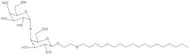
CAS:Octadecylthioethyl 4-O-(a-D-galactopyranosyl)-b-D-galactopyranoside is a synthetic carbohydrate with the CAS number 87019-34-9. It is a non-reducing sugar and has the molecular formula C18H36O22. The chemical structure of Octadecylthioethyl 4-O-(a-D-galactopyranosyl)-b-D-galactopyranoside is: The chemical name for Octadecylthioethyl 4-O-(a-D-galactopyranosyl)-b-D-galactopyranoside is Oligosaccharide, Custom synthesis, Glycosylation, High purity, Carbohydrate, sugar, Synthetic. The molecular weight of Octadecylthioethyl 4 -O-(a-[3]-Galactopyranosyl)-b-[2]-GalactopyrFormula:C32H62O11SPurity:Min. 95%Molecular weight:654.89 g/molOctyl 2-acetamido-2-deoxy-3-O-(b-D-galactopyranosyl)-b-D-glucopyranoside
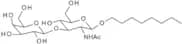
CAS:Octyl 2-acetamido-2-deoxy-3-O-(b-D-galactopyranosyl)-b-D-glucopyranoside is a monosaccharide that is custom synthesized by our company. It is modified with fluorination, methylation, and click modification to generate the desired product. Octyl 2-acetamido-2-deoxy-3-O-(b-D-galactopyranosyl)-b-D-glucopyranoside also has saccharide and polysaccharide groups attached to it. This product can be used as a sugar in the production of complex carbohydrates.Formula:C22H41NO11Purity:Min. 95%Molecular weight:495.56 g/molUndecyl 2-acetamido-2-deoxy-b-D-glucopyranoside
CAS:Undecyl 2-acetamido-2-deoxy-b-D-glucopyranoside is a cell surface glycosaminoglycan (GAG) that binds to the proteoglycan receptor, which is a GAG binding protein. Undecyl 2-acetamido-2-deoxy-b-D-glucopyranoside has been shown to be involved in signaling pathways and gene expression regulation, as well as having an effect on the activity of other proteins. This glycosaminoglycan has been used to profile gene expression levels in cells and tissues. The high density microarray technique can be used to analyze the expression profile of many genes simultaneously.Formula:C19H37NO6Purity:Min. 95%Molecular weight:375.5 g/molOctyl a-L-rhamnopyranoside
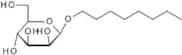
CAS:Octyl a-L-rhamnopyranoside is a custom-synthesized, fluorinated, methylated, monosaccharide with saccharide and polysaccharide modifications. It is used for the modification of glycoproteins in the synthesis of complex carbohydrates and as an intermediate in the preparation of monosaccharides and their derivatives. Octyl a-L-rhamnopyranoside is synthesized by condensing 1,2:3,4-di-O-isopropylidene D-mannitol with 5-(bromomethyl)benzene sulfonyl chloride to give 5-(Bromomethyl)benzene sulfonic acid. The acid is then reacted with octanoyl chloride to form octyl a-L-rhamnopyranoside. Octyl a-L-rhamnopyranoside has been shown to inhibit proteinFormula:C14H28O5Purity:Min. 95 Area-%Color and Shape:PowderMolecular weight:276.37 g/molOctyl b-D-mannopyranoside
CAS:Octyl b-D-mannopyranoside is a sugar that belongs to the group of complex carbohydrates. It is used in chemical synthesis and is commonly used for click modification, fluorination, glycosylation, carbamoylation, methylation, and other modifications. Octyl b-D-mannopyranoside is a white or off-white powder that can be dissolved in water or alcohols. It has a molecular weight of 536.88 g/mol.
Formula:C14H28O6Purity:Min. 95%Color and Shape:White To Off-White SolidMolecular weight:292.37 g/molLauryl glucose neopentyl glycol
CAS:Lauryl glucose neopentyl glycol is a sugar that is used in the synthesis of glycoconjugates. It is synthesized from lauryl alcohol and neopentyl glycol. Lauryl glucose neopentyl glycol can be modified with fluorine, glycosylation, methylation, or modification. This compound has been shown to have anti-inflammatory properties and to inhibit the growth of prostate cancer cells.Formula:C31H60O12Purity:Min. 95%Molecular weight:624.8 g/molTetradecyl 2-acetamido-2-deoxy-b-D-glucopyranoside
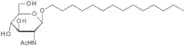
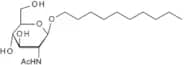
CAS:Tetradecyl 2-acetamido-2-deoxy-b-D-glucopyranoside is a custom synthesis, modification, fluorination, methylation, monosaccharide and synthetic compound. It is the CAS No. 152914-69-7. It is a saccharide composed of glucose that has been glycosylated with tetradecyl acetate in the alpha position and aminated with ammonia in the beta position. This product is also classified as a complex carbohydrate.Formula:C22H43NO6Purity:Min. 95%Molecular weight:417.58 g/molDecyl 2-acetamido-2-deoxy-b-D-glucopyranoside
CAS:Decyl 2-acetamido-2-deoxy-b-D-glucopyranoside is a glycoside that is found in the cell walls of photosynthetic organisms. It is one of the main sugars found in bacteria, fungi, and plants. In these organisms, it is linked to amino acids through amido bonds. Decyl 2-acetamido-2-deoxy-b-D-glucopyranoside has been shown to be a substrate for galactosidases, β-glycosidases, and α mannosidases. The thermal analysis of this compound shows an exothermic transition at around 200°C that may indicate its involvement in a chemical reaction. This compound also has lyotropic properties and can form micelles in water with high concentrations. The thermal parameters for this molecule are T(transition) = 220°C ΔH(transition) = -6 kcal/Formula:C18H35NO6Purity:Min. 95%Molecular weight:361.47 g/molUndecyl 2-acetamido-3,4,6-tri-O-acetyl-2-deoxy-b-D-glucopyranose
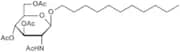
CAS:Undecyl 2-acetamido-3,4,6-tri-O-acetyl-2-deoxy-b-D-glucopyranose is a custom synthesis and modification of a carbohydrate that is used as a saccharide. It can be found in polysaccharides and oligosaccharides. This product has been modified with fluorination, methylation, glycosylation, and carbonylation. Undecyl 2-acetamido-3,4,6-tri-O-acetyl-2-deoxyb -D -glucopyranose is not currently CAS No. 1737252401 but is available for purchase on request.Formula:C25H43NO9Purity:Min. 95%Molecular weight:501.61 g/mol
![(1S,4aR,8R,8aR)-1-Methyl-3-oxo-8-[(2R,3S,4R,5R,6S)-3,4,5-trihydroxy-6-[[(E)-3-phenylprop-2-enoyl]o…](/_next/image/?url=https%3A%2Fstatic.cymitquimica.com%2Fproducts%2F3D%2Fthumb-webp%2FDGC98403.webp&w=3840&q=75)