Metals
Subcategories of "Metals"
Found 4494 products of "Metals"
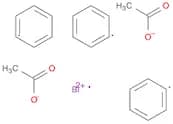
BIS(ACETATO-O)TRIPHENYLBISMUTH
CAS:Formula:C22H21BiO4Purity:98%Color and Shape:SolidMolecular weight:558.3801Ref: IN-DA000VPT
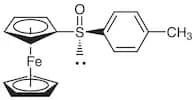
Discontinued product(S)-(p-Toluenesulfinyl)ferrocene
CAS:Formula:C17H16FeOSPurity:>97.0%(T)(HPLC)Color and Shape:Light yellow to Brown powder to crystalMolecular weight:324.22Zinc germanium phosphide
CAS:Controlled ProductZinc germanium phosphide is a semiconductor material that has been used as an effective cancer therapy. It is created by the reaction of zinc with germanium and phosphorus. This material has a high absorption coefficient in the infrared spectrum, which makes it useful for the treatment of skin cancers due to the cancer cells' increased absorption of infrared radiation. Zinc germanium phosphide can be grown at room temperature and has a constant refractive index over a range of wavelengths. The optical properties are determined by its lattice parameters, which can be changed to meet different needs. Techniques such as optical imaging and optical spectroscopy have been successfully employed to study this material's behavior.
Formula:ZnGeP2Purity:Min. 95%Copper(l) bromide
CAS:Copper bromide is a chemical compound that contains copper and bromine. It is a salt that has been used to treat bowel disease, and has also been shown to have anti-inflammatory properties. Copper bromide can be synthesized by the reaction of copper chloride with sodium bromide in water. The electrochemical impedance spectroscopy showed that the redox potential of the copper atoms in this compound is 0.07 volts, which makes it an ideal candidate for use as a biological electrode. Copper bromide is soluble in water and reacts with nitrogen atoms, giving it detection sensitivity to nitric oxide. The thermal expansion coefficient of this compound is 5.5 × 10⁻⁶/°C, which means it will contract when heated or expand when cooled.
Formula:BrCuPurity:Min. 95%Color and Shape:Blue PowderMolecular weight:143.45 g/molRef: 3D-FC34023
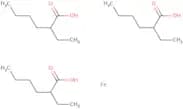
Discontinued productIron(III) 2-ethylhexanoate in 1,2,3,4-tetramethylbenzene
CAS:Iron(III) 2-ethylhexanoate is a ferric salt that is used as an acid catalyst for the synthesis of ethyl esters. It also acts as an oxidant and can be used in organic chemistry as a chemical reagent to produce ethyl esters from carboxylic acids. Iron(III) 2-ethylhexanoate reacts with iron oxide particles to form ferric hydroxide, which is then purified by calcium carbonate. This compound also has potential applications in nanotechnology, where it has been shown to be able to act as a catalyst for the synthesis of nanowires. The adsorption kinetics of this compound have been studied using various solvents and metal hydroxides, showing that the rate of adsorption depends on the type of solvent and metal hydroxide used. Iron(III) 2-ethylhexanoate is synthesized by reacting ethyl linoleate with iron oxide particles and calcium stearateFormula:C24H45FeO6Purity:Min. 95%Color and Shape:Clear LiquidMolecular weight:485.47 g/molRef: 3D-HAA32153
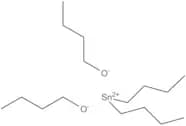
Discontinued productDI-n-BUTYLDI-n-BUTOXYTIN, 95%
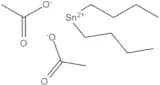
CAS:Formula:C16H36O2SnPurity:95%Color and Shape:Pale Yellow LiquidMolecular weight:379.15DI-n-BUTYLDIACETOXYTIN, tech
CAS:Formula:C12H24O4SnPurity:95%Color and Shape:Pale Yellow LiquidMolecular weight:351.01Ref: 3H-SND3160
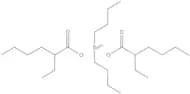
Discontinued productDI-n-BUTYLBIS(2-ETHYLHEXANOATE)TIN, tech
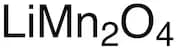
CAS:Formula:C24H48O4SnPurity:95%Color and Shape:White SolidMolecular weight:519.34Lithium Manganese(III,IV) Oxide (contains ca. 5% Aluminum at maximum as a dopant)
CAS:Formula:LiMn2O4Purity:>99.5%Color and Shape:Black powder to crystalMolecular weight:180.81Bis[di-tert-butyl(4-dimethylaminophenyl)phosphine]palladium(0)
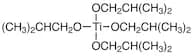
CAS:Formula:C32H56N2P2PdPurity:>98.0%(T)Color and Shape:Light yellow to Brown powder to crystalMolecular weight:637.18Tetraisobutyl Orthotitanate (contains Isopropoxide)
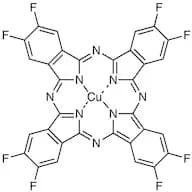
CAS:Formula:C16H36O4TiColor and Shape:Colorless to Light orange to Yellow clear liquidMolecular weight:340.33Copper(II) 2,3,9,10,16,17,23,24-Octafluorophthalocyanine (purified by sublimation)
CAS:Formula:C32H8CuF8N8Purity:>98.0%(T)(N)Color and Shape:Dark red to Dark purple to Dark blue powder to crystalMolecular weight:720.01[RuCl(p-cymene)((R)-xylbinap)]Cl
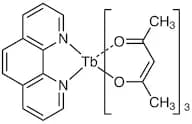
CAS:Formula:C62H62Cl2P2RuColor and Shape:Light yellow to Brown powder to crystalMolecular weight:1,041.10Tris(acetylacetonato)(1,10-phenanthroline)terbium(III)
CAS:Formula:C27H29N2O6TbPurity:>98.0%(T)Color and Shape:White to Almost white powder to crystalMolecular weight:636.46Poly[[N-isopropylacrylamide-co-[N-[3-(dodecyldimethylammonio)propyl]acrylamide]-co-(1,3,5-triacryloylhexahydro-1,3,5-triazine)]perruthenate]
Color and Shape:Black powder to crystalCopper citrate
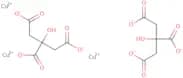
CAS:Copper citrate is a metal chelate that has been used for many purposes. It can be used as an antimicrobial agent, in wastewater treatment, and as a diagnostic tool. The structure of this compound is composed of citric acid, copper ions, and sodium ions. Copper citrate has been shown to inhibit the growth of bacteria. This product is used in the diagnosis of urinary tract infections by binding to copper ions in urine and forming a blue-green color. The structural analysis of the metal chelate was shown using X-ray crystallography with wild-type strains of Escherichia coli and Klebsiella pneumoniae.
Formula:C6H4Cu2O7Purity:Min. 95%Color and Shape:PowderMolecular weight:315.18 g/molRef: 3D-AAA86682
Discontinued product







![Bis[di-tert-butyl(4-dimethylaminophenyl)phosphine]palladium(0)](/_next/image/?url=https%3A%2Fstatic.cymitquimica.com%2Fproducts%2F3B%2Fthumb-webp%2FB4837.webp&w=3840&q=75)
![[RuCl(p-cymene)((R)-xylbinap)]Cl](/_next/image/?url=https%3A%2Fstatic.cymitquimica.com%2Fproducts%2F3B%2Fthumb-webp%2FR0150.webp&w=3840&q=75)
![Poly[[N-isopropylacrylamide-co-[N-[3-(dodecyldimethylammonio)propyl]acrylamide]-co-(1,3,5-triacryl…](/_next/image/?url=https%3A%2Fstatic.cymitquimica.com%2Fproducts%2F3B%2Fthumb-webp%2FP1698.webp&w=3840&q=75)