Metal Salts
Found 2872 products of "Metal Salts"
Lithium Perchlorate
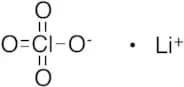
CAS:Controlled ProductApplications Lithium Perchlorate is an inorganic compound that is highly soluble in organic solvents. It is also used as an electrolyte in lithium-ion batteries.
Not a dangerous good if item is equal to or less than 1g/ml and there is less than 100g/ml in the package
References Xu, K., et al.: Chem. Rev., 104, 4303-4417 (2004)Formula:ClO4·LiColor and Shape:NeatMolecular weight:106.4Potassium Hydrogen Fluoride
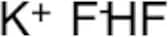
CAS:Controlled ProductApplications Potassium hydrogen fluoride (cas# 7789-29-9) is a useful research chemical.
Not a dangerous good if item is equal to or less than 1g/ml and there is less than 100g/ml in the packageFormula:KHF2Color and Shape:NeatMolecular weight:78.1Potassium Azide-15N
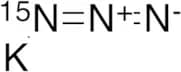
CAS:Controlled ProductApplications Potassium Azide-15N is a labelled intermediate in the synthesis of Tazobactam Sodium Salt-13C2,15N1, which is the labeled analogue of Tazobactam Sodium Salt (T010100), which is a β-Lactamase inhibitor, used with β-lactam antibiotics to enhance their effect.
References Gould, I.M., et al.: Drugs Exp. Clin. Res., 17, 187 (1991), Roland, R.K., et al.: J. Infect. Dis., 4, 226 (2000), Bonomo, R.A., et al.: Biochim. Biophys. Acta, 1547, 196 (2001),Formula:KN215NColor and Shape:Off-WhiteMolecular weight:82.11Vanadium(IV) Oxide Acetylacetonate
CAS:Controlled ProductApplications Vanadium(IV) Oxide Acetylacetonate is used as a catalyst in organic chemistry and is also an intermediate in synthetic reactions, such as the synthesis of novel oxovanadium complexes that display antitumor activity.
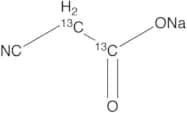
References Rui, W. et al.: Polyhedron, 117, 803 (2016); Tahmasebi, V. et al.: J. Mol. Struct., 1123, 367 (2016);Formula:C10H14O5VColor and Shape:NeatMolecular weight:265.162-Cyano-acetic Acid Sodium Salt-13C2
CAS:Controlled ProductApplications 2-Cyano-acetic Acid Sodium Salt-13C2 (cas# 1346598-51-3) is a compound useful in organic synthesis.
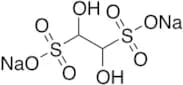
Formula:C13C2H2NNaO2Color and Shape:NeatMolecular weight:109.03Glyoxal Sodium Bisulfite (contains oligomers)
CAS:Controlled ProductApplications Glyoxal Sodium Bisulfite (contains oligomers) (cas# 517-21-5) is a useful research chemical.
Formula:C2H4Na2O8S2Color and Shape:NeatMolecular weight:266.154-[1-(4-Iodophenyl)-5-(2,4-dinitrophenyl)-formaz-3-yl]-1,3-benzene Disulfonate, Disodium Salt
CAS:Controlled ProductApplications 4-[1-(4-Iodophenyl)-5-(2,4-dinitrophenyl)-formaz-3-yl]-1,3-benzene Disulfonate, Disodium Salt (cas# 161617-44-3) is a compound useful in organic synthesis.
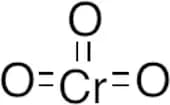
Formula:C19H11IN6O10S2·2NaColor and Shape:NeatMolecular weight:720.34Chromium (VI) Oxide
CAS:Controlled ProductApplications Chromium (VI) oxide is a toxic compound that has been strongly linked to initiating cancer in humans. Chromium (VI) oxide is also used as a catalyst in the oxidation of benzylic compounds (e.g. Toluene [T535870]) with periodic acid as the terminal oxidant.
Not a dangerous good if item is equal to or less than 1g/ml and there is less than 100g/ml in the package
References Pritchard Jr., K., et al.: J. Environ. Pathol. Tox., 19, 251 (1999); Yamazaki, S.: Org. Lett., 1, 2129 (1999)Formula:CrO3Color and Shape:Dark PurpleMolecular weight:99.99Sodium Tert-Butoxide
CAS:Controlled ProductApplications Sodium Tert-Butoxide is a useful research chemical for organic synthesis and other chemical processes.
Not a dangerous good if item is equal to or less than 1g/ml and there is less than 100g/ml in the package
References Henidi, H. A., et al.: RSC Adv., 9, 21578 (2019); Nefertiti, A. S. G., et al.: Antimicrob. Agents Chemother., 62, 1 (2018);Formula:C4H9ONaColor and Shape:NeatMolecular weight:96.1Calcium fluoride
CAS:Calcium fluoride crystals are the mineral form of calcium fluoride, which is a high-resistance ionic conductor. Calcium fluoride has been used for many purposes, such as in the production of semiconductors and lasers. Calcium fluoride is also used as a radiation shield and in the production of hydrogen fluoride, which is an important chemical reagent. The crystal structure of calcium fluoride has been determined using x-ray crystallography and electron diffraction studies. This mineral has a hexagonal crystal system (space group P6 3 /mmc) with lattice constants a = 5.9 Å and c = 6.3 Å, where c equals the length of one side of an equilateral triangle that fits within the unit cell. The space group indicates that each unit cell contains twelve atoms: six Ca2+ and six F-. The unit cell dimensions are given by a = b = 1/2 × 10−8 m and c = 2 × 10⁻⁷ m. TheseFormula:CaF2Purity:Min. 95%Molecular weight:78.07 g/molSodium Palmitate
CAS:Sodium palmitate is a saturated fatty acid that has been shown to induce phase transition temperature in the range of 37-40°C. The Toll-like receptor 4 (TLR4) is a pattern recognition receptor that has been found to be important in the pathogenesis of infectious diseases. Sodium palmitate enhances TLR4-mediated responses, and as such can be used for the treatment of infectious diseases. Sodium palmitate also has significant cytotoxicity and potent inducers of polymer compositions. It is also an effective agonist for toll-like receptor 4, which may be due to its ability to stimulate RhoA activity, leading to increased production of reactive oxygen species.Formula:C16H31NaO2Purity:Min. 95%Color and Shape:White PowderMolecular weight:278.41 g/molPotassiumtetrachloroaurate(III)
CAS:Potassiumtetrachloroaurate(III) is a chemical compound with the molecular formula KAuCl4. It is a white solid that has been shown to have anti-cancer properties in animal studies. Potassiumtetrachloroaurate(III) has also been found to be toxic to bacteria, such as Pseudomonas aeruginosa. The redox potential of potassiumtetrachloroaurate(III) can be changed by adding copper chloride or sodium citrate, which may affect its toxicity towards bacteria.
Formula:AuCl4KPurity:Min. 95%Molecular weight:377.88 g/mol2'-Hydroxy-5'-nitrohexadecanamide sodium
CAS:2'-Hydroxy-5'-nitrohexadecanamide sodium is a reagent that can be used for a variety of laboratory reactions. It is a versatile building block, useful intermediate, and useful building block for complex compounds. This compound has also been shown to be useful in the synthesis of pharmaceuticals and other fine chemicals.Formula:C22H36N2O4NaPurity:Min. 95%Molecular weight:415.52 g/molTris(2-methoxyphenyl)bismuth dichloride
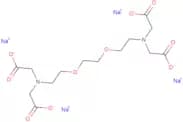
CAS:Tris(2-methoxyphenyl)bismuth dichloride is a coordination compound with the chemical formula BiCl(OMeCH). It crystallizes in the triclinic crystal system and its molecular structure is trigonal. Tris(2-methoxyphenyl)bismuth dichloride has been characterized by X-ray and infrared spectroscopy, as well as by analysis of the axial, apical, and trigonal coordinates. The compound has been shown to form perchlorate and diperchlorate salts. The presence of bismuth atoms in this molecule produces a bright yellow color.Formula:C21H21BiCl2O3Purity:Min. 95%Color and Shape:Off-White PowderMolecular weight:601.28 g/molEGTA tetrasodium salt
CAS:Chelator of bivalent ions; high affinity to calcium ionsFormula:C14H20N2O10·4NaPurity:Min. 95%Color and Shape:White PowderMolecular weight:468.28 g/molSodium 2-(hydroxymethyl)butanoate
CAS:Sodium 2-(hydroxymethyl)butanoate is a high quality and versatile building block. Sodium 2-(hydroxymethyl)butanoate can be used as a useful intermediate to synthesize a wide range of complex compounds. It has been shown to react with other chemicals in order to form an array of useful scaffolds, which can be used for the synthesis of fine chemicals. Sodium 2-(hydroxymethyl)butanoate is also a reagent that is useful for research purposes.Formula:C5H9NaO3Purity:Min. 95%Color and Shape:PowderMolecular weight:140.11 g/molSodium methanethiosulfonate
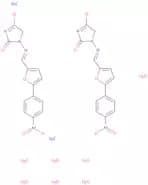
CAS:Sodium methanethiosulfonate is a chemical compound that is used in the preparation of conjugates for use as radiopharmaceuticals. It is also used to modify proteins, such as serine proteases, to study their function. Sodium methanethiosulfonate binds to carbohydrate moieties on proteins and stabilizes the protein-carbohydrate complex by forming a covalent bond with the protein. This modification prevents the protein from being degraded by enzymes that cleave bonds between carbohydrates and proteins. The molecular modelling studies performed on model proteins show that sodium methanethiosulfonate binds to serine protease active sites and inhibits enzymatic activity. Sodium methanethiosulfonate has been shown to be effective in treating muscle tissue damage caused by radiation treatments and chemotherapy.Formula:CH3NaO2S2Purity:Min. 95%Molecular weight:134.16 g/molDantrolene sodium salt hemiheptahydrate
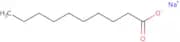
CAS:Ryanodine receptor blocker; inhibitor of calcium release; muscle relaxantFormula:C14H9N4NaO5•(H2O)3Purity:Min. 95%Color and Shape:Yellow To Orange SolidMolecular weight:399.29 g/molCapric acid sodium salt
CAS:Sodium caprate (C10) and salcaprozate sodium (SNAC), FS168567, are two of the most advanced intestinal permeation enhancers (PEs) that have been tested in clinical trials for oral delivery of macromolecules.Formula:C10H19NaO2Color and Shape:White Off-White PowderMolecular weight:194.25 g/molAcetylacetonatocarbonyl triphenylphosphine rhodium(I)
CAS:Acetylacetonatocarbonyl triphenylphosphine rhodium(I) is a fine chemical that can be used as a building block in the synthesis of complex compounds. It is also a useful intermediate in the production of research chemicals and speciality chemicals. Acetylacetonatocarbonyl triphenylphosphine rhodium(I) is a high quality reagent that has been shown to catalyze reactions with high yields.Formula:C24H22O3PRhPurity:Min. 95%Color and Shape:PowderMolecular weight:492.31 g/mol


![4-[1-(4-Iodophenyl)-5-(2,4-dinitrophenyl)-formaz-3-yl]-1,3-benzene Disulfonate, Disodium Salt](/_next/image/?url=https%3A%2Fstatic.cymitquimica.com%2Fproducts%2FTR%2Fthumb-webp%2FI718225.webp&w=3840&q=75)