Metal Salts
Found 2872 products of "Metal Salts"
Ethynylferrocene
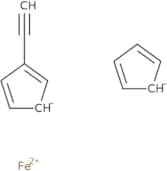
CAS:Ethynylferrocene is a molecule that has a redox potential and can be reduced to ferrocene by hydrogen-reducing agents. Ethynylferrocene can also undergo oxidation reactions with the help of oxidizing agents to form ethynylpalladium. The biological properties of this molecule have been studied extensively and it has been found to bind to receptor molecules, such as dopamine receptors, in the body. The binding of this molecule to these receptors may cause changes in cell signaling pathways and gene expression. Ethynylferrocene is a member of the class of purine derivatives that are known for their ability to bind hydrogen atoms and form hydrogen bonding interactions with other molecules. This property is useful in the palladium-catalyzed coupling reaction, which is used to produce a variety of organic compounds.
Formula:C12H10FePurity:Min. 95%Color and Shape:PowderMolecular weight:210.05 g/molDichloro(1,5-cyclooctadiene)palladium(II)
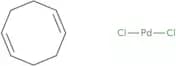
CAS:Controlled ProductDichloro(1,5-cyclooctadiene)palladium(II) is a stable metal complex in which the chlorine atom is coordinated to two benzyl groups and one palladium atom. The chloride ion is coordinated to the palladium atom through a strong coordinate bond. The chloride ion is also coordinated to the two benzyl groups by weaker coordinate bonds. In the presence of sodium carbonate, hydrogen chloride and nitrogen gas, dichloro(1,5-cyclooctadiene)palladium(II) reacts with hydrogen chloride to form stable complexes that are soluble in water. These complexes can be used as catalysts for organic reactions because they are able to transfer hydrogen atoms between molecules without breaking covalent bonds. Dichloro(1,5-cyclooctadiene)palladium(II) has been shown to have antibacterial activity against Staphylococcus aureus and Pseudomonas aeruginosaFormula:C8H12Cl2PdPurity:Min. 98%Molecular weight:285.51 g/molIridium(III) acetylacetonate
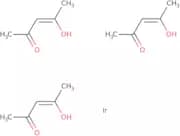
CAS:Iridium(III) acetylacetonate is a coordination complex that is used as an oxidation catalyst. It has the ability to increase the rate of reactions in which water is the reactant or product. Iridium(III) acetylacetonate has a square-planar geometry, with four ligands bound to each metal ion. The coordination geometry of this complex determines its reactivity and selectivity. The reactivity of iridium(III) acetylacetonate can be enhanced by using less soluble salts, such as sodium carbonate or fluorine, to dissolve it in solution. This complex undergoes reaction mechanisms involving hydrogen abstraction and reductive elimination, depending on the conditions of the reaction solution. Iridium(III) acetylacetonate has been used for coatings on glass substrates and as a catalyst for growth kinetics studies and mechanism studies.Formula:C15H21IrO6Purity:Min. 95%Color and Shape:PowderMolecular weight:489.54 g/molSodium taurodeoxycholate monohydrate
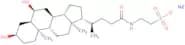
CAS:Sodium taurodeoxycholate monohydrate is a bile salt, which is a biochemical compound derived from the conjugation of bile acids with taurine. This compound is sourced from bovine bile, where it functions as a surfactant in the digestive system by emulsifying fats, thereby facilitating their absorption in the intestine.Formula:C26H44NO6S·H2O·NaPurity:Min. 95%Molecular weight:539.7 g/mol[1,4-Bis(diphenylphosphino)butane]palladium(II) Dichloride
CAS:Controlled Product[1,4-Bis(diphenylphosphino)butane]palladium(II) dichloride (PdCl2(DPPB)) is a covalent catalyst that is used in the cross-coupling of styrene with chlorides. It has been shown to be a very effective catalyst for this reaction and yields high yields. The use of this catalyst allows for the quantification of the phosphine ligand that is used in the reaction. [1,4-Bis(diphenylphosphino)butane]palladium(II) dichloride has also been shown to be an efficient catalyst for other reactions, such as solvents and diphosphine ligands.Formula:C28H28Cl2P2PdPurity:Min. 95%Molecular weight:603.79 g/molTrisodium glycyrrhizinate
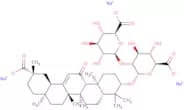
CAS:Trisodium glycyrrhizinate is a fatty acid that acts as an absorption enhancer. It has been shown to have antihypertensive activity and to protect against hepatic tissue damage in experimental models. Trisodium glycyrrhizinate also exhibits antiviral activity and has been shown to be effective against viruses such as HIV, herpes simplex virus, and influenza A. Trisodium glycyrrhizinate is poorly absorbed by the body, which may be due to its high molecular weight and low water solubility. The bioavailability of trisodium glycyrrhizinate can be increased significantly by using it with a film-forming polymer or diphenyl ether. This product is found in various foods such as ganoderma lucidum (a Chinese herbal medicine) and some types of licorice candy.Formula:C42H59Na3O16Purity:80%MinMolecular weight:888.88 g/molD,L-Alanosine sodium salt
Please enquire for more information about D,L-Alanosine sodium salt including the price, delivery time and more detailed product information at the technical inquiry form on this page
Formula:C3H6N3NaO4Purity:Min. 95%Molecular weight:171.09 g/mol(Trimethyl)pentamethylcyclopentadienyltitanium(IV)
CAS:Please enquire for more information about (Trimethyl)pentamethylcyclopentadienyltitanium(IV) including the price, delivery time and more detailed product information at the technical inquiry form on this pageFormula:C13H24TiPurity:Min. 95%Molecular weight:228.2 g/molSodium decyl sulfate
CAS:Sodium decyl sulfate is a surfactant used in the preparation of biological samples for analysis using mass spectrometry. This compound forms a disulfide bond with cysteine residues on proteins, which can be cleaved by reducing agents such as dithiothreitol or mercaptoethanol. Sodium decyl sulfate also has potent antitumor activity and is used to treat autoimmune diseases such as multiple sclerosis. The thermal expansion of this compound is proportional to the vapor pressure of water over the range from 0-100°C, and it has been shown to have a constant pressure at temperatures below 100°C. Furthermore, sodium decyl sulfate has been found to be chiral and binds to receptor molecules that are hydrophobic in nature.
Formula:C10H21O4SNaPurity:Min. 95%Color and Shape:White PowderMolecular weight:260.33 g/mol4-Acetamido-4'-isothiocyanatostilbene-2,2'-disulfonic acid, sodium salt
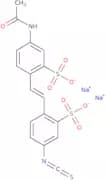
CAS:4-Acetamido-4'-isothiocyanatostilbene-2,2'-disulfonic acid, sodium salt (AITC-S) is a stilbene derivative with inhibitory properties. It has been shown to inhibit the uptake of camp in rat ventricular myocytes and caco-2 cells as well as the release of camp from rat renal proximal tubules. AITC-S also inhibits the transport of camp into the cells. The mechanism by which AITC-S inhibits uptake is not yet known, but it may be due to competition for a common carrier or an effect on intracellular metabolism. This compound has also been shown to have an acute ischemic protective effect on rats when administered before reperfusion following coronary artery occlusion.Formula:C17H12N2Na2O7S3Purity:Min. 95%Molecular weight:498.46 g/molCopper(I) trifluoromethanesulfonate toluene complex
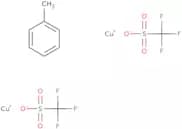
CAS:Controlled ProductToluene complex
Formula:C9H8Cu2F6O6S2Purity:Min. 95%Molecular weight:517.37 g/molIodosulfuron-methyl sodium
CAS:Iodosulfuron-methyl sodium is a herbicide that inhibits the activity of lipid-metabolizing enzymes in plants. It inhibits the action of phosphatases, which are enzymes that catalyze hydrolysis of phosphoric acid esters, and can be used to control weeds. Iodosulfuron-methyl sodium has been shown to have synergistic interactions with other herbicides, such as 2,4-D or dicamba. The effective dose for this product varies depending on the plant species and type of soil.
Formula:C14H13IN5NaO6SPurity:Min. 90 Area-%Color and Shape:White Off-White PowderMolecular weight:529.24 g/molTetrakis[N-phthaloyl-(S)-phenylalaninato]dirhodium Ethyl Acetate Adduct
CAS:Please enquire for more information about Tetrakis[N-phthaloyl-(S)-phenylalaninato]dirhodium Ethyl Acetate Adduct including the price, delivery time and more detailed product information at the technical inquiry form on this pageFormula:C68H48N4O16Rh2·C4H8O2Purity:Min. 95%Molecular weight:1,471.04 g/molTrisodium phosphonoformate hexahydrate
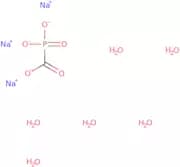
CAS:Trisodium phosphonoformate hexahydrate is a cytotoxic drug that is used to treat cytomegalovirus infections. It acts by inhibiting viral DNA polymerase and RNA synthesis, leading to cell death. Trisodium phosphonoformate hexahydrate can be used in combination with other antiviral drugs such as ganciclovir or foscarnet sodium for the treatment of HIV-1 infection. Trisodium phosphonoformate hexahydrate can also be used for prophylactic treatment against cytomegalovirus infection in immunosuppressed patients. This drug has been shown to be effective in reducing the incidence of CMV disease and mortality in transplant recipients who were undergoing low-dose chemotherapy. Trisodium phosphonoformate hexahydrate has been shown to be more effective than foscarnet sodium alone in preventing CMV disease and mortality during low-dose chemotherapy.Formula:CH12O11Na3PPurity:Min. 95%Color and Shape:PowderMolecular weight:300.04 g/molBarium tetracyanoplatinate(II) hydrate
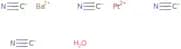
CAS:Controlled ProductPlease enquire for more information about Barium tetracyanoplatinate(II) hydrate including the price, delivery time and more detailed product information at the technical inquiry form on this pageFormula:C4H2BaN4OPtPurity:Min. 95%Molecular weight:454.5 g/molSodium phenoxide
CAS:Sodium phenoxide is a glycol ether that has been used to treat wastewater containing phenol and p-hydroxybenzoic acid. The reaction solution is prepared by mixing the desired amount of sodium phenoxide with an excess of copper chloride in anhydrous sodium. This process can be monitored using electrochemical impedance spectroscopy, which provides information about the chemical stability of the product. The use of sodium phenoxide as a wastewater treatment agent can be evaluated through treatment trials, where it is mixed with wastewater containing different concentrations of inhibitor drugs such as metoprolol succinate. Langmuir adsorption isotherm can also be used to determine the effectiveness of this product for wastewater treatment purposes.Formula:C6H5O·NaPurity:Min. 95%Color and Shape:PowderMolecular weight:116.09 g/molBis(2,2,2-trifluoroacetato-kO)di-mercury fluorescein
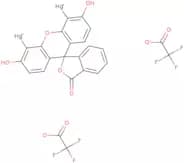
CAS:Controlled ProductPlease enquire for more information about Bis(2,2,2-trifluoroacetato-kO)di-mercury fluorescein including the price, delivery time and more detailed product information at the technical inquiry form on this pageFormula:C24H10F6Hg2O9Purity:Min. 95%Molecular weight:957.5 g/molPotassium chlorate
CAS:Controlled ProductPotassium chlorate is a strong oxidizing agent and a salt of potassium and chlorate. Potassium chlorate is used as an oxidizer in fireworks, propellants, and for the treatment of wastewater. It can also be used to generate chlorine dioxide, which is used as a disinfectant. Potassium chlorate has been shown to have genotoxic effects on rat liver cells, which may be due to its ability to induce transcriptional regulation by altering DNA methylation status. Chronic exposure to high concentrations of potassium chlorate can cause apical necrosis in rats. This type of necrosis is caused by the accumulation of potassium ions that lead to a disruption in membrane integrity. Chlorates are also known to cause chronic renal toxicity via oxidative stress mechanisms.Formula:ClKO3Purity:Min. 95%Color and Shape:White SolidMolecular weight:122.55 g/molLithium difluoro(oxalato)borate
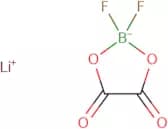
CAS:Lithium difluoro(oxalato)borate is an electron-microscopic corrosion inhibitor that belongs to the class of ester compounds. It is a solid compound that has been shown to be efficacious against oxidation products. The efficiency of this compound is dependent on the concentration and purity of lithium difluoro(oxalato)borate and the type of metal, such as steel or aluminum. Lithium difluoro(oxalato)borate can be used in rechargeable batteries, due to its transport properties, high salt tolerance, and low self-discharge rate. This compound has been shown to have functional groups that are capable of interacting with hydrogen fluoride in an organic solution.Formula:C2BF2O4•LiPurity:Min. 95%Molecular weight:143.77 g/molEthametsulfuron methyl sodium salt
CAS:Ethametsulfuron methyl sodium salt (EMS) is a herbicide that is used to control weeds in agricultural fields. It prevents the synthesis of fatty acids by blocking the activity of acetyl-CoA carboxylase, which is an enzyme involved in the production of fatty acids. EMS also inhibits plant enzymes that are involved in amino acid metabolism, such as protein synthesis. EMS has been shown to inhibit surface glycoprotein and human serum esterases. This herbicide can cause high resistance because it blocks cell division and alters lipid metabolism.Formula:C15H17N6NaO6SPurity:Min. 95%Molecular weight:432.39 g/mol

![[1,4-Bis(diphenylphosphino)butane]palladium(II) Dichloride](/_next/image/?url=https%3A%2Fstatic.cymitquimica.com%2Fproducts%2F3D%2Fthumb-webp%2FFB60968.webp&w=3840&q=75)




![Tetrakis[N-phthaloyl-(S)-phenylalaninato]dirhodium Ethyl Acetate Adduct](/_next/image/?url=https%3A%2Fstatic.cymitquimica.com%2Fproducts%2F3D%2Fthumb-webp%2FFT60014.webp&w=3840&q=75)