Metal Salts
Found 2872 products of "Metal Salts"
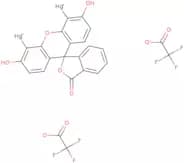
Bis(2,2,2-trifluoroacetato-kO)di-mercury fluorescein
CAS:Controlled ProductPlease enquire for more information about Bis(2,2,2-trifluoroacetato-kO)di-mercury fluorescein including the price, delivery time and more detailed product information at the technical inquiry form on this pageFormula:C24H10F6Hg2O9Purity:Min. 95%Molecular weight:957.5 g/molPotassium phosphate dibasic , anhydrous - for HPLC, >99.0%
CAS:Potassium phosphate dibasic, anhydrous - for HPLC, >99.0% is a crystalline cellulose used as a model system for enzyme activities. It has been shown to have the same effects on enzymes as potassium phosphate monobasic and potassium dihydrogen phosphate. This product also has a use in radiation-induced damage studies due to its ability to absorb ionizing radiation.
Formula:K2HPO4Purity:Min. 95%Color and Shape:PowderMolecular weight:174.18 g/molCesium bromide
CAS:Cesium bromide is a chemical compound that has a high melting point. It is used as an ionic liquid and as a salt in analytical chemistry. Cesium bromide can be used to measure the thermal expansion of materials or to measure the hydrogen bond strength between two molecules. Cesium bromide is also used in membrane systems for water purification, and it can be used for radiation treatment of cancer cells. Cesium bromide can be found in wastewater treatment plants where it helps to remove halides and other contaminants from water vapor, providing kinetic energy to do so. Cesium bromide is also used as an analytical method for measuring hydrochloric acid, uv absorption, or chelate rings.Formula:CsBrPurity:Min. 95%Molecular weight:212.81 g/molDichlorotitanium Diisopropoxide
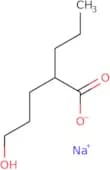
CAS:Controlled ProductDichlorotitanium Diisopropoxide is a novel reagent for the asymmetric synthesis of amides. The reaction mechanism is based on the formation of a chloride-containing titanium enolate from titanium tetrachloride and an amine. This enolate reacts with another molecule of titanium tetrachloride to form the desired amide. Dichlorotitanium Diisopropoxide has been used in the preparation of polymers, such as poly(vinyl chloride) and poly(methyl methacrylate). It has also been used to produce organic compounds, such as chloroform, dichloromethane, and chlorobenzene. The stereoselectivity can be controlled by changing the solvent used in this reaction.nowiki>END>>Formula:C6H14Cl2O2TiPurity:Min. 95%Molecular weight:236.95 g/molrac 5-Hydroxy valproic acid sodium
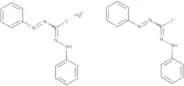
CAS:Please enquire for more information about rac 5-Hydroxy valproic acid sodium including the price, delivery time and more detailed product information at the technical inquiry form on this pageFormula:C8H16O3•NaPurity:Min. 95%Color and Shape:PowderMolecular weight:183.2 g/molMercury(II) bis(dithizonate)
CAS:Controlled ProductMercury(II) bis(dithizonate) is an isomeric form of mercury that exhibits photochromism. It has a yellow color in the solid state and can reversibly change to a red color when exposed to light. Mercury(II) bis(dithizonate) is soluble in organic solvents and forms bright yellow crystals with a melting point of 81-82 °C. It has been used as an optical dye for microscopy, where it absorbs ultraviolet radiation and emits visible light. This property makes it useful for detection of bacteria or other microorganisms by optical microscopy or fluorescence microscopy. The solvents acetonitrile, diethylether, or acetone can be used to dissolve this compound. Mercury(II) bis(dithizonate) is metastable which means that it will decompose spontaneously into mercury(I) oxide and hydrogen gas if heated to 180 °C.
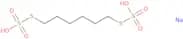
Formula:C26H22HgN8S2Purity:Min. 95%Color and Shape:Dark Red SolidMolecular weight:711.23 g/molSodium hexamethylene-1,6-bisthiosulfate dihydrate
CAS:Sodium hexamethylene-1,6-bisthiosulfatedihydrate is a salt of an oxide of benzene with hexamethylene 1,6-disulfate dihydrate. It has a white to off-white crystalline appearance and is used as an additive in mixtures to improve the wetting and dispersing properties of the mixture. The chemical formula for this compound is C8H4NaOS·2H2O.Formula:C6H12Na2O6S4Purity:Min. 95%Color and Shape:PowderMolecular weight:354.4 g/mol4-Hydroxy atorvastatin disodium salt
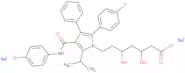
CAS:Please enquire for more information about 4-Hydroxy atorvastatin disodium salt including the price, delivery time and more detailed product information at the technical inquiry form on this page
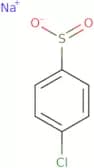
Formula:C33H33FN2Na2O6Purity:Min. 95%Molecular weight:618.6 g/mol4-Chloro-benzene-sulfinic acid sodium salt
CAS:The 4-chloro-benzenesulfinic acid sodium salt is a type of sulfinic acid. It can be used to control experiments involving methides, halides, and human macrophages. Sodium salts of this compound have been shown to inhibit the growth of Candida glabrata and Galleria mellonella in vitro. The 4-chloro-benzenesulfinic acid sodium salt reacts with chloride ion to form a nucleophilic trifluoroacetate anion, which reacts with thiosulfonates to produce type strain. Trifluoroacetic acid is used as a solvent in the reaction.Formula:C6H4ClNaO2SPurity:Min. 95%Molecular weight:198.6 g/molCalcium pyrophosphate
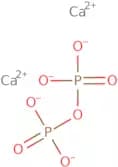
CAS:Calcium pyrophosphate is a compound that is used in the diagnosis and treatment of chronic arthritis. It has been shown to induce caspase-independent cell death and inhibit the proliferation of fibroblasts. Calcium pyrophosphate also inhibits nuclear DNA fragmentation and caspases, which are proteins that are involved in apoptosis. This drug has a structural analysis that shows it to be a crystalline compound with a molecular weight of 622.6 Da. The crystals are composed of two calcium ions, two phosphate ions, one pyrophosphate ion, and three water molecules. Calcium pyrophosphate is biocompatible and can be used as a coating for medical implants because it does not cause any inflammation or organ rejection.
Formula:Ca2P2O7Purity:Min. 95%Color and Shape:SolidMolecular weight:254.1 g/molPotassium trimethylsilanolate
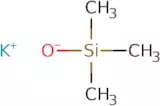
CAS:Potassium trimethylsilanolate is a chemical substance that has inhibitory properties. It is a trifluoroacetic acid derivative that inhibits the activity of certain enzymes, such as proteases and lipases. The compound's inhibitory properties are due to its ability to bind to cytochrome cb2 receptors by means of hydrogen bonding. The binding of potassium trimethylsilanolate to the receptor prevents the activation of apoptosis proteins and protein synthesis in cells. This substance also has an inhibitory effect on water vapor, inhibiting the formation of water molecules from hydrogen atoms and oxygen atoms. Potassium trimethylsilanolate can be used as an anti-cancer agent by preventing cell division in tumor cells and preventing cancer metastasis through inhibition of protease activity.Formula:C3H9KOSiPurity:Min. 95%Molecular weight:128.29 g/molPlatinum(IV) oxide monohydrate
CAS:Platinum(IV) oxide monohydrate (PtO) is a compound used as an oxidation catalyst in organic synthesis. It can be used to oxidize fatty acids in rat liver microsomes and has been shown to hydrolyze hydrogenated, hydrated, and nitro fatty acids. PtO also has the ability to catalyze the oxidation of alcohols and ketones. Platinum(IV) oxide monohydrate is a brown powder that is soluble in water at high concentrations and slightly soluble in methanol. It has a molecular weight of 243.3 g/mol and a melting point of over 2000 °C. PtO can be analyzed by determining its mass spectrum or its fluorescence properties with a specific probe.
Formula:PtO2•H2OPurity:Min. 95%Color and Shape:PowderMolecular weight:245.09 g/molD-Glyceric acid calcium dihydrate
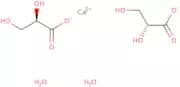
CAS:Please enquire for more information about D-Glyceric acid calcium dihydrate including the price, delivery time and more detailed product information at the technical inquiry form on this pageFormula:C3H6O4•Ca0•H2OPurity:Min. 95%Molecular weight:288.26 g/molBis(tri-tert-butylphosphine)palladium(0)
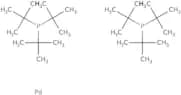
CAS:Bis(tri-tert-butylphosphine)palladium(0) is a chemical compound, insoluble in organic solvents. It has been used as a catalyst for cross-coupling reactions in organic chemistry. Bis(tri-tert-butylphosphine)palladium(0) reacts with sodium salts and palladium-catalyzed cross-coupling to form an insoluble complex in the presence of hexane, which is soluble in organic solvents. The reaction proceeds through reductive elimination, yielding a trisubstituted product. This process can be used for the synthesis of halides and transmetallation.Formula:C24H54P2PdPurity:Min. 95%Color and Shape:White PowderMolecular weight:511.05 g/molTitanium(IV) isopropoxide
CAS:Titanium(IV) isopropoxide is a chemical compound with the formula Ti(OCH(CH)) (i-Pr). It is an organotitanium compound that reacts with water to form titanium hydroxide. The compound has a low vapor pressure and a high melting point, which makes it well suited for use in high temperature environments. Titanium(IV) isopropoxide can be used as an additive to improve the corrosion resistance of metal surfaces, such as steel and copper. It also has been shown to have synergistic effects when combined with other additives, such as metal hydroxides or methyl glycosides.Formula:C12H28O4TiPurity:Min. 95%Molecular weight:284.22 g/molLithium tetrakis(pentafluorophenyl)borate ethyl etherate
CAS:Controlled ProductLithium tetrakis(pentafluorophenyl)borate ethyl etherate is a lithium salt of the etherate ester of pentafluorophenylboronic acid (B(C6F5)3). The complex is an electron donor and ligand, which can stabilize the high-energy intermediate state in the reaction. Lithium tetrakis(pentafluorophenyl)borate ethyl etherate reacts with magnesium to form a magnesium salt and ethylene. This product can be used as a co-catalyst for coupling reactions, such as the synthesis of cyclic compounds from alkenes.Formula:C24BF20·(C4H10O)2·LiPurity:Min. 95%Molecular weight:760.11 g/molb-Glycerophosphoric acid disodium salt tetrahydrate
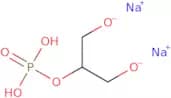
CAS:Glycerolipid metabolism componentFormula:C3H7O6P·2Na·4H2OPurity:Min. 95%Molecular weight:288.1 g/molAluminum diacetate hydroxide
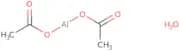
CAS:Aluminum diacetate hydroxide is a white powder that is soluble in water. It is used as a laser ablation material and can be used to seal chemical reactions. Aluminum diacetate hydroxide also functions as a gas sensor, with its sensitivity to aromatic hydrocarbons and fatty acids. This compound has clinical use in detergent compositions, where it prevents the formation of foam.Formula:C4H7AlO5Purity:Min. 28%Color and Shape:PowderMolecular weight:162.08 g/mol16-Deacetyl fusidic acid sodium salt
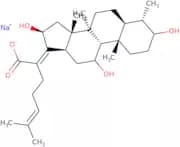
CAS:Controlled ProductPlease enquire for more information about 16-Deacetyl fusidic acid sodium salt including the price, delivery time and more detailed product information at the technical inquiry form on this page
Formula:C29H45NaO5Purity:Min. 95%Molecular weight:496.65 g/molEthametsulfuron methyl sodium salt
CAS:Ethametsulfuron methyl sodium salt (EMS) is a herbicide that is used to control weeds in agricultural fields. It prevents the synthesis of fatty acids by blocking the activity of acetyl-CoA carboxylase, which is an enzyme involved in the production of fatty acids. EMS also inhibits plant enzymes that are involved in amino acid metabolism, such as protein synthesis. EMS has been shown to inhibit surface glycoprotein and human serum esterases. This herbicide can cause high resistance because it blocks cell division and alters lipid metabolism.Formula:C15H17N6NaO6SPurity:Min. 95%Molecular weight:432.39 g/mol