Metal Salts
Found 2872 products of "Metal Salts"
Cobalt(II) oxide
CAS:Cobalt is a transition metal with the atomic number 27. It has an oxidation state of +2 and belongs to group 8 on the periodic table. Cobalt(II) oxide (CoO) is a black solid that can be formed by heating cobalt metal at temperatures greater than 1400°C. The electrochemical impedance spectroscopy of CoO shows that it has high resistivity and good electrical conductivity, making it useful for corrosion protection. Cobalt oxide is also used as a catalyst in chemical reactions, such as oxidation and reduction, due to its redox potential. Cobalt oxide can be produced from the reaction between hydrochloric acid and zirconium oxide by electrolysis, which produces an electric current. This process can be done in two ways: either by using an electrochemical cell or by laser ablation. The latter method is more efficient because it requires less energy input than using an electrochemical cell. In addition, CoO particles are spherical in shape, have
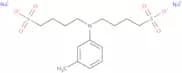
Formula:CoOPurity:75%MinColor and Shape:PowderMolecular weight:74.93 g/molN,N-Bis-(4-sulfobutyl)-3-methylaniline disodium salt
CAS:N,N-Bis-(4-sulfobutyl)-3-methylaniline disodium salt is a fine chemical that is used as a building block for organic synthesis. It can be used in the formulation of pharmaceuticals and other chemicals. N,N-Bis-(4-sulfobutyl)-3-methylaniline disodium salt has been shown to be an excellent reagent for the synthesis of complex compounds with high purity and high quality. This compound is also versatile in its use as a building block, scaffold or intermediate for the synthesis of many different types of molecules.Formula:C15H23NNa2O6S2Purity:Min. 95%Color and Shape:PowderMolecular weight:423.46 g/molSodium tetrachloropalladate(II)
CAS:Sodium tetrachloropalladate(II) is a photoelectron acceptor that absorbs x-rays in the wavelength range of 0.2-1.5 Å. It is used as a nanomaterial for the preparation of microspheres and optical devices. Sodium tetrachloropalladate(II) has been shown to have a chloride ion content of 36%. The chemical composition of this element can be determined by using preparative methods such as suzuki coupling reaction, phase chromatography, or elemental analysis. The isolated yield of sodium tetrachloropalladate(II) can be determined by immobilizing it on an ion exchange resin and eluting with 0.1 M HCl.Formula:Cl4Na2PdPurity:Min. 95%Molecular weight:294.21 g/molDichloro[1,3-Bis(2,6-diisopropylphenyl)imidazolyl-2-idene](3-chloropyridyl)palladium(IV)
CAS:Controlled ProductDichloro[1,3-Bis(2,6-diisopropylphenyl)imidazolyl-2-idene](3-chloropyridyl)palladium(IV) is an insoluble molecule with a beige color. The molecule belongs to the class of palladium catalyzed cross coupling reactions. It can react with various halides and has been shown to have functionalities, skeleton and reactive groups. This compound is used in synthetic organic chemistry in order to generate sequences with chloride and pentane.Formula:C32H40Cl3N3PdPurity:Min. 95%Color and Shape:PowderMolecular weight:679.46 g/molPotassium chlorate
CAS:Controlled ProductPotassium chlorate is a strong oxidizing agent and a salt of potassium and chlorate. Potassium chlorate is used as an oxidizer in fireworks, propellants, and for the treatment of wastewater. It can also be used to generate chlorine dioxide, which is used as a disinfectant. Potassium chlorate has been shown to have genotoxic effects on rat liver cells, which may be due to its ability to induce transcriptional regulation by altering DNA methylation status. Chronic exposure to high concentrations of potassium chlorate can cause apical necrosis in rats. This type of necrosis is caused by the accumulation of potassium ions that lead to a disruption in membrane integrity. Chlorates are also known to cause chronic renal toxicity via oxidative stress mechanisms.Formula:ClKO3Purity:Min. 95%Color and Shape:White SolidMolecular weight:122.55 g/molTrisodium phosphonoformate hexahydrate
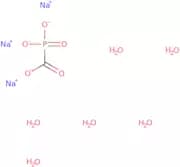
CAS:Trisodium phosphonoformate hexahydrate is a cytotoxic drug that is used to treat cytomegalovirus infections. It acts by inhibiting viral DNA polymerase and RNA synthesis, leading to cell death. Trisodium phosphonoformate hexahydrate can be used in combination with other antiviral drugs such as ganciclovir or foscarnet sodium for the treatment of HIV-1 infection. Trisodium phosphonoformate hexahydrate can also be used for prophylactic treatment against cytomegalovirus infection in immunosuppressed patients. This drug has been shown to be effective in reducing the incidence of CMV disease and mortality in transplant recipients who were undergoing low-dose chemotherapy. Trisodium phosphonoformate hexahydrate has been shown to be more effective than foscarnet sodium alone in preventing CMV disease and mortality during low-dose chemotherapy.Formula:CH12O11Na3PPurity:Min. 95%Color and Shape:PowderMolecular weight:300.04 g/molCopper(I) trifluoromethanesulfonate toluene complex
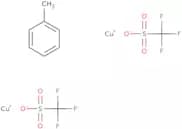
CAS:Controlled ProductToluene complex
Formula:C9H8Cu2F6O6S2Purity:Min. 95%Molecular weight:517.37 g/mol(Trimethyl)pentamethylcyclopentadienyltitanium(IV)
CAS:Please enquire for more information about (Trimethyl)pentamethylcyclopentadienyltitanium(IV) including the price, delivery time and more detailed product information at the technical inquiry form on this pageFormula:C13H24TiPurity:Min. 95%Molecular weight:228.2 g/molDichloro(1,5-cyclooctadiene)palladium(II)
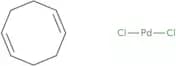
CAS:Controlled ProductDichloro(1,5-cyclooctadiene)palladium(II) is a stable metal complex in which the chlorine atom is coordinated to two benzyl groups and one palladium atom. The chloride ion is coordinated to the palladium atom through a strong coordinate bond. The chloride ion is also coordinated to the two benzyl groups by weaker coordinate bonds. In the presence of sodium carbonate, hydrogen chloride and nitrogen gas, dichloro(1,5-cyclooctadiene)palladium(II) reacts with hydrogen chloride to form stable complexes that are soluble in water. These complexes can be used as catalysts for organic reactions because they are able to transfer hydrogen atoms between molecules without breaking covalent bonds. Dichloro(1,5-cyclooctadiene)palladium(II) has been shown to have antibacterial activity against Staphylococcus aureus and Pseudomonas aeruginosaFormula:C8H12Cl2PdPurity:Min. 98%Molecular weight:285.51 g/molZinc iodide
CAS:Zinc iodide is a chemical compound with the molecular formula ZnI. It is used as an anti-inflammatory agent, and it has been shown to be effective against inflammatory diseases such as asthma. The reaction mechanism of zinc iodide is complex and may involve a copper complex. One possible reactive site for this reaction is a hydroxyl group on the nitrogen atom. Hydrogen bonds are also present in this molecule, which may allow the formation of polymeric matrices that can be used to deliver ZnI to cells or tissues.
Formula:I2ZnPurity:Min. 95%Color and Shape:PowderMolecular weight:319.19 g/molEplerenone hydroxyacid potassium salt
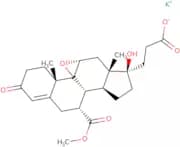
CAS:Eplerenone is a drug that belongs to the class of drugs known as selective mineralocorticoid receptor antagonists. It is a prodrug that is metabolized in vivo to its active form, eplerenone acid. Eplerenone inhibits the binding of aldosterone to its receptors in the kidney. Eplerenone hydroxyacid potassium salt has been shown to have stereochemical purity of >98% and no detectable process-related impurities or experimental impurities. High-performance liquid chromatography (HPLC) methods have been used to characterize this drug substance and confirm that it has an average particle size 10 micrometers with no particles > 150 micrometers.Formula:C24H31KO7Purity:Min. 95%Molecular weight:470.6 g/molShikimate-3-phosphate trisodium salt
CAS:Shikimate-3-phosphate trisodium salt (SPTS) is a herbicide that inhibits the enzyme EPSPS, which is essential for the production of aromatic amino acids in plants. It binds to the active site of the enzyme and prevents it from functioning properly. SPTS is used as a pesticide on crops such as wheat, rye, barley, oats, rice, soybeans, maize, potato and sugar beet. The herbicide has been shown to be effective in nanomolar range concentrations. It can be detected using biosensors designed for environmental monitoring purposes. The surface of these biosensors are functionalized with SPTS and immobilized on a solid support such as glass or silicon dioxide. These sensors have been shown to detect glyphosate at concentrations as low as 0.01 ppm. SPTS has been investigated for use in developing biosensors that could be used to monitor levels of this herbicide in water sources such as rivers and streams.END>Formula:C7H8Na3O8PPurity:Min. 95%Color and Shape:White PowderMolecular weight:320.08 g/molBis(methyldiphenylphosphine)palladium(II) Dichloride
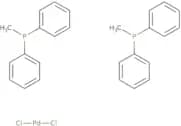
CAS:Controlled ProductBis(methyldiphenylphosphine)palladium(II) chloride is an aryl halide catalyst that is used in the preparation of aryl chlorides. It can be used for the synthesis of pharmaceuticals, agrochemicals, perfumes and other chemical compounds. This catalyst has been shown to be effective in the presence of chloride as well as aryl halides. The reaction can be performed in either the presence or absence of solvent. Methyldiphenylphosphine is soluble in organic solvents such as ether, benzene, and toluene.Formula:C26H26Cl2P2PdPurity:Min. 95%Molecular weight:577.76 g/molCopper(I) trifluoromethanesulfonate benzene complex
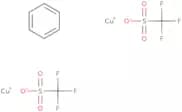
CAS:Copper trifluoromethanesulfonate is a copper complex that inhibits the activity of thrombin receptor and other diazo compounds. It has been shown to inhibit the activity of the cannabinoid receptors, sodium channels, and voltage-gated potassium channels. Copper trifluoromethanesulfonate can be used in organic chemistry as an alkylating agent or to form thioacetals. The activity of this compound is chiral, meaning that it can exist as two different enantiomers: (1) (S)-(+)-Copper(I) trifluoromethanesulfonate benzene complex and (2) (R)-(-)-Copper(I) trifluoromethanesulfonate benzene complex. These two enantiomers have different chemical properties, including their ability to bind to protein receptors.Formula:(CF3SO3Cu)2•C6H6Purity:Min. 95%Color and Shape:PowderMolecular weight:503.34 g/molMercury thiocyanate
CAS:Controlled ProductMercury thiocyanate is a coordination complex that is an organometallic compound. It contains mercury and thiocyanate ions, which are coordinated by four sulfur atoms from the thiocyanate ion. This compound is a light-sensitive, white powder with a basic structure. Mercury thiocyanate has been used in gravimetric analysis for determining the concentration of thiocyanates in solutions. Powder diffraction analysis has shown that mercury thiocyanate crystallizes in the monoclinic system with space group C2/c and unit cell dimensions a = 12.7 Å, b = 8.5 Å, c = 4.7 Å, β = 108°, V = 518 Å3 (calculated). The morphology of this compound is acicular crystals with smooth surfaces and edges that are often striated or curved on one side. It also exhibits thermal expansion properties as well as high chemical stability and resistance to
Formula:C2HgN2S2Purity:Min. 95%Molecular weight:316.76 g/molSodium 1-Dodecanesulfonate
CAS:Sodium 1-dodecanesulfonate is a surfactant that can be used in the treatment of wastewater containing organic and inorganic substances. This compound adsorbs on the surface of bacteria and helps to destroy them by inhibiting their growth. Sodium 1-dodecanesulfonate has been shown to inhibit the growth of Gram-positive and Gram-negative bacteria, including Pseudomonas aeruginosa, Staphylococcus aureus, Escherichia coli, Enterobacter cloacae, Klebsiella pneumoniae, Citrobacter freundii, Proteus mirabilis, Salmonella typhimurium, Campylobacter jejuni and Shigella sonnei. The sodium dodecyl sulfonate molecule binds to phospholipids in bacterial cell membranes by electrostatic interactions with the hydrophilic head group and hydrophobic tail. This inhibits the activity of enzymes such as proteinFormula:C12H25NaO3SPurity:Min. 95%Color and Shape:White To Light (Or Pale) Yellow SolidMolecular weight:272.38 g/molPhosphatidylinositol-bis-4,5-phosphate sodium salt
Please enquire for more information about Phosphatidylinositol-bis-4,5-phosphate sodium salt including the price, delivery time and more detailed product information at the technical inquiry form on this pagePurity:Min. 95%Succinyl coenzyme A sodium
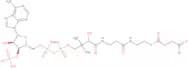
CAS:Succinyl coenzyme A sodium (SCCA) is a membrane-permeable probe that can be used to measure the mitochondrial membrane potential. SCCA is transported into mitochondria and reduced by dehydrogenase, resulting in an increase in the concentration of its oxidized form, succinic semialdehyde. This increase in extracellular concentrations of succinic semialdehyde can be detected using high performance liquid chromatography with fluorescence detection. The use of this probe has been shown to be useful for measuring mitochondrial function in live cells and tissues, and for investigating genetic disorders that affect mitochondrial function.
Formula:C25H40N7O19P3S•NaxPurity:Min. 95%Molecular weight:889.59 g/molBis(tricyclohexylphosphine)palladium(II) Dichloride
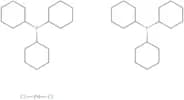
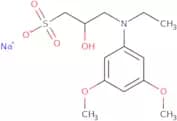
CAS:Controlled ProductBis(tricyclohexylphosphine)palladium(II) Dichloride is a cross-coupling agent that is used for the synthesis of organic and organometallic compounds. It reacts with terminal alkynes to form a phosphine oxide, which can then be converted into an arylated product. The reaction proceeds by the formation of a palladium-carbon bond and subsequent cleavage of the carbon-palladium bond in the presence of ammonium formate. Bis(tricyclohexylphosphine)palladium(II) Dichloride is insoluble in water, but soluble in organic solvents such as dichloromethane, 1,2-dichloroethane, or chloroform. This reagent has been shown to enhance the rate of transfer reactions between monomers.Formula:C36H66Cl2P2PdPurity:Min. 95%Molecular weight:738.18 g/molN-Ethyl-N-(2-hydroxy-3-sulfopropyl)-3,5-dimethoxyaniline sodium salt
CAS:N-Ethyl-N-(2-hydroxy-3-sulfopropyl)-3,5-dimethoxyaniline sodium salt is an antioxidant that has been shown to have antiviral properties. This drug has been found to be a potent inhibitor of HIV replication in wild type mice and was able to inhibit the virus in human serum. The mechanism by which this drug inhibits the virus is not known, but it may be due to its ability to scavenge free radicals and protect cells against oxidative stress. Studies have also shown that this drug can increase the activity of antioxidant enzymes such as superoxide dismutase, catalase, and glutathione reductase. It has also been found to decrease lipoprotein lipase activity in vitro. These effects are thought to be due to the ability of this drug to bind with proteins and lipids on cell membranes and prevent them from being oxidized. Clinical trials have shown that N-Ethyl-N-(2Formula:C13H20NO6S·NaPurity:Min. 98 Area-%Color and Shape:White PowderMolecular weight:341.36 g/mol



palladium(IV)](/_next/image/?url=https%3A%2Fstatic.cymitquimica.com%2Fproducts%2F3D%2Fthumb-webp%2FFB157435.webp&w=3840&q=75)