Metal Salts
Found 2872 products of "Metal Salts"
2-Hydroxyethanesulfonic acid sodium salt
CAS:2-Hydroxyethanesulfonic acid sodium salt is a drug that is used to treat metabolic disorders such as cystinuria and hyperchloremic metabolic acidosis. It is also used for the treatment of water-vapor related respiratory problems and cataracts, as well as for the prevention of renal stone formation. This drug is made through electrochemical impedance spectroscopy of taurine in reaction solution with phosphorus pentoxide. 2-Hydroxyethanesulfonic acid sodium salt has been shown to increase locomotor activity in rats by improving their biochemical properties. This compound binds to the chloride ion receptor site on the Na+/K+ ATPase, causing an inhibition of the enzyme's function.Formula:C2H5O4S·NaPurity:Min. 95%Color and Shape:White PowderMolecular weight:148.11 g/mol1,1'-Dibenzoylferrocene
CAS:1,1'-Dibenzoylferrocene is a ferrocene derivative that has been shown to be an excellent ligand for the separation of heavy metal ions. The physicochemical properties of 1,1'-dibenzoylferrocene make it a good candidate for ionization and separation techniques. It can accommodate different substituents on the ferrocene molecule, which allows it to interact with different types of metal ions. 1,1'-Dibenzoylferrocene has been used in metallocene catalysis as a solvent, although its use as a ligand has not yet been explored.
Formula:C24H18FeO2Purity:Min. 95%Molecular weight:394.24 g/molSodium selenite
CAS:Sodium selenite is an inorganic chemical compound that is a byproduct of the refining process of crude oil. It is used as a dietary supplement and in clinical studies for inflammatory bowel disease. Sodium selenite is a strong reducing agent because it has a redox potential of -1.5 V, which can cause genotoxic effects in cells with low antioxidant defenses. The pro-oxidant effect may be due to its ability to generate reactive oxygen species, such as hydrogen peroxide and hydroxyl radicals. It also exhibits antimicrobial activity against bacteria, fungi, and yeast.
Formula:Na2SeO3Purity:Min. 95%Color and Shape:PowderMolecular weight:174.95 g/molBis(cyclopentadienyl)titanium (IV) dichloride
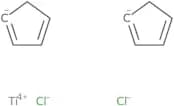
CAS:Bis(cyclopentadienyl)titanium (IV) dichloride is a cationic polymerization catalyst that has been used to produce polyolefins with high molecular weights. It is also an important component of solid catalysts for the production of butadiene and styrene. Bis(cyclopentadienyl)titanium (IV) dichloride is a potent carcinogen in animals and is mutagenic in bacteria. It has been shown to cause cancer in animal models, and has been shown to be mutagenic in bacterial mutation assay tests. Bis(cyclopentadienyl)titanium (IV) dichloride reacts with dimethylformamide and aromatic hydrocarbons to produce photochemical properties that can lead to skin irritation or sensitization. This compound also has hydroxyl groups, which can react with oxidants such as chlorine gas to form chlorohydrins, which are toxic compounds that may be carcinogenic.
Formula:C10H10TiCl2Purity:Min. 95%Color and Shape:Red Clear LiquidMolecular weight:248.96 g/molSodium 2-mercaptobenzothiazole - 50% aqueous solution
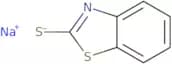
CAS:2-Mercaptobenzothiazole is a white crystalline powder that is soluble in water and insoluble in organic solvents. It has an odor threshold of 1.5 ppm and a melting point of 158°C. 2-Mercaptobenzothiazole is used as an absorption enhancer for ultraviolet light, infrared radiation, or X-rays. It is also used to improve the efficiency of chemical reactions, such as the synthesis of polyurethane resins and other polymers. The most common application for 2-mercaptobenzothiazole is as a cationic surfactant, which is often used in textile processing and oil refining. This compound can be prepared by reacting sodium carbonate with hydrochloric acid and glycol ether, followed by the addition of water vapor to produce hydrogen chloride gas. 2-Mercaptobenzothiazole can be synthesized using a liquid chromatography method with electrochemical impedance spectroscopy (Formula:C7H4NNaS2Purity:Min. 95%Color and Shape:Yellow To Brown LiquidMolecular weight:189.24 g/molSodium stearate
CAS:Sodium stearate is a sodium salt that is commonly used as a surfactant and emulsifying agent in the food industry. The drug interactions with sodium stearate are not well known, but it has been shown to have an effect on fetal bovine serum (FBS) cell viability at concentrations above 10%. Sodium stearate typically shows a thermal expansion of 5–6% per degree Celsius. It is also used in conjunction with CO2 flow to produce anhydrous sodium carbonate and sodium bicarbonate. Sodium stearate can be found in foods such as margarine, shortening, and baking powder. It also has metabolic effects such as promoting the production of insulin and reducing blood sugar levels. It has also been shown to inhibit tumor growth in bone cancer cell lines.Formula:C18H35NaO2Purity:Min. 95%Color and Shape:White/Off-White SolidMolecular weight:306.46 g/molBispyribac sodium
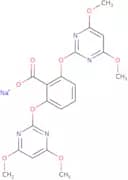
CAS:Controlled ProductBispyribac sodium is a herbicide that belongs to the triazolopyrimidine class. It inhibits plant growth by inhibiting photosynthesis. Bispyribac sodium has been shown to be effective against the following plants: Triticum aestivum, eclipta prostrata, and cationic surfactant when applied at a concentration of 0.5 kg/ha. This herbicide is not active against plants with a neutral pH, such as corn and soybeans. The herbicide does not inhibit the enzyme activities in plants with an acidic pH, such as rice and wheat.
Formula:C19H17N4NaO8Purity:Min. 95%Color and Shape:PowderMolecular weight:452.35 g/molZinc lactate
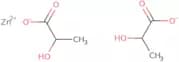
CAS:Zinc lactate is an ionic salt that contains zinc and lactate ions. It is a particle that can be used as an oral supplement to treat zinc deficiency. Zinc lactate is soluble in water, which makes it easy to take orally. The other benefits of this supplement include its ability to reduce the risk of dental cavities and promote wound healing. In addition, zinc lactate has been shown to have antibacterial properties against throat infections and cavity-causing bacteria such as Streptococcus mutans. This product is also beneficial for brain cells due to its ability to remove polyphosphates from neurons, which are toxic substances that accumulate when brain cells are injured or diseased.Formula:C6H10O6ZnPurity:Min. 95%Color and Shape:White PowderMolecular weight:243.52 g/molSodium 2-thiobarbiturate
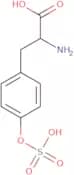
CAS:Controlled ProductSodium 2-thiobarbiturate is a nitrosating agent that has been shown to protect the lungs from ischemia–reperfusion injury in vitro. It exerts its protective effects by inhibiting the release of nitric oxide (NO) and protects against neuronal death by preventing mitochondrial dysfunction. Sodium 2-thiobarbiturate also has genotoxic effects, which are reduced in the presence of antioxidants, and can cause DNA damage. This drug is reactive with oxygen, so it should not be stored in airtight containers or exposed to light.Formula:C4H4N2O2S·NaPurity:Min. 95%Color and Shape:White/Off-White SolidMolecular weight:167.14 g/molH-Tyr(SO3H)-OH sodium salt
CAS:Please enquire for more information about H-Tyr(SO3H)-OH sodium salt including the price, delivery time and more detailed product information at the technical inquiry form on this page
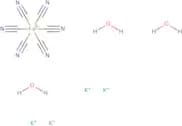
Formula:C9H11NO6SPurity:Min. 95%Molecular weight:261.25 g/molPotassium ferrocyanide trihydrate
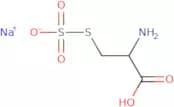
CAS:Potassium ferrocyanide trihydrate is a stable compound that has high resistance to corrosion by acids and bases. It is an inorganic compound that belongs to the class of ferroelectric materials. The crystal structure of potassium ferrocyanide trihydrate is a metastable phase with a very high thermal expansion coefficient. This compound can be synthesized by reacting ethylene diamine with hydrochloric acid and sodium carbonate, followed by adding potassium hydroxide. Potassium ferrocyanide trihydrate can also be produced from potassium malonate, which is prepared from malonic acid and potassium hydroxide in the presence of an aryl halide.Formula:C6FeN6•(H2O)3•K4Purity:Min. 95%Molecular weight:422.39 g/molH-Cys(SO3H)-OH sodium salt
CAS:Please enquire for more information about H-Cys(SO3H)-OH sodium salt including the price, delivery time and more detailed product information at the technical inquiry form on this page
Formula:C3H7NO5S2·xNaPurity:Min. 98 Area-%Color and Shape:White PowderMolecular weight:201.22 g/molPotassium bicarbonate
CAS:Potassium bicarbonate is a chemical compound that is used as a buffer in a variety of applications. It is commonly used to maintain the pH of laboratory solutions and can be found in many home products such as baking powder, fire extinguishers, and antacids. Potassium bicarbonate has been shown to bind to metal ions, such as hydrogen fluoride and metal chelates, which may be responsible for its ability to inhibit cox-2 activity. Potassium bicarbonate also has high water permeability properties. This property makes it useful in blood sampling, where it causes the red blood cells to swell up and burst so they can be removed by centrifugation. Potassium bicarbonate also has hydrogen bonding interactions with water molecules (H2O).
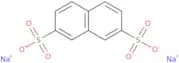
Formula:KHCO3Purity:Min. 99.0%Color and Shape:White Clear LiquidMolecular weight:100.12 g/mol2,7-Naphthalenedisulfonic acid disodium salt
CAS:2,7-Naphthalenedisulfonic acid disodium salt is a heteronuclear molecule that is synthesized by the reaction of 2,7-naphthalenedisulfonyl chloride with sodium sulfite in water. It has been used in the manufacture of dyes and pigments, as a corrosion inhibitor for steel and aluminum, and as an intermediate in the synthesis of pharmaceuticals. The compound has been detected in groundwater samples at concentrations up to 10 mg/L. The compound is also found in geothermal waters at concentrations up to 0.6 mg/L.Formula:C10H6Na2O6S2Purity:Min. 95%Molecular weight:332.26 g/mol4-Sulpho-1,8-naphthalic anhydride potassium salt
CAS:4-Sulpho-1,8-naphthalic anhydride potassium salt is a reagent that belongs to the family of sulfonic acids. It is used for recycling purposes in biochemical studies and for the synthesis of other compounds in organic chemistry. The chloride ion can be substituted with bromide or iodide ions to yield 4-bromobenzaldehyde. Studies have also shown that 4-SNAK can act as an electron acceptor in cellular respiration pathways and has been shown to inhibit synaptic transmission.
Formula:C12H5KO6SPurity:Min. 95%Color and Shape:SolidMolecular weight:316.33 g/molDioctyl sulfosuccinate sodium salt
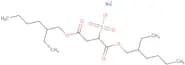
CAS:Dioctyl sulfosuccinate sodium salt (DSS) is a surfactant that is used in the formulation of aerosol products. It can be used as a matrix for the analytical determination of enzyme activities such as glutathione reductase and cytochrome p450, which are involved in the metabolism of xenobiotics. DSS has been shown to have an optimum concentration of 0.1% and fluorescence probe with a pH range between 7-9. The surfactant also shows ionotropic gelation properties at concentrations greater than 1%.
Formula:C20H37NaO7SPurity:Min. 95%Color and Shape:White PowderMolecular weight:444.57 g/molCalcium silicate
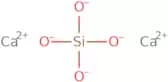
CAS:Calcium silicate is a crystalline compound of calcium and silicon with the chemical formula CaSiO3. It is chemically stable and has a high resistance to particle wear. Calcium silicate is used in the production of dental cements, adhesives, sealants, and other dental restorations. In addition, it is used in the manufacture of paints and coatings as well as in papermaking. Calcium silicate also has biological properties that make it useful for cell culture. It can be used to support the growth of primary cells such as human osteosarcoma cells or epidermal growth factor-stimulated fibroblasts. It also has been shown to have a basic structure that can bind to basic proteins such as laminin
Formula:CaSiO3Purity:Min. 95%Color and Shape:White PowderMolecular weight:116.16Tianeptine sodium salt
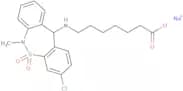
CAS:Controlled ProductFull agonist of the μ-opioid receptor (MOR) with Ki of 383 nM. It also weakly agonizes the δ-opioid receptor (DOR) with a Ki >10 μM. Tianeptine has antidepressant effects but can also regulate neuroplasticity in the amygdala and stress-induced release of glutamate. It can generate analgesia and reward, typical opiate-like behavioural effects, but does not induce tolerance or withdrawal.
Formula:C21H24ClN2NaO4SPurity:Min. 98.5 Area-%Color and Shape:White Slightly Yellow PowderMolecular weight:458.93 g/molRhodium(III) chloride hydrate
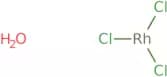
CAS:Rhodium(III) chloride hydrate is a catalyst that is used in the oxidation of aromatic hydrocarbons. It has been shown to have an acidic reaction with hydrochloric acid and is used in the oxidation of benzene, toluene, ethylbenzene, and xylene. Rhodium(III) chloride hydrate has also been shown to be a good catalyst for the production of polycyclic aromatic hydrocarbons from light emitting diodes. This product can be used as an oxidizing agent in organic synthesis reactions. The 6-Fluoro-3-indoxyl-beta-D-galactopyranoside is an antituberculosis drug that belongs to the class of rifamycins. It is the most active of the rifamycins for the treatment of tuberculosis. Rifapentine inhibits bacterial growth by binding to DNA-dependent RNA polymerase, thereby preventing transcription and replication. The high frequency of
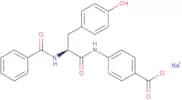
Formula:RhCl3·xH2OPurity:Min. 95%Molecular weight:209.26 g/molBz-Tyr-4-Abz-OH·sodium salt
CAS:Please enquire for more information about Bz-Tyr-4-Abz-OH·sodium salt including the price, delivery time and more detailed product information at the technical inquiry form on this pageFormula:C23H19N2NaO5Purity:Min. 95%Molecular weight:426.4 g/mol