Metal Salts
In this section, you can find various metal salts, which are compounds characterized by containing both metal and non-metal atoms. Essentially, metal salts are composed of cations that are one or more metal atoms. These salts play a crucial role in numerous chemical reactions and applications, serving as catalysts, reactants, or intermediates in various industrial and research processes. At CymitQuimica, we offer a wide selection of high-quality metal salts to meet your research and industrial needs, ensuring reliable and effective performance in your applications.
Found 2870 products of "Metal Salts"
Sort by
Purity (%)
0
100
|
0
|
50
|
90
|
95
|
100
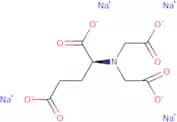
N, N-Bis(Carboxymethyl)-L -glutamic acid tetrasodium salt - ca. 40% in water
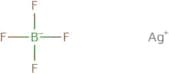
CAS:N,N-Bis(carboxymethyl)-L-glutamic acid tetrasodium salt is a cationic surfactant that has been used in the production of personal care products and industrial cleaners. This compound is soluble in water and can be used as a post-treatment to reduce the redox potential of hydrochloric acid. It also has antibacterial efficacy against both Gram-positive and Gram-negative bacteria. N,N-Bis(carboxymethyl)-L-glutamic acid tetrasodium salt has been shown to be effective against tumor cells.Formula:C9H9NO8·4NaPurity:Min. 95%Color and Shape:PowderMolecular weight:351.13 g/molSilver tetrafluoroborate
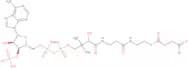
CAS:<p>Silver tetrafluoroborate (AgBF) is a chemical reagent that is used in analytical chemistry and structural analysis. It has shown to be a stable complex with organic molecules, such as fatty acids, and has been used to study the properties of these compounds. AgBF is an inorganic salt that can be synthesized by reacting silver nitrate and barium fluoride in the presence of trifluoroacetic acid. This compound has also been found to form stable complexes with organic molecules containing a hydroxyl group or nitrogen atom. The structure of AgBF has been determined through X-ray crystal structures and electron diffraction patterns. The molecule consists of two symmetric chains joined by a central disulfide bond.</p>Formula:AgBF4Purity:Min. 95%Color and Shape:PowderMolecular weight:194.67 g/molSuccinyl coenzyme A sodium
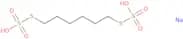
CAS:<p>Succinyl coenzyme A sodium (SCCA) is a membrane-permeable probe that can be used to measure the mitochondrial membrane potential. SCCA is transported into mitochondria and reduced by dehydrogenase, resulting in an increase in the concentration of its oxidized form, succinic semialdehyde. This increase in extracellular concentrations of succinic semialdehyde can be detected using high performance liquid chromatography with fluorescence detection. The use of this probe has been shown to be useful for measuring mitochondrial function in live cells and tissues, and for investigating genetic disorders that affect mitochondrial function.</p>Formula:C25H40N7O19P3S•NaxPurity:Min. 95%Molecular weight:889.59 g/molSodium hexamethylene-1,6-bisthiosulfate dihydrate
CAS:Sodium hexamethylene-1,6-bisthiosulfatedihydrate is a salt of an oxide of benzene with hexamethylene 1,6-disulfate dihydrate. It has a white to off-white crystalline appearance and is used as an additive in mixtures to improve the wetting and dispersing properties of the mixture. The chemical formula for this compound is C8H4NaOS·2H2O.Formula:C6H12Na2O6S4Purity:Min. 95%Color and Shape:PowderMolecular weight:354.4 g/molTitanium(IV) isopropoxide
CAS:Titanium(IV) isopropoxide is a chemical compound with the formula Ti(OCH(CH)) (i-Pr). It is an organotitanium compound that reacts with water to form titanium hydroxide. The compound has a low vapor pressure and a high melting point, which makes it well suited for use in high temperature environments. Titanium(IV) isopropoxide can be used as an additive to improve the corrosion resistance of metal surfaces, such as steel and copper. It also has been shown to have synergistic effects when combined with other additives, such as metal hydroxides or methyl glycosides.Formula:C12H28O4TiPurity:Min. 95%Molecular weight:284.22 g/molSodium 1-Tetradecanesulfonate
CAS:<p>Sodium 1-tetradecanesulfonate is a detergent additive that can be used in water-based cleaning compositions. It is a sodium salt and fatty acid that has been shown to provide high viscosity in the presence of water vapor. This product also provides excellent detergency on oily soils, and is compatible with other ingredients such as fatty alcohols, glycol ethers, glycerin, aluminium, dodecyl cations, and polyvinyl alcohols. Sodium 1-tetradecanesulfonate has been shown to have a wide range of applications including wastewater treatment and analytical chemistry.</p>Purity:Min. 95%Shikimate-3-phosphate trisodium salt
CAS:Shikimate-3-phosphate trisodium salt (SPTS) is a herbicide that inhibits the enzyme EPSPS, which is essential for the production of aromatic amino acids in plants. It binds to the active site of the enzyme and prevents it from functioning properly. SPTS is used as a pesticide on crops such as wheat, rye, barley, oats, rice, soybeans, maize, potato and sugar beet. The herbicide has been shown to be effective in nanomolar range concentrations. It can be detected using biosensors designed for environmental monitoring purposes. The surface of these biosensors are functionalized with SPTS and immobilized on a solid support such as glass or silicon dioxide. These sensors have been shown to detect glyphosate at concentrations as low as 0.01 ppm. SPTS has been investigated for use in developing biosensors that could be used to monitor levels of this herbicide in water sources such as rivers and streams.END>Formula:C7H8Na3O8PPurity:Min. 95%Color and Shape:White PowderMolecular weight:320.08 g/molDichloro(1,5-cyclooctadiene)palladium(II)
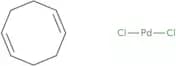
CAS:Controlled ProductDichloro(1,5-cyclooctadiene)palladium(II) is a stable metal complex in which the chlorine atom is coordinated to two benzyl groups and one palladium atom. The chloride ion is coordinated to the palladium atom through a strong coordinate bond. The chloride ion is also coordinated to the two benzyl groups by weaker coordinate bonds. In the presence of sodium carbonate, hydrogen chloride and nitrogen gas, dichloro(1,5-cyclooctadiene)palladium(II) reacts with hydrogen chloride to form stable complexes that are soluble in water. These complexes can be used as catalysts for organic reactions because they are able to transfer hydrogen atoms between molecules without breaking covalent bonds. Dichloro(1,5-cyclooctadiene)palladium(II) has been shown to have antibacterial activity against Staphylococcus aureus and Pseudomonas aeruginosaFormula:C8H12Cl2PdPurity:Min. 98%Molecular weight:285.51 g/mol4-Acetamido-4'-isothiocyanatostilbene-2,2'-disulfonic acid, sodium salt
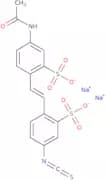
CAS:4-Acetamido-4'-isothiocyanatostilbene-2,2'-disulfonic acid, sodium salt (AITC-S) is a stilbene derivative with inhibitory properties. It has been shown to inhibit the uptake of camp in rat ventricular myocytes and caco-2 cells as well as the release of camp from rat renal proximal tubules. AITC-S also inhibits the transport of camp into the cells. The mechanism by which AITC-S inhibits uptake is not yet known, but it may be due to competition for a common carrier or an effect on intracellular metabolism. This compound has also been shown to have an acute ischemic protective effect on rats when administered before reperfusion following coronary artery occlusion.Formula:C17H12N2Na2O7S3Purity:Min. 95%Molecular weight:498.46 g/molTris(dibenzylideneacetone)dipalladium(0)
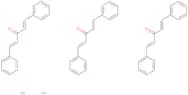
CAS:<p>Tris(dibenzylideneacetone)dipalladium(0) (Pd2(dba)) is a monoclonal antibody that is used to treat infectious diseases. The metal complex binds to the fatty acid and inhibits the synthesis of membrane lipids, which leads to an inhibition of virus replication. Tris(dibenzylideneacetone)dipalladium(0) has been shown to have potent antitumor activity in animal models, with cytotoxic effects on mutant melanoma cells and hydrochloric acid. This drug also has potent pro-apoptotic properties, inducing apoptosis by binding to pro-apoptotic proteins. Tris(dibenzylideneacetone)dipalladium(0) has been shown to be a potent inhibitor of x-ray crystal structures at high temperatures, where it competes with water for the labile hydrogen atoms on the surface of hydroxyl groups.</p>Formula:C17H14O·Pd2Purity:Min. 95%Color and Shape:Purple PowderMolecular weight:915.72 g/molSodium thiocyanate
CAS:<p>Sodium thiocyanate is a salt that is used as an injection solution and reaction solution in the chemical laboratory. It reacts with water vapor to form sodium carbonate and hydrogen cyanide, which are then converted into sodium salts. The biological properties of this compound are not well-known, but it has been shown to be toxic to cells at high concentrations. Sodium thiocyanate is a salt that is used as an injection solution and reaction solution in the chemical laboratory. It reacts with water vapor to form sodium carbonate and hydrogen cyanide, which are then converted into sodium salts. The biological properties of this compound are not well-known, but it has been shown to be toxic to cells at high concentrations.</p>Formula:CNNaSPurity:Min. 95%Color and Shape:White PowderMolecular weight:81.07 g/molBarium tetracyanoplatinate(II) hydrate
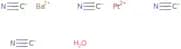
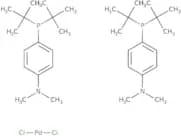
CAS:Controlled ProductPlease enquire for more information about Barium tetracyanoplatinate(II) hydrate including the price, delivery time and more detailed product information at the technical inquiry form on this pageFormula:C4H2BaN4OPtPurity:Min. 95%Molecular weight:454.5 g/molBis(4-(di-tert-butylphosphino)-N,N-dimethylbenzenamine) palladium dichloride
CAS:Controlled ProductBis(4-(di-tert-butylphosphanyl)-N,N-dimethylaniline) is a boronic acid that has been used as a surfactant in organic chemistry. It is hydrophobic and has hydrogen bonding interactions with other molecules. Bis(4-(di-tert-butylphosphanyl)-N,N-dimethylaniline) is also a proton acceptor and can form stable complexes with metal ions such as palladium chloride. This compound is kinase selective and can be used to inhibit tyrosine kinases by binding to the ATP binding site of the enzyme's kinase domain. The functional groups of this compound are able to undergo cross-coupling reactions with other functional groups that have been activated by a reagent such as palladium chloride. Bis(4-(di-tert-butylphosphanyl)-N,N-dimethylaniline) has been used in highFormula:C32H56Cl2N2P2PdPurity:Min. 95%Color and Shape:PowderMolecular weight:708.07 g/molSodium cinnamate
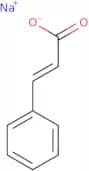
CAS:<p>Sodium cinnamate is an organic compound that is a derivative of 4-hydroxycinnamic acid. It forms sodium salts with water vapor, which are soluble in water. Sodium cinnamate has been shown to have genotoxic activity, and may be used as a potential anticancer drug. Sodium cinnamate also binds to toll-like receptors on the surface of cells, which activate inflammatory signaling pathways. This compound also inhibits enzymes involved in infectious diseases such as influenza A virus and herpes simplex virus type 1 replication. Caffeic acids, chlorogenic acids, and pge2 levels were shown to be increased after treatment with sodium cinnamate.</p>Formula:C9H7NaO2Purity:Min. 95 Area-%Color and Shape:PowderMolecular weight:170.14 g/mol4-Methoxybenzyl chloride - stabilised with potassium carbonate
CAS:4-Methoxybenzyl chloride is a chemotherapeutic agent that inhibits the binding of inhibitor molecules to their target proteins. It has been shown to inhibit the binding of uridine and methanol solvent to their targets, which are enzymes in the synthesis of nucleic acids. The inhibition of these enzymes prevents DNA replication and protein synthesis, leading to cell death. 4-Methoxybenzyl chloride has been found to be effective in treating autoimmune diseases and solid tumours, as well as being an antimicrobial treatment for microbial infections. 4-Methoxybenzyl chloride is also used in chemical syntheses for its ability to undergo cationic polymerization and asymmetric synthesis.Formula:C8H9ClOPurity:Min. 95%Color and Shape:Colorless Clear LiquidMolecular weight:156.61 g/molSodium percarbonate
CAS:<p>Sodium percarbonate is a chemical compound that has a high degree of chemical stability. It is a white, crystalline solid with an appearance similar to table salt. Sodium percarbonate can be used for wastewater treatment by reacting with the hydrogen peroxide in wastewater to produce carbon dioxide and sodium sulfate. The reaction mechanism is based on the oxidation of p-hydroxybenzoic acid by hydrogen peroxide. Sodium percarbonate can also be used as an oxidizing agent in organic synthesis reactions, such as ester hydrolysis, nitro reduction, and decomposition of boron compounds. Optimum concentrations range from 1% to 3%.</p>Formula:C2H6Na4O12Purity:Min. 95%Molecular weight:314.02 g/molBis(tri-tert-butylphosphine)palladium(0)
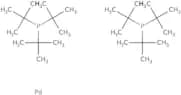
CAS:Bis(tri-tert-butylphosphine)palladium(0) is a chemical compound, insoluble in organic solvents. It has been used as a catalyst for cross-coupling reactions in organic chemistry. Bis(tri-tert-butylphosphine)palladium(0) reacts with sodium salts and palladium-catalyzed cross-coupling to form an insoluble complex in the presence of hexane, which is soluble in organic solvents. The reaction proceeds through reductive elimination, yielding a trisubstituted product. This process can be used for the synthesis of halides and transmetallation.Formula:C24H54P2PdPurity:Min. 95%Color and Shape:White PowderMolecular weight:511.05 g/mol7,7-Azo-3-a,12-a-dihydroxytaurocholanic acid sodium salt
CAS:Please enquire for more information about 7,7-Azo-3-a,12-a-dihydroxytaurocholanic acid sodium salt including the price, delivery time and more detailed product information at the technical inquiry form on this pageFormula:C26H42N3NaO6SPurity:Min. 95%Molecular weight:547.68 g/molBispyribac sodium
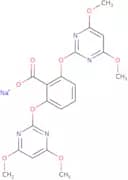
CAS:Controlled Product<p>Bispyribac sodium is a herbicide that belongs to the triazolopyrimidine class. It inhibits plant growth by inhibiting photosynthesis. Bispyribac sodium has been shown to be effective against the following plants: Triticum aestivum, eclipta prostrata, and cationic surfactant when applied at a concentration of 0.5 kg/ha. This herbicide is not active against plants with a neutral pH, such as corn and soybeans. The herbicide does not inhibit the enzyme activities in plants with an acidic pH, such as rice and wheat.</p>Formula:C19H17N4NaO8Purity:Min. 95%Color and Shape:PowderMolecular weight:452.35 g/molH-Tyr(SO3H)-OH sodium salt
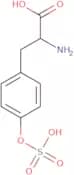
CAS:<p>Please enquire for more information about H-Tyr(SO3H)-OH sodium salt including the price, delivery time and more detailed product information at the technical inquiry form on this page</p>Formula:C9H11NO6SPurity:Min. 95%Molecular weight:261.25 g/mol