Metal Salts
Found 2870 products of "Metal Salts"
[4,4'-Di-t-butyl-2,2'-bipyridine][bis[5-(t-butyl)-2-[4-(t-butyl)-2-pyridinyl-kN]phenyl-kC]iridium(III) hexafluorophosphate
CAS:Please enquire for more information about [4,4'-Di-t-butyl-2,2'-bipyridine][bis[5-(t-butyl)-2-[4-(t-butyl)-2-pyridinyl-kN]phenyl-kC]iridium(III) hexafluorophosphate including the price, delivery time and more detailed product information at the technical inquiry form on this pageFormula:C56H72F6IrN4PPurity:Min. 95%Molecular weight:1,138.38 g/molSodium L-glutamate
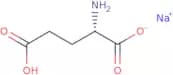
CAS:Glutamate is the most abundant amino acid in the body and plays an important role in metabolism, brain function, and immune function. It is involved in many biochemical reactions and has been found to be associated with liver lesions, thermal expansion, and brain functions. Glutamate also has a role in diseases such as Huntington's disease, amyotrophic lateral sclerosis (ALS), and Parkinson's disease. Furthermore, glutamate is used as a neurotransmitter that regulates the central nervous system. The treatment of diseases can be done through glutamate replacement therapy or by inhibiting glutamate receptors. Glutamate levels in human serum have been shown to increase when blood sampling is taken from individuals with metabolic disorders. Results show high values for glutamate levels in human serum samples collected from patients with metabolic disorders.
Formula:C5H9NO4•NaPurity:Min. 95%Color and Shape:PowderMolecular weight:170.12 g/molH-Cys(SO3H)-OH sodium salt
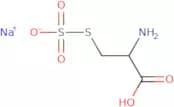
CAS:Please enquire for more information about H-Cys(SO3H)-OH sodium salt including the price, delivery time and more detailed product information at the technical inquiry form on this page
Formula:C3H7NO5S2·xNaPurity:Min. 98 Area-%Color and Shape:White PowderMolecular weight:201.22 g/molSodium phosphate
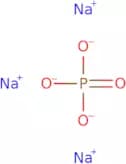
CAS:Sodium phosphate is a solution of sodium ions and phosphate ions in water. It is used as an electrolyte, as an additive to processed food, and in the treatment of infectious diseases. Sodium phosphate is also used to produce polyphosphates that are used in many industrial applications. The dissolution of sodium phosphate starts with the release of hydrogen fluoride (HF). This reaction can be monitored using microdialysis probes inserted into the reaction solution. The dissociation of this compound can be studied using electrochemical impedance spectroscopy. In human serum, sodium phosphate inhibits the growth of bacteria by forming a complex with the sodium ion and preventing their absorption in the bloodstream.
Formula:Na·PO4Purity:Min. 95%Color and Shape:White PowderMolecular weight:163.94 g/molMethyl paraben sodium
CAS:Methyl paraben sodium is a preservative that belongs to the group of antimicrobial agents. It is used as a preservative in pharmaceuticals and personal care products. Methyl paraben sodium has been shown to have significant cytotoxicity at concentrations above 0.1%. The concentration-time curve for methylparaben sodium shows that it has a rapid effect on bacteria, with an increase in the number of dead cells after 24 hours. Methyl paraben sodium also showed significant cytotoxicity against human lung cells at concentrations below 1%. This agent has been shown to be effective against gram-positive and gram-negative bacteria, but not yeast or moulds. Methylparaben sodium is soluble in water and glycol ethers, but insoluble in oil. The solubility of this agent means that it can be used in various formulations such as nanoparticulate compositions and postharvest treatments for fruit and vegetables. Methylparaben sodium is also
Formula:C8H7NaO3Purity:Min. 95%Color and Shape:PowderMolecular weight:174.13 g/mol2-Bromoethanesulfonic acid sodium
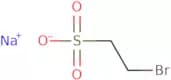
CAS:2-Bromoethanesulfonic acid sodium (2BESA) is a chemical inhibitor that is used to control methanogenic activity. It has been shown to be effective in the treatment of wastewater, although it is not very soluble in water. 2BESA inhibits methanogenesis by binding to the enzyme methane monooxygenase, which blocks electron transfer from methane to oxygen. This prevents the formation of hydrogen and carbon dioxide, which are products of fermentation. 2BESA also has electrochemical properties that make it a good candidate for use as an electrode material in fuel cells. In vitro assays have demonstrated that 2BESA inhibits bacterial growth by inhibiting DNA synthesis and protein synthesis.
Formula:C2H4BrNaO3SPurity:Min. 95%Molecular weight:211.01 g/molBismuth subgallate
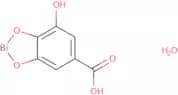
CAS:Bismuth subgallate is a basic compound that is used to treat dermatitis, acne, and other skin conditions. It has been shown to inhibit the growth of human osteosarcoma cells by inhibiting collagen synthesis. Bismuth subgallate also has antibacterial properties against Escherichia coli, Pseudomonas aeruginosa, Staphylococcus aureus, and Streptococcus pyogenes. This drug inhibits bacterial growth by binding to the copper ion in the enzyme superoxide dismutase (SOD), preventing the formation of hydrogen peroxide. The activity of bismuth subgallate is due to its ability to inhibit eosinophil cationic protein and eosinophil peroxidase.Formula:C7H5BiO6Purity:Min. 95%Molecular weight:394.09 g/molSilver(I) 2,2,2-trifluoroacetate
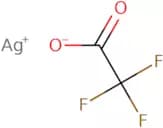
CAS:Silver trifluoroacetate is a chemical compound that is a silver salt of trifluoroacetic acid. Silver trifluoroacetate is a white crystalline solid, soluble in water and alcohols, but insoluble in ethers. It has the chemical formula AgCF3CO2H. The crystal structure of silver trifluoroacetate has been determined by x-ray diffraction techniques and found to be orthorhombic with space group Pbam. The molecule consists of two 5-membered heteroaromatic rings, one containing carbon atoms and the other containing nitrogen atoms. The nitrogen atom is bonded to six hydrogen atoms and three fluorine atoms, while the carbon atom is bonded to four oxygen atoms and one fluorine atom. Synthesis methods for this compound include reacting silver nitrate with sodium carbonate in water vapor at 120°C.Formula:C2AgF3O2Purity:Min. 95%Molecular weight:220.88 g/molSodium dimethyldithiocarbamate hydrate
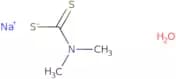
CAS:Sodium dimethyldithiocarbamate hydrate is a salt of dimethyldithiocarbamic acid. It is used as an additive in paints and coatings to prevent corrosion of metal. Sodium dimethyldithiocarbamate hydrate is also used in the production of polyurethane and polyester resins, where it acts as a curing agent. Dimethyldithiocarbamic acid has been shown to be a ligand for the influenza virus, inhibiting viral activity by binding to the hemagglutinin protein. The crystal system of this substance is hexagonal; its salts exist in both acidic and basic forms. The functional theory explains the stabilization of this compound through coordination with nitrogen atoms on one side and phenyl substituents on the other side. Hexamethylenetetramine reacts with sodium chloride to form sodium dimethyldithiocarbamate hydrate, which can then react with methanol or eth
Formula:C3H6NNaS2·xH2OPurity:Min. 95%Color and Shape:White PowderMolecular weight:143.2 g/molDehydroacetic acid sodium salt
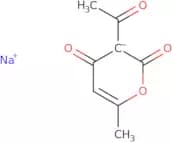
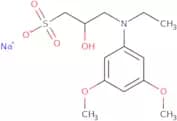
CAS:Dehydroacetic acid sodium salt is a chemical compound with the formula CH3COOCH2NaO2. It is an ionic liquid that can be used as a preservative or stabilizer in foods and other products. Dehydroacetic acid sodium salt has been shown to inhibit the growth of bacteria and fungi in biological studies. The analytical method for dehydroacetic acid sodium salt is based on x-ray diffraction data, which is used to identify its purity and concentration. The reaction solution includes dehydroacetic acid, water vapor, sodium salts, phosphorus pentoxide, and control analysis.Formula:C8H7O4NaPurity:Min. 95%Color and Shape:PowderMolecular weight:190.13 g/molN-Ethyl-N-(2-hydroxy-3-sulfopropyl)-3,5-dimethoxyaniline sodium salt
CAS:N-Ethyl-N-(2-hydroxy-3-sulfopropyl)-3,5-dimethoxyaniline sodium salt is an antioxidant that has been shown to have antiviral properties. This drug has been found to be a potent inhibitor of HIV replication in wild type mice and was able to inhibit the virus in human serum. The mechanism by which this drug inhibits the virus is not known, but it may be due to its ability to scavenge free radicals and protect cells against oxidative stress. Studies have also shown that this drug can increase the activity of antioxidant enzymes such as superoxide dismutase, catalase, and glutathione reductase. It has also been found to decrease lipoprotein lipase activity in vitro. These effects are thought to be due to the ability of this drug to bind with proteins and lipids on cell membranes and prevent them from being oxidized. Clinical trials have shown that N-Ethyl-N-(2Formula:C13H20NO6S·NaPurity:Min. 98 Area-%Color and Shape:White PowderMolecular weight:341.36 g/mol2-Hydroxy-4-(methylthio)butyric acid calcium salt
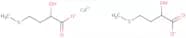
CAS:2-Hydroxy-4-(methylthio)butyric acid calcium salt (2HMBAC) is a fatty acid that is found in malic acid. It is an important industrial chemical used for the preparation of other chemicals such as acetic anhydride, adipic acid, and butyric acid. 2HMBAC has been shown to have various biological functions including the inhibition of protein synthesis and the reduction of chloride ion transport. The dietary administration of 2HMBAC has been shown to relieve diarrhoea in rats.Formula:C10H18CaO6S2Purity:Min. 95%Molecular weight:338.46 g/mol1,1'-Dibenzoylferrocene
CAS:1,1'-Dibenzoylferrocene is a ferrocene derivative that has been shown to be an excellent ligand for the separation of heavy metal ions. The physicochemical properties of 1,1'-dibenzoylferrocene make it a good candidate for ionization and separation techniques. It can accommodate different substituents on the ferrocene molecule, which allows it to interact with different types of metal ions. 1,1'-Dibenzoylferrocene has been used in metallocene catalysis as a solvent, although its use as a ligand has not yet been explored.
Formula:C24H18FeO2Purity:Min. 95%Molecular weight:394.24 g/molRuthenium dioxide
CAS:Ruthenium dioxide is a chemical compound that can be used as an oxidation catalyst. It is a solid material with high resistance and can be used in the water treatment process as well as in electrochemical processes, such as wastewater treatment. Ruthenium dioxide has been shown to have an acidic reaction mechanism, which is related to the particle size of the substance. The large particle size leads to a higher surface area for catalytic activity. Ruthenium dioxide also has the ability to react with hydrogen gas and form hydrogen bonds. This property makes it useful for electrochemical processes, such as wastewater treatment. Ruthenium dioxide also reacts with cationic surfactants containing boron nitride, which allows it to be used in catalysis and electrochemical processes.
Formula:RuO2Purity:Min. 95%Molecular weight:133.07 g/molSodium dicyanamide
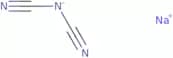
CAS:Sodium dicyanamide is a diphenyl ether that has been shown to be effective in the treatment of polycystic ovarian syndrome. It binds to picolinic acid, which is a cofactor for the enzyme phenylalanine hydroxylase, and inhibits the production of tyrosine. This leads to an increase in the levels of luteinizing hormone and follicle-stimulating hormone, which helps ovulation. Sodium dicyanamide also interacts with hydrogen bond interactions and chelate ligands. The reaction mechanism of this compound is not well understood, but it is known that it can react with oxygen at high temperatures.
Formula:C2N3NaPurity:Min. 95%Color and Shape:White PowderMolecular weight:89.03 g/molZinc phthalocyanine
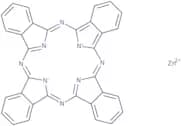
CAS:Zinc phthalocyanine is a blue dye that is used in the manufacture of paints, plastics, and rubber. It has been shown to be a potential cancer treatment for skin cancer because it absorbs ultraviolet light. Zinc phthalocyanine can also be used in wastewater treatment as a coagulant and disinfectant. In addition, zinc phthalocyanine has been shown to have anti-microbial properties against opportunistic fungal and bacterial infections. This compound is also an antioxidant that can protect cells from damage caused by reactive oxygen species. Zinc phthalocyanine's photophysical properties are characterized by its absorption spectrum, which includes the visible region of the electromagnetic spectrum between 400 nm and 700 nm. It is a strong electron acceptor with a redox potential of -0.4 V at pH 7 and 0°C. This molecule also inhibits cytochrome P450 activity in model systems.
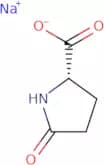
Formula:C32H16N8ZnPurity:90%MinMolecular weight:577.9 g/molSodium pyroglutamate
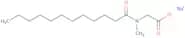
CAS:Sodium pyroglutamate is a surface methodology that inhibits leukemia inhibitory factor and has been shown to be effective in inhibiting the growth of mouse tumor cells. Sodium pyroglutamate has been shown to be cytotoxic to prostate cancer cells, which may be due to its ability to inhibit glutamate-mediated activation of the MAP kinase pathway. This drug also has anti-tumor effects on skin cells, which may be due to its inhibition of cell proliferation and induction of apoptosis. Sodium pyroglutamate also inhibits the production of collagenase, a major enzyme in the degradation of extracellular matrix, by human fibroblast cells. It also has an anti-inflammatory effect and is used as a food additive.Formula:C5H7NO3•NaPurity:Min. 95%Color and Shape:Colorless PowderMolecular weight:152.1 g/molSodium N-Lauroylsarcosinate - 30% solution
CAS:Sodium N-lauroylsarcosinate is a chemical compound that is used in the production of sodium salts. It has high resistance to biological samples and is soluble in water, organic solvents, and other chemicals. It can be used to measure biochemical properties, such as reaction solution polymerase chain reaction (PCR) or electrochemical impedance spectroscopy (EIS). Sodium N-lauroylsarcosinate can also be used for wastewater treatment and water permeability. It has been used as an analytical method for proteins, peptides, amino acids, and carbohydrates. It has been shown to have biological properties on human serum.
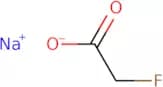
Formula:C15H28NNaO3Color and Shape:Clear LiquidMolecular weight:293.38 g/molSodium fluoroacetate
CAS:Sodium fluoroacetate is a salt that is synthesized by the reaction of methyl ethyl and sodium trifluoroacetate. It has been used as an insecticide, but also has been used to treat metabolic disorders such as bowel disease and eye disorders. Sodium fluoroacetate also has been used in natural products for the treatment of autoimmune diseases. The toxicological studies of sodium fluoroacetate have shown that it can cause eye disorders and x-ray crystal structures have revealed its mechanism of action.
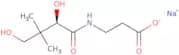
Formula:C2H2FNaO2Color and Shape:White PowderMolecular weight:100.02 g/molSodium-O-pantothenate
CAS:Sodium-O-pantothenate is a natural form of vitamin B5. It is the sodium salt of pantothenic acid, which is used in the synthesis of coenzyme A and acetylcholine. Sodium-O-pantothenate has been shown to be nontoxic in animals and humans when ingested as an additive in food. In vitro studies have shown that this compound inhibits the production of epidermal growth factor, an effect that may be due to its ability to inhibit phospholipase A2 activity. Sodium-O-pantothenate also has been found to enhance the production of erythrocytes, platelets, and leukocytes in human serum. This compound is used as a cofactor for many enzyme reactions involving pyridoxine hydrochloride (B6) and calcium pantothenate.
Formula:C9H16NNaO5Purity:Min. 95%Color and Shape:White PowderMolecular weight:241.22 g/mol
![[4,4'-Di-t-butyl-2,2'-bipyridine][bis[5-(t-butyl)-2-[4-(t-butyl)-2-pyridinyl-kN]phenyl-kC]iridium(…](/_next/image/?url=https%3A%2Fstatic.cymitquimica.com%2Fproducts%2F3D%2Fthumb-webp%2FFD159336.webp&w=3840&q=75)