Metal Salts
Found 2872 products of "Metal Salts"
Copper(II) stearate
CAS:Copper(II) stearate is an inorganic compound that consists of copper chloride and stearic acid. It has a reactive functional group, a copper complex, and a metal-metal bond. Copper(II) stearate is used as an ingredient in cosmetics to enhance the color stability of pigments, such as iron oxides, titanium dioxide, and zinc oxide. The particle size of the compound can be adjusted by controlling the ratio of copper chloride to stearic acid. Copper(II) stearate has been shown to have good chemical stability at high temperatures and is not affected by boron nitride or calcium stearate. Activation energies for the formation of copper(II) stearate are found at about -4.8 kJ/mol for copper chloride and about -5.6 kJ/mol for stearic acid. It also exhibits electrochemical impedance spectroscopy properties with a higher resistance than other metal salts with similar functional groups
Formula:C36H70CuO4Purity:Min. 95%Molecular weight:630.48 g/molRef: 3D-FC140628
Discontinued productSodium cyanate
CAS:Sodium cyanate is a sodium salt that is used in the treatment of wastewater. It inhibits the growth of microorganisms and can be used as a biocide. Sodium cyanate has been shown to have inhibitory properties against bacteria, fungi, and viruses. Sodium cyanate also has been shown to have a protective effect on the papillary muscle during experimental heart failure in rats. This compound may be able to prevent infections caused by infectious agents, such as those found in wastewater treatment plants and hospitals. The mechanism of action of sodium cyanate is related to its ability to release cyanide ions, which disrupts electron transport chains within cells and prevents ATP production. Sodium cyanate has been shown to have a chronic oral toxicity that affects the liver and kidneys at high doses (LD50: 3-6 g/kg).
Formula:CNNaOPurity:Min. 95%Molecular weight:65.01 g/molTin(IV) oxide
CAS:Tin(IV) oxide is a chemical compound that can be used in the treatment of cancer. It is a white powder with a low melting point and is soluble in water, alcohols, and ethers. Tin(IV) oxide has been used as an additive to microscopy techniques to improve contrast. The compound has also been shown to have anticancer properties by inhibiting the growth of cancer cells. Tin(IV) oxide blocks the formation of chalcones, which are products that are formed when reactions between hydrochloric acid and aluminium take place at high temperatures. This blockage prevents the formation of hydrogen gas, thereby preventing cell death due to dehydration or exposure to infrared radiation from heat sources such as microwaves or lasers. Tin(IV) oxide also has been used in infrared spectroscopy for its ability to produce a characteristic absorption band at 3690 cm-1 and as an alternative material for the production of semiconductors when producing thin films.
Formula:SnO2Purity:95%NmrColor and Shape:Off-White To Grey SolidMolecular weight:150.71 g/molZinc phthalocyanine
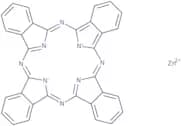
CAS:Zinc phthalocyanine is a blue dye that is used in the manufacture of paints, plastics, and rubber. It has been shown to be a potential cancer treatment for skin cancer because it absorbs ultraviolet light. Zinc phthalocyanine can also be used in wastewater treatment as a coagulant and disinfectant. In addition, zinc phthalocyanine has been shown to have anti-microbial properties against opportunistic fungal and bacterial infections. This compound is also an antioxidant that can protect cells from damage caused by reactive oxygen species. Zinc phthalocyanine's photophysical properties are characterized by its absorption spectrum, which includes the visible region of the electromagnetic spectrum between 400 nm and 700 nm. It is a strong electron acceptor with a redox potential of -0.4 V at pH 7 and 0°C. This molecule also inhibits cytochrome P450 activity in model systems.
Formula:C32H16N8ZnPurity:90%MinMolecular weight:577.9 g/molL-Tyrosine dipotassium
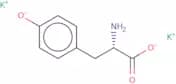
CAS:L-Tyrosine dipotassium salt is a high quality, reagent, complex compound, useful intermediate and fine chemical. It is a useful scaffold that can be used in the synthesis of various important natural products. L-Tyrosine dipotassium salt is a versatile building block that has been widely applied in research on the development of new drugs, such as antiviral agents and antibiotics. L-Tyrosine dipotassium salt can act as a reaction component for many organic reactions. It also has applications in many areas such as medicine, food production, and environmental protection.
Formula:C9H11NO3•K2Purity:Min. 95%Molecular weight:259.39 g/molCalcium-Like Peptide
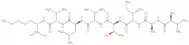
CAS:Please enquire for more information about Calcium-Like Peptide including the price, delivery time and more detailed product information at the technical inquiry form on this page
Formula:C40H75N9O10Purity:Min. 95%Molecular weight:842.08 g/molRef: 3D-FC110290
Discontinued productSodium tert butoxide
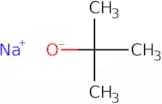
CAS:Please enquire for more information about Sodium tert butoxide including the price, delivery time and more detailed product information at the technical inquiry form on this page
Formula:C4H9NaOPurity:Min. 95%Color and Shape:PowderMolecular weight:96.1 g/molRef: 3D-FS03425
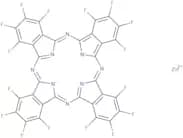
Discontinued productZinc 1,2,3,4,8,9,10,11,15,16,17,18,22,23,24,25-hexadecafluoro-29H,31H-phthalocyanine
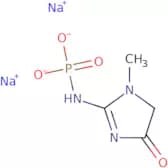
CAS:Please enquire for more information about Zinc 1,2,3,4,8,9,10,11,15,16,17,18,22,23,24,25-hexadecafluoro-29H,31H-phthalocyanine including the price, delivery time and more detailed product information at the technical inquiry form on this pageFormula:C32F16N8ZnPurity:Min. 95%Molecular weight:865.75 g/molDisodium (1-methyl-4-oxoimidazolidin-2-ylidene)phosphoramidate
CAS:Please enquire for more information about Disodium (1-methyl-4-oxoimidazolidin-2-ylidene)phosphoramidate including the price, delivery time and more detailed product information at the technical inquiry form on this page
Formula:C4H6N3O4PNa2Purity:Min. 80 Area-%Color and Shape:PowderMolecular weight:237.06 g/molSodium phenylacetate
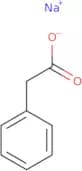
CAS:Controlled ProductSodium phenylacetate is a chemical compound that is used as an antifungal agent in vitro. It has also been shown to have anti-proliferative and cytotoxic effects on neuroblastoma cells. The physiological function of sodium phenylacetate is not well understood, but it may act as a neurotransmitter by inhibiting the release of acetylcholine or by regulating cell signaling pathways. Sodium phenylacetate may also inhibit angiogenesis, which would limit the growth of cancerous tumors.
Formula:C8H7NaO2Purity:Min. 95%Color and Shape:PowderMolecular weight:158.13 g/molSodium mercaptopyruvate
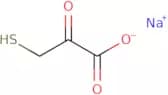
CAS:Sodium mercaptopyruvate is a pyruvate compound that is synthesized by the reaction of sodium sulfide with 3-bromopyruvic acid. It has been shown to be effective in treating emphysema, chronic bronchitis and seborrheic dermatitis. Sodium mercaptopyruvate has also been found to modify the activity of enzymes that are related to inflammation and autoimmune diseases. This drug is an efficient nucleophile, which is important for its ability to interact with proteins via covalent modification. The compound can also be used as a substrate for various dehydrogenases, which can lead to metabolic reactions mediated by these enzymes.
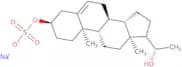
Formula:C3H3NaO3SPurity:Min. 95%Color and Shape:SolidMolecular weight:142.11 g/mol20a-Dihydro pregnenolone 3-sulfate sodium salt
CAS:Please enquire for more information about 20a-Dihydro pregnenolone 3-sulfate sodium salt including the price, delivery time and more detailed product information at the technical inquiry form on this page
Formula:C21H33NaO5SPurity:Min. 95%Molecular weight:420.54 g/molRef: 3D-FD21937
Discontinued product