Metal Salts
Found 2872 products of "Metal Salts"
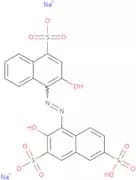
Hydroxy naphthol blue disodium
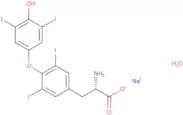
CAS:Hydroxy naphtol blue is a synthetic azo dye, characterised for containing the functional group R N=N R. The hydroxy naphtol blue disodium and trisodium salt are used as indicators to determine the content of alkaline earth and lanthanides spectrophotometrically, showing at maximum a wavelength of ~ 650 nm (λmax = 647.6 nm). The best example of the use of hydroxy naphtol blue sodium salt is to determine the hardness of water by measuring the concentration of calcium and magnesium. At alkaline or basic pH, the hydroxy naphtol blue forms a pink/red complex with the metal ions and, after titration with EDTA, hydroxy naphtol blue is liberated, turning the solution blue which indicates the endpoint.Formula:C20H14N2O11S3·2NaColor and Shape:PowderMolecular weight:600.51 g/mol3,3',5,5'-Tetraiodo-L-thyronine sodium hydrate
CAS:3,3',5,5'-Tetraiodo-L-thyronine sodium hydrate is a synthetic thyroid hormone that is used to treat hypothyroidism and myxedema coma. It is also used as an ingredient in pharmaceuticals. 3,3',5,5'-Tetraiodo-L-thyronine sodium hydrate has been shown to be effective in the treatment of hypothyroidism and myxedema coma. The drug exhibits a high degree of bioequivalence with levothyroxine sodium tablets.
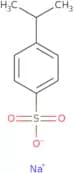
MRP2/ABCG2 transport proteins are expressed at high levels in the liver and gut epithelium and play a role in the absorption of 3,3',5,5'-tetraiodo-L-thyronine sodium hydrate from the small intestine into blood circulation. This drug binds to sorbitol and d-mannitol through hydrogen bonding interactions. These interactions may be responsible forFormula:C15H10I4NNaO4•(H2O)xPurity:Min. 97 Area-%Color and Shape:PowderMolecular weight:798.85Sodium cumene sulfonate
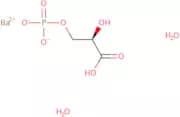
CAS:Sodium cumene sulfonate is a hydrated film-forming polymer that is used as a surfactant in the production of sodium hypochlorite. It has synergistic effects when combined with sodium hypochlorite and is often used in the treatment of sewage or in industrial water purification. Sodium cumene sulfonate also has many other uses, including providing skin care benefits and acting as an additive to detergents. When dissolved in water, it can be used as a photodecomposition agent for organic waste, such as n-oxide or amines. This polymer also has photoelectrochemical properties that allow it to transfer electrons from one electrode to another.Formula:C9H11NaO3SPurity:Min. 95%Color and Shape:White Off-White PowderMolecular weight:222.24 g/mol3-Phosphoglyceric acid barium
CAS:Please enquire for more information about 3-Phosphoglyceric acid barium including the price, delivery time and more detailed product information at the technical inquiry form on this page
Formula:C3H7O7P•BaPurity:Min. 95%Molecular weight:323.38 g/mol2-Methoxy-4-morpholinobenzenediazonium chloride zinc chloride double
CAS:2-Methoxy-4-morpholinobenzenediazonium chloride zinc chloride double (2MBZD) is a chemical compound that has been analyzed by X-ray crystallography and nuclear magnetic resonance. This molecule consists of two parts: a diazonium salt and zinc chloride. The diazonium salt is a heterocyclic nitrogen ring with two nitrogens, which are bonded to the same carbon atom. The second part of the molecule is zinc chloride, which has one chlorine atom attached to it. The zinc chloride component stabilizes the compound, while the diazonium component provides the antibacterial activity. 2MBZD has shown activity against Staphylococcus aureus and Bacillus subtilis.Formula:C11H14N3O2•(ZnCl4)0Purity:Min. 90 Area-%Color and Shape:Yellow Green PowderMolecular weight:323.85 g/mol4,4'-Bis(2-sulfostyryl)biphenyl disodium
CAS:4,4'-Bis(2-sulfostyryl)biphenyl disodium (BSSPD) is a fluorescent dye that is used to measure the pH of wastewater. BSSPD shows a blue-green fluorescence in acidic solutions and a pink fluorescence in alkaline solutions. It has been shown that the use of BSSPD as an optical probe for wastewater can be used to detect changes in pH levels. This dye is also used to measure the degree of inflammation in the corneal epithelium by measuring the synchronous fluorescence. The effects of hydrochloric acid on BSSPD were studied and validated by optical properties and analytical methods.
Formula:C28H20Na2O6S2Purity:Min. 95%Color and Shape:Slightly Yellow PowderMolecular weight:562.57 g/molLithium tetra(perfluoro-tert-butoxy)aluminate
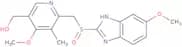
CAS:Used in modifying and improving the electrolyte systems commonly used in lithium-ion batteries, particularly through unique interactions at the interface of electrode materials.Formula:C16AlF36LiO4Purity:Min. 95%Color and Shape:Colorless PowderMolecular weight:974.03 g/mol5-Hydroxy omeprazole sodium salt
CAS:5-Hydroxy omeprazole sodium salt is a fine chemical that belongs to the category of versatile building blocks. It is a complex compound with a molecular weight of 305.38 and a CAS number of 1215629-45-0. 5-Hydroxy omeprazole sodium salt can be used as a reagent in research, as well as a speciality chemical and reaction component in the synthesis of other complex compounds. This product has high purity and quality, and it is useful for complicated reactions because it serves as an intermediate or scaffold for more complex compounds.Formula:C17H18N3NaO4SPurity:Min. 95 Area-%Color and Shape:White Slightly Brown PowderMolecular weight:383.4 g/molLead acetate trihydrate
CAS:Lead acetate trihydrate is a polymerase chain reaction (PCR) reagent. It is used in the detection of DNA sequences, typically for forensic or genealogical purposes. Lead acetate trihydrate has been shown to inhibit mitochondrial membrane potential and increase the growth factor-β1 level in experimental models. It also has been shown to cause toxicological effects such as enzyme activities and plasma mass spectrometry changes in animals, as well as physiological effects such as energy metabolism and structural analysis changes, which are related to oxidative injury. The biological sample can be analyzed using chemiluminescence methods.
Formula:C4H8O4•Pb•(H2O)3Purity:Min. 95%Color and Shape:PowderMolecular weight:381.37 g/molBismuth potassium iodide
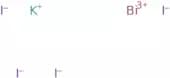
CAS:Bismuth potassium iodide is a water-insoluble, inorganic compound. For many years, bismuth potassium iodide, most commonly known world-wide as Dragendorffâs reagent, has been used as a colorimetric agent to detect alkaloids. At present, the Dragendorffâs reagent is composed by bismuth potassium iodide and other additives, and is of great importance in screening natural products. In addition, modified formulations of the Dragendorffâs reagent containing bismuth potassium iodide and different additives are used for the production of surfactants (Raal, 2020).Formula:BiI7K4Color and Shape:Red PowderMolecular weight:1,253.7 g/molCesium formate
CAS:Cesium formate is a complex enzyme that catalyzes the polymerization of formic acid and formate. It is an analytical method for determining the purity of these compounds in industrial applications. The polymerase chain reaction (PCR) is used to amplify small quantities of DNA. Cesium formate has been shown to be a suitable model system for studying the effects of matrices on phase transitions and molecular dynamics. This compound also has a matrix effect on the polymerization of formic acid and formate, which can be modeled using cesium formate as a model system. Formic acid is an important chemical in industry, where it serves as a feedstock for the production of acetic acid, methanol, and other chemicals. As such, understanding how this compound behaves at different temperatures is essential. The phase transition temperature for cesium formate is determined by its concentration relative to calcium ions in solution; therefore, this property can be determined by measuring the concentrations of ces
Formula:CHCsO2Purity:Min. 95%Color and Shape:PowderMolecular weight:177.92 g/molMeclofenamic acid sodium salt
CAS:Meclofenamic acid is a non-steroidal anti-inflammatory drug that is used to treat pain and inflammation. It inhibits the production of prostaglandin, which is a natural chemical produced by the body that causes pain, fever, and inflammation. Meclofenamic acid sodium salt can be administered orally or topically. The drug has been shown to reduce disease activity in patients with rheumatoid arthritis and other inflammatory conditions. Meclofenamic acid sodium salt is also used for the treatment of gouty arthritis, osteoarthritis, ankylosing spondylitis, and dysmenorrhea. Meclofenamic acid sodium salt has been shown to have cardiac effects such as bradycardia and heart blockage when taken at high doses over a long period of time.
Formula:C14H10Cl2NNaO2Purity:Min. 95%Color and Shape:White PowderMolecular weight:318.13 g/molGold(III) chloride trihydrate - 50% Au
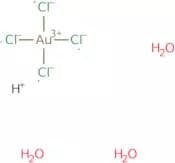
CAS:Gold is a transition metal that is chemically inert and non-toxic. It can be used as a catalyst, electrode, or semiconductor in various techniques. Gold(III) chloride trihydrate has been used as a pesticide and an extractant for nitrocellulose membranes. Gold(III) chloride trihydrate has also been shown to have cancer-fighting properties and is currently being studied for its use in the treatment of prostate cancer. Gold(III) chloride trihydrate has also been used in microscopy and optical studies and has shown to have bioelectrochemical properties. The transport mechanism of gold(III) chloride trihydrate is not yet fully understood, but it may be due to the transport of charged particles on the surface of the molecule. Gold(III) chloride trihydrate has also been used for photocatalytic activity, surface-enhanced Raman spectroscopy, and transport properties with buffers.Formula:HAuCl4·3H2OPurity:Min. 95%Color and Shape:Yellow To Orange SolidMolecular weight:393.83 g/molMiltirone I
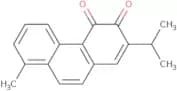
CAS:Miltirone is a bioactive compound, which is a diterpene quinone found primarily in the roots of Salvia miltiorrhiza, also known as Danshen. Its mode of action involves modulating multiple cellular pathways and targets, including the inhibition of cytochrome P450 enzymes and influencing various signaling cascades, such as the MAPK and NF-κB pathways. This multifaceted interaction allows Miltirone to exert significant anticancer and anti-inflammatory effects.Formula:C18H16O2Purity:Min. 95%Molecular weight:264.32 g/molEthylenediaminetetraacetic acid tetrasodium salt tetrahydrate
CAS:Ethylenediaminetetraacetic acid tetrasodium salt tetrahydrate is a chemical compound that is used in cell culture to protect cells from oxidative injury. It has been shown to be effective against a variety of antimicrobial agents, such as aromatic hydrocarbons and reactive oxygen species. Ethylenediaminetetraacetic acid tetrasodium salt tetrahydrate has been shown to have antioxidant properties by scavenging reactive oxygen species, which are produced during the process of oxidation. This chemical compound also prevents the breakdown of disulfide bonds and may have a protective effect on DNA by preventing strand breakage. Ethylenediaminetetraacetic acid tetrasodium salt tetrahydrate can be used for sample preparation and inhibits the polymerase chain reaction (PCR) in vitro at low concentrations.Formula:C10H12N2Na4O8·4H2OPurity:Min. 95%Color and Shape:PowderMolecular weight:452.23 g/molSodium rhodizonate dibasic
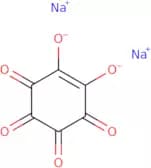
CAS:Sodium rhodizonate dibasic is a chemical reagent that can be used as a nutrient or biochemical supplement in the laboratory. It is a white crystalline solid that reacts with water to form sodium hydroxide and hydrogen peroxide. Sodium rhodizonate dibasic is used to measure the concentration of picolinic acid, which is an intermediate in the citric acid cycle. This compound can also be used as a metal chelate for removal of heavy metals from wastewater or soil. The reaction mechanism for this compound has been studied using plasma mass spectrometry and solid phase microextraction techniques.
Formula:C6Na2O6Color and Shape:Brown PowderMolecular weight:214.04 g/molRiboflavin 5'-phosphate sodium salt dihydrate
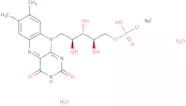
CAS:Riboflavin 5'-phosphate sodium salt dihydrate is a fine chemical that belongs to the group of complex compounds. It is a versatile building block, which can be used as a reaction component in research or as an intermediate for the production of other chemicals. Riboflavin 5'-phosphate sodium salt dihydrate has many applications, such as being a useful scaffold for the preparation of new molecules and being a reagent for reactions involving nucleotides. This compound also has high quality and is often used in speciality chemicals.Formula:C17H20N4NaO9P·2H2OPurity:(Uv) 73.0 To 79.0%Color and Shape:PowderMolecular weight:514.36 g/molPantoprazole sodium hydrate
CAS:Proton pump inhibitor; anti-ulcer
Formula:C16H14F2N3NaO4SPurity:Min. 95%Color and Shape:White PowderMolecular weight:405.35 g/molHypoxanthine monosodium salt
CAS:Hypoxanthine is a nucleotide, which is a building block of DNA and RNA. It is a useful intermediate for the production of other chemicals and drugs. Hypoxanthine can be used as a reagent in biochemical research, to study the effects of hypoxia on cells, or as a catalyst in organic synthesis. Hypoxanthine monosodium salt is an important building block for complex compounds with many uses. It is also used as a reaction component in many chemical reactions as well as being a versatile scaffold for drug design.Formula:C5H4N4NaOPurity:Min. 97 Area-%Color and Shape:White PowderMolecular weight:159.1 g/mol4-Methoxybenzoic acid sodium
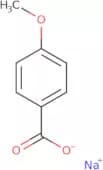
CAS:4-Methoxybenzoic acid sodium is an amide that has been used as a preservative and antimicrobial agent in food products. It is also a second-order rate constant with a Ca2+ concentration of 0.1 mM for staphylococcus. The fatty acids of 4-methoxybenzoic acid sodium are hydrophobic and inhibit the growth of microorganisms by disrupting the cell membrane, which leads to leakage of cellular content. This compound also inhibits the activity of fatty acyl coenzyme A reductase and has been shown to have a microbicidal effect on gram-positive bacteria, such as Staphylococcus aureus. 4-Methoxybenzoic acid sodium has also been shown to be effective against Candida albicans, Streptococcus pyogenes, and Bacillus subtilis when combined with an antimicrobial peptide or cationic surfactant.Formula:C8H7NaO3Purity:Min. 98 Area-%Color and Shape:PowderMolecular weight:174.13 g/mol