Metal Salts
Found 2872 products of "Metal Salts"
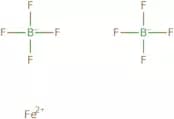
Iron(II) tetrafluoroborate - 40-45% aqueous solution
CAS:Iron(II) tetrafluoroborate is a green-yellow crystalline solid that is soluble in water. It has been shown to have structural and optical properties that are similar to those of ferric chloride, but with the advantage of being less toxic. Iron(II) tetrafluoroborate is used as a homogeneous catalyst for organic reactions such as the hydrogenation of nitroarenes and the reduction of ketones. The catalytic activity of Iron(II) tetrafluoroborate arises from its ability to form hydrogen bonding interactions with other molecules and ions in solution.
Iron(II) tetrafluoroborate undergoes a number of reactions with other compounds, including cleavage products such as hydrogen sulfate and nitrogen atoms, which may be due to its chelate ligand. In coordination chemistry, Iron(II) tetrafluoroborate can form coordination complexes by reacting with potassium dichromate or calcium carbonate. These complexes areFormula:B2F8FePurity:About 45%Color and Shape:Slightly Green Clear LiquidMolecular weight:229.45 g/molRef: 3D-FI105721
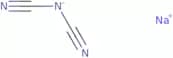
Discontinued productSodium dicyanamide
CAS:Sodium dicyanamide is a diphenyl ether that has been shown to be effective in the treatment of polycystic ovarian syndrome. It binds to picolinic acid, which is a cofactor for the enzyme phenylalanine hydroxylase, and inhibits the production of tyrosine. This leads to an increase in the levels of luteinizing hormone and follicle-stimulating hormone, which helps ovulation. Sodium dicyanamide also interacts with hydrogen bond interactions and chelate ligands. The reaction mechanism of this compound is not well understood, but it is known that it can react with oxygen at high temperatures.
Formula:C2N3NaPurity:Min. 95%Color and Shape:White PowderMolecular weight:89.03 g/molRef: 3D-FS16102
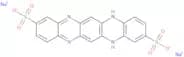
Discontinued productPhacolysine sodium salt
CAS:Phacolysine sodium salt is a drug that activates the choroidal neovascularization receptor. It has been shown to inhibit the growth of tumors by synchronous fluorescence and disulfide bond binding. Phacolysine sodium salt has shown clinical efficacy in the treatment of choroidal neovascularization, with an average success rate of 75%. It has also been shown to be effective in treating other types of cancer, such as prostate cancer. In addition, it has antioxidative properties and can inhibit prostaglandin synthesis. This medicine is sometimes used in combination with ondansetron hydrochloride and benzalkonium chloride for pharmacological treatment.
Formula:C18H10N4Na2O6S2Purity:Min. 95%Color and Shape:Red PowderMolecular weight:488.41 g/molRef: 3D-FP26858
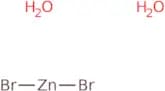
Discontinued productZinc bromide dihydrate
CAS:Zinc bromide dihydrate is a crystalline compound that is used as a catalyst for the conversion of metalloporphyrins to hydroporphyrins. This process is used in the production of vitamin B12. Zinc bromide dihydrate can also be used to inhibit the function of ion pumps, which are proteins that pump ions across membranes. The inhibition of these pumps may lead to a decrease in intracellular calcium levels and an increase in free radicals.
Zinc bromide dihydrate has been shown to react with chlorophylls, vinylated heterostructures, and polyvinyl nonmetals. These reactions produce morphology changes in zinc bromide dihydrate crystalsFormula:ZnBr2•2H2OPurity:Min. 95%Color and Shape:PowderMolecular weight:261.22 g/molSodium potassium tartrate tetrahydrate
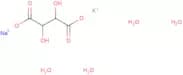
CAS:Sodium potassium tartrate tetrahydrate is a crystal compound made up of potassium and sodium. It is a ferroelectric material that exhibits polarization and piezoelectric properties. The growth rate of these crystals can be controlled by using inhibitors such as protein kinase inhibitors. Sodium potassium tartrate tetrahydrate has been shown to have inhibitory activity against certain enzymes, including proteases and kinases. Additionally, it exhibits dielectric properties and can be used in the production of capacitors and other electronic components.
Formula:C4H4KNaO6·4H2OPurity:Min. 95%Color and Shape:White PowderMolecular weight:282.22 g/molRef: 3D-FS11087
Discontinued productZinc phthalocyanine
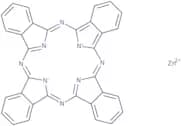
CAS:Zinc phthalocyanine is a blue dye that is used in the manufacture of paints, plastics, and rubber. It has been shown to be a potential cancer treatment for skin cancer because it absorbs ultraviolet light. Zinc phthalocyanine can also be used in wastewater treatment as a coagulant and disinfectant. In addition, zinc phthalocyanine has been shown to have anti-microbial properties against opportunistic fungal and bacterial infections. This compound is also an antioxidant that can protect cells from damage caused by reactive oxygen species. Zinc phthalocyanine's photophysical properties are characterized by its absorption spectrum, which includes the visible region of the electromagnetic spectrum between 400 nm and 700 nm. It is a strong electron acceptor with a redox potential of -0.4 V at pH 7 and 0°C. This molecule also inhibits cytochrome P450 activity in model systems.
Formula:C32H16N8ZnPurity:90%MinMolecular weight:577.9 g/molSodium cyanate
CAS:Sodium cyanate is a sodium salt that is used in the treatment of wastewater. It inhibits the growth of microorganisms and can be used as a biocide. Sodium cyanate has been shown to have inhibitory properties against bacteria, fungi, and viruses. Sodium cyanate also has been shown to have a protective effect on the papillary muscle during experimental heart failure in rats. This compound may be able to prevent infections caused by infectious agents, such as those found in wastewater treatment plants and hospitals. The mechanism of action of sodium cyanate is related to its ability to release cyanide ions, which disrupts electron transport chains within cells and prevents ATP production. Sodium cyanate has been shown to have a chronic oral toxicity that affects the liver and kidneys at high doses (LD50: 3-6 g/kg).
Formula:CNNaOPurity:Min. 95%Molecular weight:65.01 g/molPamidronate disodium pentahydrate
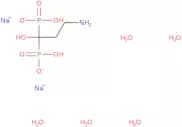
CAS:Farnesyl diphosphate synthase inhibitor
Formula:C3H19NNa2O12P2Purity:Min. 95%Molecular weight:369.11 g/molRef: 3D-FP148956
Discontinued productIron(III) sulfate hydrate
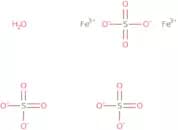
CAS:Iron(III) sulfate hydrate is a chemical compound that is used as a coagulant in wastewater treatment. It reacts with hydrogen ions to form ferric hydroxides, which are insoluble and settle out of the water. Iron sulfate also has been used to identify the presence of bacteria in histological preparations by staining. The optimum concentration for this reaction is 1%. The reaction mechanism for this process is not known and it is difficult to determine the optimal pH range because it depends on the type of bacteria being studied. Iron(III) sulfate hydrate has a carcinogenic potential, but this risk can be minimized by adding an acidic substance such as caproic acid or citric acid to the solution. Iron(III) sulfate hydrate also has been shown to have nutrient-rich properties and can be used as a nutrient solution in conditions where other nutrients are unavailable. When heated, iron sulfate undergoes a redox reaction, producing water vapor and fer
Formula:Fe2(SO4)3•(H2O)xPurity:Min. 95%Color and Shape:Off-White To Yellow To Beige SolidMolecular weight:399.88 g/molRef: 3D-FI166723
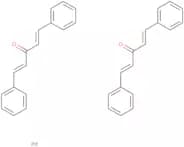
Discontinued productBis(dibenzylideneacetone)palladium(0)
CAS:Bis(dibenzylideneacetone)palladium(0) (Pd 2 (dba)) is a reactive metal complex that can be used to synthesize allyl compounds. The Pd 2 (dba) complex has been shown to have potential as an anti-infective agent for the treatment of infectious diseases. It has been reported that Pd 2 (dba) has a high resistance to halides, hydrochloric acid, and electrochemical impedance spectroscopy.
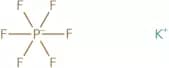
Formula:C34H28O2PdPurity:Min. 95%Molecular weight:575 g/molPotassium hexafluorophosphate
CAS:Potassium hexafluorophosphate is a chemical compound that is used as an antimicrobial agent in the laboratory. It reacts with hydroxyl groups on various surfaces to form potassium hexafluorophosphate and water. The reaction solution can be used to disinfect equipment and surfaces, and is stable at room temperature. Potassium hexafluorophosphate has been shown to have biological properties such as inhibiting the growth of bacteria and fungi, but not viruses. This chemical compound has been shown to be effective against E. coli, Klebsiella pneumoniae, Staphylococcus aureus, Proteus vulgaris, Bacillus subtilis, Pseudomonas aeruginosa, Aspergillus niger, Candida albicans, or Saccharomyces cerevisiae.
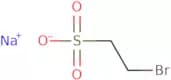
Formula:KPF6Purity:Min. 95%Color and Shape:PowderMolecular weight:184.06 g/mol2-Bromoethanesulfonic acid sodium
CAS:2-Bromoethanesulfonic acid sodium (2BESA) is a chemical inhibitor that is used to control methanogenic activity. It has been shown to be effective in the treatment of wastewater, although it is not very soluble in water. 2BESA inhibits methanogenesis by binding to the enzyme methane monooxygenase, which blocks electron transfer from methane to oxygen. This prevents the formation of hydrogen and carbon dioxide, which are products of fermentation. 2BESA also has electrochemical properties that make it a good candidate for use as an electrode material in fuel cells. In vitro assays have demonstrated that 2BESA inhibits bacterial growth by inhibiting DNA synthesis and protein synthesis.
Formula:C2H4BrNaO3SPurity:Min. 95%Molecular weight:211.01 g/molRef: 3D-FB19225
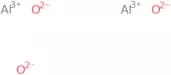
Discontinued productAluminumoxide - Partical size 40-50nm
CAS:Aluminum oxide is a non-toxic, inert solid that is used as a catalyst in the production of polymers and plastics. Aluminum oxide is also used for wastewater treatment, as it has high chemical stability. It can be used to remove pollutants such as hydrogen fluoride, hydrochloric acid and heavy metals from water. The particle size of aluminum oxide ranges from 40-50nm. The phase transition temperature of aluminum oxide is typically at 1,000°C which makes it suitable for use in industrial processes with high temperatures. Aluminum oxide has been shown to reduce inflammation, inhibit angiogenesis and increase vascular permeability in inflammatory diseases such as rheumatoid arthritis and asthma. Alumina can also induce apoptosis in cancer cells by disrupting their cell membranes.
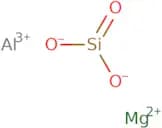
Formula:Al2O3Purity:Min. 95%Color and Shape:White SolidMolecular weight:101.96 g/molAluminum magnesium silicate
CAS:Magnesium aluminum silicate is a film-forming polymer that can be used in the formulation of skin care products, such as sunscreens. It has been shown to have a thermal expansion coefficient similar to that of human skin and also prevents moisture loss by forming a protective barrier on the surface of the skin. Magnesium aluminum silicate also possesses antioxidant properties and has been shown to inhibit tyrosinase activity in analytical chemistry experiments. This polymer is soluble in water, but is not soluble in organic solvents such as ethanol or acetone. The water solubility can be increased by adding an alkylthio group. Magnesium aluminum silicate is insoluble in water at room temperature and must be heated up to 200°C for dissolution. The viscosity of magnesium aluminum silicate increases with increasing concentration and reaches a maximum at about 2% concentration. This polymer shows uptake of water vapor and will form a gel when exposed to high humidity environments, which makes it useful as
Formula:AlMgO3SiPurity:Min. 95%Color and Shape:PowderMolecular weight:127.37 g/molRef: 3D-FA162345
Discontinued productMethyl paraben sodium
CAS:Methyl paraben sodium is a preservative that belongs to the group of antimicrobial agents. It is used as a preservative in pharmaceuticals and personal care products. Methyl paraben sodium has been shown to have significant cytotoxicity at concentrations above 0.1%. The concentration-time curve for methylparaben sodium shows that it has a rapid effect on bacteria, with an increase in the number of dead cells after 24 hours. Methyl paraben sodium also showed significant cytotoxicity against human lung cells at concentrations below 1%. This agent has been shown to be effective against gram-positive and gram-negative bacteria, but not yeast or moulds. Methylparaben sodium is soluble in water and glycol ethers, but insoluble in oil. The solubility of this agent means that it can be used in various formulations such as nanoparticulate compositions and postharvest treatments for fruit and vegetables. Methylparaben sodium is also
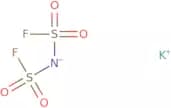
Formula:C8H7NaO3Purity:Min. 95%Color and Shape:PowderMolecular weight:174.13 g/molPotassium bis(fluorosulfonyl)imide
CAS:Potassium bis(fluorosulfonyl)imide (K2FSI) is a reactive chemical that can be used to remove sulfur from petroleum products. It is also used in the manufacturing of ethylene and perovskite solar cells. K2FSI reacts with potassium ions to form potassium hexafluorophosphate (KHF2). This reaction reduces the vapor pressure of KHF2 and increases its solubility in water. The use of K2FSI can reduce the amount of energy needed for desulfurization, as it does not require heating. The following are some uses for potassium bis(fluorosulfonyl)imide: - As a catalyst for production of ethylene - In organic solvent to produce perovskite solar cells - To remove sulfur from petroleum products - To make hydrogen fluoride - For desulfurization
Formula:F2NO4S2•KPurity:Min. 95%Color and Shape:White PowderMolecular weight:219.23 g/molCopper(II) stearate
CAS:Copper(II) stearate is an inorganic compound that consists of copper chloride and stearic acid. It has a reactive functional group, a copper complex, and a metal-metal bond. Copper(II) stearate is used as an ingredient in cosmetics to enhance the color stability of pigments, such as iron oxides, titanium dioxide, and zinc oxide. The particle size of the compound can be adjusted by controlling the ratio of copper chloride to stearic acid. Copper(II) stearate has been shown to have good chemical stability at high temperatures and is not affected by boron nitride or calcium stearate. Activation energies for the formation of copper(II) stearate are found at about -4.8 kJ/mol for copper chloride and about -5.6 kJ/mol for stearic acid. It also exhibits electrochemical impedance spectroscopy properties with a higher resistance than other metal salts with similar functional groups
Formula:C36H70CuO4Purity:Min. 95%Molecular weight:630.48 g/molRef: 3D-FC140628
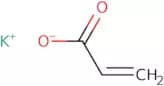
Discontinued productPotassium acrylate
CAS:Potassium acrylate is a diamine tetraacetic acid that functions as a control agent. It is used in analytical methods to measure the effectiveness of other agents. It can be used to produce carboxylate, coordination complex, and hydroxide solution. It has been shown to be effective at doses of 3-5 mM. Potassium acrylate is soluble in water and is stable in air. The FTIR spectrum shows an absorption band at 1657 cm-1, which corresponds to the C=O stretching vibration of the carboxylate group.
Formula:C3H3KO2Purity:Min. 95%Molecular weight:110.15 g/molRef: 3D-FP32495
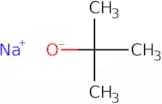
Discontinued productSodium tert butoxide
CAS:Please enquire for more information about Sodium tert butoxide including the price, delivery time and more detailed product information at the technical inquiry form on this page
Formula:C4H9NaOPurity:Min. 95%Color and Shape:PowderMolecular weight:96.1 g/molRef: 3D-FS03425
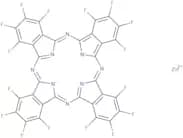
Discontinued productZinc 1,2,3,4,8,9,10,11,15,16,17,18,22,23,24,25-hexadecafluoro-29H,31H-phthalocyanine
CAS:Please enquire for more information about Zinc 1,2,3,4,8,9,10,11,15,16,17,18,22,23,24,25-hexadecafluoro-29H,31H-phthalocyanine including the price, delivery time and more detailed product information at the technical inquiry form on this pageFormula:C32F16N8ZnPurity:Min. 95%Molecular weight:865.75 g/molSodium mercaptopyruvate
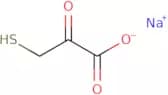
CAS:Sodium mercaptopyruvate is a pyruvate compound that is synthesized by the reaction of sodium sulfide with 3-bromopyruvic acid. It has been shown to be effective in treating emphysema, chronic bronchitis and seborrheic dermatitis. Sodium mercaptopyruvate has also been found to modify the activity of enzymes that are related to inflammation and autoimmune diseases. This drug is an efficient nucleophile, which is important for its ability to interact with proteins via covalent modification. The compound can also be used as a substrate for various dehydrogenases, which can lead to metabolic reactions mediated by these enzymes.
Formula:C3H3NaO3SPurity:Min. 95%Color and Shape:SolidMolecular weight:142.11 g/molSodium phenylacetate
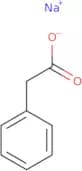
CAS:Controlled ProductSodium phenylacetate is a chemical compound that is used as an antifungal agent in vitro. It has also been shown to have anti-proliferative and cytotoxic effects on neuroblastoma cells. The physiological function of sodium phenylacetate is not well understood, but it may act as a neurotransmitter by inhibiting the release of acetylcholine or by regulating cell signaling pathways. Sodium phenylacetate may also inhibit angiogenesis, which would limit the growth of cancerous tumors.
Formula:C8H7NaO2Purity:Min. 95%Color and Shape:PowderMolecular weight:158.13 g/mol