Metal Salts
Found 2873 products of "Metal Salts"
Zinc bromide dihydrate
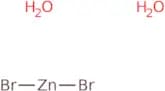
CAS:Zinc bromide dihydrate is a crystalline compound that is used as a catalyst for the conversion of metalloporphyrins to hydroporphyrins. This process is used in the production of vitamin B12. Zinc bromide dihydrate can also be used to inhibit the function of ion pumps, which are proteins that pump ions across membranes. The inhibition of these pumps may lead to a decrease in intracellular calcium levels and an increase in free radicals.
Zinc bromide dihydrate has been shown to react with chlorophylls, vinylated heterostructures, and polyvinyl nonmetals. These reactions produce morphology changes in zinc bromide dihydrate crystalsFormula:ZnBr2•2H2OPurity:Min. 95%Color and Shape:PowderMolecular weight:261.22 g/molSodium orthovanadate
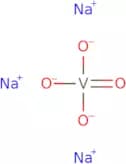
CAS:Sodium orthovanadate is a vanadium compound that is often used as a model system for studying the properties of other transition metal compounds. It has been shown to have hypoglycemic effects in mice, and has also been shown to have synergic effects with other drugs such as clofibrate, troglitazone, and metformin. The coordination geometry of sodium orthovanadate is octahedral, with one vanadium atom at the center and six oxygen atoms around it. It is an ionic compound that dissolves well in water. Sodium orthovanadate can be found in nature as a mineral called meta-vanadinite or vanadic acid. The crystal structure of sodium orthovanadate has been studied using x-ray diffraction data, which revealed that its structure changes from cubic to hexagonal when heated to temperatures above its phase transition temperature (approximately 300°C).
Formula:Na3VO4Purity:Min. 95%Color and Shape:White Off-White PowderMolecular weight:183.91 g/molAluminum magnesium silicate
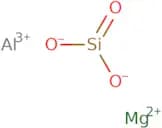
CAS:Magnesium aluminum silicate is a film-forming polymer that can be used in the formulation of skin care products, such as sunscreens. It has been shown to have a thermal expansion coefficient similar to that of human skin and also prevents moisture loss by forming a protective barrier on the surface of the skin. Magnesium aluminum silicate also possesses antioxidant properties and has been shown to inhibit tyrosinase activity in analytical chemistry experiments. This polymer is soluble in water, but is not soluble in organic solvents such as ethanol or acetone. The water solubility can be increased by adding an alkylthio group. Magnesium aluminum silicate is insoluble in water at room temperature and must be heated up to 200°C for dissolution. The viscosity of magnesium aluminum silicate increases with increasing concentration and reaches a maximum at about 2% concentration. This polymer shows uptake of water vapor and will form a gel when exposed to high humidity environments, which makes it useful as
Formula:AlMgO3SiPurity:Min. 95%Color and Shape:PowderMolecular weight:127.37 g/molRef: 3D-FA162345
Discontinued productPalladium on activated carbon - 10% Pd
CAS:Palladium on activated carbon - 10% Pd is a palladium-containing chemical product. It can be used as a catalyst, reagent, or scaffold in chemical synthesis. Palladium on activated carbon - 10% Pd is useful as a reaction component, useful for research and development of new products, and has high quality. This product can be used as an intermediate in organic synthesis to create complex compounds that are often used as speciality chemicals or fine chemicals. Palladium on activated carbon - 10% Pd has CAS No. 7440-05-3.
Formula:PdPurity:(As Pd) 9 To 11%Color and Shape:PowderMolecular weight:106.42 g/molAluminumoxide - Partical size 40-50nm
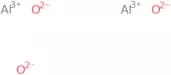
CAS:Aluminum oxide is a non-toxic, inert solid that is used as a catalyst in the production of polymers and plastics. Aluminum oxide is also used for wastewater treatment, as it has high chemical stability. It can be used to remove pollutants such as hydrogen fluoride, hydrochloric acid and heavy metals from water. The particle size of aluminum oxide ranges from 40-50nm. The phase transition temperature of aluminum oxide is typically at 1,000°C which makes it suitable for use in industrial processes with high temperatures. Aluminum oxide has been shown to reduce inflammation, inhibit angiogenesis and increase vascular permeability in inflammatory diseases such as rheumatoid arthritis and asthma. Alumina can also induce apoptosis in cancer cells by disrupting their cell membranes.
Formula:Al2O3Purity:Min. 95%Color and Shape:White SolidMolecular weight:101.96 g/molPotassium hexafluorophosphate
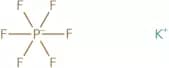
CAS:Potassium hexafluorophosphate is a chemical compound that is used as an antimicrobial agent in the laboratory. It reacts with hydroxyl groups on various surfaces to form potassium hexafluorophosphate and water. The reaction solution can be used to disinfect equipment and surfaces, and is stable at room temperature. Potassium hexafluorophosphate has been shown to have biological properties such as inhibiting the growth of bacteria and fungi, but not viruses. This chemical compound has been shown to be effective against E. coli, Klebsiella pneumoniae, Staphylococcus aureus, Proteus vulgaris, Bacillus subtilis, Pseudomonas aeruginosa, Aspergillus niger, Candida albicans, or Saccharomyces cerevisiae.
Formula:KPF6Purity:Min. 95%Color and Shape:PowderMolecular weight:184.06 g/molSodium phosphate dibasic dodecahydrate
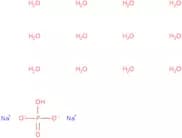
CAS:Sodium phosphate dibasic dodecahydrate is a sodium salt that has been used in analytical chemistry, water treatment, and as a buffering agent. It is also used as a synergistic agent with other sodium salts to increase their bioavailability. This substance has been studied extensively for its effects on cancer tissues and has shown promise in inhibiting the growth of cancer cells. Sodium phosphate dibasic dodecahydrate is not very soluble in water but is highly permeable through human serum membranes. It can be administered orally or intravenously and will have different effects depending on the route of administration.
Formula:H3PO4·Na2·12H2OPurity:Min. 95%Molecular weight:358.14 g/molIndium - 99.999% trace metals basis
CAS:Indium-99.999% trace metals basis is a radioactive metal whose atomic number is 49, and it is the heaviest element in Group 3 of the periodic table. Indium-99.999% trace metals basis can be used in the treatment of bowel disease, such as inflammatory bowel disease (IBD) and Crohn's disease. It may also be used to diagnose other diseases that are not visible through medical imaging techniques, such as cancer or inflammatory diseases of the bowel. It can be used to measure cell nuclei and nuclear DNA for disease activity, or identify response elements for autologous stem-cell transplantation. It has been shown that this metal can cause long-term toxicity to cells when combined with injury models. This toxicity may be due to its coordination geometry, which causes a disruption in electron flow during oxidation reactions.
Formula:InPurity:Min. 95%Molecular weight:114.82 g/molRef: 3D-FI158340
Discontinued productSodium methylarsonate - 50% aqueous solution
CAS:Sodium methylarsonate is a monosodium salt of the hydroxypicolinic acid. It is an experimental model for studies on polymerase chain reaction (PCR) and has been shown to have significant cytotoxicity in vitro. The toxicological profile of this substance has been studied in rodents, where it was found to have a low toxicity level. Sodium methylarsonate was found to be carcinogenic in mice and rats, but not in hamsters. Picolinic acid, which is produced by the metabolic activation of sodium methylarsonate, may be responsible for its carcinogenic properties. The analytical method used for this substance is high-pressure liquid chromatography with mass spectrometry detection.
Formula:CH4AsNaO3Purity:Min. 95%Color and Shape:Clear LiquidMolecular weight:161.95 g/molDipotassium hydrogen phosphate trihydrate
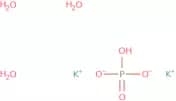
CAS:Please enquire for more information about Dipotassium hydrogen phosphate trihydrate including the price, delivery time and more detailed product information at the technical inquiry form on this page
Formula:K2HPO4•(H2O)3Molecular weight:228.22 g/molRef: 3D-FD143178
Discontinued productPotassium bis(fluorosulfonyl)imide
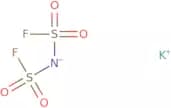
CAS:Potassium bis(fluorosulfonyl)imide (K2FSI) is a reactive chemical that can be used to remove sulfur from petroleum products. It is also used in the manufacturing of ethylene and perovskite solar cells. K2FSI reacts with potassium ions to form potassium hexafluorophosphate (KHF2). This reaction reduces the vapor pressure of KHF2 and increases its solubility in water. The use of K2FSI can reduce the amount of energy needed for desulfurization, as it does not require heating. The following are some uses for potassium bis(fluorosulfonyl)imide: - As a catalyst for production of ethylene - In organic solvent to produce perovskite solar cells - To remove sulfur from petroleum products - To make hydrogen fluoride - For desulfurization
Formula:F2NO4S2•KPurity:Min. 95%Color and Shape:White PowderMolecular weight:219.23 g/molL-Tyrosine dipotassium
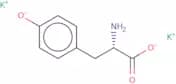
CAS:L-Tyrosine dipotassium salt is a high quality, reagent, complex compound, useful intermediate and fine chemical. It is a useful scaffold that can be used in the synthesis of various important natural products. L-Tyrosine dipotassium salt is a versatile building block that has been widely applied in research on the development of new drugs, such as antiviral agents and antibiotics. L-Tyrosine dipotassium salt can act as a reaction component for many organic reactions. It also has applications in many areas such as medicine, food production, and environmental protection.
Formula:C9H11NO3•K2Purity:Min. 95%Molecular weight:259.39 g/molSodium tert butoxide
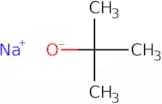
CAS:Please enquire for more information about Sodium tert butoxide including the price, delivery time and more detailed product information at the technical inquiry form on this page
Formula:C4H9NaOPurity:Min. 95%Color and Shape:PowderMolecular weight:96.1 g/molRef: 3D-FS03425
Discontinued product