Metal Salts
In this section, you can find various metal salts, which are compounds characterized by containing both metal and non-metal atoms. Essentially, metal salts are composed of cations that are one or more metal atoms. These salts play a crucial role in numerous chemical reactions and applications, serving as catalysts, reactants, or intermediates in various industrial and research processes. At CymitQuimica, we offer a wide selection of high-quality metal salts to meet your research and industrial needs, ensuring reliable and effective performance in your applications.
Found 2870 products of "Metal Salts"
Sort by
Purity (%)
0
100
|
0
|
50
|
90
|
95
|
100
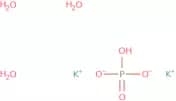
Dipotassium hydrogen phosphate trihydrate
CAS:<p>Please enquire for more information about Dipotassium hydrogen phosphate trihydrate including the price, delivery time and more detailed product information at the technical inquiry form on this page</p>Formula:K2HPO4•(H2O)3Molecular weight:228.22 g/molRef: 3D-FD143178
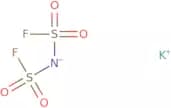
Discontinued productPotassium bis(fluorosulfonyl)imide
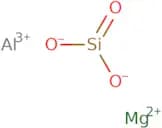
CAS:<p>Potassium bis(fluorosulfonyl)imide (K2FSI) is a reactive chemical that can be used to remove sulfur from petroleum products. It is also used in the manufacturing of ethylene and perovskite solar cells. K2FSI reacts with potassium ions to form potassium hexafluorophosphate (KHF2). This reaction reduces the vapor pressure of KHF2 and increases its solubility in water. The use of K2FSI can reduce the amount of energy needed for desulfurization, as it does not require heating. The following are some uses for potassium bis(fluorosulfonyl)imide: - As a catalyst for production of ethylene - In organic solvent to produce perovskite solar cells - To remove sulfur from petroleum products - To make hydrogen fluoride - For desulfurization</p>Formula:F2NO4S2•KPurity:Min. 95%Color and Shape:White PowderMolecular weight:219.23 g/molAluminum magnesium silicate
CAS:<p>Magnesium aluminum silicate is a film-forming polymer that can be used in the formulation of skin care products, such as sunscreens. It has been shown to have a thermal expansion coefficient similar to that of human skin and also prevents moisture loss by forming a protective barrier on the surface of the skin. Magnesium aluminum silicate also possesses antioxidant properties and has been shown to inhibit tyrosinase activity in analytical chemistry experiments. This polymer is soluble in water, but is not soluble in organic solvents such as ethanol or acetone. The water solubility can be increased by adding an alkylthio group. Magnesium aluminum silicate is insoluble in water at room temperature and must be heated up to 200°C for dissolution. The viscosity of magnesium aluminum silicate increases with increasing concentration and reaches a maximum at about 2% concentration. This polymer shows uptake of water vapor and will form a gel when exposed to high humidity environments, which makes it useful as</p>Formula:AlMgO3SiPurity:Min. 95%Color and Shape:PowderMolecular weight:127.37 g/molRef: 3D-FA162345
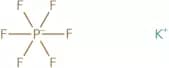
Discontinued productPotassium hexafluorophosphate
CAS:<p>Potassium hexafluorophosphate is a chemical compound that is used as an antimicrobial agent in the laboratory. It reacts with hydroxyl groups on various surfaces to form potassium hexafluorophosphate and water. The reaction solution can be used to disinfect equipment and surfaces, and is stable at room temperature. Potassium hexafluorophosphate has been shown to have biological properties such as inhibiting the growth of bacteria and fungi, but not viruses. This chemical compound has been shown to be effective against E. coli, Klebsiella pneumoniae, Staphylococcus aureus, Proteus vulgaris, Bacillus subtilis, Pseudomonas aeruginosa, Aspergillus niger, Candida albicans, or Saccharomyces cerevisiae.</p>Formula:KPF6Purity:Min. 95%Color and Shape:PowderMolecular weight:184.06 g/molSodium phosphate dibasic dodecahydrate
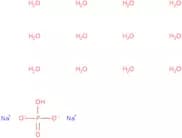
CAS:<p>Sodium phosphate dibasic dodecahydrate is a sodium salt that has been used in analytical chemistry, water treatment, and as a buffering agent. It is also used as a synergistic agent with other sodium salts to increase their bioavailability. This substance has been studied extensively for its effects on cancer tissues and has shown promise in inhibiting the growth of cancer cells. Sodium phosphate dibasic dodecahydrate is not very soluble in water but is highly permeable through human serum membranes. It can be administered orally or intravenously and will have different effects depending on the route of administration.</p>Formula:H3PO4·Na2·12H2OPurity:Min. 95%Molecular weight:358.14 g/molAluminumoxide - Partical size 40-50nm
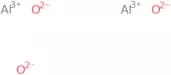
CAS:<p>Aluminum oxide is a non-toxic, inert solid that is used as a catalyst in the production of polymers and plastics. Aluminum oxide is also used for wastewater treatment, as it has high chemical stability. It can be used to remove pollutants such as hydrogen fluoride, hydrochloric acid and heavy metals from water. The particle size of aluminum oxide ranges from 40-50nm. The phase transition temperature of aluminum oxide is typically at 1,000°C which makes it suitable for use in industrial processes with high temperatures. Aluminum oxide has been shown to reduce inflammation, inhibit angiogenesis and increase vascular permeability in inflammatory diseases such as rheumatoid arthritis and asthma. Alumina can also induce apoptosis in cancer cells by disrupting their cell membranes.</p>Formula:Al2O3Purity:Min. 95%Color and Shape:White SolidMolecular weight:101.96 g/molTin(IV) oxide
CAS:<p>Tin(IV) oxide is a chemical compound that can be used in the treatment of cancer. It is a white powder with a low melting point and is soluble in water, alcohols, and ethers. Tin(IV) oxide has been used as an additive to microscopy techniques to improve contrast. The compound has also been shown to have anticancer properties by inhibiting the growth of cancer cells. Tin(IV) oxide blocks the formation of chalcones, which are products that are formed when reactions between hydrochloric acid and aluminium take place at high temperatures. This blockage prevents the formation of hydrogen gas, thereby preventing cell death due to dehydration or exposure to infrared radiation from heat sources such as microwaves or lasers. Tin(IV) oxide also has been used in infrared spectroscopy for its ability to produce a characteristic absorption band at 3690 cm-1 and as an alternative material for the production of semiconductors when producing thin films.</p>Formula:SnO2Purity:95%NmrColor and Shape:Off-White To Grey SolidMolecular weight:150.71 g/molIron(III) sulfate hydrate
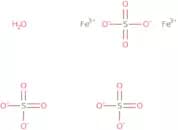
CAS:<p>Iron(III) sulfate hydrate is a chemical compound that is used as a coagulant in wastewater treatment. It reacts with hydrogen ions to form ferric hydroxides, which are insoluble and settle out of the water. Iron sulfate also has been used to identify the presence of bacteria in histological preparations by staining. The optimum concentration for this reaction is 1%. The reaction mechanism for this process is not known and it is difficult to determine the optimal pH range because it depends on the type of bacteria being studied. Iron(III) sulfate hydrate has a carcinogenic potential, but this risk can be minimized by adding an acidic substance such as caproic acid or citric acid to the solution. Iron(III) sulfate hydrate also has been shown to have nutrient-rich properties and can be used as a nutrient solution in conditions where other nutrients are unavailable. When heated, iron sulfate undergoes a redox reaction, producing water vapor and fer</p>Formula:Fe2(SO4)3•(H2O)xPurity:Min. 95%Color and Shape:Off-White To Yellow To Beige SolidMolecular weight:399.88 g/molRef: 3D-FI166723
Discontinued productZinc bromide dihydrate
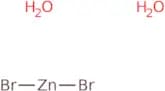
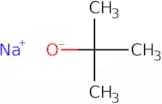
CAS:<p>Zinc bromide dihydrate is a crystalline compound that is used as a catalyst for the conversion of metalloporphyrins to hydroporphyrins. This process is used in the production of vitamin B12. Zinc bromide dihydrate can also be used to inhibit the function of ion pumps, which are proteins that pump ions across membranes. The inhibition of these pumps may lead to a decrease in intracellular calcium levels and an increase in free radicals.<br>Zinc bromide dihydrate has been shown to react with chlorophylls, vinylated heterostructures, and polyvinyl nonmetals. These reactions produce morphology changes in zinc bromide dihydrate crystals</p>Formula:ZnBr2•2H2OPurity:Min. 95%Color and Shape:PowderMolecular weight:261.22 g/molSodium tert butoxide
CAS:<p>Please enquire for more information about Sodium tert butoxide including the price, delivery time and more detailed product information at the technical inquiry form on this page</p>Formula:C4H9NaOPurity:Min. 95%Color and Shape:PowderMolecular weight:96.1 g/molRef: 3D-FS03425
Discontinued product