Sugars
Found 174 products of "Sugars"
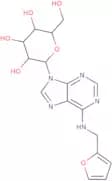
Kinetin-9-glucoside
CAS:Kinetin-9-glucoside is a conjugate of kinetin and glucose. It has been shown to inhibit the growth of several types of bacteria, including Pseudomonas aeruginosa, Staphylococcus aureus, and Streptococcus pyogenes. Kinetin-9-glucoside also has anti-inflammatory properties that may be due to its ability to inhibit prostaglandin synthesis. Kinetin-9-glucoside is used in tissue culture for the induction of plant regeneration from callus tissue or from excised root tissues. Kinetin-9-glucoside has been shown to stimulate the formation of apical roots in plantlets and promote cell division in neuronal cells.Formula:C16H19N5O6Purity:Min. 95 Area-%Color and Shape:PowderMolecular weight:377.35 g/molLaricitrin-3,5'-di-O-glucoside
Laricitrin-3,5'-di-O-glucoside is an organic compound that can be used as a research chemical. Laricitrin-3,5'-di-O-glucoside is a building block for the synthesis of other compounds and has been used in the synthesis of novel antibiotics. This compound is also a useful intermediate in the production of 3,6-dihydroxychalcone.Formula:C28H32O18Purity:Min. 95%Molecular weight:656.54 g/molSodium stibogluconate
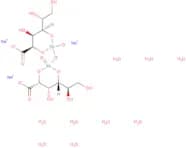
CAS:Sodium stibogluconate is a drug that has been widely used in the treatment of leishmaniasis. It is administered as an intramuscular injection or intravenous infusion, depending on the severity of the infection. The drug targets the parasite by inhibiting its DNA topoisomerase, which disrupts DNA replication and transcription. Clinical data have shown that this drug is effective against infantum and other strains of leishmania.Formula:C12H20O17Sb2•(Na)3•(H2O)9Purity:Min. 95%Color and Shape:PowderMolecular weight:910.9 g/molGlucostrophanthidin
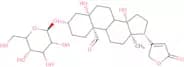
CAS:Glucostrophanthidin is a cardiac glycoside, which is derived from natural plant sources, specifically from species in the Apocynaceae family. This compound exerts its effects primarily through inhibition of the sodium-potassium ATPase enzyme, leading to an increase in intracellular sodium concentration. The downstream effect of this process involves an increase in intracellular calcium via the sodium-calcium exchange mechanism, ultimately enhancing the contractility of cardiac muscle fibers.
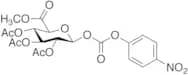
Formula:C29H42O11Purity:Min. 95%Molecular weight:566.64 g/molβ-D-Glucopyranuronic Acid Methyl Ester 2,3,4-Triacetate 1-(4-Nitrophenyl Carbonate)
CAS:Controlled ProductApplications Intermediate used in the addition of protected Glucopyranuronic Acid.
Formula:C20H21NO14Color and Shape:NeatMolecular weight:499.38Propylene Glycol β-D-Glucopyranosiduronic Acid Benzyl Ester 2,3,4-Triacetate-d6
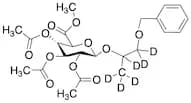
Controlled ProductApplications Propylene Glycol β-D-Glucopyranosiduronic Acid Benzyl Ester 2,3,4-Triacetate-d6 s an intermediate in the synthesis of Isotope labelled Propylene Glycol 2-Glucuronide which is a metabolite of propylene glycol, used in the synthesis of N-terminal kinase inhibitors with cellular activity. Acts as a solvent for various pharmaceutical compounds.
References Szczepankiewicz, B. et al.: J. Med. Chem., 49, 3563 (2006); Mateus, R. et al.: Int. J. Pharm., 444, 106 (2013);Formula:C23H24D6O11Color and Shape:NeatMolecular weight:488.51Rengasin-4'-O-glucoside
Rengasin-4'-O-glucoside (RG4G) is a natural glycoside that belongs to the category of sugar derivatives. It has versatile uses and can be used as a building block for complex compounds, as well as in research chemicals, pharmaceuticals, and cosmetics. RG4G also has many applications in chemistry, including being used as a reagent or speciality chemical. RG4G is also an important intermediate in organic synthesis, which can be used to synthesize many useful compounds. The compound is often used as a scaffold for larger molecules.
Purity:Min. 95%Nepetin-7-glucoside
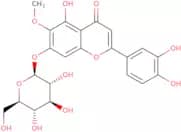
CAS:Nepetin-7-glucoside is a compound found in plants that has been shown to have anti-inflammatory and antiviral properties. Nepetin-7-glucoside inhibits the activity of enzymes such as phospholipase A2, cyclooxygenase, and lipoxygenase. It also reduces the production of inflammatory mediators such as prostaglandins and leukotrienes. Nepetin-7-glucoside may be helpful in the treatment of autoimmune diseases and other inflammatory disorders. This compound also has antiviral effects by inhibiting the replication of herpes simplex virus type 1 (HSV1) in a cell culture system. Nepetin-7-glucoside also has been shown to inhibit the expression of genes related to inflammation and other inflammatory diseases, such as rheumatoid arthritis, colitis ulcerosa, psoriasis, and Crohn's disease.Formula:C22H22O12Purity:Min. 95%Color and Shape:PowderMolecular weight:478.4 g/molFerrous gluconate dihydrate
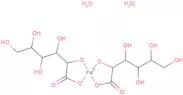
CAS:Ferrous gluconate dihydrate is a fine chemical that has many applications in research and development. It is a versatile building block that can be used as a starting material for the synthesis of complex compounds, such as drugs, pesticides, and perfumes. Ferrous gluconate dihydrate can also be used as a reaction component to produce speciality chemicals, such as benzyl alcohols. In addition to its usefulness in research, ferrous gluconate dihydrate is an important reagent for the production of high-quality pharmaceuticals.Formula:C12H22FeO14·2H2OPurity:Min. 95%Color and Shape:PowderMolecular weight:482.17 g/molLaricitrin-3,7,5'-tri-O-glucoside
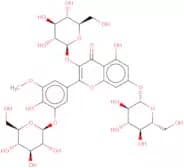
CAS:Laricitrin-3,7,5'-tri-O-glucoside is a fine chemical that can be used as a versatile building block. It is an intermediate in the synthesis of many complex compounds and useful scaffolds. Laricitrin-3,7,5'-tri-O-glucoside has been shown to react with other chemicals in order to form new compounds. This compound also has potential applications in research as a reaction component or speciality chemical. Laricitrin-3,7,5'-tri-O-glucoside has high purity and quality and is available at a reasonable price.
Formula:C34H42O23Purity:Min. 95%Molecular weight:818.68 g/molRengasin-3'-O-glucoside
Rengasin-3'-O-glucoside is a fine chemical, useful building block, and research chemical. It is a versatile building block that can be used in the synthesis of complex compounds. Rengasin-3'-O-glucoside is also a useful intermediate or scaffold for reactions. This compound has been shown to react with 1,2-ethanediol and form an ester, which can be hydrolyzed to release glycerol and the original rengasin-3'-O-glucoside.
Formula:C22H22O11Purity:(%) Min. 75%Molecular weight:462.4 g/molN-Acetyl-β-D-glucosaminyl-(1→4)-N-acetylmuramoyl-L-alanyl-D-isoglutamine
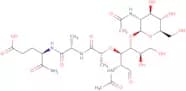
CAS:Please enquire for more information about N-Acetyl-β-D-glucosaminyl-(1→4)-N-acetylmuramoyl-L-alanyl-D-isoglutamine including the price, delivery time and more detailed product information at the technical inquiry form on this pageFormula:C27H45N5O16Purity:Min. 95%Color and Shape:PowderMolecular weight:695.67 g/molFlavanone rhamnoglucoside
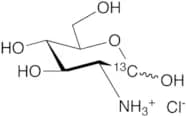
Flavanone rhamnoglucoside is a specialized flavonoid compound, which is derived from various natural sources such as fruits, vegetables, and certain medicinal plants. It functions primarily as an antioxidant by scavenging free radicals, thereby protecting cells from oxidative stress. Additionally, it exhibits anti-inflammatory properties by modulating pathways involved in inflammation, such as NF-kB and COX-2.Purity:Min. 95%D-Glucosamine-13C Hydrochloride
CAS:Controlled ProductApplications Isotope Labelled Derivative of D-Glucosamine (G514950), an amino sugar and a prominent precursor in the biochemical synthesis of glycosylate proteins and lipids.
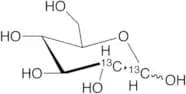
References Zupanets, I.A. et al.: Klin. Farmat., 15, 67 (2011); Vajarudal, Y., et al.: Clin. Ther., 3, 336 (1981); Setnikar, I., et al.: Arzneim.-Forsch., 36, 729 (1986);Formula:CC5H13NO5·ClHColor and Shape:NeatMolecular weight:216.625D-Glucose-1,2-13C2
CAS:Applications Labelled D-Glucose is a simple sugar that is present in plants. A monosaccharide that may exist in open chain or cyclic conformation if in solution. It plays a vital role in photosynthesis and fuels the energy required for cellular respiration. D-Glucose is used in various metabolic processes including enzymic synthesis of cyclohexyl-α and β-D-glucosides. Can also be used as a diagnostic tool in detection of type 2 diabetes mellitus and potentially Huntington's disease through analysis of blood-glucose in type 1 diabetes mellitus.
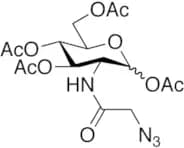
References Wang, R., et al.: J. Mol. Catal. B. Enz., 56, 131 (2009); Springhorn, C. et al.: J. Clin. Endocrinol. Metab., 97, 4640 (2012); Hashimoto, K. et al.: J. Clin. Endocrinol. Metab., 97, 3016 (2012); Avelange, M. et al.: Plant. Phys., 94, 1157 (1990); Cramer, C. et al.: J. Chem. Soc., 115, 5745 (1993);Formula:C2C4H12O6Color and Shape:NeatMolecular weight:182.14N-Azidoacetylglucosamine, Acetylated
CAS:Controlled ProductFormula:C16H22N4O10Color and Shape:NeatMolecular weight:430.3676-O-[(1,1Dimethylethyl)diphenylsilyl]-2,3,4-tris-O-D-gluconic Acid δ-lactone
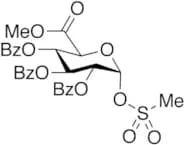
CAS:Controlled ProductFormula:C43H46O6SiColor and Shape:NeatMolecular weight:686.92α-D-Glucopyranuronic Acid Methyl Ester 2,3,4-Tribenzoate 1-Methanesulfonate
CAS:Controlled ProductApplications α-D-Glucopyranuronic Acid Methyl Ester 2,3,4-Tribenzoate 1-Methanesulfonate is a reactant in organic synthesis. It is used in the preparation of novel quaternary glucuronyl reagent for preparation of tertiary amines.
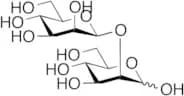
References Araya, I. & Akita, H.: Heterocycles., 75, 1213 (2008)Formula:C29H26O12SColor and Shape:NeatMolecular weight:598.572-O-β-D-Mannopyranosyl-D-mannose
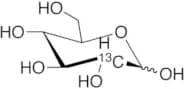
CAS:Controlled ProductFormula:C12H22O11Color and Shape:NeatMolecular weight:342.296D-Glucose-2-13C
CAS:Controlled ProductApplications Labelled D-Glucose is a simple sugar that is present in plants. A monosaccharide that may exist in open chain or cyclic conformation if in solution. It plays a vital role in photosynthesis and fuels the energy required for cellular respiration. D-Glucose is used in various metabolic processes including enzymic synthesis of cyclohexyl-α and β-D-glucosides. Can also be used as a diagnostic tool in detection of type 2 diabetes mellitus and potentially Huntington's disease through analysis of blood-glucose in type 1 diabetes mellitus.
References Wang, R., et al.: J. Mol. Catal. B. Enz., 56, 131 (2009); Springhorn, C. et al.: J. Clin. Endocrinol. Metab., 97, 4640 (2012); Hashimoto, K. et al.: J. Clin. Endocrinol. Metab., 97, 3016 (2012); Avelange, M. et al.: Plant. Phys., 94, 1157 (1990); Cramer, C. et al.: J. Chem. Soc., 115, 5745 (1993);Formula:C513CH12O6Color and Shape:NeatMolecular weight:181.15


![6-O-[(1,1Dimethylethyl)diphenylsilyl]-2,3,4-tris-O-D-gluconic Acid δ-lactone](/_next/image/?url=https%3A%2Fstatic.cymitquimica.com%2Fproducts%2FTR%2Fthumb-webp%2FD480803.webp&w=3840&q=75)