Food Industry Standards
Subcategories of "Food Industry Standards"
- Beverage Standards(7 products)
- Dairy Standards(39 products)
- Food Contact Materials(1,075 products)
- Wine Standards(47 products)
Found 7985 products of "Food Industry Standards"
PSA Sorbent
Applications PSA sorbent is useful in food residue cleanup removing food matrix interferences.
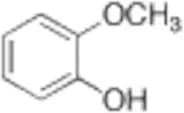
References F.J. Schenck, et al.: J. Chromatogr. A., 868, 51-61 (2000);F.J. Schenck, et al.: J. Sep. Sci. 25, 883-890 (2002)Color and Shape:Neat2-Methoxyphenol
CAS:Controlled ProductStability Light Sensitive
Applications 2-Methoxyphenol (CAS# 90-05-1) is useful for testing ruthenium- and palladium-containing catalysts activity via guaiacol hydrogenation.
References Shakirov, I. I., et al.: Pet. Chem., 60, 1136 (2020)Formula:C7H8O2Color and Shape:NeatMolecular weight:124.14N1-Acetylspermine Trihydrochloride
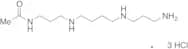
CAS:Controlled ProductApplications N1-Acetylspermine Trihydrochloride is a monoacetylated derivative of Spermine (S680510); a biogenic polyamine formed from Spermidine (S680400) that occurs in almost all tissues. Spermine is also essential for both normal and neoplastic tissue growth and is involved in the modulation of calcium-dependent immune processes.
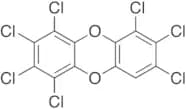
References Israel, et al.: J. Med. Chem., 7, 710 (1964); Janne, J., et al.: Biochim. Biophys. Acta, 473, 241 (1978); Theoharides, T.C., et al.: Life Sci., 27, 703 (1980); Horn, Y., et al.: Cancer Res., 42, 3248 (1982)Formula:C12H31Cl3N4OColor and Shape:NeatMolecular weight:353.76Heptachlorodibenzo-p-dioxin
CAS:Applications A toxic polychlorinated dibenzo-p-dioxin detected in domestic meat and poultry.
Not a dangerous good if item is equal to or less than 1g/ml and there is less than 100g/ml in the package
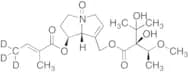
References Feil, V., et al.: J. Agric. Food Chem., 48, 6163 (2000), Huwe, J., et al.: Food Addit. Contam., 21, 182 (2004), Llobet, J., et al.: Toxicol. Lett., 178, 117 (2008),Formula:C12HCl7O2Color and Shape:NeatMolecular weight:425.31Lasiocarpine N-Oxide-d3
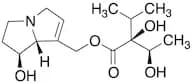
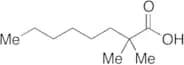
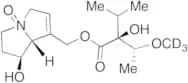
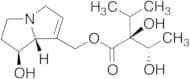
CAS:Controlled ProductFormula:C21D3H30NO8Color and Shape:NeatMolecular weight:430.5072,2-Dimethyloctanoic Acid
CAS:Controlled ProductApplications 2,2-Dimethyloctanoic Acid is used in biological studies as benzyl dimethyloctanoate metabolite of sewage bacteria.
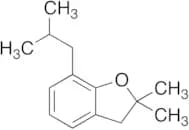
References Millier, A., et al.: Bull. Environ. Contam. Toxicol., 28, 113 (1982);Formula:C10H20O2Color and Shape:NeatMolecular weight:172.267-Isobutyl-2,2-dimethyl-2,3-dihydrobenzofuran
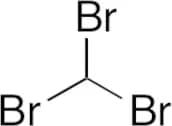
Controlled ProductFormula:C14H20OColor and Shape:NeatMolecular weight:204.308Bromoform
CAS:Controlled ProductApplications Bromoform is a brominated organic solvent, sedative and flame retardant, in the past. Now it is mainly used as a laboratory reagent, for example as an extraction solvent.This compound is a contaminant of emerging concern (CECs)
Not a dangerous good if item is equal to or less than 1g/ml and there is less than 100g/ml in the package
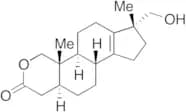
References Haag, W., et al.: Environ. Sci. Technol., 26, 1005 (1992); Giesen, D., et al.: Theoretical Chem. Accounts, 98, 85 (1997); Shvakumar, D., et al.: J. Chem. Theory Compt., 5, 919 (2009)Formula:CHBr3Color and Shape:ColourlessMolecular weight:252.7317α-Hydroxymethyl-17β-methyl-18-nor-2-oxa-5α-androst-13-en-3-one
CAS:Controlled ProductApplications 17α-Hydroxymethyl-17β-methyl-18-nor-2-oxa-5α-androst-13-en-3-one is a derivative of epiandrosterone (E578000), which is a steroid hormone that is present in normal human urine as a minor constituent , it is a less active 3β-isomer of the androgen Androsterone (A635535).
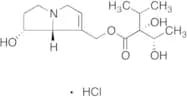
References Marchand, M., et al.: Eur. J. Biochem., 184, 455 (1989), Dardonville, C., et al.: Bioorg. Med. Chem., 11, 3205 (2003), Fumarola, L., et al.: Res. Microbiol., 155, 224 (2004), Albert, M., et al.: J. Biol. Chem., 280, 28306 (2005),Formula:C19H28O3Purity:>90%Color and Shape:Off-WhiteMolecular weight:304.42Indicine Hydrochloride
CAS:Controlled ProductFormula:C15H25NO5·ClHColor and Shape:NeatMolecular weight:335.824Heliotrine-N-oxide D7
CAS:Controlled ProductFormula:C16H20D7NO6Color and Shape:NeatMolecular weight:336.44Ergosine
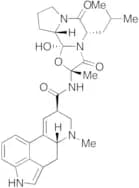
CAS:Controlled ProductApplications Ergosine is an ergot alkaloid which are used in the treatment of vasoconstriction and as well as Parkinson’s disease. Also certain derivatives act as psychedelics mimicking lysergic acid.
References Martucci N. et al.: Cephal., 1, 151 (1983); Kehr, W. et al.: Eur. J. Phamracol., 41, 261 (1977);Formula:C30H37N5O5Color and Shape:NeatMolecular weight:547.655b-Cholestan-3b-ol-2,2,3,4,4-d5
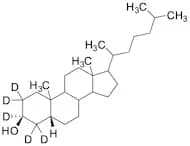
CAS:Controlled ProductFormula:C27D5H43OColor and Shape:NeatMolecular weight:393.7alpha-iso-Methylionone
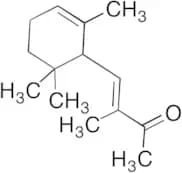
CAS:Applications alpha-iso-Methylionone (cas# 127-51-5) is a useful research chemical.
Not a dangerous good if item is equal to or less than 1g/ml and there is less than 100g/ml in the packageFormula:C14H22OColor and Shape:NeatMolecular weight:206.32L-Ascorbic Acid-1-13C
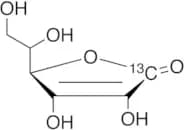
CAS:Controlled ProductApplications Labelled Ascorbic Acid. Physiological antioxidant. Coenzyme for a number of hydroxylation reactions; required for collagen synthesis. Widely distributed in plants and animals. Inadequate intake results in deficiency syndromes such as scurvy. Used as antimicrobial and antioxidant in foodstuffs.
References Al-Meshal, I.A., et al.: Anal. Profiles Drug Subs., 11, 45 (1982), Levine, M., et al.: N. Engl. J. Med., 314, 892 (1986), Prust, C., et al.: Nature Biotech., 23, 195 (2005),Formula:C513CH8O6Color and Shape:White SolidMolecular weight:177.12(+)-Echimidine-D6 Hydrochloride Salt
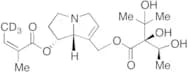
Controlled ProductFormula:C20H25D6NO7·HClColor and Shape:NeatMolecular weight:439.96055