Pharmaceutical and Veterinary Compounds and Metabolites
This category includes pharmaceutical compounds used for human and veterinary medicine, as well as their metabolites. These compounds are essential for studying drug efficacy, metabolism, and safety. At CymitQuimica, we offer a variety of pharmaceutical and veterinary compounds for research applications, ensuring compliance with regulatory standards and supporting the development of new treatments.
Found 2602 products of "Pharmaceutical and Veterinary Compounds and Metabolites"
Sort by
Purity (%)
0
100
|
0
|
50
|
90
|
95
|
100
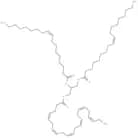
1,2-Dioleoyl-3-Docosohexaenoyl-rac-glycerol
CAS:<p>1,2-Dioleoyl-3-docosohexaenoyl-rac-glycerol, a triacylglycerol, consists of oleic acid at the sn-1 and sn-2 positions and docosahexaenoic acid at the sn-3 position. This compound has been identified in human breast milk.</p>Formula:C61H102O6Color and Shape:SolidMolecular weight:931.46C2 Dihydro Ceramide (d18:0/2:0)
CAS:<p>C2 Dihydro Ceramide (d18:0/2:0) (C2 Dihydroceramide) is a ceramide that is a precursor of ceramide synthesis and stimulates ABCA1-mediated cholesterol efflux.</p>Formula:C20H41NO3Purity:98%Color and Shape:SolidMolecular weight:343.54H-0106 Dihydrochloride
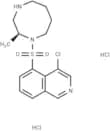
CAS:<p>H-0106 Dihydrochloride is an inhibitor of ROCK that acts by applying strong intraocular pressure (IOP)-lowering effects into the eyes of monkeys.</p>Formula:C16H22Cl3N3O2SPurity:98%Color and Shape:SolidMolecular weight:426.79Uridine 5'-diphosphate
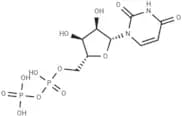
CAS:<p>Uridine 5'-diphosphate acts as a P2Y6 receptor agonist, exhibiting an EC50 value of 0.013 μM for the human P2Y6 receptor [1].</p>Formula:C9H14N2O12P2Purity:98%Color and Shape:SolidMolecular weight:404.1612,15-epoxy-13-methyl-12,14-Eicosadienoic Acid
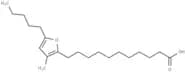
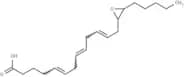
CAS:<p>12,15-Epoxy-13-methyl-12,14-eicosadienoic acid, a furan fatty acid first identified in northern pike (E. lucius), exhibits elevated levels in the liver of starving cod.</p>Formula:C21H36O3Color and Shape:SolidMolecular weight:336.51M-0002
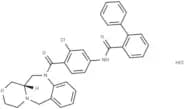
CAS:<p>M-0002, a vasopressin V2 receptor antagonist, is used potentially for the treatment of ascites.</p>Formula:C32H29Cl2N3O3Color and Shape:SolidMolecular weight:574.55-OAHSA
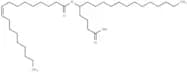
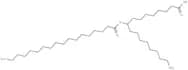
CAS:<p>Branched fatty acid esters of hydroxy fatty acids (FAHFAs) are endogenous lipids that are influenced by fasting and high-fat diets and linked to improved insulin sensitivity in mice. These compounds typically feature a chain of either 16 or 18 carbon atoms (for example, palmitoleic, palmitic, oleic, or stearic acid) esterified with a hydroxy fatty acid chain of similar length. One specific FAHFA, known as 5-OAHSA, consists of oleic acid bonded to the fifth carbon of hydroxy stearic acid. Within the FAHFA family, OAHSAs exhibit the highest serum levels in AG4OX mice, which are known for their glucose tolerance attributed to the overexpression of the Glut4 glucose transporter in adipose tissue.</p>Formula:C36H68O4Color and Shape:SolidMolecular weight:564.912-OAHSA
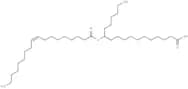
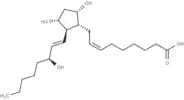
CAS:<p>Branched fatty acid esters of hydroxy fatty acids (FAHFAs) are recently discovered lipids that play a role in the body's response to fasting and high-fat diets, with a link to insulin sensitivity. These compounds consist of a long-chain fatty acid (such as palmitoleic, palmitic, oleic, or stearic acid) bonded to a hydroxy fatty acid, both ranging in length from C-16 to C-18. Specifically, 12-OAHSA is a type of FAHFA where oleic acid is attached to the 12th carbon of hydroxy stearic acid. Within the FAHFA family, OAHSAs are particularly notable for their high concentration in the serum of AG4OX mice, a strain engineered to express the Glut4 glucose transporter predominantly in their adipose tissue, which demonstrates an enhanced glucose tolerance.</p>Formula:C36H68O4Color and Shape:SolidMolecular weight:564.915(R)-Prostaglandin F2α
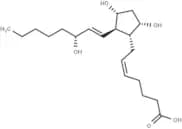
CAS:<p>15-beta PGF2α, a biochemical compound, serves as a pivotal mediator in diverse physiological processes.</p>Formula:C20H34O5Color and Shape:SolidMolecular weight:354.487Amb123203
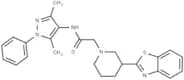
CAS:<p>Amb123203 is an inhibitor of the budding of mVP40 and eVP40 VLPs that acts by blocking mVP40-795 Nedd4 protein-protein interaction.</p>Formula:C25H27N5OSColor and Shape:SolidMolecular weight:445.581a,1b-dihomo Prostaglandin F2α
CAS:<p>1a,1b-Dihomo Prostaglandin F2α (1a,1b-dihomo PGF2α), a hypothetical product of adrenic acid in the COX pathway, is predominantly synthesized in the renal medulla, reflecting the selective distribution of adrenic acid in this region.</p>Formula:C22H38O5Color and Shape:SolidMolecular weight:382.541Diflumidone sodium
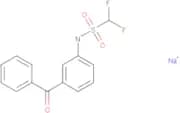
CAS:<p>Diflumidone sodium is a non-steroidal agent with anti-inflammatory activity.</p>Formula:C14H10F2NNaO3SColor and Shape:SolidMolecular weight:333.291-Myristoyl-2-Linoleoyl-3-Oleoyl-rac-glycerol
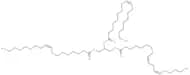
CAS:<p>1-Myristoyl-2-linoleoyl-3-oleoyl-rac-glycerol, a triacylglycerol, features myristic acid, linoleic acid, and oleic acid at the sn-1, sn-2, and sn-3 positions, respectively. This compound is prevalent in mature human milk, infant formula fats, and butterfat.</p>Formula:C53H96O6Color and Shape:SolidMolecular weight:829.339-SAHSA
CAS:<p>Branched fatty acid esters of hydroxy fatty acids (FAHFAs) are lipids that are modulated by dietary changes such as fasting and high-fat diets, and they play a role in insulin sensitivity. These compounds generally consist of a fatty acid chain of either 16 or 18 carbons (for example, palmitoleic, palmitic, oleic, or stearic acid) esterified to a similarly long hydroxy fatty acid. One specific FAHFA, 9-SAHSA, features stearic acid esterified at the 9th carbon of hydroxy stearic acid. The concentration of 9-SAHSA is notably increased in the serum of glucose-tolerant AG4OX mice, which specifically express the Glut4 glucose-transporting protein in adipose tissue.</p>Formula:C36H70O4Color and Shape:SolidMolecular weight:566.99(Z),11(E)-Conjugated Linoleic Acid methyl ester
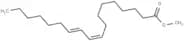
CAS:<p>9(Z),11(E)-Conjugated Linoleic Acid Methyl Ester, identified in lemon grass (C. flexuosus), serves as a standard for quantifying conjugated linoleic acids in thermally stressed olive oil and trans fats in bakery products. [Matreya, LLC. Catalog No. 1255]</p>Formula:C19H34O2Color and Shape:SolidMolecular weight:294.4791,2-Dioleoyl-3-linoleoyl-rac-glycerol
CAS:<p>1,2-Dioleoyl-3-linoleoyl-rac-glycerol (OOL) is a triglyceride featuring oleic acid at the sn-1 and sn-2 positions and linoleic acid at the sn-3 position. This compound is prevalent in several seed and vegetable oils, such as those from pumpkin seeds, olives, and sesame.</p>Formula:C57H102O6Color and Shape:SolidMolecular weight:883.414,15-Epoxyeicosatrienoic acid
CAS:<p>14,15-Epoxyeicosatrienoic acid (14,15-EET), derived from Arachidonic acid metabolism, significantly inhibits platelet aggregation in vivo and enhances</p>Formula:C20H32O3Color and Shape:SolidMolecular weight:320.47L-hydroxylysine dihydrochloride
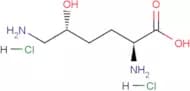
CAS:<p>L-hydroxylysine dihydrochloride , is formed by posttranslational hydroxylation of some lysine residues. It is an amino acid, is exclusive to collagen protein.</p>Formula:C6H16Cl2N2O3Purity:98%Color and Shape:SolidMolecular weight:235.11Sulforhodamine 101 DHPE
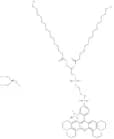
CAS:<p>Sulforhodamine 101 DHPE, a fluorescent probe, results from the conjugation of sulforhodamine 101, a red fluorescent dye with excitation/emission spectra of 586/605 nm, to the phospholipid 1,2-dipalmitoyl-sn-glycero-3-PE. It effectively integrates into phospholipid bilayers and is utilized for imaging solid supported lipid bilayers, detecting protein-ligand interactions on bilayers, and monitoring lipid probe colocalization in liposomes through resonance energy transfer (RET).</p>Formula:C74H117N4O14PS2Color and Shape:SolidMolecular weight:1381.861-Oleoyl-2-hydroxy-sn-glycero-3-PG sodium
CAS:<p>1-Oleoyl-2-hydroxy-sn-glycero-3-PG (sodium salt), a lysophospholipid with oleic acid (18:1) at the sn-1 position, finds application in creating micelles, liposomes, and various artificial membranes, notably in lipid-based drug delivery systems.</p>Formula:C24H46NaO9PColor and Shape:SolidMolecular weight:532.587