Pharmaceutical and Veterinary Compounds and Metabolites
This category includes pharmaceutical compounds used for human and veterinary medicine, as well as their metabolites. These compounds are essential for studying drug efficacy, metabolism, and safety. At CymitQuimica, we offer a variety of pharmaceutical and veterinary compounds for research applications, ensuring compliance with regulatory standards and supporting the development of new treatments.
Found 2602 products of "Pharmaceutical and Veterinary Compounds and Metabolites"
Sort by
Purity (%)
0
100
|
0
|
50
|
90
|
95
|
100
Biliverdin
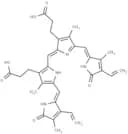
CAS:<p>Biliverdin, produced through the oxidation of bilirubin, can also be synthesized through a non-protoporphyrin pathway in Corynebacterium glutamicum [1].</p>Formula:C33H34N4O6Color and Shape:SolidMolecular weight:582.6511-dehydro Thromboxane B3
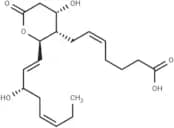
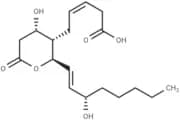
CAS:<p>11-Dehydro Thromboxane B3 (11-dehydro TXB3) serves as a urinary metabolite of TXA3 in humans following an increased dietary intake of EPA.</p>Formula:C20H30O6Color and Shape:SolidMolecular weight:366.5Tiracizine HCl
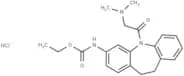
CAS:<p>Tiracizine HCl, a new class I antiarrhythmic drug, was studied in patients with ischemic heart disease and shown to decrease myocardial contractile function.</p>Formula:C21H26ClN3O3Purity:98%Color and Shape:SolidMolecular weight:403.9AalphaC
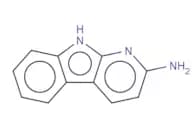
CAS:<p>AalphaC (2-Amino-alpha-carboline) is a potential carcinogen.</p>Formula:C11H9N3Purity:99.32%Color and Shape:Crystalline SolidMolecular weight:183.2110-OAHSA
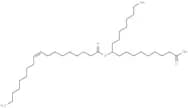
CAS:<p>10-OAHSA is a newly discovered endogenous lipid categorized within the group of branched fatty acid esters of hydroxy fatty acids (FAHFAs). This specific FAHFA comprises oleic acid esterified to 10-hydroxy stearic acid. It stands out among its FAHFA counterparts for its potential bioactive properties, similar to other members of its family such as PAHSAs, which are notably prevalent in the adipose tissue of AG4OX mice exhibiting glucose tolerance due to overexpression of the Glut4 glucose transporter specifically in adipose tissue. Like other FAHFAs, 10-OAHSA may play significant roles in enhancing glucose tolerance, stimulating insulin secretion, and exerting anti-inflammatory effects, which suggests its importance in managing metabolic syndrome and inflammation.</p>Formula:C36H68O4Color and Shape:SolidMolecular weight:564.92,3-dinor Prostaglandin E1
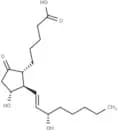
CAS:<p>Prostaglandin E1 (PGE1), though not predominantly found in nature, plays a significant role in clinical treatments, addressing conditions such as peripheral occlusive vascular disease, erectile dysfunction, and neonatal cardiology issues. The metabolism of PGE1 primarily begins with the oxidation at C-15, producing 13,14-dihydro-15-keto PGE1 as its major metabolite. Alternatively, inhibiting this pathway or overwhelming it with too much PGE1 could potentially enhance the production of 2,3-dinor metabolites, like 2,3-dinor PGE1, though their biological activities remain unreported. Cayman Chemical stands out as a prominent provider of prostaglandins and their metabolites, uniquely manufacturing 2,3-dinor PGE1.</p>Formula:C18H30O5Color and Shape:SolidMolecular weight:326.4Palmitoleic Acid sodium
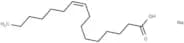
CAS:<p>Palmitoleic acid, an ω-7 monounsaturated fatty acid found in macadamia and sea buckthorn oils, enhances both basal and insulin-stimulated glucose uptake, as well as Glut4 protein levels in 3T3-L1 adipocytes at a 200 µM concentration. Ex vivo, at a dosage of 300 mg/kg per day, it significantly increases glucose uptake and both aerobic and anaerobic glycolysis, while decreasing de novo fatty acid synthesis and the activity of lipogenic enzymes, specifically ATP citrate lyase (ACL) and glucose-6-phosphate dehydrogenase (G6PDH), in isolated murine adipocytes. Furthermore, the dietary administration of palmitoleic acid at 300 mg/kg mitigates high-fat diet-induced insulin resistance and liver inflammation in mice.</p>Formula:C16H29O2NaColor and Shape:SolidMolecular weight:276.391,2,3-Tritricosanoyl Glycerol
CAS:<p>1,2,3-Tritricosanoyl glycerol, a triacylglycerol containing tricosanoic acid at the sn-1, sn-2, and sn-3 positions, serves as an internal standard for the quantification of fatty acids within the triglyceride component of human aortic endothelial cells (HAECs) cultured in media supplemented with stearic and/or oleic acid.</p>Formula:C72H140O6Color and Shape:SolidMolecular weight:1101.881-Myristoyl-2-Palmitoyl-3-Butyryl-rac-glycerol
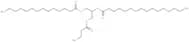
CAS:<p>1-Myristoyl-2-palmitoyl-3-butyryl-rac-glycerol, a triacylglycerol with myristic acid (at the sn-1 position), palmitic acid (at the sn-2 position), and butyric acid (at the sn-3 position), has been detected in human breast milk.</p>Formula:C37H70O6Color and Shape:SolidMolecular weight:6115(S)-HETrE
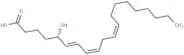
CAS:<p>5(S)-HETrE, made by 5-LO from mead acid, has unknown biological activity and metabolic fate.</p>Formula:C20H34O3Color and Shape:SolidMolecular weight:322.48(±)16,17-EDT
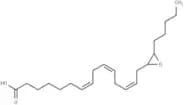
CAS:<p>(±)16,17-EDT, an oxylipin metabolite of adrenic acid produced through the cytochrome P450 (CYP) pathway, effectively induces dilation in isolated porcine</p>Formula:C22H36O3Color and Shape:SolidMolecular weight:348.523-Aminoisobutyric Acid sodium
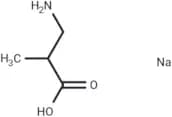
CAS:<p>3-Aminoisobutyric acid, a non-protein amino acid resultant from thymine catabolism, plays a significant role in metabolic activities. At a 5 µM concentration, it triggers browning in primary adipocytes, notably elevating uncoupling protein 1 (UCP-1) and CIDEA expression. Additionally, it boosts PPARα expression in both primary adipocytes and mouse inguinal white adipose tissue (WAT) in vivo, alongside enhancing β-oxidation in hepatocytes. Its plasma levels surge post-exercise in mice, and its administration at 100 mg/kg daily curtails weight gain and body fat without diminishing food consumption or hiking energy output, whilst ameliorating glucose tolerance. Notably, 3-aminoisobutyric acid concentrations are heightened in individuals with β-ureidopropionase deficiency, a genetic flaw impairing pyrimidine degradation, affecting plasma, urine, and cerebrospinal fluid.</p>Formula:C4H8NO2NaColor and Shape:SolidMolecular weight:125.1Pentadecanoyl ethanolamide
CAS:<p>Pentadecanoyl ethanolamide, a derivative of the endogenous lipid amides (N-acylethanolamines), demonstrates anticonvulsant efficacy in electroshock-induced seizures in mice, exhibiting minimal toxicity [1].</p>Formula:C17H35NO2Color and Shape:SolidMolecular weight:285.4728(Z)-Eicosenoic Acid
CAS:<p>8(Z)-Eicosenoic acid, a cis-unsaturated free fatty acid featuring a 20-carbon chain, enhances acetylcholine (ACh) receptor channel currents without causing depression and augments PCKε phosphorylation of a substrate peptide in Xenopus oocytes. This acid comprises 6% of the fatty acid composition in seed oil extracted from B. collina.</p>Formula:C20H38O2Color and Shape:SolidMolecular weight:310.522cis-13-Octadecenoic Acid
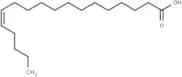
CAS:<p>Cis-13-Octadecenoic acid, a monounsaturated fatty acid, is identified in bovine milk fat.</p>Formula:C18H34O2Color and Shape:SolidMolecular weight:282.46H-0104 Dihydrochloride
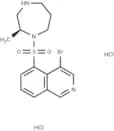
CAS:<p>H-0104 Dihydrochloride is an inhibitor of ROCK that acts by applying potent intraocular pressure (IOP)-lowering effects into the eyes of monkeys.</p>Formula:C15H20BrCl2N3O2SPurity:98%Color and Shape:SolidMolecular weight:457.21Arachidonoyl-N-methyl amide
CAS:<p>Anandamide (AEA), an endogenous cannabinoid, interacts with both central (CB1) and peripheral (CB2) cannabinoid receptors. Its effects are concluded through the cellular uptake and enzymatic breakdown of its amide bond by fatty acid amide hydrolase. Arachidonoyl-N-methyl amide, an analog of anandamide, specifically targets the human CB1 receptor, displaying a binding affinity with a Ki of 60 nM. It completely inhibits rat glial gap junction intercellular communication at a concentration of 50 µM.</p>Formula:C21H35NOColor and Shape:SolidMolecular weight:317.511-Dehydro-2,3-Dinor Thromboxane B2
CAS:<p>11-Dehydro-2,3-Dinor Thromboxane B2 is a metabolite of Thromboxane B2 (TXB2), formed by the oxidation of TXB2 via 11-Hydroxy Thromboxane Dehydrogenase.</p>Formula:C18H28O6Color and Shape:SolidMolecular weight:340.411,2-Dimyristoyl-3-palmitoyl-rac-glycerol
CAS:<p>1,2-Dimyristoyl-3-palmitoyl-rac-glycerol (MMP) is a triacylglycerol comprising myristic acid and palmitic acid [1].</p>Formula:C47H90O6Color and Shape:SolidMolecular weight:751.211,2-Distearoyl-3-Oleoyl-rac-glycerol
CAS:<p>1,2-Distearoyl-3-oleoyl-rac-glycerol, a triacylglycerol, comprises stearic acid at the sn-1 and sn-2 positions and oleic acid at the sn-3 position. This compound is present in cocoa butter and vegetable oils.</p>Formula:C57H108O6Color and Shape:SolidMolecular weight:889.46