Pharmaceutical and Veterinary Compounds and Metabolites
This category includes pharmaceutical compounds used for human and veterinary medicine, as well as their metabolites. These compounds are essential for studying drug efficacy, metabolism, and safety. At CymitQuimica, we offer a variety of pharmaceutical and veterinary compounds for research applications, ensuring compliance with regulatory standards and supporting the development of new treatments.
Found 2602 products of "Pharmaceutical and Veterinary Compounds and Metabolites"
Sort by
Purity (%)
0
100
|
0
|
50
|
90
|
95
|
100
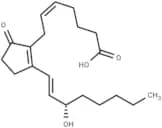
Prostaglandin B2
CAS:<p>Prostaglandin B2 is a dehydration product of PGE2/PGA2 with weak TP receptor activity, raising rabbit pulmonary pressure at >5 ug/kg.</p>Formula:C20H30O4Color and Shape:SolidMolecular weight:334.455α-Androst-16-en-3-one
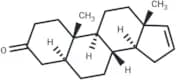
CAS:<p>5α-Androst-16-en-3-one, a mammalian pheromone present in boar saliva, plays a crucial role in facilitating social and sexual interactions by acting as a volatile chemical cue. It is utilized to prime sows in estrus for mating or artificial insemination, underscoring its significance in reproductive behavior. Additionally, this compound is detected in human sweat and urine, where it is involved in studies concerning receptor-mediated odorant detection and the genetic foundations of anosmias, thereby broadening its scope of relevance beyond the animal kingdom.</p>Formula:C19H28OColor and Shape:SolidMolecular weight:272.432Docosatrienoic Acid
CAS:<p>Docosatrienoic acid is a rare omega-3 fatty acid; Ki value is 5×M, which inhibits the binding of LTB4 to porcine neutrophil membrane.</p>Formula:C22H38O2Purity:98%Color and Shape:SolidMolecular weight:334.5414,15-Leukotriene C4
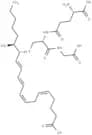
CAS:<p>Leukotriene C4 (14,15-LTC4) is an inflammatory mediator synthesized from arachidonic acid through the actions of 15- and 12-lipoxygenases (LOs), involving intermediates such as 15-HpETE and 14,15-LTA4. Unlike the majority of leukotrienes formed via the 5-LO pathway, 14,15-LTC4 is an eoxin predominantly produced by eosinophils, although mast cells and nasal polyps can also synthesize it. While its physiological roles are not well understood, 14,15-LTC4 exhibits limited contractile activity on guinea pig ileum and pulmonary parenchyma. However, it can increase vascular permeability in human endothelial cell monolayers in vitro with potency comparable to 5-LO-derived leukotrienes, contributing to plasma leakage characteristic of inflammation.</p>Formula:C30H47N3O9SColor and Shape:SolidMolecular weight:625.82-Methoxyestrone
CAS:<p>2-Methoxyestrone is a methoxylated catechol estrogen and the principal metabolite of 2-hydroxyestrone, a nonuterotropic metabolite of estradiol.</p>Formula:C19H24O3Purity:97.07% - 99.18%Color and Shape:SolidMolecular weight:300.39N-Stearoyl Taurine
CAS:<p>N-Arachidonoyl dopamine (NADA) and N-Arachidonoyl serine (ARA-S), among various arachidonoyl amino acids, have been extracted from bovine brain, while a novel series of fatty acyl amides of taurine were unearthed in rat brain through mass spectral lipidomic analysis, indicating the discovery of a new class of compounds also located in the kidney. These compounds are known to activate members of the transient receptor potential (TRP) family of calcium channels. Notably, N-Stearoyl taurine emerges as a significant amino-acyl endocannabinoid identified in rat brain lipidomics profiling.</p>Formula:C20H41NO4SColor and Shape:SolidMolecular weight:391.61Hydroxyphenyllactic acid
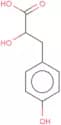
CAS:<p>Hydroxyphenyllactic acid is an antifungal metabolite, fungi such as Lactobacillus sp. SK007.</p>Formula:C9H10O4Purity:99.75%Color and Shape:SolidMolecular weight:182.173-Methylhistamine dihydrochloride
CAS:<p>N tau-methylhistamine, a histamine metabolite, indicates histamine release in plasma/urine with fewer artifacts.</p>Formula:C6H13Cl2N3Purity:90% - 99.83%Color and Shape:Off-White To Pale Yellow SolidMolecular weight:198.09413,14-dihydro-15(R)-Prostaglandin E1
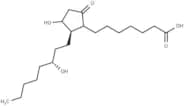
CAS:<p>13,14-Dihydro-15(R)-Prostaglandin E1 (13,14-dihydro-15(R)-PGE1) is an analog of 13,14-dihydro-PGE1 characterized by its R-configured hydroxyl group at the C-15 position [1].</p>Formula:C20H36O5Color and Shape:SolidMolecular weight:356.50312(R)-HEPE
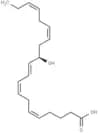
CAS:<p>12(R)-HEPE, a monohydroxy fatty acid derived from EPA in the eggs of the sea urchin S. purpuratus, has a biological activity that, while not extensively documented, may resemble that of 12(R)-HETE (Catalog No.34560).</p>Formula:C20H30O3Color and Shape:SolidMolecular weight:318.511β-13,14-dihydro-15-keto Prostaglandin F2α
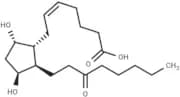
CAS:<p>11β-13,14-Dihydro-15-keto PGF2α, a PGD2 metabolite in the 15-hydroxy PGDH pathway, is formed in human males upon infusion or inhalation of tritiated PGD2, with peak plasma levels of both 11β-PGF2α and 11β-13,14-dihydro-15-keto PGF2α observed within 10 minutes. In human lung homogenates, PGD2 is metabolized firstly to 11β-PGF2α and subsequently to 11β-15-keto-PGF2α in the presence of NAD+, but not to 11β-13,14-dihydro-15-keto PGF2α. Conversely, guinea pig liver and kidney homogenates can metabolize PGD2 to 11β-13,14-dihydro-15-keto PGF2α via 11β-PGF2α, with both NAD+ and NADP+ being requisite for this conversion.</p>Formula:C20H34O5Color and Shape:SolidMolecular weight:354.5A 62198
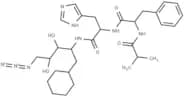
CAS:<p>A 62198 is a potent and selective renin inhibitor with potential as a hypotensive agent.</p>Formula:C30H44N8O5Purity:98%Color and Shape:SolidMolecular weight:596.72β-cyano-L-Alanine
CAS:<p>β-cyano-L-Alanine (Beta-cyano-l-alanine) is a nitrile of widespread occurrence in higher plants.</p>Formula:C4H6N2O2Purity:99.86% - 99.92%Color and Shape:SolidMolecular weight:114.1Thromboxane A2
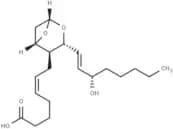
CAS:<p>Thromboxane A2: unstable, leads to thromboxane B2, induces platelet aggregation, causes vasoconstriction.</p>Formula:C20H32O5Color and Shape:SolidMolecular weight:352.47N-Palmitoyl Taurine
CAS:<p>N-Palmitoyl taurine, an amino-acyl endocannabinoid prominent in rat brain lipidomics profiling, accompanies multiple arachidonoyl amino acids isolated from bovine brain, including N-arachidonoylethanolamine (NADA) and N-arachidonoyl serine (ARA-S). Mass spectral lipidomic analysis of rat brain additionally revealed a series of fatty acyl amides with taurine. The function of N-Palmitoyl taurine is under investigation.</p>Formula:C18H37NO4SColor and Shape:SolidMolecular weight:363.61-Palmitoyl-3-Stearoyl-rac-glycerol
CAS:<p>1-Palmitoyl-3-stearoyl-rac-glycerol, a diacylglycerol, features palmitic acid at the sn-1 position and stearic acid at the sn-3 position. This compound appears in palm-based diacylglycerols derived from palm stearin, palm mid fraction, palm oil, and palm olein, as well as in extracts of wheat bran and brewer's spent grain.</p>Formula:C37H72O5Color and Shape:SolidMolecular weight:596.96AZD-6605
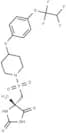
CAS:<p>AZD6605 is a potent, reversible inhibitor of, MMP2, MMP9, MMP12 and MMP13.</p>Formula:C18H21F4N3O6SColor and Shape:SolidMolecular weight:483.439-OAHSA
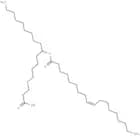
CAS:<p>Branched fatty acid esters of hydroxy fatty acids (FAHFAs) are a class of endogenous lipids whose levels are modulated by fasting and high-fat diets and are linked to insulin sensitivity. These compounds typically consist of a C-16 or C-18 fatty acid, such as palmitoleic, palmitic, oleic, or stearic acid, esterified to a hydroxylated C-16 or C-18 lipid. One specific form of FAHFA, known as 9-OAHSA, involves the esterification of oleic acid to 9-hydroxy stearic acid. Within the FAHFA family, OAHSAs notably represent the predominant form found in the serum of glucose-tolerant AG4OX mice, which uniquely overexpress the Glut4 glucose transporter in adipose tissue.</p>Formula:C36H68O4Color and Shape:SolidMolecular weight:564.9361-Linoleoyl-3-α-Linolenoyl-rac-glycerol
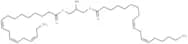
CAS:<p>1-Linoleoyl-3-α-linolenoyl-rac-glycerol, a diacylglycerol, features linoleic acid at the sn-1 position and α-linolenic acid at the sn-3 position. This compound is identified in olive oil that has undergone lipase-catalyzed glycerolysis, utilizing immobilized lipase B derived from C. antarctica.</p>Formula:C39H66O5Color and Shape:SolidMolecular weight:614.9411-Hexadecenoic Acid
CAS:<p>11-Hexadecenoic acid, a monounsaturated fatty acid, comprises both 11-cis-hexadecenoic acid and 11-trans-hexadecenoic acid. These isoforms are present in ewe milk fat and their concentrations increase when the diet is supplemented with lipids from linseed, sunflower, olive, or fish oils. Additionally, 11-trans-hexadecenoic acid is found in intramuscular fat of both male and female foals. The product is a blend of the 11-cis and 11-trans forms. [Matreya, LLC. Catalog No. 1208]</p>Formula:C16H30O2Color and Shape:SolidMolecular weight:254.41