Pharmaceutical and Veterinary Compounds and Metabolites
This category includes pharmaceutical compounds used for human and veterinary medicine, as well as their metabolites. These compounds are essential for studying drug efficacy, metabolism, and safety. At CymitQuimica, we offer a variety of pharmaceutical and veterinary compounds for research applications, ensuring compliance with regulatory standards and supporting the development of new treatments.
Found 2602 products of "Pharmaceutical and Veterinary Compounds and Metabolites"
Sort by
Purity (%)
0
100
|
0
|
50
|
90
|
95
|
100
SAR114137
CAS:<p>SAR114137 is a highly effective pharmaceutical compound characterized by potent bioactivity. It exhibits variations in its amorphous content during the physical processing of crystalline active pharmaceutical ingredients (APIs). The amorphous API content of SAR114137 significantly decreases when subjected to various jet milling techniques. Additionally, SAR114137 demonstrates good chemical stability in drug formulations.</p>Formula:C17H24F2N4O2Color and Shape:SolidMolecular weight:354.39ent-8-iso-15(S)-Prostaglandin F2α
CAS:<p>Isoprostanes are produced by the non-enzymatic, free radical peroxidation of phospholipid-esterified arachidonic acid.</p>Formula:C20H34O5Color and Shape:SolidMolecular weight:354.48Estradiol 3-glucuronide
CAS:<p>Estradiol 3-glucuronide is an immunogen with antigenic properties. The antiserum induced in rabbits exhibits high affinity and specificity for Estradiol 3-glucuronide. This compound shows promise for use in research involving radioimmunoassay.</p>Formula:C24H32O8Color and Shape:SolidMolecular weight:448.51(S)-CPP sodium
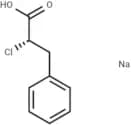
CAS:<p>(S)-CPP sodium serves as an inhibitor of the branched-chain α-keto acid dehydrogenase complex (BCKDC) kinase, commonly referred to as BDK or keto acid dehydrogenase kinase. As a negative regulator of BCKDC activity, (S)-CPP (IC50 of 6.3 μM) inhibits BDK, which activates the complex, leading to a significant reduction in the levels of leucine/isoleucine and valine in the plasma of wild-type mice.</p>Formula:C9H8ClNaO2Color and Shape:SolidMolecular weight:206.6015:0 PG sodium
CAS:<p>15:0 PG sodium serves as an activator for the Protein Kinase C family and is an anionic phospholipid located in the membranes of mitochondria and microsomes. It plays a crucial role in the composition of pulmonary surfactants, especially within the membrane of the pulmonary lamellar bodies.</p>Formula:C36H70NaO10PColor and Shape:SolidMolecular weight:716.90Lumirubin
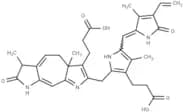
CAS:<p>Lumirubin is a water-soluble photoproduct of bilirubin formed in vivo during phototherapy.</p>Formula:C33H36N4O6Color and Shape:SolidMolecular weight:584.667-hydroxychlorpromazine
CAS:<p>7-Hydroxychlorpromazine, an active metabolite of Chlorpromazine, can reversibly counteract the suppression of regionally dense dopaminergic neurons induced by Amphetamine.</p>Formula:C17H19ClN2OSColor and Shape:SolidMolecular weight:334.86(+)-Potassium Ds-threo-isocitrate monobasic
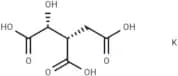
CAS:<p>(+)-Potassium Ds-threo-isocitrate monobasic is a bioactive compound known for its role in enhancing cellular metabolism and regulating energy production. This substance is also utilized in researching metabolic pathways and the regulation of enzyme activities. Widely applied in biochemical research, (+)-Potassium Ds-threo-isocitrate monobasic is studied for its potential functions in cellular processes and disease mechanisms.</p>Formula:C6H7KO7Color and Shape:SolidMolecular weight:230.218-Oxo-dATP
CAS:<p>8-Oxo-dATP can be hydrolyzed to its monophosphate form by the oxidation of purine nucleoside triphosphate MTH1, preventing erroneous incorporation during DNA replication or transcription.</p>Formula:C10H12Li4N5O13P3Color and Shape:SolidMolecular weight:530.9133-Benzylidenecamphor
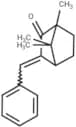
CAS:<p>3-Benzylidenecamphor, a UV absorber, is noted for its excellent photostability and antioxidant activity. It is extensively utilized in sunscreen products to shield the skin from UV damage. Additionally, 3-Benzylidenecamphor is used in cosmetics to enhance product shelf life and safety.</p>Formula:C17H20OColor and Shape:SolidMolecular weight:240.342,4-Dihydroxybutanoic acid
CAS:<p>2,4-Dihydroxybutanoic acid is typically not found in extracts of normal human urine and is present only in trace amounts in newborns, while cases of succinic semialdehyde dehydrogenase deficiency consistently exhibit elevated levels of this metabolite.</p>Formula:C4H8O4Color and Shape:SolidMolecular weight:120.10OH-α-PVP TFA
CAS:OH-α-PVP (OH-α-Pyrrolidinovalerophenone) TFA is a metabolite of α-pyrrolidinovalerophenone, which is a synthetic cathinone stimulant.Formula:C17H24F3NO3Molecular weight:347.37Miaosporone A
<p>Miaosporone A: angucyclic quinone, cytotoxic to MCF-7, NCI-H187, Vero cells; anti-TB and anti-malaria with IC50 of 2.4 μM, 2.5 μM.</p>Formula:C19H18O5Color and Shape:SolidMolecular weight:326.34AubipyOMe
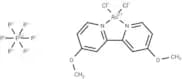
CAS:<p>AubipyOMe serves as an effective inhibitor of Tartrate-resistant Acid Phosphatase (TRAP/ACP5), a metalloenzyme identified in activated osteoclasts and macrophages. It exhibits inhibitory IC50 values of 1.3 μM against TRAP5a and 1.8 μM against TRAP5b. Additionally, it effectively suppresses TRAP activity in extracts from mouse macrophages and human lung tissues.</p>Formula:C12H12AuCl2F6N2O2PColor and Shape:SolidMolecular weight:629.07Cyclic-di-GMP sodium
<p>c-di-GMP sodium: STING activator, regulates bacteria biofilm, motility, virulence.</p>Formula:C20H24N10NaO14P2Color and Shape:SolidMolecular weight:713.08464(-)-Mesembrine
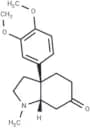
CAS:<p>Mesembrine is a serotonin reuptake inhibitor and is also a weak inhibitor of the enzyme phosphodiesterase 4 (PDE4).</p>Formula:C17H23NO3Color and Shape:SolidMolecular weight:289.373-Oxochenodeoxycholic acid
CAS:3-Oxochenodeoxycholic acid is an endogenous metabolite detectable in feces and may serve as a diagnostic marker for various diseases, including COVID-19.Formula:C24H38O4Molecular weight:390.5563β,7β-Dihydroxy-5-cholestenoic acid
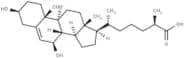
CAS:<p>3β,7β-Dihydroxy-5-cholestenoic acid is a C27 acid whose levels are elevated in Niemann-Pick Type C and B diseases, leading to toxicity in ocular motor neurons. It is synthesized by the enzymatic action of hydroxysteroid 11-β dehydrogenase 1 from 3β-hydroxy-7-oxocholest-5-en-(25R)26-enoic acid (3βH,7O-CA).</p>Formula:C27H44O4Color and Shape:SolidMolecular weight:432.64EpoY
CAS:<p>EpoY (SD-142) is an irreversible inhibitor of the primary brain microtubule-associated tyrosine carboxypeptidase (TCP), a complex formed by vasohibin-1 (VASH1) and small vasohibin-binding protein (SVBP). By inhibiting TCP with an IC50 value of approximately 500 nM, EpoY effectively reduces the levels of detyrosinated α-tubulin, which is crucial for microtubule dynamics and neuronal differentiation. This inhibition results in significant differentiation defects and is linked to potential issues related to cancer and cardiomyopathy.</p>Formula:C15H17NO7Color and Shape:SolidMolecular weight:323.301-Phenylethanamine
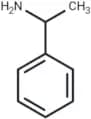
CAS:<p>1-Phenylethanamine, a potential central nervous system stimulant related to β-phenylethylamine (β-phenylethylamine), exhibits diminished glycogenolysis activity in the brain due to its benzene ring being replaced by an indole group. This reduction in activity makes it useful for investigating how the chemical structure of phenylethylamine derivatives influences their effects on the central nervous system. Additionally, 1-Phenylethanamine is also utilized in the synthesis of the tyrosine kinase (tyrosine kinase) inhibitor CLM3.</p>Formula:C8H11NColor and Shape:SolidMolecular weight:121.18