Amino Acids (AA)
Amino acids (AAs) are the fundamental building blocks of proteins, playing a crucial role in various biological processes. These organic compounds are essential for protein synthesis, metabolic pathways, and cell signaling. In this category, you will find a comprehensive range of amino acids, including essential, non-essential, and modified forms, which are vital for research in biochemistry, molecular biology, and nutritional sciences. At CymitQuimica, we provide high-quality amino acids to support your research and development needs, ensuring accuracy and reliability in your experimental outcomes.
Subcategories of "Amino Acids (AA)"
- Amino Acid Derivatives(3,971 products)
- Amino Acid and Amino Acid Related Compounds(3,477 products)
- Amino Acids with Oxygen or Sulphur(168 products)
- Boc- Amino Acids(351 products)
- Fmoc Amino Acids(1,710 products)
Found 38321 products of "Amino Acids (AA)"
Sort by
Purity (%)
0
100
|
0
|
50
|
90
|
95
|
100
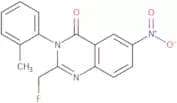
2-(Fluoromethyl)-3-(2-methylphenyl)-6-nitro-3H-quinazolin-4-one
CAS:Controlled Product<p>Please enquire for more information about 2-(Fluoromethyl)-3-(2-methylphenyl)-6-nitro-3H-quinazolin-4-one including the price, delivery time and more detailed product information at the technical inquiry form on this page</p>Formula:C16H12FN3O3Purity:Min. 95%Molecular weight:313.28 g/molRef: 3D-FF97211
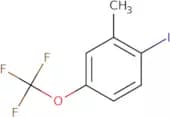
Discontinued product2-Methyl-4-(trifluoromethoxy)iodobenzene
CAS:<p>Please enquire for more information about 2-Methyl-4-(trifluoromethoxy)iodobenzene including the price, delivery time and more detailed product information at the technical inquiry form on this page</p>Formula:C8H6F3IOPurity:Min. 95%Molecular weight:302.03 g/molRef: 3D-FM85964
Discontinued product(17R)-4-Chloro-5-ethyl-9-fluoro-11b-hydroxy-16b-methylspiro[androsta-1,4-diene-17,2(3H)-furan]-3,3-dione
CAS:<p>Clobetasol propionate is an organic acid with a chemical structure that is stable in pharmaceutical preparations. It is used to treat inflammatory skin disorders such as psoriasis and atopic dermatitis. Clobetasol propionate is an impurity of clobetasol, which has been shown to be chemically stable in preparations. The clobetasol propionate compound has been found to be more potent than other topical corticosteroids for the treatment of plaque psoriasis and atopic dermatitis.</p>Formula:C25H30ClFO4Purity:Min. 95%Molecular weight:448.95 g/molRef: 3D-FF103612
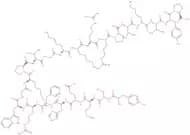
Discontinued productACTH (2-24) (human, bovine, rat) trifluoroacetate salt
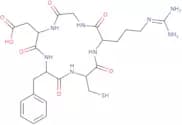
CAS:<p>Please enquire for more information about ACTH (2-24) (human, bovine, rat) trifluoroacetate salt including the price, delivery time and more detailed product information at the technical inquiry form on this page</p>Formula:C133H205N39O29SPurity:Min. 95%Molecular weight:2,846.36 g/molCyclo(-Arg-Gly-Asp-D-Phe-Cys) acetate salt
CAS:<p>Cyclo(-Arg-Gly-Asp-D-Phe-Cys) acetate salt is a peptide that has been modified to be an active targeting agent. It is an amphipathic molecule that can be used to deliver therapeutic agents specifically to cancer cells. Cyclo(-Arg-Gly-Asp-D-Phe-Cys) acetate salt is conjugated to a drug and is taken up by cells through the process of endocytosis. Once inside the cell, the drug is released and binds with the cell membrane, which leads to cell death. The uptake of this peptide has been shown to be pH dependent; it is taken up more readily in acidic environments than in neutral or alkaline environments. This peptide has also been shown to have cytotoxic effects on both MFC7 cells and rat liver cells.</p>Formula:C24H34N8O7SPurity:Min. 95%Molecular weight:578.64 g/molRef: 3D-FC110008
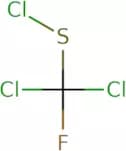
Discontinued product1,1-Dichloro-1-fluoro-methanesulfenylchloride
CAS:<p>1,1-Dichloro-1-fluoro-methanesulfenylchloride is a hazardous chemical that belongs to the group of chlorine compounds. It has been used as an antibacterial agent in the past and has been shown to be effective against nematodes, helminths, and some microorganisms. It is also used as a solvent in the production of dyes and perfumes. 1,1-Dichloro-1-fluoro-methanesulfenylchloride is not active against bacteria that are resistant to sulfonic acids or amines.</p>Formula:CCl3FSPurity:Min. 95%Color and Shape:Clear LiquidMolecular weight:169.43 g/molRef: 3D-FD88966
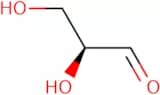
Discontinued productL-(-)-Glyceraldehyde - Technical grade aqueous solution
CAS:<p>Please enquire for more information about L-(-)-Glyceraldehyde - Technical grade aqueous solution including the price, delivery time and more detailed product information at the technical inquiry form on this page</p>Formula:C3H6O3Purity:Min. 95%Color and Shape:Clear Viscous LiquidMolecular weight:90.08 g/molRef: 3D-FG12041
Discontinued productDiethoxy-Methyl-Thioxo-Phosphorane
CAS:Controlled Product<p>Diethoxy-methyl-thioxo-phosphorane is a chemical compound that is used in the manufacture of industrial chemicals. It has a vapor pressure of 0.0014 mmHg at 25°C, and can be quantified by chemical ionization with gas chromatography/mass spectrometry. Diethoxy-methyl-thioxo-phosphorane reacts with radiation to produce reactive oxygen species and other free radicals, which can damage DNA and cause cancer. The reaction rate is rapid, with an analogy to humans being exposed to nitrate compounds. Diethoxy-methyl-thioxo-phosphorane is also used in devices such as radiators and heaters, where it causes damage when combined with nitrates.</p>Formula:C5H13O2PSPurity:Min. 95%Molecular weight:168.2 g/molRef: 3D-FD58753
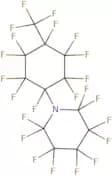
Discontinued productPerfluoro-N-(4-methylcyclohexyl)piperidine
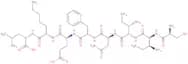
CAS:Controlled Product<p>Perfluoro-N-(4-methylcyclohexyl)piperidine (4-FPP) is a fluorine compound that has been shown to inhibit the enzymatic activity of tyrosine kinases. It is a potent inhibitor of both human and murine tyrosine kinases, but it does not bind to bacterial tyrosine kinase domains. 4-FPP has been used in clinical studies as an anti-cancer drug, although it's clinical relevance remains unclear. It has also been shown to be effective against the influenza virus by inhibiting the synthesis of viral proteins that are involved in replication. The chemical structure of 4-FPP contains a carbonyl group that can react with other compounds through a photochemical process. This reaction is thought to result in the development of new drugs with similar biochemical properties to 4-FPP.</p>Formula:C12F23NPurity:Min. 95%Color and Shape:Clear LiquidMolecular weight:595.1 g/molOvalbumin (257-264) (chicken) trifluoroacetate salt
CAS:<p>Please enquire for more information about Ovalbumin (257-264) (chicken) trifluoroacetate salt including the price, delivery time and more detailed product information at the technical inquiry form on this page</p>Formula:C45H74N10O13·C2HF3O2Purity:Min. 95%Molecular weight:1,077.15 g/molRef: 3D-FO109383
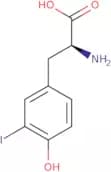
Discontinued product3-Iodo-L-tyrosine
CAS:<p>Please enquire for more information about 3-Iodo-L-tyrosine including the price, delivery time and more detailed product information at the technical inquiry form on this page</p>Formula:C9H10INO3Purity:Min. 96.0 Area-%Color and Shape:PowderMolecular weight:307.09 g/molRef: 3D-FI12110
Discontinued product1,2-Distearoyl-sn-glycero-3-phosphoethanolamine-N-[amino(polyethylene glycol) 2000] (ammonium salt)
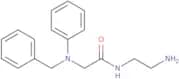
CAS:<p>1,2-Distearoyl-sn-glycero-3-phosphoethanolamine-N-[amino(polyethylene glycol) 2000] (ammonium salt) is a PEG compound with two different functional groups (also known as heterobifunctional). Unlike homobifunctional PEG compounds (same functional group on both ends), this type of compounds are more versatile as have two different anchor points. 1,2-Distearoyl-sn-glycero-3-phosphoethanolamine-N-[amino(polyethylene glycol) 2000] (ammonium salt) is used as a linker and spacer to add a PEG moiety, via pegylation (a bioconjugation technique) to proteins, peptides, oligonucleotides, small molecules and nanoparticles.</p>Formula:(C2H4O)nC44H87N2O10P•H3NPurity:Min. 95%Color and Shape:White PowderN-(2-Amino-ethyl)-2-(benzyl-phenyl-amino)-acetamide
CAS:<p>Please enquire for more information about N-(2-Amino-ethyl)-2-(benzyl-phenyl-amino)-acetamide including the price, delivery time and more detailed product information at the technical inquiry form on this page</p>Formula:C17H21N3OPurity:Min. 95%Color and Shape:White PowderMolecular weight:283.37 g/molRef: 3D-FA111189
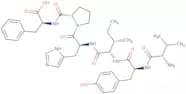
Discontinued productAngiotensin I/II (3-8)
CAS:<p>Angiotensin I/II (3-8) H-Val-Tyr-Ile-His-Pro-Phe-OH is a peptide that has physiological effects and is used as a drug. It is an active analogue of the peptide hormone angiotensin II, which regulates blood pressure and fluid volume. Angiotensin I/II (3-8) H-Val-Tyr-Ile-His-Pro-Phe-OH binds to angiotensin receptors and stimulates the release of calcium ions from cytosolic stores in cells, leading to increased muscle contractions and vasoconstriction. This drug may also have effects on dopamine levels in the brain, locomotor activity, and biochemical properties such as enzyme activity or protein binding.br><br>Angiotensin I/II (3-8) H-Val-Tyr-Ile-His Pro Phe OH has been shown to reduce the level of dopamine</p>Formula:C40H54N8O8Purity:Min. 95%Molecular weight:774.91 g/molRef: 3D-FA110283
Discontinued productPeptide YY (3-36) (human) trifluoroacetate salt
CAS:<p>Peptide YY (3-36) (human) trifluoroacetate salt H-Ile-Lys-Pro-Glu-Ala-Pro-Gly-Glu-Asp-Ala-Ser-Pro-Glu-Glu-Leu-Asn -Arg -Tyr -Tyr -Ala -Ser -Leu -Arg <br>Peptide YY (3.36) is a peptide hormone that is secreted by L cells in the small intestine and colon. It has been shown to be an effective treatment for obesity, type 2 diabetes, and other metabolic disorders. Peptide YY (3.36) has been shown to increase insulin sensitivity, reduce food intake and body weight, increase metabolic rate, and improve glucose homeostasis in animal studies. In humans, it has been found to have similar effects on postprandial plasma levels of peptide YY (3.</p>Formula:C180H279N53O54Purity:Min. 95%Molecular weight:4,049.47 g/molRef: 3D-FP110326
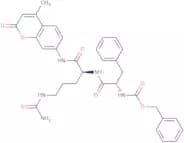
Discontinued productZ-Phe-Cit-AMC
CAS:<p>Z-Phe-Cit-AMC is a fluorescent substrate for the enzymes cysteine and peptide aminopeptidases. It has been synthesized by conjugating 7-amino-4-methylcoumarin with L-phenylalanine. The product is useful in assays to measure the activity of these enzymes, which are involved in protein digestion and wound healing. Z-Phe-Cit-AMC can be hydrolyzed by bromelain, ficin, or papain and it can be used as a substrate for enzyme reactions.</p>Formula:C33H35N5O7Purity:Min. 95%Molecular weight:613.66 g/molRef: 3D-FP110564
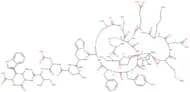
Discontinued productEndothelin-1 (human, bovine, dog, mouse, porcine, rat) acetate
CAS:<p>Endothelin-1 (ET-1) is a peptide that is produced by the endothelium. ET-1 is involved in numerous biological processes, including vasoconstriction, inflammation, and cell proliferation. Endothelin-1 (human ET-1) acetate salt H-Cys-Ser-Cys-Ser-Ser-Leu-Met-Asp-Lys-(Glu)-Cys-(Val)-Tyr-(Phe)-Cys-(His)-Leu -Asp(-Ile)-Ile(-Trp)) acetate salt is a recombinant protein that has been shown to significantly upregulate the production of endothelin in primary pulmonary hypertension. It also plays an important role in bowel disease, where it may be involved in the development of chronic inflammatory bowel disease.</p>Formula:C109H159N25O32S5•(C2H4O2)xPurity:Min. 95%Molecular weight:2,491.91 g/molRef: 3D-FE109997
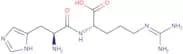
Discontinued productH-His-Arg-OH
CAS:<p>H-His-Arg-OH is a synthetic peptide that has been shown to have cytotoxic effects on mammalian cells. The H-His-Arg-OH peptide can be used for the treatment of heart disease and autoimmune diseases, such as rheumatoid arthritis. This peptide has been found to be resistant to congestive heart failure, which is caused by a number of factors, including hypertension and valvular stenosis. It has also been shown to have an immunoglobulin G1 (IgG1) genotype.</p>Formula:C12H21N7O3Purity:Min. 95%Molecular weight:311.34 g/molRef: 3D-FH108062
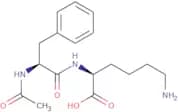
Discontinued productAc-Phe-Lys-OH
CAS:<p>Ac-Phe-Lys-OH is a synthetic peptide that mimics the lysine side chain of L-lysine. It has been shown to be cytotoxic to cancer cells and cardiac cells, with the formation rate of Ac-Phe-Lys-OH being dependent on the concentration of glycolaldehyde. The reaction yield for Ac-Phe-Lys-OH is also dependent on creatine kinase activity. Acetylation of Ac-Phe-Lys-OH reduces its cytotoxicity and increases its solubility in water.</p>Formula:C17H25N3O4Purity:Min. 95%Molecular weight:335.4 g/molRef: 3D-FA108278
Discontinued productAcetyl-(Cys(Acm)33·42)-EGF (33-42) amide (mouse)
CAS:<p>Please enquire for more information about Acetyl-(Cys(Acm)33·42)-EGF (33-42) amide (mouse) including the price, delivery time and more detailed product information at the technical inquiry form on this page</p>Formula:C51H82N16O17S2Purity:Min. 95%Molecular weight:1,255.43 g/molRef: 3D-FA109117
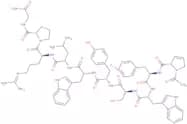
Discontinued productAcetyl-(3,4-dehydro-Pro1,4-fluoro-D-Phe2,D-Trp3·6)-LHRH trifluoroacetate salt
CAS:<p>Please enquire for more information about Acetyl-(3,4-dehydro-Pro1,4-fluoro-D-Phe2,D-Trp3·6)-LHRH trifluoroacetate salt including the price, delivery time and more detailed product information at the technical inquiry form on this page</p>Formula:C69H85FN16O13Purity:Min. 95%Molecular weight:1,365.51 g/molRef: 3D-FA109161
Discontinued product

![(17R)-4-Chloro-5-ethyl-9-fluoro-11b-hydroxy-16b-methylspiro[androsta-1,4-diene-17,2(3H)-furan]-3,3…](/_next/image/?url=https%3A%2Fstatic.cymitquimica.com%2Fproducts%2F3D%2Fthumb-webp%2FFF103612.webp&w=3840&q=75)

![1,2-Distearoyl-sn-glycero-3-phosphoethanolamine-N-[amino(polyethylene glycol) 2000] (ammonium salt)](/_next/image/?url=https%3A%2Fstatic.cymitquimica.com%2Fproducts%2F3D%2Fthumb-webp%2FFD157101.webp&w=3840&q=75)