Amino Acids (AA)
Amino acids (AAs) are the fundamental building blocks of proteins, playing a crucial role in various biological processes. These organic compounds are essential for protein synthesis, metabolic pathways, and cell signaling. In this category, you will find a comprehensive range of amino acids, including essential, non-essential, and modified forms, which are vital for research in biochemistry, molecular biology, and nutritional sciences. At CymitQuimica, we provide high-quality amino acids to support your research and development needs, ensuring accuracy and reliability in your experimental outcomes.
Subcategories of "Amino Acids (AA)"
- Amino Acid Derivatives(3,971 products)
- Amino Acid and Amino Acid Related Compounds(3,477 products)
- Amino Acids with Oxygen or Sulphur(168 products)
- Boc- Amino Acids(351 products)
- Fmoc Amino Acids(1,710 products)
Found 38321 products of "Amino Acids (AA)"
Sort by
Purity (%)
0
100
|
0
|
50
|
90
|
95
|
100
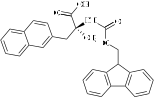
N-Fmoc-(S)-2-Amino-2-Methyl-3-(2'-Naphthyl)-Propanoic Acid
CAS:Formula:C29H25NO4Molecular weight:451.52N1-N-Nitroso methyl (2S,5S)-5-methylpiperazine-2-carboxylate
Formula:C7H13N3O3Molecular weight:187.20N-Nitroso (3R,6R)-1-tert-Butyl 3-methyl 6-methylpiperazine-1,3-dicarboxylate
Formula:C11H21N3O3Molecular weight:243.31Sodium 2,2'-Methylene-bis(4,6-di-tert-butylphenyl)phosphate
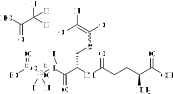
CAS:Formula:C29H42O4P·NaMolecular weight:485.63 22.99S-(1,2-Dichlorovinyl)-Glutathione-13C2-15N Trifluoroacetate
Formula:C1013C2H17Cl2N215NO6S·C2HF3O2Molecular weight:519.24 114.02Tirzepatide Impurity 10 Di-Trifluoroacetate (D-Gln 19)
Formula:C225H348N48O68·2C2HF3O2Molecular weight:4813.53 2*114.02Tirzepatide Impurity 35 Di-Trifluoroacetate (D-Lys 20)
Formula:C225H348N48O68·2C2HF3O2Molecular weight:4813.53 2*114.02Tirzepatide Impurity 30 Di-Trifluoroacetate (Endo-Ala 35)
Formula:C228H353N49O69·2C2HF3O2Molecular weight:4884.61 2*114.02Vosoritide Impurity 11 Tritrifluoroacetate (Acetylated Lysin 27)
Formula:C178H292N56O52S3·3C2HF3O2Molecular weight:4144.81 3*114.02Tirzepatide Impurity 11 Di-Trifluoroacetate (β-Ala 18)
Formula:C225H348N48O68·2C2HF3O2Molecular weight:4813.53 2*114.02endo-Gly9a-Vasopressin Di-trifluoroacetate
CAS:Formula:C48H67N15O14S2·2C2HF3O2Molecular weight:1142.28 2* 114.02Tirzepatide Impurity 36 Di-Trifluoroacetate (D-Trp 25)
Formula:C225H348N48O68·2C2HF3O2Molecular weight:4813.53 2*114.02Tirzepatide Impurity 3 Di-Trifluoroacetate (Des-γ-Glu)
Formula:C220H342N48O64·2C2HF3O2Molecular weight:4683.43 2*114.02Tirzepatide Impurity 18 Di-Trifluoroacetate (β-Ala 35)
Formula:C225H348N48O68·2C2HF3O2Molecular weight:4813.53 2*114.02Tirzepatide Impurity 13 Di-Trifluoroacetate (D-γ-Glu-Side chain)
Formula:C225H348N48O68·2C2HF3O2Molecular weight:4813.53 2*114.02Tirzepatide Impurity 14 Di-Trifluoroacetate (β-Ala 28)
Formula:C225H348N48O68·2C2HF3O2Molecular weight:4813.53 2*114.02Tirzepatide Impurity 17 Di-Trifluoroacetate (D-Leu 26)
Formula:C225H348N48O68·2C2HF3O2Molecular weight:4813.53 2*114.02Tirzepatide Impurity 8 Di-Trifluoroacetate (D-Gln 24)
Formula:C225H348N48O68·2C2HF3O2Molecular weight:4813.53 2*114.02Tirzepatide Impurity 1 Di-Trifluoroacetate (Des-Ile 12)
Formula:C219H337N47O67·2C2HF3O2Molecular weight:4700.37 2*114.02Vosoritide Impurity 9 Tritrifluoroacetate (Acetylated Lysin 17)
Formula:C178H292N56O52S3·3C2HF3O2Molecular weight:4144.81 3*114.02Vosoritide Impurity 7 Tritrifluoroacetate (Acetylated Lysin 12)
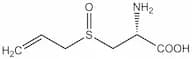
Formula:C178H292N56O52S3·3C2HF3O2Molecular weight:4144.81 3*114.02L-(±)-alliin
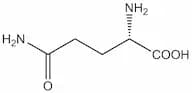
CAS:Organo-sulphur compoundFormula:C6H11NO3SPurity:≥ 95.0 % (HPLC)Color and Shape:PowderMolecular weight:177.22L-glutamine
CAS:Amino acidFormula:C5H10N2O3Purity:≥ 98.0 % (HPLC)Color and Shape:PowderMolecular weight:146.145-hydroxy l-tryptophan
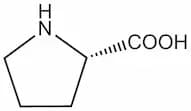
CAS:Nitrogen heterocyclic compoundFormula:C11H12N2O3Purity:≥ 98.0 % (HPLC)Color and Shape:PowderMolecular weight:220.23L-proline
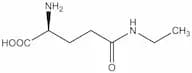
CAS:Amino acidFormula:C5H9NO2Purity:≥ 98.0 % (HPLC)Color and Shape:PowderMolecular weight:115.13L-theanine
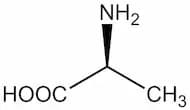
CAS:Acyclic amideFormula:C7H14N2O3Purity:≥ 98.0 % (HPLC)Color and Shape:PowderMolecular weight:174.2L-alanine
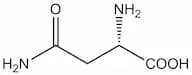
CAS:Amino acidFormula:C3H7NO2Purity:≥ 98.0 % (HPLC)Color and Shape:PowderMolecular weight:89.09L-asparagine
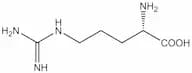
CAS:Amino acidFormula:C4H8N2O3Purity:≥ 98.0 % (HPLC)Color and Shape:PowderMolecular weight:132.12L-arginine
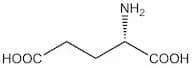
CAS:Amino acidFormula:C6H14N4O2Purity:≥ 98.0 % (HPLC)Color and Shape:PowderMolecular weight:174.2L-glutamic acid
CAS:Glutamic acidFormula:C5H9NO4Purity:≥ 98.0 % (HPLC)Color and Shape:PowderMolecular weight:147.13N-malonyl dl-tryptophan
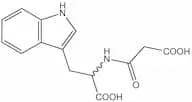
Nitrogen heterocyclic compoundFormula:C14H14N2O5Purity:≥ 98.0 % (HPLC)Color and Shape:PowderMolecular weight:290.28L-(+)-ergothioneine
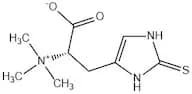
CAS:Nitrogen heterocyclic compoundFormula:C9H15N3O2SPurity:≥ 90.0 % (HPLC)Color and Shape:PowderMolecular weight:229.3Γ-aminobutyric acid
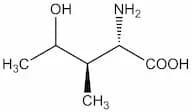
CAS:Amino acidFormula:C4H9NO2Purity:≥ 98.0 % (HPLC)Color and Shape:PowderMolecular weight:103.124-hydroxy l-isoleucine
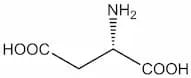
CAS:Amino acidFormula:C6H13NO3Purity:≥ 98.0 % (HPLC)Color and Shape:PowderMolecular weight:147.17L-aspartic acid
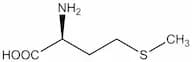
CAS:Amino acidFormula:C4H7NO4Purity:≥ 98.0 % (HPLC)Color and Shape:PowderMolecular weight:133.1L-methionine
CAS:MethionineFormula:C5H11NO2SPurity:≥ 95.0 % (HPLC)Color and Shape:PowderMolecular weight:149.21Ethyl 3-(dimethylamino)-2-(2,4,5-trifluoro-3-methoxybenzoyl)acrylate
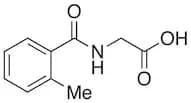
CAS:Formula:C15H16F3NO4Color and Shape:NeatMolecular weight:331.2872-Methyl Hippuric Acid
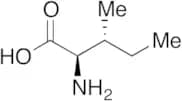
CAS:Controlled Product<p>Applications The main metabolite of o-xylene.<br>References Gregus, Z., et al.: Drug Metab. Dispos., 26, 1082 (1998), Gregus, Z., et al.: Xenobiotica, 29, 547 (1999), Gonzalez-Reche, L., et al.: Arch. Toxicol., 77, 80 (2003),<br></p>Formula:C10H11NO3Color and Shape:White To Off-WhiteMolecular weight:193.20D-Isoleucine
CAS:<p>Applications D-Isoleucine is not biosynthesized in the human body and is therefore categorized as an essential amino acid that must be obtained through diet. It is also an important building block that is used in the formation of hemoglobin in humans.<br>References Albanese, A.: J. Biol. Chem., 157, 613 (1945); Martin, R. & Kirk, K.: Blood, 109, 2217 (2007)<br></p>Formula:C6H13NO2Color and Shape:Off White SolidMolecular weight:131.17292-Bromo-N-methoxy-N-methylbenzamide
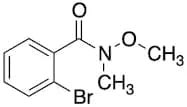
CAS:Controlled Product<p>Applications 2-bromo-N-methoxy-N-methylbenzamide (cas# 899425-05-9) is a useful research chemical.<br></p>Formula:C9H10BrNO2Color and Shape:NeatMolecular weight:244.0854-Desmethoxypropoxyl-4-methoxy S-Deoxo Rabeprazole
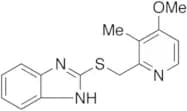
CAS:Controlled Product<p>Impurity Rabeprazole EP Impurity G<br>Applications Used in the preparation of 2-[[(2-pyridyl)methyl]thio]-1H-benzimidazoles derivatives as anti helicobacter pylori agents.<br>References Kuehler, T. et al.: J. Med. Chem., 41, 1777 (1998)<br></p>Formula:C15H15N3OSColor and Shape:WhiteMolecular weight:285.362-Bromo-3'-methoxyacetophenone
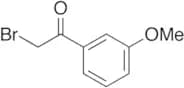
CAS:Controlled Product<p>Applications Derivatizing reagent.<br> Not a dangerous good if item is equal to or less than 1g/ml and there is less than 100g/ml in the package<br>References Webster, S., et al.: Bioorg. Med. Chem. Lett., 20, 3265 (2010), Chezal, J., et al.: Eur. J. Med. Chem., 45, 2044 (2010),<br></p>Formula:C9H9BrO2Color and Shape:NeatMolecular weight:229.07N-Methylnitroacetamide
CAS:Controlled Product<p>Impurity Ranitidine EP Impurity H<br>Applications N-Methylnitroacetamide (Ranitidine EP Impurity H) is a degradation product of Ranitidine (R120000).<br>References Sharma, N. et al.: Sci. Pharmac., 79, 309 (2011); Haywood, P.A. et al.: J. Chem. Soc., 5, 951 (1987);<br></p>Formula:C3H6N2O3Color and Shape:NeatMolecular weight:118.091-Ethyl-1-methylcyclopentane
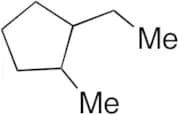
CAS:Controlled Product<p>Applications 1-Ethyl-1-methylcyclopentane, is one of the chemical components of Gas-Phase organic carbon emissions from motor vehicles. It is also a volatile component of frying oils.<br>References Gentner, D. R., et al.: Environ. Sci. Tech., 47, 11937 (2013); Prevot, A. Frying Food, 155 (1988);<br></p>Formula:C8H16Color and Shape:NeatMolecular weight:112.21Boc-His(Trt)-OH
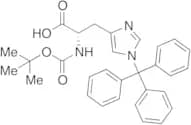
CAS:Controlled Product<p>Applications Boc-His(Trt)-OH was used in the study to prepare and study structure-activity relationship of amino acid amides as selective inhibitors for dipeptidyl peptidases.<br>References Senten, K., et al.: J. Med. Chem., 46, 5005 (2003);<br></p>Formula:C30H31N3O4Color and Shape:White To Off-WhiteMolecular weight:497.584′-Methylpropiophenone
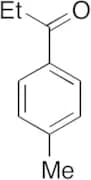
CAS:Controlled Product<p>Applications 4′-Methylpropiophenone is a chemical reagent used in electrocarboxylation reactions.<br>References Zhang, K. et al.: Chin. J. Chem., 28, 509 (2010); Zhao, S. et al.: Tetra. Lett., 52, 2702 (2011);<br></p>Formula:C10H12OColor and Shape:NeatMolecular weight:148.20p-Methoxytoluene
CAS:<p>Applications p-Methoxytoluene is a building block that has been used as a reactant for the preparation of electrophilic fluorinating agents.<br> Not a dangerous good if item is equal to or less than 1g/ml and there is less than 100g/ml in the package<br>References Baudoux, J., Cahard, D.: Org. Reactions, 69, 347 (2007)<br></p>Formula:C8H10OColor and Shape:NeatMolecular weight:122.164-Methylmorpholine
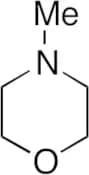
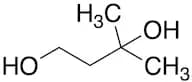
CAS:<p>Applications 4-Methylmorpholine is used in the synthesis of novel and selective TYK2 inhibitors, used in the treatment of inflammatory diseases. Also used in the preparation of cathespin K inhibitors which are highly selective.<br> Not a dangerous good if item is equal to or less than 1g/ml and there is less than 100g/ml in the package<br>References Liang, J. et al.: Eur. J. Med. Chem., 67, 175 (2013); Yuan, X. et al.: Org. Biomol. Chem., 11, 5847 (2013);<br></p>Formula:C5H11NOColor and Shape:NeatMolecular weight:101.153-Methyl-1,3-butanediol
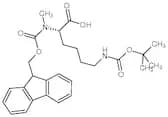
CAS:Controlled Product<p>Applications 3-Methyl-1,3-butanediol is a useful compound in carbon oxygen coupling reactions.<br></p>Formula:C5H12O2Color and Shape:NeatMolecular weight:104.15Fmoc-n-me-lys(boc)-oh
CAS:Controlled Product<p>Applications Fmoc-n-me-lys(boc)-oh<br></p>Formula:C27H34N2O6Color and Shape:NeatMolecular weight:482.5691-Methoxy-2-propanol
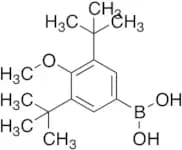
CAS:Controlled Product<p>Applications 1-Methoxy-2-propanol is used as a reagent in the synthesis of 2-amino-3-carboxy-4-phenylthiophenes as novel atypical protein kinase C inhibitors. Also used as a reagent in the synthesis of Metolachlor (M338700); a selective pre-emergence herbicide.<br> Not a dangerous good if item is equal to or less than 1g/ml and there is less than 100g/ml in the package<br>References Titchenell, P.M., et al.: Bioorg. Med. Chem. Lett., 23, 3034 (2013); Zhang, H.: Nongyao Kexue Yu Guanli, 32, 26 (2011)<br></p>Formula:C4H10O2Color and Shape:ColourlessMolecular weight:90.12(3,5-Di-tert-butyl-4-methoxyphenyl)boronic Acid
CAS:Controlled Product<p>Applications: (3,5-Di-tert-butyl-4-methoxyphenyl)boronic acid (cas# 233584-42-4) is a useful research chemical.<br></p>Formula:C15H25BO3Color and Shape:NeatMolecular weight:264.1682-Chloro-2-methylpropane-d9
CAS:Controlled Product<p>Applications Isotope labelled 2-Chloro-2-methylpropane is a starting molecule to carry out nucleophilic substitution reactions.<br>References Eyet, N., et al.: J. Phy. Chem. A., 117, 1136 (2013); Eyet, N., et al.: J. Am. Mass. Spec., 18, 1046 (2007);<br></p>Formula:C4D9ClColor and Shape:NeatMolecular weight:101.624-(2-methoxybenzoyl)-8-propyl-1-oxa-4,8-diazaspiro[4.5]decane-3-carboxylic acid
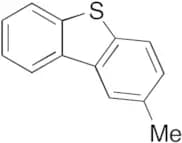
CAS:Purity:95.0%Molecular weight:362.42599487304692-Methyldibenzothiophene
CAS:Controlled Product<p>Applications 2-Methyldibenzothiophene, is an alkyldibenzothiophene present in crude oil. Research concerning the biodegradation of Dibenzothiophene by different types of bacteria is a currently being carried out, as these bacteria have the ability to breakdown other harmful PAH’s as well. This may be used in removing spilled oil from marine and terrestrial environments.<br>References Boberg, F., et al.: Erdoel & Kohle, Erdgas, Petrochemie, 47, 187 (1994); Tanaka, Y., et al.: Applied Microbiology and Biotech., 59 (2), 325 (2002); Prince, R., Spill Sci. Tech. Bulletin, 8 (2), 145 (2003);<br></p>Formula:C13H10SColor and Shape:NeatMolecular weight:198.28N-Acetyl Phentermine
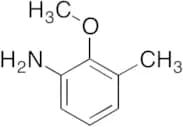
CAS:Controlled Product<p>Applications N-(2-Methyl-1-phenylpropan-2-yl)acetamide is a byproduct from the preparation of benzolactams by palladium-catalyzed carbonylation of arylethylamines and α-amino benzenepropanoates.<br>References Lopez, B., et al.: Chem. Commun., 47, 1054 (2011); Albert, J., et al.: Organometallics, 32, 649 (2013);<br></p>Formula:C12H17NOColor and Shape:NeatMolecular weight:191.272-Methoxy-3-methylaniline
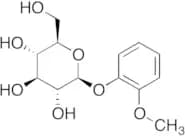
CAS:Controlled Product<p>Applications 2-Methoxy-3-methylaniline is an important building block.<br></p>Formula:C8H11NOColor and Shape:NeatMolecular weight:137.179Guaiacol-β-D-glucopyranoside
CAS:Controlled Product<p>Applications Guaiacol-beta-D-glucopyranoside, is a Guaiacol Conjugate, that has shown to present in fermentation of grapes that had been exposed to bushfire smoke and can potentially yield unpalatable, smoke-affected wine.<br>References Hayasaka, Y.m et al.: J. Arg. Food Chem., Vol. 58, Issue 4, P: 2076; 2081 (2010);<br></p>Formula:C13H18O7Color and Shape:NeatMolecular weight:286.282-Methylbutyrylglycine-d9
CAS:Controlled Product<p>Applications Labelled 2-Methylbutyrylglycine (M294340). 2-Methylbutyrylglycine is one of the acylglycines, an important class of metabolites that have been used in the diagnosis of several inborn errors of metabolism (IEM).<br>References Costa, C., et al.: J. Pharmaceut. Biomed. Anal., 21, 1215 (2000), Garcia-Villoria, J., et al.: Clin. Biochem., 42, 2 (2009), Scalbert, A., et al.: Metabolomics, 5, 435 (2009),<br></p>Formula:C72H9H4NO3Color and Shape:Off-WhiteMolecular weight:168.24Sodium 2,2'-Methylene-bis(4,6-di-tert-butylphenyl)phosphate
CAS:Controlled Product<p>Applications Sodium 2,2'-Methylene-bis(4,6-di-tert-butylphenyl)phosphate is an organophosphate nucleating agent.<br>References Li, J., et al.: Suliao, 43, 47-50 (2014);<br></p>Formula:C29H42O4P·NaColor and Shape:White PowderMolecular weight:508.60Azido-PEG3-alcohol
CAS:Controlled ProductFormula:C6H13N3O3Color and Shape:NeatMolecular weight:175.191-Azido-2-(2-methoxyethoxy)ethane
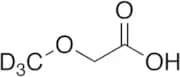
CAS:Controlled Product<p>Applications 1-Azido-2-(2-methoxyethoxy)ethane (cas# 215181-61-6) is a useful research chemical.<br></p>Formula:C5H11NO2Color and Shape:NeatMolecular weight:145.162-Methoxyacetic Acid-d3
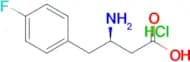
CAS:Controlled Product<p>Applications: Isotope labelled analogue of 2-Methoxyacetic Acid, a synthetic intermediate in the synthesis of dimethyl(alkyloxy)[(methylsulfonyl)phenyl]furanones as COX-2 inhibitors.<br>Dangerous Goods Info: Not a dangerous good if item is equal to or less than 1g/ml and there is less than 100g/ml in the package<br>References Leblanc, Y., et al.: Bioorg. Med. Chem. Lett., 9, 2207 (1999);<br></p>Formula:C32H3H3O3Color and Shape:NeatMolecular weight:93.10(R)-3-Amino-4-(4-fluorophenyl)butanoic acid hydrochloride
CAS:Purity:95.0%Color and Shape:Solid, White powderMolecular weight:233.6699981689453DL-Cysteine
CAS:Controlled Product<p>Stability Hygroscopic<br>Applications Cysteine is a non-essential amino acid that can be synthesized by the human body under normal physiological conditions if a sufficient quantity of methionine is available. Cysteine is commonly used as a precursor in the food and pharmaceutical industries. Cysteine is used as a processing aid for baking, as an additive in cigarettes, as well as in the preparation of meat flavours.<br>References Hui, N. et al.: Meat Sci. Appl., 74 (2001); Kiviharju, K. et al.: J. Biotechnol., 117, 299 (2005); Pecivova, P. et al.: J. Sci. Food Agric., 90, 1681 (2010);<br></p>Formula:C3H7NO2SColor and Shape:NeatMolecular weight:121.16C2 Ceramide
CAS:Controlled Product<p>Stability Moisture Sensitive<br>Applications A biologically active, cell permeable, but nonphysiologic ceramide analog. It inhibits cell proliferation and induces monocytic differentiation of HL-60 cells and induces apoptosis. It stimulates protein phosphatase 2A and activates MAP Kinase2.<br>References Inoue, T., et al.: J. Biol. Chem., 284, 9566 (2009), Kang, J., et al.: Bioorg. Med. Chem., 17, 1498 (2009), Rath, G., et al.: Int. J. Biochem. Cell Biol., 41, 1165 (2009),<br></p>Formula:C20H39NO3Color and Shape:Off White PowderMolecular weight:341.534-(4-chloro-2-fluorobenzoyl)-8-methyl-1-oxa-4,8-diazaspiro[4.5]decane-3-carboxylic acid
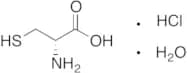
CAS:Purity:95.0%Molecular weight:356.7799987792969D-Cysteine Hydrochloride Monohydrate
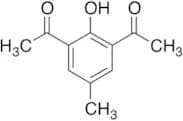
CAS:Controlled Product<p>Applications D-Cysteine Hydrochloride Monohydrate is used as a reactant in the expedient synthesis of electronically modified luciferins for bioluminescence imaging.<br>References McCutcheon, D., et al.: J. Am. Chem. Soc., 134, 7604 (2012);<br></p>Formula:C3H7NO2S·HCl·H2OColor and Shape:NeatMolecular weight:121.16+(36.46)+(18.02)1-(3-Acetyl-2-hydroxy-5-methyl-phenyl)ethanone
CAS:Controlled Product<p>Applications 1-(3-ACETYL-2-HYDROXY-5-METHYL-PHENYL)-ETHANONE (cas# 55108-28-6) is a useful research chemical.<br></p>Formula:C11H12O3Color and Shape:NeatMolecular weight:192.2118-ethyl-4-(pyridine-3-carbonyl)-1-oxa-4,8-diazaspiro[4.5]decane-3-carboxylic acid
CAS:Purity:95.0%Molecular weight:319.3609924316406(3-Glycidoxypropyl)triethoxysilane
CAS:Controlled Product<p>Applications (3-Glycidoxypropyl)triethoxysilane is used in the fabric industry to treat and modify fabrics.<br>References Schramm, Christian, et al.: Coloration Tech., 133(3), 234-242 (2017);Grancaric, Ana Marija, et al.: Pro. in Org. Coatings, 103, 174-181 (2017); Yeo, Jun-Seok, et al.: J. of Ind. and Eng. Chem., 45, 301-306 (2017)<br></p>Formula:C12H26O5SiColor and Shape:NeatMolecular weight:278.428-ethyl-4-(2,4,6-trimethylbenzoyl)-1-oxa-4,8-diazaspiro[4.5]decane-3-carboxylic acid
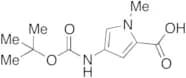
CAS:Purity:95.0%Molecular weight:360.45401000976564-(Boc-amino)-1-methylpyrrole-2-carboxylic Acid
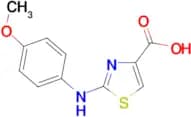
CAS:Controlled Product<p>Applications 4-(Boc-amino)-1-methylpyrrole-2-carboxylic Acid is an unnatural amino acid for preparing heteroaromatic oligoamides for regulating gen expression in biotechnology.<br>References Baird, E., et al.: J. Am. Chem. Soc., 118, 6141 (1996); White, S., et al.: Nature, 391, 468 (1998)<br></p>Formula:C11H16N2O4Color and Shape:NeatMolecular weight:240.2562-(4-Methoxy-phenylamino)-thiazole-4-carboxylic acid
CAS:Formula:C11H10N2O3SPurity:95.0%Color and Shape:SolidMolecular weight:250.27Methyl 4-Methoxybenzoate
CAS:<p>Applications Methyl 4-Methoxybenzoate is also used in the synthesis of oxadiazole-based, GSK-3 inhibitors. Methyl 4-Methoxybenzoate is used in the synthesis of substituted hydrazides for their antitubercular properties.<br>References Lo Monte, F. et al.: Eur.J. Med. Chem., 61, 26 (2013); Gupta, R. et al.: Asian J. Pharm. Clin. Res., 5, 251 (2012);<br></p>Formula:C9H10O3Color and Shape:WhiteMolecular weight:166.17






























![2-[4-(3-Chlorophenyl)piperazin-1-yl]-2-phenylacetic acid](/_next/image/?url=https%3A%2Fstatic.cymitquimica.com%2Fproducts%2F10%2Fthumb-webp%2FF300393.webp&w=3840&q=75)
![4-(2-methoxybenzoyl)-8-propyl-1-oxa-4,8-diazaspiro[4.5]decane-3-carboxylic acid](/_next/image/?url=https%3A%2Fstatic.cymitquimica.com%2Fproducts%2F10%2Fthumb-webp%2FF525737.webp&w=3840&q=75)






![4-(4-chloro-2-fluorobenzoyl)-8-methyl-1-oxa-4,8-diazaspiro[4.5]decane-3-carboxylic acid](/_next/image/?url=https%3A%2Fstatic.cymitquimica.com%2Fproducts%2F10%2Fthumb-webp%2FF525664.webp&w=3840&q=75)
![8-ethyl-4-(pyridine-3-carbonyl)-1-oxa-4,8-diazaspiro[4.5]decane-3-carboxylic acid](/_next/image/?url=https%3A%2Fstatic.cymitquimica.com%2Fproducts%2F10%2Fthumb-webp%2FF525700.webp&w=3840&q=75)

![8-ethyl-4-(2,4,6-trimethylbenzoyl)-1-oxa-4,8-diazaspiro[4.5]decane-3-carboxylic acid](/_next/image/?url=https%3A%2Fstatic.cymitquimica.com%2Fproducts%2F10%2Fthumb-webp%2FF525711.webp&w=3840&q=75)