


Amino Acids (AA)
Amino acids (AAs) are the fundamental building blocks of proteins, playing a crucial role in various biological processes. These organic compounds are essential for protein synthesis, metabolic pathways, and cell signaling. In this category, you will find a comprehensive range of amino acids, including essential, non-essential, and modified forms, which are vital for research in biochemistry, molecular biology, and nutritional sciences. At CymitQuimica, we provide high-quality amino acids to support your research and development needs, ensuring accuracy and reliability in your experimental outcomes.
Subcategories of "Amino Acids (AA)"
- Amino Acid Derivatives(3,955 products)
- Amino Acid and Amino Acid Related Compounds(3,451 products)
- Amino Acids with Oxygen or Sulphur(168 products)
- Boc- Amino Acids(351 products)
- Fmoc Amino Acids(1,710 products)
Found 38234 products of "Amino Acids (AA)"
Sort by
Purity (%)
0
100
|
0
|
50
|
90
|
95
|
100
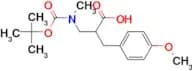
2-N-Boc-3-(4-Methoxy-phenyl)-2-methylaminomethyl-propionic acid
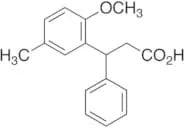
CAS:Formula:C17H25NO5Purity:97.0%Color and Shape:SolidMolecular weight:323.3893-(2-Methoxy-5-methylphenyl)-3-phenyl-propanoic Acid
CAS:Controlled Product<p>Applications 3-(2-Methoxy-5-methylphenyl)-3-phenyl-propanoic Acid (cas# 109089-77-2) is a compound useful in organic synthesis.<br></p>Formula:C17H18O3Color and Shape:NeatMolecular weight:270.328-benzyl-4-(2-phenylacetyl)-1-oxa-4,8-diazaspiro[4.5]decane-3-carboxylic acid
CAS:Purity:95.0%Molecular weight:394.47100830078125Isopropyl 2-Bromo-2-methylpropanoate
CAS:Controlled Product<p>Applications Isopropyl 2-bromo-2-methylpropanoate (cas# 51368-55-9) is a useful research chemical.<br></p>Formula:C7H13O2BrColor and Shape:NeatMolecular weight:209.088-ethyl-4-(2,4,6-trimethylbenzoyl)-1-oxa-4,8-diazaspiro[4.5]decane-3-carboxylic acid
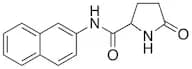
CAS:Purity:95.0%Molecular weight:360.4540100097656L-Pyroglutamic Acid β-Naphthylamide
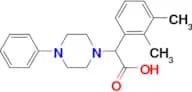
CAS:Controlled Product<p>Applications A substrate for pyroglutamate aminopeptidase. Used for colorimetric determination of pyrrolidonyl peptidase activity in bacteria.<br> Not a dangerous good if item is equal to or less than 1g/ml and there is less than 100g/ml in the package<br>References Szewczuk, A., et al.: Eur. J. Biochem., 8, 63 (1969), Szewczuk, A., et al.: Anal. Biochem., 39, 268 (1971)<br></p>Formula:C15H14N2O2Color and Shape:NeatMolecular weight:254.282-(3-Chlorophenyl)-2-[4-(4-fluorophenyl)piperazin-1-yl]acetic acid
CAS:Molecular weight:348.799987792968755-Bromo-2-(2-methyl-2H-tetrazol-5-yl)pyridine
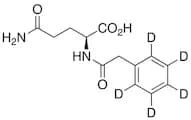
CAS:Controlled Product<p>Applications 5-Bromo-2-(2-methyl-2H-tetrazol-5-yl)pyridine is a reagent in the synthesis and structure-activity relationship studies of highly potent novel benzoxazinyl-oxazolidinone which is an antibacterial agent. Benzoxazinyl-oxazolidinone had potent activity against Gram-positive pathogens. 5-Bromo-2-(2-methyl-2H-tetrazol-5-yl)pyridine is also an intermediate in the synthesis of Tedizolid (T013750).<br>References Xin, Q., et al.: J. Med. Chem., 54, 7493 (2011)<br></p>Formula:C7H6BrN5Color and Shape:NeatMolecular weight:240.06Phenylacetyl-d5 L-Glutamine
CAS:Controlled Product<p>Applications It is used as labelled biomarker for metabolic age.<br>References Selmer, T., et al.: Eur. J. Biochem., 268, 1363 (2001), Connelly, J., et al.: Drug Metab. Dispos., 30, 1357 (2002), Lindon, J., et al.: Pharm. Res., 23, 1075 (2006), Monteagudo, E., et al.: Xenobiotica, 37, 1000 (2007),<br></p>Formula:C13D5H11N2O4Color and Shape:Off-White To Light YellowMolecular weight:269.314-[4-(dimethylamino)benzoyl]-8-methyl-1-oxa-4-azaspiro[4.5]decane-3-carboxylic acid
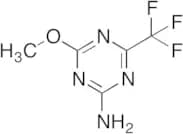
CAS:Purity:95.0%Molecular weight:346.4270019531254-Methoxy-6-(trifluoromethyl)-1,3,5-triazin-2-amine
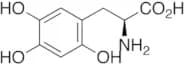
CAS:<p>Applications 4-Methoxy-6-(trifluoromethyl)-1,3,5-triazin-2-amine can be used as reactant/reagent in preparation of N-phenylsulfony-N'-pyrimidinylureas as herbicides.<br>References Hamprecht, G., et al.: Ger. Offen., DE 4322726 A1 19950112 (1995)<br></p>Formula:C5H5F3N4OColor and Shape:NeatMolecular weight:194.116-Hydroxy-L-DOPA
CAS:Controlled Product<p>Impurity Levodopa EP Impurity A; Levodopa USP Related Compound A<br>Stability Hygroscopic<br>Applications 6-Hydroxy-L-DOPA (Levodopa EP Impurity A; Levodopa USP Related Compound A) is the 6-hydroxy derivative of the amino acid L-DOPA (D533751) with neurotoxic properties. Studies show that exogenously administered 6-Hydroxy-L-DOPA is biotransformed by amino acid decarboxylase to the highly potent and catecholamine-selective neurotoxin, 6-Hydroxydopamine. The treatment of 6-Hydroxy-L-DOPA in rats resulted in the stimulation of acetylcholinesterase.<br>References Jaim-Etcheverry, G. et al.: Brain Res., 100, 699 (1975); Kostrzewa, R.M. et al.: Amino Acids, 14, 175 (1998); Berthet, A. et al.: J. Neurosci., 29, 4829 (2009);<br></p>Formula:C9H11NO5Color and Shape:Brown To BlackMolecular weight:213.19(R)-2-((tert-Butoxycarbonyl)amino)-3-hydroxypropanoic acid hydrate
CAS:Purity:97.0%Molecular weight:223.22500610351562L-Tryptophan-d3
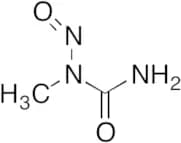
CAS:Controlled Product<p>Applications L-Tryptophan-d3 is a deuterium labelled amino acid, which is a protein building block. The unlabelled L-Tryptophan (T947210) is also available.<br>References Goze, C., et al.: Eur. J. Pharmacol., 643, 153 (2010), Bhandare, P., et al.: J. Chem. Pharm. Res., 2, 372 (2010),<br></p>Formula:C11D3H9N2O2Color and Shape:NeatMolecular weight:207.24N-Methyl-N-nitroso Urea (Wetted with water >20%)
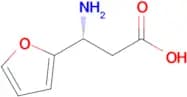
CAS:Controlled Product<p>Stability Temperature Sensitive<br>Applications Precursor of Diazomethane. It has a cytotoxicity effect.This product contains an undetermined amount of water.<br> Not a dangerous good if item is equal to or less than 1g/ml and there is less than 100g/ml in the package<br>References Huggins, C., et al.: J. Exp. Med., 131, 321 (1970), Gullino, P.M., et al.: J. Natl. Cancer Inst., 54, 401 (1975),<br></p>Formula:C2H5N3O2Color and Shape:Off-White To Light BeigeMolecular weight:103.08(S)-3-Amino-3-(3-(trifluoromethyl)phenyl)propanoic acid hydrochloride
CAS:Purity:95%Molecular weight:269.6499938964844H-D-Ala-D-Leu-OH TFA Salt
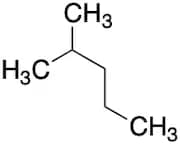
CAS:Controlled Product<p>Applications H-D-Ala-D-Leu-OH (cas# 67392-69-2) is a useful research chemical.<br></p>Formula:C9H18N2O3·C2HF3O2Color and Shape:NeatMolecular weight:316.2742-Methylpentane
CAS:<p>Applications 2-Methylpentane is used as a raw material/intermediate in organic synthesis, rubber solvent, and vegetable oil extraction solvent.<br>References Choi, D., et al.: Adv. Funct. Mater. 25, 920 (2015)<br></p>Formula:C6H14Color and Shape:ColourlessMolecular weight:86.187,10-Dichloro-2-methoxybenzo[b][1,5]naphthyridine
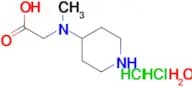
CAS:Controlled Product<p>Applications 7,10-Dichloro-2-methoxybenzo[b][1,5]naphthyridine is used in the preparation of pyronaridine.<br>References Li, J., et al.: PCT Int. Appl., 2013:1701510 (2013)<br></p>Formula:C13H8Cl2N2OColor and Shape:NeatMolecular weight:279.12N-methyl-N-4-piperidinylglycine dihydrochloride hydrate
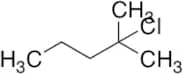
CAS:Purity:95.0%Molecular weight:263.16000366210942-Chloro-2-methylpentane
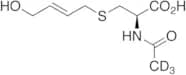
CAS:Controlled Product<p>Stability Volatile<br>Applications 2-Chloro-2-Methylpentane (cas# 4325-48-8) is a useful research chemical.<br></p>Formula:C6H13ClColor and Shape:NeatMolecular weight:120.62N-Acetyl-S-(4-hydroxy-2-buten-1-yl)-L-cysteine-d3
CAS:Controlled Product<p>Stability Hygroscopic<br>Applications A novel labelled metabolite of Butadiene monoepoxide (BMO), a mutagen and carcinogen compound.<br>References Cheng, X., et al.: Drug Metab. Dispos., 21, 121 (1993), Nieusma, J., et al.: Chem. Res. Toxicol., 10, 450 (1997),<br></p>Formula:C9D3H12NO4SColor and Shape:NeatMolecular weight:236.30322-(4-(Benzo[d][1,3]dioxol-5-ylmethyl)piperazine-1-carbonyl)cyclohexane-1-carboxylic acid
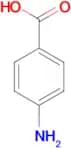
CAS:Purity:90%Molecular weight:374.437011718754-Aminobenzoic acid
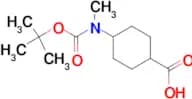
CAS:Formula:C7H7NO2Purity:97%Color and Shape:Solid, Crystalline Powder or PowderMolecular weight:137.1384-(TERT-BUTOXYCARBONYL-METHYL-AMINO)-CYCLOHEXANECARBOXYLIC ACID
CAS:Purity:95.0%Molecular weight:257.3299865722656N,N-Diethyl-N’-1-naphthylethylenediamine Oxalate
CAS:Controlled Product<p>Applications Used in the methods of detecting nitrotyrosine and aminotyrosine residues of peptides and proteins. Also used in the studies on the separation and photometric determination of antiepileptics.<br>References Quednow, B., et al.: Pharmazie, 34, 724 (1979),<br></p>Formula:C18H24N2O4Color and Shape:NeatMolecular weight:332.39D-Serine
CAS:Controlled Product<p>Applications A proteinogenic amino acids involved in the biosynthesis of purines and pyrimidines. Inhibitor of serine palmitoyltransferase. A neuromodulator.<br>References Junjaud, G. et al.: J. Neurochem., 98, 1159 (2006); Hanada, K. et al.: FEBS Lett., 474, 63 (2000); Pollegionni, L. et al.: Cell. Mol. Life Sci., 67, 2387 (2010);<br></p>Formula:C3H7NO3Color and Shape:NeatMolecular weight:105.095-Carboxy-2-methylphenylboronic Acid
CAS:Controlled Product<p>Applications 5-Carboxy-2-methylphenylboronic Acid acts as a reagent in the synthesis of pyrazolopyridinone-based p38 MAP kinase inhibitor<br>References Milburn, R. R., et al.: Org. Process Res. Dev., 15, 31 (2011); Achmatowicz, M., et al.: J. Org. Chem., 74, 795 (2009)<br></p>Formula:C8H9BO4Color and Shape:NeatMolecular weight:179.97L-Ornithine-2,3,3,4,4,5,5-d7 hydrochloride
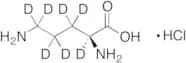
CAS:Controlled Product<p>Applications L-Ornithine-2,3,3,4,4,5,5-d7 hydrochloride is the labelled analogue of L-Ornithine Hydrochloride (O695550), a non-essential amino acid for human development but is required intermediate in arginine biosynthesis. L-Ornithine is found in virtually all vertebrate tissues as well as incorporated into proteins, such as tyrocidine. Isolation from chicken excreta.<br>References Fattori, D., et al.: J. Med. Chem., 50, 550 (2007), Gomez-Alonso, S., et al.: J. Agric. Food Chem., 55, 608 (2007), Subramaniam, R., et al.: Bioorg. Med. Chem. Lett., 18, 3333 (2008),<br></p>Formula:C5D7H5N2O2·ClHColor and Shape:NeatMolecular weight:175.1104926088Ademethionine-d3 1,4-Butanedisulfonate (>85%)
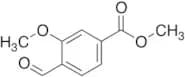
CAS:Controlled Product<p>Applications Ademethionine-d3 1,4-Butanedisulfonate, is a labeled analogue of Ademethionine 1,4-Butanedisulfonate (A280355), used in the synthesis of sulfonio-adenosyl-L-methionine (SAMe) salts.<br></p>Formula:C15H20D3N6O5S(C4H8O6S2)·(C4H10O6S2)Purity:>85%Color and Shape:NeatMolecular weight:402.46 (Free Base)Methyl 4-Formyl-3-methoxybenzoate
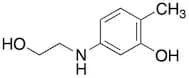
CAS:Controlled ProductFormula:C10H10O4Color and Shape:NeatMolecular weight:194.185-((2-Hydroxyethyl)amino)-2-methylphenol
CAS:Controlled Product<p>Applications 5-((2-Hydroxyethyl)amino)-2-methylphenol (cas# 55302-96-0) is a useful research chemical.<br></p>Formula:C9H13NO2Color and Shape:NeatMolecular weight:167.21-Methyl-2-pyrrolidinone
CAS:Controlled Product<p>Applications It is a versatile industrial solvent. NMP is currently approved for use only in veterinary pharmaceuticals. The determination of the disposition and metabolism of NMP in the rat will contribute toward understanding the toxicology of this exogenous chemical which man may likely be exposed to in increasing amounts.<br>References Southwell, D., et al.: J. Pharm. Pharmacol., 33, 3 (1981), Barry, W., et al.: J. Invest. Dermatol., 82, 49 (1984),<br></p>Formula:C5H9NOColor and Shape:ColourlessMolecular weight:99.134-Methylfluorene
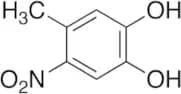
CAS:Controlled Product<p>Applications 4-Methylfluorene is a polycyclic aromatic hydrocarbon that has been found to be emitted by wastewater treatment facilities.<br>References Zhang, W., et. al.: Sci. Total Environ., 432m 396 (2012)<br></p>Formula:C14H12Color and Shape:NeatMolecular weight:180.2454-Methyl-5-nitrocatechol
CAS:Controlled Product<p>Applications MNC is on the metabolic pathway for 2,4-Dinitotoluene degradation.<br>References Spangoord, R.J., et al.: App. and Environ. Microbiology, 57, 11, 3200 (1991)<br></p>Formula:C7H7NO4Color and Shape:NeatMolecular weight:169.132-Amino-5-methylhexanoic Acid
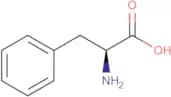
CAS:Controlled Product<p>Applications 2-amino-5-methylhexanoic acid (cas# 3558-32-5) is a useful research chemical.<br></p>Formula:C7H15NO2Color and Shape:NeatMolecular weight:145.2H-Phe-OH
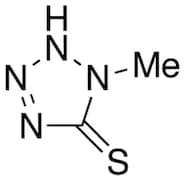
CAS:<p>M02961 - H-Phe-OH</p>Formula:C9H11NO2Purity:98%Color and Shape:SolidMolecular weight:165.192N-Methyl-5-tetrazolethiol
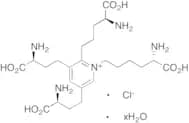
CAS:Controlled Product<p>Impurity Cefoperazone EP Impurity C<br>Applications N-Methyl-5-tetrazolethiol (Cefoperazone EP Impurity C) is an impurity of Cefoperazone.<br>References Kitson, T., et al.: Biochem. J., 175, 83 (1978), Elenbaas, R., et al.: Clin. Pharmacol. Ther., 32, 347(1982),<br></p>Formula:C2H4N4SColor and Shape:NeatMolecular weight:116.14Isodesmosine Chloride Hydrate (Synthetic)
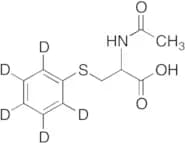
Controlled ProductFormula:C24H40N5O8·Cl·xH2OColor and Shape:NeatMolecular weight:526.61 + 35.45 + x(18.02)N-Acetyl-S-phenyl-d5-DL-cysteine
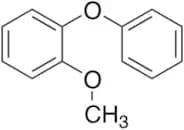
CAS:Controlled Product<p>Applications N-Acetyl-S-phenyl-d5-DL-cysteine is the deuterium labelled form of N-Acetyl-S-phenyl-DL-cysteine, which is used as a reactant in the preparation of potent HIV-1 protease inhibitors that use D-amino acids as P2/P3 ligands.<br>References Jungheim, L., et al.: J. Med. Chem., 39, 96 (1996);<br></p>Formula:C11D5H8NO3SColor and Shape:BrownMolecular weight:244.322-Methoxyphenyl Phenyl Ether
CAS:Controlled ProductFormula:C13H12O2Color and Shape:NeatMolecular weight:200.2332-((4-Phenoxyphenyl)amino)-4-methyl-1,3-thiazole-5-carboxylic acid, 95%
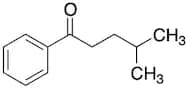
Molecular weight:326.36999511718754-Methyl-valerophenone
CAS:Controlled Product<p>Applications 4-Methyl-valerophenone is an intermediate used in the synthesis of a-Pyrrolidinoisohexanophenone (Hydrochloride) (P841230), which is a phenone derivative used for research purposes.<br>References Guo, Z.K., et al.: Marine Drugs, 16, 45/1 (2018)<br></p>Formula:C12H16OColor and Shape:NeatMolecular weight:176.253-([(TERT-BUTOXY)CARBONYL](METHYL)AMINO)CYCLOBUTANE-1-CARBOXYLIC ACID
CAS:Purity:95.0%Molecular weight:229.2760009765625(1E)-N-Methyl-2-[1-(phenylmethyl)-1H-indol-5-yl]ethenesulfonamide
CAS:Controlled Product<p>Applications Intermediate for the preparation of Naratriptan and other indole sulfonamide derivatives.<br></p>Formula:C18H18N2O2SColor and Shape:NeatMolecular weight:326.412-BENZYL-8-CHLORO-1,2,3,4-TETRAHYDROBENZO[B][1,6]NAPHTHYRIDINE-10-CARBOXYLIC ACID
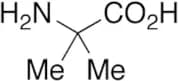
CAS:Purity:95.0%Color and Shape:Liquid, No data available.Molecular weight:352.820007324218752-Aminoisobutyric Acid (2-Methylalanine)
CAS:Controlled Product<p>Applications 2-Methylalanine is an Alanine (A481400) derivative. Alanine is an amino acid that occurs naturally in nature. It is a functional component in the alanine cycle which regulates the level of alanine aminotransferases which can be used as a diagnostic tool to predict type II diabetes.<br>References Naveed S. et al.: Diab., 53, 11 (2004); Barlind, J. et al.: Bioorg. Med. Chem. Lett., 23, 2721 (2013);<br></p>Formula:C4H9NO2Color and Shape:NeatMolecular weight:103.123-Methyl Salicylic Acid
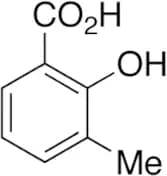
CAS:Controlled Product<p>Applications 3-Methyl Salicylic Acid is a toxic compound, it’s toxicity is similar to salicylic acid. Reagent used in manufacturing and preparation of dyes.<br>References Egorova, T. V., et al.: Tekstil'naya Promyshlennost , 3, 48 (1987); Keshavarz, M. H., et al.: J. Hazard. Mater., 237, 79 (2012)<br></p>Formula:C8H8O3Color and Shape:NeatMolecular weight:152.15(S)-2-((tert-Butoxycarbonyl)(methyl)amino)-3-cyclopropylpropanoic acid
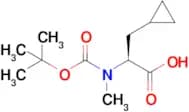
CAS:Purity:95%Molecular weight:243.30299377441406N-Acetyl-S-(3-hydroxypropyl)-L-cysteine Dicyclohexylamine Salt (unlabelled)
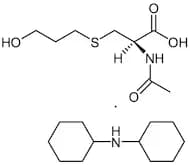
CAS:Controlled Product<p>Applications N-Acetyl-S-(3-hydroxypropyl)-L-cysteine Dicyclohexylamine Salt (unlabelled) (CAS# 14369-42-7) is a useful research compound.<br></p>Formula:C12H23N·C8H15NO4SColor and Shape:NeatMolecular weight:402.592-(1'-(tert-Butoxycarbonyl)spiro[chroman-2,4'-piperidine]-4-yl)acetic acid
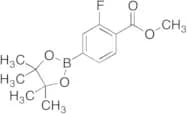
CAS:Purity:95.0%Molecular weight:361.437988281253-Fluoro-4-methoxycarbonylphenylboronic Acid, Pinacol Ester
CAS:Controlled Product<p>Applications 3-Fluoro-4-methoxycarbonylphenylboronic acid, pinacol ester is a useful intermediate for organic synthesis and other chemical transformations.<br>References Zhao, F., et al.: Eur. J. Med. Chem., 134, 147 (2017); Zhao, F., et al.: Bioorg. Med. Chem., 24, 4281 (2016)<br></p>Formula:C19H38F3NO2SColor and Shape:NeatMolecular weight:401.571[3-(4-Fluorobenzyl)-2,4-dioxo-1,3,8-triazaspiro[4.5]dec-8-yl]acetic acid
CAS:Purity:95.0%Molecular weight:335.33499145507816-Methoxy-2-naphthol
CAS:Controlled Product<p>Stability Light Sensitive<br>Applications 6-Methoxy-2-naphthol is a reactant in the development of sirtuin inhibitors from pyrazolone and isoxazol-5-one cambinol analogs.<br>References Mahajan, S.S., et. al.: J. Med. Chem., 57, 3283 (2014)<br></p>Formula:C11H10O2Color and Shape:NeatMolecular weight:174.20Boc-4-azido-L-phenylalanine
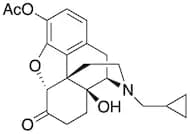
CAS:Controlled Product<p>Applications Boc-4-azido-L-phenylalanine is used in the development of visible fluorogenic dyes for cellular imaging.<br>References Qi, Jianjun., et al.; Bioconjugate Chem., 22, 1758 (2011);<br></p>Formula:C14H18N4O4Color and Shape:NeatMolecular weight:306.323-O-Acetylnaltrexone
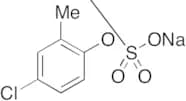
CAS:Controlled ProductFormula:C22H25NO5Color and Shape:White To Off-WhiteMolecular weight:383.444-Chloro-2-methylphenol Sulfate Sodium Salt
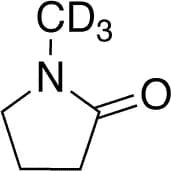
CAS:<p>Stability Unstable in methanol solution<br>Applications 4-Chloro-2-methylphenol Sulfate Sodium Salt is a halogenated derivative of o-toluenesulfonate, present in landfill leachates. o-Toluenesulfonate is an analog of the strong organic acid p-Toluenesulfonate.<br>References Riediker, S. et al.: Environ. Sci. Tech., 34, 2156 (2000);<br></p>Formula:C7H6ClNaO4SColor and Shape:NeatMolecular weight:244.6281-Methyl-2-pyrrolidinone-d3
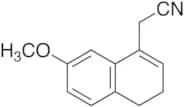
CAS:Controlled Product<p>Applications Labelled 1-Methyl-2-pyrrolidinone (M326120). It is a versatile industrial solvent. NMP is currently approved for use only in veterinary pharmaceuticals. The determination of the disposition and metabolism of NMP in the rat will contribute toward understanding the toxicology of this exogenous chemical which man may likely be exposed to in increasing amounts.<br>References Southwell, D., et al.: J. Pharm. Pharmacol., 33, 3 (1981), Barry, W., et al.: J. Invest. Dermatol., 82, 49 (1984),<br></p>Formula:C5H6D3NOColor and Shape:NeatMolecular weight:102.157-Methoxy-3,4-dihydro-1-naphthalenyl-acetonitrile
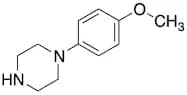
CAS:Controlled Product<p>Applications 7-Methoxy-3,4-dihydro-1-naphthalenyl-acetonitrile (cas# 861960-34-1) is a compound useful in organic synthesis.<br></p>Formula:C13H13NOColor and Shape:NeatMolecular weight:199.251-(4-Methoxyphenyl)piperazine
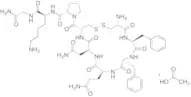
CAS:Controlled Product<p>Applications 1-(4-Methoxyphenyl)piperazine (cas# 38212-30-5) is a useful research chemical.<br></p>Formula:C11H16N2OColor and Shape:NeatMolecular weight:192.26Felypressin Acetate
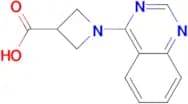
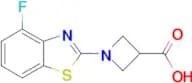
CAS:Controlled Product<p>Applications Felypressin(Octapressin) is a vasopressin 1 agonist and a peptide containing eight amino acids including cystine. Felypressin is used as a vasoconstrictor.<br>References Boissonnas, G., et al.: Helv. Chim. Acta, 43, 190 (1960), Farkas, D., et al.: Curr. Drug Metab., 6, 111 (2005), Elferink, M., et al.: Toxicol. Appl. Pharmacol., 229, 300 (2008),<br></p>Formula:C46H65N13O11S2·x(C2H4O2)Color and Shape:NeatMolecular weight:1040.221-(4-fluoro-1,3-benzothiazol-2-yl)azetidine-3-carboxylic acid
CAS:Purity:95.0%Molecular weight:252.25999450683594N-Benzyl-L-tyrosine
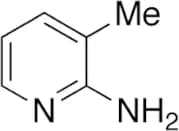
CAS:Controlled Product<p>Applications Protected L-Tyrosine (T899975), an amino acid, used by cells to synthesize proteins. L-Tyrosine is biologically converted from L-phenylalanine and is in turn is converted to L-DOPA and further converted into the neurotransmitters: dopamine, norepinephrine, and epinephrine.<br>References Rasmussen D.D. et al.: J. Clin. Endocrinol. Metab., 57, 760 (1983); Bagchi, S.P. et al.: Biochem. Pharmacol., 26, 900 (1977)<br></p>Formula:C16H17NO3Color and Shape:NeatMolecular weight:271.322-Amino-3-methylpyridine
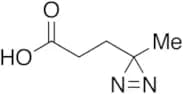
CAS:Controlled Product<p>Applications 2-Amino-3-methylpyridine is used in the synthesis of ketones from aldehydes.<br>References Jun, C. et al.: J. Org. Chem., 62, 1200 (1997); Jun, C. et al.: Angew. Chem. Int. Ed., 37, 145 (1998);<br></p>Formula:C6H8N2Color and Shape:NeatMolecular weight:108.143-Methyl-diazirine-3-propanoic Acid
CAS:Controlled Product<p>Stability Light Sensitive<br>Applications 3-Methyl-diazirine-3-propanoic Acid is a reagent used in crosslinking sugars and photoactivatable crosslinking.<br>References Tanaka, Y. et al.: J. Am. Chem. Soc., 130, 3278 (2008);<br></p>Formula:C5H8N2O2Color and Shape:NeatMolecular weight:128.134-(4-Chloro-2-methylphenoxy-d3)butyric Acid
CAS:Controlled Product<p>Applications 4-(4-Chloro-2-methylphenoxy-d3)butyric Acid (CAS# 1219803-42-5) is a useful isotopically labeled research compound.<br></p>Formula:C11D3H10ClO3Color and Shape:White To Off-WhiteMolecular weight:231.691N-Pyrazinylcarbonyl-L-phenylalanine Methyl Ester
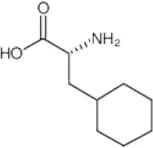
CAS:<p>Applications Used for the synthesis of Bortezomib from L-phenylalanine via dipeptidyl boronic acid ester intermediates.<br>References Zhu, Y., et al.: J. Med. Chem., 52, 4192 (2009),<br></p>Formula:C15H15N3O3Color and Shape:NeatMolecular weight:285.30(R)-D-Cyclohexylalanine
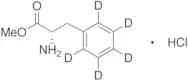
CAS:Controlled ProductFormula:C9H17NO2Color and Shape:NeatMolecular weight:171.237L-Phenylalanine-d5 Methyl Ester Hydrochloride
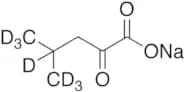
CAS:Controlled Product<p>Applications Protected (S) enantiomer of the amino acid Phenylalanine.<br>References Zhu, P., et al.: Bioorg. Med. Chem. Lett., 19, 6966 (2009), Cramer, B., et al.: Bioorg. Med. Chem., 18, 343 (2010),<br></p>Formula:C10H9D5ClNO2Color and Shape:NeatMolecular weight:220.714-Methyl-2-oxovaleric Acid-d7 Sodium Salt
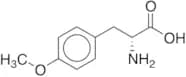
CAS:Controlled Product<p>Applications Labelled 4-Methyl-2-oxovaleric Acid, an α-ketomonocarboxylic acid that triggers insulin release by acting upon receptor sites which differ from those occupied by amino acids. 4-Methyl-2-oxovaleric Acid is an intermediate in the metabolism of Leucine.<br>References Panten, U. et al.: Naun.-Schmied. Arch. Pharmacol., 291, 405 (1975); Vague, P. et al.: Diab. Metab., 1, 185 (1975); Francois, G. et al.: Lancet, 1, 858 (1984);<br></p>Formula:C62H7H2O3·NaColor and Shape:NeatMolecular weight:159.17(R)-2-Amino-3-(4-methoxyphenyl)propanoic Acid
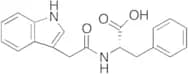
CAS:Controlled ProductFormula:C10H13NO3Color and Shape:NeatMolecular weight:195.215indole-3-acetyl-L-phenylalanine
CAS:Controlled Product<p>Applications Indole-3-acetyl-L-phenylalanine is an indole-3-acetyl-amino acid conjugate involved in regulatory mechanisms for the control of auxin activity during physiological and pathophysiological responses.<br>References Ostrowski, M., et al.: J Plant Physiol, 191, 63-72 (2016)<br></p>Formula:C19H18N2O3Color and Shape:NeatMolecular weight:322.3584-(2-chlorobenzoyl)-8-methyl-1-oxa-4,8-diazaspiro[4.5]decane-3-carboxylic acid
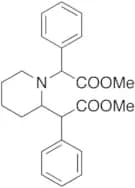
CAS:Purity:95.0%Molecular weight:338.79000854492191,2-Bismethylphenidate (Mixture of Diastereomers)
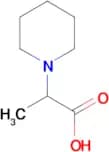
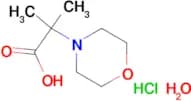
Controlled Product<p>Applications 1,2-Bismethylphenidate is an impurity of methylphenidate (M325880), an CNS stimulant.<br>References Greenblatt, E.N., et al.: J. Pharmacol. Exp. Ther., 131, 115 (1961), Padmanabhan, G.R., Anal. Profiles Drug Subs., 10, 473 (1981), Srinivas, N.R., et al.: Pharm. Res., 10, 14 (1993),<br></p>Formula:C23H27NO4Color and Shape:NeatMolecular weight:381.462-methyl-2-(4-morpholinyl)propanoic acid hydrochloride hydrate
CAS:Purity:95.0%Color and Shape:SolidMolecular weight:227.69000244140625L,L-Dityrosine Dihydrochloride
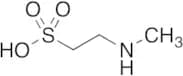
CAS:Controlled Product<p>Stability Hygroscopic<br>Applications Dityrosine (DY), a tyrosine dimer formed by 3,3’-biaryl bond formation can be used as a biomarker to detect oxidative protein damage and selective proteolysis. Fluorescence intensity decays of Dityrosine are generally characterized by two decay components, one with a lifetime in the range of 150 to 800 ps and another between 2.5 and 4.5 ns.<br>References Libertini, L., et al.: Biophys. J., 47, 765 (1985), Huggins, T., et al.: J. Biol. Chem., 268, 12341 (1993), Malencik, D., et al.: Biochemistry, 35, 4375 (1996),<br></p>Formula:C18H20N2O6·2ClHColor and Shape:NeatMolecular weight:433.28N-Methyltaurine
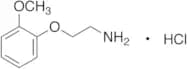
CAS:<p>Applications N-Methyltaurine can be used as a counter ion in the formation of soaps.<br>References Miyahara, Reiji, et al.: J. of Oleo Sci., 50(10), 823-830 (2001)<br></p>Formula:C3H9NO3SColor and Shape:NeatMolecular weight:139.17352-(2-Methoxyphenoxy)ethylamine Hydrochloride
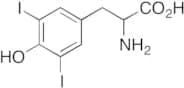
CAS:<p>Impurity Carvedilol EP Impurity E; Carvedilol Impurity E; Carvedilol USP E<br>Applications 2-(2-Methoxyphenoxy)ethylamine Hydrochloride (Carvedilol EP Impurity E; Carvedilol Impurity E; Carvedilol USP E) is an impurity of Carvedilol synthesis.<br>References Smith, L., et al.: J. Med. Chem., 20, 1653 (1977),<br></p>Formula:C9H13NO2·ClHColor and Shape:NeatMolecular weight:203.673,5-Diiodo-DL-tyrosine
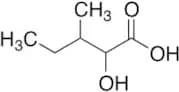
CAS:Controlled Product<p>Applications 3,5-Diiodo-DL-tyrosine is used for diagnosis of hypothyroidism caused by DEHAL1 gene defects.<br>References Encinas, S., et al.: Chem. Res. Toxicol., 11, 946 (1998), Daneshvar, A., et al.: Chemosphere, 80, 301 (2010), Eriksson, J., et al.: Photochem. Photobiol., 86, 528 (2010),<br></p>Formula:C9H9I2NO3Color and Shape:NeatMolecular weight:432.982-Hydroxy-3-methylpentanoic Acid (Mixture of Diastereomers)
CAS:Controlled Product<p>Applications 2-hydroxy-3-methylpentanoic acid (cas# 488-15-3) is a useful research chemical.<br></p>Formula:C6H12O3Color and Shape:NeatMolecular weight:132.156-Phenyl-5,6,6a,7,8,9,10,10a-octahydro-7,10-methanophenanthridine-2-carboxylic acid
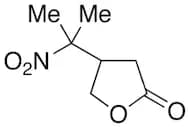
CAS:Purity:98%Molecular weight:319.403991699218754-(1-Methyl-1-nitroethyl)tetrahydrofuran-2-one
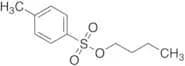
CAS:Controlled Product<p>Applications Used in the synthesis of DMPO-type spin traps.<br>References Konaka, R., et al.: Free Radical Res., 23, 15 (1995),<br></p>Formula:C7H11NO4Color and Shape:NeatMolecular weight:173.17Butyl 4-Methylbenzenesulfonate
CAS:Controlled Product<p>Applications Butyl 4-methylbenzenesulfonate (cas# 778-28-9) is a useful research chemical.<br></p>Formula:C11H16O3SColor and Shape:NeatMolecular weight:228.312-Methylindazole-3-carboxylic Acid
CAS:Controlled Product<p>Applications A reagent used to synthesize 5-HT2A and 5-HT3 receptor ligands for use in treating CNS-related disorders.<br>References Bermudez, J., et al.: J. Med. Chem., 33, 1924 (1990),<br></p>Formula:C9H8N2O2Color and Shape:NeatMolecular weight:176.173-Ethyl-3-methylheptane
CAS:Controlled Product<p>Stability Volatile<br>Applications 3-ETHYL-3-METHYLHEPTANE (cas# 17302-01-1) is a useful research chemical.<br> Not a dangerous good if item is equal to or less than 1g/ml and there is less than 100g/ml in the package<br></p>Formula:C10H22Color and Shape:NeatMolecular weight:142.28DL-Homocysteine-d4
CAS:Controlled Product<p>Applications DL-Homocysteine-d4 is used in the detection of the biosynthetic pathway for the formation of volatile aroma compound 2-methyltetrahydrothiophen-3-one by the bacterium Chitinophaga.<br>References Nawrath, T., et al.: ChemBioChem., 11, 1914-1919 (2010)<br></p>Formula:C4D4H5NO2SColor and Shape:NeatMolecular weight:139.212-Methyl-4-nitroaniline-d3
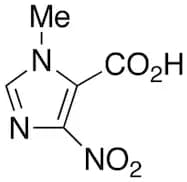
CAS:Controlled Product<p>Applications A red azoic dye.<br> Not a dangerous good if item is equal to or less than 1g/ml and there is less than 100g/ml in the package<br>References Hoover, K., et al.: Chem. Res. Toxicol., 18, 1497 (2005), Altenburger, R., et al.: Environ. Toxicol. Chem., 24, 324 (2005), Gonzalez, M., et al.: Bioorg. Med. Chem., 13, 1775 (2005),<br></p>Formula:C7H5D3N2O2Color and Shape:NeatMolecular weight:155.171-Methyl-4-nitro-1H-imidazole-5-carboxylic Acid
CAS:Controlled Product<p>Applications A derivative of imidazole used in the synthesis of heteroxanthine.<br>References Sarasin, J., et al.: Helv. Chim. Acta, 7, 713 (1924),<br></p>Formula:C5H5N3O4Color and Shape:NeatMolecular weight:171.118-benzyl-4-(2-ethylbutanoyl)-1-oxa-4,8-diazaspiro[4.5]decane-3-carboxylic acid
CAS:Purity:95.0%Molecular weight:374.4809875488281N-[(9H-Fluoren-9-ylmethoxy)carbonyl]-N-methyl-L-alloisoleucine
CAS:Controlled Product<p>Applications N-[(9H-Fluoren-9-ylmethoxy)carbonyl]-N-methyl-L-alloisoleucine, is a building block used in the synthesis of Ecumicin, which is a the potent anti-mycobacterial cyclic depsipeptide natural product.<br>References Hawkins, P. et al.: Organic Letters, Vol. 20, P: 1019-1022 (2018)<br></p>Formula:C22H25NO4Color and Shape:NeatMolecular weight:367.44(R)-3-((tert-Butoxycarbonyl)amino)-3-(naphthalen-1-yl)propanoic acid
CAS:Purity:98%Molecular weight:315.36898803710941-Chloro-3-methoxypropane
CAS:Controlled Product<p>Applications 1-Chloro-3-methoxypropane (cas# 36215-07-3) is a compound useful in organic synthesis.<br></p>Formula:C4H9ClOColor and Shape:NeatMolecular weight:108.572,2-Dimethoxy-N-methylethanamine
CAS:<p>Applications 2,2-Dimethoxy-N-methylethanamine is an impurity formed in the synthetic process of Methimazole (M260300), a thiourea antithyroid agent that prevents iodine organification,<br> Not a dangerous good if item is equal to or less than 1g/ml and there is less than 100g/ml in the package<br>References Sitar, D.S., et al.: J. Pharmacol. Exp. Ther., 184, 432 (1973), Aboul-Enein, H.Y., et al.: Anal. Profiles Drug Subs., 8, 351 (1979), Cooper, D.S., et al.: N. Engl. J. Med., 311, 1353 (1984), Atterwill, C.K., et al.: Food Chem. Toxicol., 29, 355 (1991),<br></p>Formula:C5H13NO2Color and Shape:NeatMolecular weight:119.16


![8-benzyl-4-(2-phenylacetyl)-1-oxa-4,8-diazaspiro[4.5]decane-3-carboxylic acid](/_next/image/?url=https%3A%2Fstatic.cymitquimica.com%2Fproducts%2F10%2Fthumb-webp%2FF525793.webp&w=3840&q=75)

![8-ethyl-4-(2,4,6-trimethylbenzoyl)-1-oxa-4,8-diazaspiro[4.5]decane-3-carboxylic acid](/_next/image/?url=https%3A%2Fstatic.cymitquimica.com%2Fproducts%2F10%2Fthumb-webp%2FF525711.webp&w=3840&q=75)
![2-(3-Chlorophenyl)-2-[4-(4-fluorophenyl)piperazin-1-yl]acetic acid](/_next/image/?url=https%3A%2Fstatic.cymitquimica.com%2Fproducts%2F10%2Fthumb-webp%2FF300385.webp&w=3840&q=75)

![4-[4-(dimethylamino)benzoyl]-8-methyl-1-oxa-4-azaspiro[4.5]decane-3-carboxylic acid](/_next/image/?url=https%3A%2Fstatic.cymitquimica.com%2Fproducts%2F10%2Fthumb-webp%2FF525610.webp&w=3840&q=75)




![7,10-Dichloro-2-methoxybenzo[b][1,5]naphthyridine](/_next/image/?url=https%3A%2Fstatic.cymitquimica.com%2Fproducts%2FTR%2Fthumb-webp%2FD435410.webp&w=3840&q=75)
![2-(4-(Benzo[d][1,3]dioxol-5-ylmethyl)piperazine-1-carbonyl)cyclohexane-1-carboxylic acid](/_next/image/?url=https%3A%2Fstatic.cymitquimica.com%2Fproducts%2F10%2Fthumb-webp%2FF729921.webp&w=3840&q=75)







AMINO)CYCLOBUTANE-1-CARBOXYLIC ACID](/_next/image/?url=https%3A%2Fstatic.cymitquimica.com%2Fproducts%2F10%2Fthumb-webp%2FF504133.webp&w=3840&q=75)
![(1E)-N-Methyl-2-[1-(phenylmethyl)-1H-indol-5-yl]ethenesulfonamide](/_next/image/?url=https%3A%2Fstatic.cymitquimica.com%2Fproducts%2FTR%2Fthumb-webp%2FM320600.webp&w=3840&q=75)
![2-BENZYL-8-CHLORO-1,2,3,4-TETRAHYDROBENZO[B][1,6]NAPHTHYRIDINE-10-CARBOXYLIC ACID](/_next/image/?url=https%3A%2Fstatic.cymitquimica.com%2Fproducts%2F10%2Fthumb-webp%2FF306441.webp&w=3840&q=75)
![2-(1'-(tert-Butoxycarbonyl)spiro[chroman-2,4'-piperidine]-4-yl)acetic acid](/_next/image/?url=https%3A%2Fstatic.cymitquimica.com%2Fproducts%2F10%2Fthumb-webp%2FF078168.webp&w=3840&q=75)
![[3-(4-Fluorobenzyl)-2,4-dioxo-1,3,8-triazaspiro[4.5]dec-8-yl]acetic acid](/_next/image/?url=https%3A%2Fstatic.cymitquimica.com%2Fproducts%2F10%2Fthumb-webp%2FF495292.webp&w=3840&q=75)





![4-(2-chlorobenzoyl)-8-methyl-1-oxa-4,8-diazaspiro[4.5]decane-3-carboxylic acid](/_next/image/?url=https%3A%2Fstatic.cymitquimica.com%2Fproducts%2F10%2Fthumb-webp%2FF525617.webp&w=3840&q=75)




![8-benzyl-4-(2-ethylbutanoyl)-1-oxa-4,8-diazaspiro[4.5]decane-3-carboxylic acid](/_next/image/?url=https%3A%2Fstatic.cymitquimica.com%2Fproducts%2F10%2Fthumb-webp%2FF525814.webp&w=3840&q=75)
![N-[(9H-Fluoren-9-ylmethoxy)carbonyl]-N-methyl-L-alloisoleucine](/_next/image/?url=https%3A%2Fstatic.cymitquimica.com%2Fproducts%2FTR%2Fthumb-webp%2FF588715.webp&w=3840&q=75)


