Amino Acids (AA)
Amino acids (AAs) are the fundamental building blocks of proteins, playing a crucial role in various biological processes. These organic compounds are essential for protein synthesis, metabolic pathways, and cell signaling. In this category, you will find a comprehensive range of amino acids, including essential, non-essential, and modified forms, which are vital for research in biochemistry, molecular biology, and nutritional sciences. At CymitQuimica, we provide high-quality amino acids to support your research and development needs, ensuring accuracy and reliability in your experimental outcomes.
Subcategories of "Amino Acids (AA)"
- Amino Acid Derivatives(3,955 products)
- Amino Acid and Amino Acid Related Compounds(3,436 products)
- Amino Acids with Oxygen or Sulphur(168 products)
- Boc- Amino Acids(351 products)
- Fmoc Amino Acids(1,710 products)
Found 38216 products of "Amino Acids (AA)"
Sort by
Purity (%)
0
100
|
0
|
50
|
90
|
95
|
100
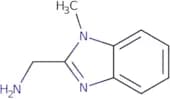
(1-Methyl-1H-benzimidazol-2-yl)methylamine
CAS:Controlled Product<p>(1-Methyl-1H-benzimidazol-2-yl)methylamine is a heterocyclic compound with the chemical formula C6H5NCH3. It is used in organic synthesis as a building block for other compounds. (1-Methyl-1H-benzimidazol-2-yl)methylamine can be synthesized by reacting methylamine and benzimidazole in solvothermal conditions, followed by purification with ionization mass spectrometry. The compound has a molecular weight of 136 g/mol and an ionization mass of 133. This compound is homolytic under standard conditions, meaning that it undergoes reaction processes that break covalent bonds using heat or light energy. This process creates ions from neutral molecules, which are then analyzed by ionization mass spectrometry to determine the composition of the molecule.</p>Formula:C9H11N3Purity:Min. 95%Color and Shape:Slightly Yellow PowderMolecular weight:161.2 g/mol(3-Phenyl-1,2,4-oxadiazol-5-yl)methanol
CAS:<p>3-Phenyl-1,2,4-oxadiazol-5-yl)methanol is a versatile building block that has been used in the synthesis of complex compounds and research chemicals. It is also a reagent that can be used in the laboratory to synthesize other fine chemicals. 3-Phenyl-1,2,4-oxadiazol-5-yl)methanol is an intermediate that can be used to create high quality and useful building blocks for chemical reactions. This compound has many uses as a scaffold in organic synthesis and it can be used to make valuable products such as pharmaceuticals and pesticides. 3-(3'-phenyl)-1,2,4-oxadiazole 5'-amine is listed on the Chemical Abstracts Service (CAS) database with number 5543-33-9.</p>Formula:C9H8N2O2Purity:Min. 95%Color and Shape:PowderMolecular weight:176.17 g/molO-tert-Butyl-L-allo-threonine
CAS:<p>O-tert-Butyl-L-allo-threonine is a methionine derivative that has been shown to be expressed in the human liver and kidney. It is synthesized by coupling of the n-terminal tryptophan with O-tert-butyl L-allo-threonine, which is then followed by a transpeptidation reaction. The resulting product can be used as an efficient insulin precursor for the production of human insulin. The efficiency of this process depends on the spacer length and reaction time, which can be optimized for each synthesis.</p>Formula:C8H17NO3Purity:Min. 95%Color and Shape:White PowderMolecular weight:175.23 g/molBoc-L-tyrosine N-hydroxysuccinimide ester
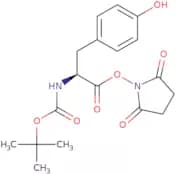
CAS:<p>Boc-L-tyrosine N-hydroxysuccinimide ester is a linker that is used for the synthesis of peptides. It has good solubility in dimethylformamide and can be incorporated into synthetic peptides. Boc-L-tyrosine N-hydroxysuccinimide ester reacts with lysine residues to form amide bonds, which are stable under physiological conditions. It also has a hydroxy group that can be used to conjugate other molecules. This linker has been used in vitro studies and clinical trials, as well as for the preparation of peptidyl conjugates for histological analysis.</p>Formula:C18H22N2O7Purity:Min. 95%Color and Shape:PowderMolecular weight:378.38 g/molCyclo(L-Ala-L-Gly)
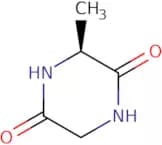
CAS:<p>Cyclo(L-Ala-L-Gly) is a synthetic peptide that has been shown to stabilize biomolecules. It was found to be a competitive inhibitor of the enzyme phospholipase A2 and has been used in protein engineering. Cyclo(L-Ala-L-Gly) has also been shown to inhibit the formation of n-oxides from H2O2 by binding with it.</p>Formula:C5H8N2O2Purity:Min. 95%Color and Shape:White PowderMolecular weight:128.13 g/molN-Methyloctylamine
CAS:<p>N-Methyloctylamine is a low energy, organic extractant that is soluble in water and ethanol. It has been shown to be an effective agent for the extraction of adenine nucleotides from acidic aqueous solutions. The hydroxyl group on the molecule enables oxidation reactions with molecules containing aldehyde groups, such as diphenyl ethers and amines. N-Methyloctylamine has also been shown to be an effective catalyst for transfer reactions between particles, such as nanoparticles.</p>Formula:C9H21NPurity:Min. 95%Color and Shape:Clear LiquidMolecular weight:143.27 g/mol5-Methoxymethylacicerone
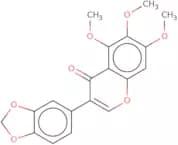
CAS:<p>5-Methoxymethylacicerone (5MMA) is an organic compound that is used in the production of polymers. It has a viscosity of approximately 12,000 cP and can be used as a thermoplastic at temperatures up to 400°C. 5MMA is also used as a viscosite component in automotive fluids and as an optical component in customized items. It is soluble in natural gas and forms a hydrophilic film on water surfaces, causing eutrophication. 5MMA can be found in natural products such as Griffonia simplicifolia.</p>Formula:C19H16O7Purity:Min. 95%Molecular weight:356.33 g/mol1-Phenyl-3-(4-chlorostyrene)pyrazole
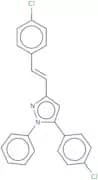
CAS:<p>1-Phenyl-3-(4-chlorostyrene)pyrazole is a high quality reagent that can be used as an intermediate in the production of complex compounds. It is also used as a building block in the synthesis of speciality chemicals, research chemicals, and versatile building blocks. 1-Phenyl-3-(4-chlorostyrene)pyrazole has been shown to be useful as a reaction component in the synthesis of fine chemicals and useful scaffolds.</p>Formula:C23H16Cl2N2Purity:Min. 95%Molecular weight:391.29 g/molBoc-2-nitro-L-phenylalanine
CAS:<p>Boc-2-nitro-L-phenylalanine is a chemical building block that has been used as an intermediate in the synthesis of other compounds. It has been shown to be a useful scaffold for the synthesis of complex compounds and can be used as a reagent in organic syntheses. Boc-2-nitro-L-phenylalanine is commercially available from several suppliers and can be purchased at low cost.</p>Formula:C14H18N2O6Purity:Min. 95%Color and Shape:PowderMolecular weight:310.3 g/molBoc-D-Tyr-OH
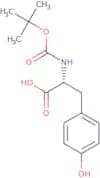
CAS:<p>Boc-D-Tyr-OH is a monomer that is used as a building block for the synthesis of sacubitril. It reacts with chlorides in the presence of a base to form Boc-D-Tyr-Cl, which can be converted to sacubitril by removal of the Boc protecting group. Boc-D-Tyr-OH can also be synthesized by reaction of biphenyl and D-Tyr with trifluoromethanesulfonic acid in the presence of a catalyst. This chemical is fluorescent and can be used as an analytical reagent for chromatographic methods. The synthetic process involves ligation of four molecules of tetrapeptides (which are linked by amide bonds) to biphenyl, followed by Suzuki coupling reaction.</p>Formula:C14H19NO5Purity:Min. 95%Color and Shape:PowderMolecular weight:281.3 g/mol1-(3-Methylphenyl)-2-nitropropene
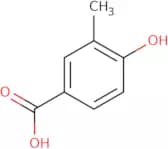
CAS:<p>1-(3-methylphenyl)-2-nitropropene is a versatile building block that is used in the synthesis of complex compounds. It is also an intermediate for the synthesis of other chemicals, such as reaction components and useful scaffolds. It has been shown to be high quality and useful as reagent and speciality chemical.</p>Formula:C10H11NO2Purity:Min. 95%Molecular weight:177.2 g/mol4-Hydroxy-3-methylbenzoic acid
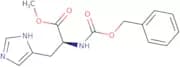
CAS:<p>4-Hydroxy-3-methylbenzoic acid is a metabolite of 4-hydroxybenzoic acid that is found in human blood and serum. It is also a methylated derivative of benzoic acid. This compound is an intermediate in the metabolism of benzoic acid, which can be found in many plants such as cranberries, apples, and oranges.</p>Formula:C8H8O3Color and Shape:PowderMolecular weight:152.15 g/molNa-Z-L-histidine methyl ester
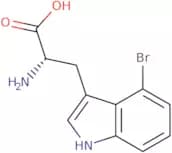
CAS:<p>Na-Z-L-histidine methyl ester is a solvent that is used in the synthesis of peptides. It is a low water, hydrophobic, and thermodynamically stable liquid that is soluble in dimethylformamide. Na-Z-L-histidine methyl ester is also an amide with a trifluoroacetic acid group and can be used to synthesize solid phase peptides. The compound has been shown to have thyrotropin releasing effects on rats when administered intravenously.</p>Formula:C15H17N3O4Purity:Min. 95%Color and Shape:White PowderMolecular weight:303.31 g/mol4-Bromo-L-tryptophan
CAS:<p>4-Bromo-L-tryptophan is an amino acid that is used in the synthesis of biomimetic molecules. It is synthesized by allylation with bromine and then chromatographically purified. 4-Bromo-L-tryptophan can also be used to study the biosynthesis of tryptophan. 4-Bromo-L-tryptophan has a molecular weight of 204.2 daltons and a pKa of 5.72, which makes it acidic at physiological pH values. The compound spontaneously forms anhydride with hydroxytryptophan, which stabilizes it and prevents hydrolysis reactions. The optimum temperature for enzymatic activity is 160 degrees Celsius, and kinetic constants have been determined at this temperature as well as at 100 degrees Celsius. Catalytic asymmetric synthesis has also been accomplished using 4-bromo L tryptophan as a substrate.</p>Formula:C11H11BrN2O2Purity:Min. 95%Color and Shape:Slightly Yellow PowderMolecular weight:283.12 g/molPoly[2-methoxy-5-(2-ethylhexyloxy)-1,4-phenylenevinylene] - M.W. average 10,000-100,000
CAS:<p>Poly[2-methoxy-5-(2-ethylhexyloxy)-1,4-phenylenevinylene] (MEH-PPV) is a polymer that has been extensively studied in the past. It has an average molecular weight of 10,000 to 100,000 and exhibits semiconducting properties. MEH-PPV can be synthesized by chemical sulfonation of MEH-PPV with sulfuric acid followed by addition of potassium hydroxide. This process yields a polymer that is soluble in organic solvents. The degree of sulfonation can be controlled by adjusting the ratio of sulfuric acid to MEH-PPV. MEH-PPV can also be synthesized from vinyl alcohol and vinylene monomers by free radical polymerization or copolymerization reactions. In this process, vinyl alcohol and vinylene are copolymerized to form polymers with alternating ethylene glycol and phenylethynyl moieties.</p>Formula:(C17H24O2)nPurity:Min. 95%Color and Shape:Red Powder4'-Trifluoromethoxy-β-methyl-β-nitrostyrene
CAS:<p>4'-Trifluoromethoxy-beta-methyl-beta-nitrostyrene is a fine chemical that is a useful building block in organic synthesis. It can be used as a reagent, specialty chemical, or intermediate for the preparation of more complex compounds. This compound has been shown to be useful in the synthesis of natural products and pharmaceuticals.</p>Formula:C10H8F3NO3Purity:Min. 95%Molecular weight:247.17 g/mol2-Methyl-5,6-dihydro-4H-pyrrolo[3,4-d]thiazole
CAS:<p>2-Methyl-5,6-dihydro-4H-pyrrolo[3,4-d]thiazole is a chemical compound that is used as a research chemical and in the synthesis of other compounds. It is also used as a speciality chemical and reagent. 2-Methyl-5,6-dihydro-4H-pyrrolo[3,4-d]thiazole has been used as a building block for the preparation of other compounds and can be found in complex natural products. The compound has shown to be versatile since it can be easily converted into other compounds through reaction with different functional groups.</p>Formula:C6H8N2SPurity:Min. 95%Color and Shape:SolidMolecular weight:140.21 g/mol6-Amino-8-methyl-2H-1,4-benzoxazin-3(4H)-one
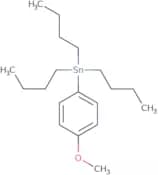
CAS:<p>6-Amino-8-methyl-2H-1,4-benzoxazin-3(4H)-one is a fine chemical that is a useful building block for research chemicals and speciality chemicals. It can be used as a reagent in organic synthesis, as well as in the production of high quality and versatile building blocks. 6-Amino-8-methyl-2H-1,4-benzoxazin-3(4H)-one can be reacted to form useful scaffolds or intermediates that are valuable in the process of making complex compounds.</p>Formula:C9H10N2O2Purity:Min. 95%Color and Shape:PowderMolecular weight:178.19 g/molTributyl-(4-methoxy-phenyl)-stannane
CAS:Controlled Product<p>Tributyl-(4-methoxy-phenyl)-stannane is a nucleophilic compound that can be used to synthesize 5-HT1A receptor agonists. It has been shown to have biochemical, positron and chloride properties. This chemical is synthesised by introducing a sulfur atom into the molecule. The sulfur atom reacts with the chlorine atom in chlorobenzene to form the sulfonation bond. This reaction is efficient and can be used as a method for cleaving bonds and cross-coupling carbon atoms.</p>Formula:C19H34OSnPurity:Min. 95%Color and Shape:PowderMolecular weight:397.18 g/mol7-Methyladenine
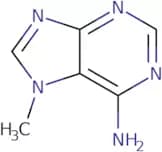
CAS:<p>7-Methyladenine is a nitrogen-containing compound that has been shown to cause an increase in renal blood flow. It is also a synthetic estrogen. 7-Methyladenine is mainly metabolized by methylation, and it can be detected in urine samples. This substance has been shown to have a direct effect on cardiac contractility and blood pressure. 7-Methyladenine also has the ability to stimulate the growth of cells and tissues, as well as being able to inhibit the synthesis of certain proteins.</p>Formula:C6H7N5Purity:Min. 95%Color and Shape:White To Off-White SolidMolecular weight:149.15 g/mol





![Poly[2-methoxy-5-(2-ethylhexyloxy)-1,4-phenylenevinylene] - M.W. average 10,000-100,000](/_next/image/?url=https%3A%2Fstatic.cymitquimica.com%2Fproducts%2F3D%2Fthumb-webp%2FFP165854.webp&w=3840&q=75)

![2-Methyl-5,6-dihydro-4H-pyrrolo[3,4-d]thiazole](/_next/image/?url=https%3A%2Fstatic.cymitquimica.com%2Fproducts%2F3D%2Fthumb-webp%2FFM51472.webp&w=3840&q=75)