Amino Acids (AA)
Amino acids (AAs) are the fundamental building blocks of proteins, playing a crucial role in various biological processes. These organic compounds are essential for protein synthesis, metabolic pathways, and cell signaling. In this category, you will find a comprehensive range of amino acids, including essential, non-essential, and modified forms, which are vital for research in biochemistry, molecular biology, and nutritional sciences. At CymitQuimica, we provide high-quality amino acids to support your research and development needs, ensuring accuracy and reliability in your experimental outcomes.
Subcategories of "Amino Acids (AA)"
- Amino Acid Derivatives(3,955 products)
- Amino Acid and Amino Acid Related Compounds(3,436 products)
- Amino Acids with Oxygen or Sulphur(168 products)
- Boc- Amino Acids(351 products)
- Fmoc Amino Acids(1,710 products)
Found 38216 products of "Amino Acids (AA)"
Sort by
Purity (%)
0
100
|
0
|
50
|
90
|
95
|
100
2-Bromo-4-methylphenol
CAS:<p>2-Bromo-4-methylphenol is an organic compound that has interactive effects with hydrochloric acid, molybdenum, and trifluoromethanesulfonic acid. It is soluble in water vapor, but insoluble in polyvinyl. 2-Bromo-4-methylphenol reacts with sodium hydroxide solution to form a hydroxide solution and sodium carbonate. The reaction product of 2-bromo-4-methylphenol with triterpenoid saponin produces fatty acids. This reaction occurs because the hydroxide ion from the sodium hydroxide solution attacks the ester group of the saponin, forming an alcohol group on one end and a carboxylic acid group on the other end. The benzyl groups are removed by hydrogenation to produce phenol.</p>Formula:C7H7BrOPurity:Min. 95%Molecular weight:187.03 g/mol5-Acetoxy-6-methoxyindole
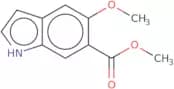
CAS:<p>5-Acetoxy-6-methoxyindole is a fine chemical, useful building block, and research chemical with CAS No. 112919-69-4. It is a versatile building block and reaction component that can be used as a reagent or speciality chemical in the synthesis of other complex compounds. 5-Acetoxy-6-methoxyindole is also used as an intermediate in the synthesis of drugs and pharmaceuticals. This compound has high purity, making it a high quality product with many uses.</p>Formula:C11H11NO3Purity:Min. 95%Molecular weight:205.21 g/mol6-Amino-8-methyl-2H-1,4-benzoxazin-3(4H)-one
CAS:<p>6-Amino-8-methyl-2H-1,4-benzoxazin-3(4H)-one is a fine chemical that is a useful building block for research chemicals and speciality chemicals. It can be used as a reagent in organic synthesis, as well as in the production of high quality and versatile building blocks. 6-Amino-8-methyl-2H-1,4-benzoxazin-3(4H)-one can be reacted to form useful scaffolds or intermediates that are valuable in the process of making complex compounds.</p>Formula:C9H10N2O2Purity:Min. 95%Color and Shape:PowderMolecular weight:178.19 g/molEthyl1-boc-4-allyl-4-piperidinecarboxylate
CAS:<p>Ethyl1-boc-4-allyl-4-piperidinecarboxylate is a reagent, high quality, complex compound, useful intermediate, fine chemical, useful scaffold, useful building block, speciality chemical and research chemicals. It is used as a versatile building block for synthesis of drugs. Ethyl1-boc-4-allyl-4-piperidinecarboxylate is also used in reactions to synthesize new compounds with varied structures and properties. This product can be used in the production of various types of pharmaceuticals and other chemical products.</p>Formula:C16H27NO4Purity:Min. 95%Molecular weight:297.39 g/molFmoc-S-methyl-L-cyseteine
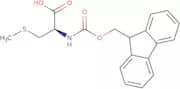
CAS:<p>Fmoc-S-methyl-L-cysteine is a versatile, high quality building block for the synthesis of complex compounds. It is an intermediate in the synthesis of pharmaceuticals and other organic compounds. Fmoc-S-methyl-L-cysteine can be used as a reagent or as a speciality chemical in research. This product is also useful in the synthesis of peptides and proteins. In addition, it can be used as a reaction component or scaffold for drug design.</p>Formula:C19H19NO4SPurity:Min. 95%Color and Shape:PowderMolecular weight:357.42 g/molFmoc-D-Aph(Hor)-OH
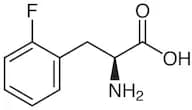
<p>Fmoc-D-Aph(Hor)-OH is a versatile building block that is used in the synthesis of complex compounds. It can be used as a reaction component to make fine chemicals. Fmoc-D-Aph(Hor)-OH has CAS Number 58955-02-1 and is classified as a speciality chemical. This product has high quality and is useful for research purposes.</p>Formula:C29H26N4O7Purity:Min. 95%Color and Shape:PowderMolecular weight:542.54 g/mol2-Fluoro-L-phenylalanine
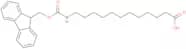
CAS:Formula:C9H10FNO2Purity:>96.0%(T)Color and Shape:White to Light yellow powder to crystalMolecular weight:183.18Fmoc-12-aminododecanoic acid
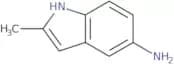
CAS:<p>Fmoc-12-aminododecanoic acid is a synthetic amino acid that has been shown to lower blood pressure in both animal and human studies. It binds to albumin, which regulates the passage of substances into and out of the bloodstream, and also binds to b2 receptors that regulate the release of insulin from pancreatic cells. Fmoc-12-aminododecanoic acid has also been shown to inhibit cancer cell growth in vitro and has been used as an anti-cancer agent in animal experiments. This drug also inhibits bacterial growth by binding to a transporter protein, preventing uptake of glucose. Fmoc-12-aminododecanoic acid is a substrate for 4-tert butylbenzoic acid (4TBBA), which is taken up by bacteria such as P. aeruginosa at high rates.</p>Formula:C27H35NO4Purity:Min. 95%Molecular weight:437.57 g/mol5-Amino-2-methylindole
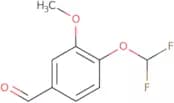
CAS:<p>5-Amino-2-methylindole is a hyaluronic acid inhibitor that has been shown to have an inhibitory effect on the growth of some bacteria. It inhibits the synthesis of bacterial enzymes and growth factors, which are required for bacterial cell division. 5-Amino-2-methylindole also inhibits the production of a number of important enzymes in bacteria, including benzofuran derivatives, as well as p. aeruginosa. This drug is used as a topical treatment in cases where there is tissue damage or inflammation. 5-Amino-2-methylindole has been shown to be effective against gram positive bacteria such as Streptococcus pyogenes and Enterococcus faecalis, but not against gram negative bacteria such as Pseudomonas aeruginosa or Escherichia coli.</p>Formula:C9H10N2Purity:Min. 95%Color and Shape:Yellow To Dark Brown SolidMolecular weight:146.19 g/mol3-Methoxy-4-(difluoromethoxy)benzaldehyde
CAS:<p>3-Methoxy-4-(difluoromethoxy)benzaldehyde is a chemical compound that has been found to have anti-tumor properties. It inhibits tumor cells by inducing cell apoptosis. 3-Methoxy-4-(difluoromethoxy)benzaldehyde induces apoptosis in human carcinoma cells, with optimal activity at doses of 10 micromolar and higher. This chemical can be used as an anti-tumor agent because it shows no genotoxic effects, and has high yield with a low toxicity profile. When this compound is exposed to UV radiation, the formation of reactive oxygen species (ROS) increases the rate of cell death. 3-Methoxy-4-(difluoromethoxy)benzaldehyde also has anti-inflammatory properties, which may be due to its ability to inhibit prostaglandin synthesis.</p>Formula:C9H8F2O3Purity:Min. 95%Color and Shape:Colourless To Pale Yellow LiquidMolecular weight:202.15 g/mol1-(2-Hydroxyethyl)-4-methylpiperazine
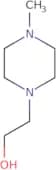
CAS:<p>1-(2-Hydroxyethyl)-4-methylpiperazine is an organic compound with the formula CHN(CHOH)CHNH. It is a colorless, viscous liquid that is soluble in water and has a pungent odor. The chemical is used as a viscosity control agent and as an intermediate in the manufacture of other chemicals. 1-(2-Hydroxyethyl)-4-methylpiperazine can be synthesized by the reaction of ethylene oxide with amines, or by quaternization of diethanolamine with chloroethane. 1-(2-Hydroxyethyl)-4-methylpiperazine is used in industrial applications such as in ion exchange resins and to control the viscosity of drilling fluids. It has been detected at low levels in surface waters and soils, where it may be derived from wastewater treatment plants or atmospheric deposition.</p>Formula:C7H16N2OPurity:Min. 95%Color and Shape:PowderMolecular weight:144.21 g/mol2-Chloro-6-methylnicotinic acid
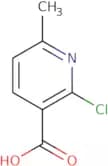
CAS:<p>2-Chloro-6-methylnicotinic acid is a protonated nicotinic acid derivative with potent inhibitory activity against hepatitis C virus. It has been shown to inhibit the replication of the virus by competitive inhibition at the 2-chloro-6-methylnicotinic acid site on the viral genome. It also inhibits the synthesis of viral proteins, which are necessary for viral replication. The molecule has been shown to have an inhibitory effect on other RNA viruses such as influenza and HIV, but it is not active against DNA viruses such as herpes simplex or adenovirus. 2-Chloro-6-methylnicotinic acid is absorbed orally and its pharmacokinetic properties are well understood. This compound can be used as a probe in supramolecular chemistry to study hydrogen bonding and biomolecular interactions.</p>Formula:C7H6ClNO2Purity:Min. 95%Color and Shape:Yellow SolidMolecular weight:171.58 g/molFmoc-cis-4-aminocyclohexane carboxylic acid
CAS:<p>Fmoc-cis-4-aminocyclohexane carboxylic acid is a reagent, useful for the synthesis of complex compounds. It is also used as an intermediate in the production of fine chemicals and speciality chemicals. In addition, it is a versatile building block that can be used to synthesize many different types of compounds, including pharmaceuticals and pesticides. Fmoc-cis-4-aminocyclohexane carboxylic acid is a high quality compound with a CAS number of 147900-45-6. It has been shown to be an effective scaffold for the synthesis of novel reaction components.</p>Formula:C22H23NO4Purity:Min. 95%Color and Shape:White/Off-White SolidMolecular weight:365.42 g/mol[2-(6-Methylpyridin-2-yl)ethyl]amine
CAS:<p>2-(6-Methylpyridin-2-yl)ethyl]amine is a reagent that is used as a building block for the synthesis of heterocycles. It is used in the preparation of various complex compounds, such as 2-(6-methylpyridin-2-yl)ethylamine hydrochloride, 2-(6-methylpyridin-2-yl)ethylamine hydrobromide, and 2-[(6-methylpyridin-2-yl)ethyl]amine hydrochloride. This chemical can be used as an intermediate in the synthesis of fine chemicals or speciality chemicals. It has CAS No. 19363-94-1 and is an important research chemical with versatile uses in organic synthesis reactions.</p>Formula:C8H12N2Purity:Min. 95%Color and Shape:Colourless LiquidMolecular weight:136.19 g/molD-Alanine methyl ester HCl
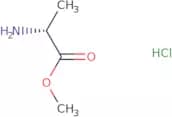
CAS:<p>D-Alanine methyl ester HCl is a diamide with antimycobacterial activity. It was synthesized by the reaction of D-alanine and methyl acrylate in the presence of methanesulfonic acid. The chiral compound was obtained as a racemic mixture. Optical properties are not reported.</p>Formula:C4H9NO2HCIPurity:Min. 95%Color and Shape:White To Off-White SolidMolecular weight:243.04 g/molFmoc-glycinol
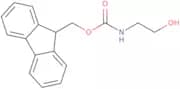
CAS:<p>Fmoc-glycinol is a synthetase that is used to synthesize glycinol conjugates. It binds to the receptor on Gram-positive bacteria and blocks the synthesis of bacterial cell wall, leading to cell death. Fmoc-glycinol has been shown to have high binding constants with amines and an acyl chain, which allows it to bind with antigen. Fmoc-glycinol also has strong nucleophilic properties that allow it to react with chloride ions in water and other polar solvents. This reaction mechanism leads to the formation of a new bond between two molecules, which is called a glycinol linkage.</p>Formula:C17H17NO3Purity:Min. 95%Color and Shape:White PowderMolecular weight:283.32 g/mol4-Phenoxybenzyl alcohol
CAS:<p>4-Phenoxybenzyl alcohol is an organic compound that is used as a reagent in the introduction of fatty acids. It has been used to study the fluidity, disulfides, and amide bonds of fatty acid chains. 4-Phenoxybenzyl alcohol also has been shown to inhibit lipase activity. In vitro assays have demonstrated that it can inhibit monoacylglycerol lipase, which is a key enzyme for the hydrolysis of endocannabinoids such as 2-arachidonoylglycerol. 4-Phenoxybenzyl alcohol has also been shown to be a potent inhibitor of potassium phosphate esterase and monoacylglycerol lipase in vitro.</p>Formula:C13H12O2Purity:Min. 95%Color and Shape:PowderMolecular weight:200.23 g/molNα-[(9H-Fluoren-9-ylmethoxy)carbonyl]-N1-tert-butoxycarbonyl-L-tryptophan
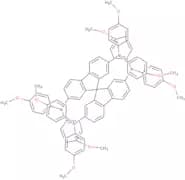
CAS:Formula:C31H30N2O6Purity:>97.0%(HPLC)Color and Shape:White to Orange to Green powder to crystalMolecular weight:526.592,2',7,7'-Tetrakis-(N,N-di-4-methoxyphenylamino)-9,9'-spirobifluorene - Sublimed grade
CAS:<p>2,2',7,7'-Tetrakis-(N,N-di-4-methoxyphenylamino)-9,9'-spirobifluorene (TPB) is a model system for investigating the transport of light signal in polymers. TPB can be used as a component in solar cells to increase their efficiency and improve their resistance to heat. TPB has shown high resistance to hydrochloric acid and other aggressive chemicals. TPB has been shown to be an effective photoelectron donor with a redox potential that is close to the one of copper; this property can be used for electrochemical impedance spectroscopy.</p>Formula:C81H68N4O8Purity:Min. 95%Color and Shape:Off-white to yellow solid.Molecular weight:1,225.43 g/molBoc-Phe-Pro-OH
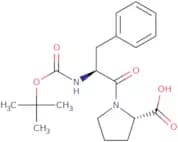
CAS:<p>Boc-Phe-Pro-OH is an opioid receptor agonist. It binds to the δ opioid receptors and activates them, which leads to analgesic effects. Boc-Phe-Pro-OH also has antibacterial properties and can be used for the treatment of bacterial infections. This compound may also have antiinflammatory properties that are mediated by its ability to inhibit prostaglandin synthesis. Boc-Phe-Pro-OH has been shown to possess a high affinity for the μ opioid receptor, but does not activate this receptor subtype.</p>Formula:C19H26N2O5Purity:Min. 95%Color and Shape:White To Off-White SolidMolecular weight:362.42 g/mol







![[2-(6-Methylpyridin-2-yl)ethyl]amine](/_next/image/?url=https%3A%2Fstatic.cymitquimica.com%2Fproducts%2F3D%2Fthumb-webp%2FFM123522.webp&w=3840&q=75)

![Nα-[(9H-Fluoren-9-ylmethoxy)carbonyl]-N1-tert-butoxycarbonyl-L-tryptophan](/_next/image/?url=https%3A%2Fstatic.cymitquimica.com%2Fproducts%2F3B%2Fthumb-webp%2FF0507.webp&w=3840&q=75)