Amino Acids (AA)
Amino acids (AAs) are the fundamental building blocks of proteins, playing a crucial role in various biological processes. These organic compounds are essential for protein synthesis, metabolic pathways, and cell signaling. In this category, you will find a comprehensive range of amino acids, including essential, non-essential, and modified forms, which are vital for research in biochemistry, molecular biology, and nutritional sciences. At CymitQuimica, we provide high-quality amino acids to support your research and development needs, ensuring accuracy and reliability in your experimental outcomes.
Subcategories of "Amino Acids (AA)"
- Amino Acid Derivatives(3,955 products)
- Amino Acid and Amino Acid Related Compounds(3,420 products)
- Amino Acids with Oxygen or Sulphur(168 products)
- Boc- Amino Acids(351 products)
- Fmoc Amino Acids(1,710 products)
Found 38200 products of "Amino Acids (AA)"
Sort by
Purity (%)
0
100
|
0
|
50
|
90
|
95
|
100
4-(Aminomethyl)-3-phenylbutyric acid hydrochloride
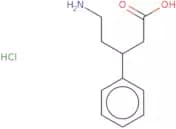
CAS:<p>4-(Aminomethyl)-3-phenylbutyric acid hydrochloride is a reagent that can be used as a building block in synthesizing new chemical compounds. It is also an intermediate for the synthesis of 4-(aminomethyl)benzoic acid, which is useful for producing pharmaceuticals, pesticides, and other agrochemicals. 4-(Aminomethyl)-3-phenylbutyric acid hydrochloride has a CAS number of 860252-34-2 and can be used in reactions with a variety of reagents to produce fine chemicals, research chemicals, and speciality chemicals.</p>Formula:C11H16ClNO2Purity:Min. 95%Molecular weight:229.7 g/mol(3-Phenyl-1,2,4-oxadiazol-5-yl)methanol
CAS:<p>3-Phenyl-1,2,4-oxadiazol-5-yl)methanol is a versatile building block that has been used in the synthesis of complex compounds and research chemicals. It is also a reagent that can be used in the laboratory to synthesize other fine chemicals. 3-Phenyl-1,2,4-oxadiazol-5-yl)methanol is an intermediate that can be used to create high quality and useful building blocks for chemical reactions. This compound has many uses as a scaffold in organic synthesis and it can be used to make valuable products such as pharmaceuticals and pesticides. 3-(3'-phenyl)-1,2,4-oxadiazole 5'-amine is listed on the Chemical Abstracts Service (CAS) database with number 5543-33-9.</p>Formula:C9H8N2O2Purity:Min. 95%Color and Shape:PowderMolecular weight:176.17 g/mol1-Methyl-N-(9-methyl-9-azabicyclo[3.3.1]non-3-yl)-indazole-3-carboxamide
CAS:Controlled Product<p>1-Methyl-N-(9-methyl-9-azabicyclo[3.3.1]non-3-yl)-indazole-3-carboxamide is a chemical inhibitor of the 5HT2 receptor, which is responsible for regulating nausea and vomiting. It has been shown to have antiemetic properties, and can be used in chemotherapy to control nausea and vomiting. The 5HT2 receptor is coupled to Gs proteins and inhibits adenylyl cyclase activity, while 1MMAI binds to the 5HT2A receptor and blocks serotonin from binding. This prevents serotonin from activating Gq protein receptors, which are involved in the generation of intracellular calcium concentrations that lead to neurotransmitter release. 1MMAI also inhibits the activation of phospholipase C by serotonin, resulting in decreased levels of diacylglycerol (DAG) and inositol triphosphate (IP3). These changes inhibit plate</p>Formula:C18H24N4OPurity:Min. 95%Color and Shape:White Off-White PowderMolecular weight:312.41 g/molFmoc-4-amino-L-phe(t-butyl-carbamoyl)-OH
<p>Fmoc-4-amino-L-phe(t-butyl-carbamoyl)-OH is a versatile building block that is used in the synthesis of complex compounds. This compound has been found to be useful as a reagent, speciality chemical, and reaction component for the synthesis of high quality and useful intermediates. Fmoc-4-amino-L-phe(t-butyl carbamoyl)-OH is also a useful scaffold for the production of novel compounds.</p>Formula:C29H31N3O5Purity:Min. 95%Color and Shape:PowderMolecular weight:501.57 g/mol2-Fluoro-5-methylpyridine-3-boronic acid
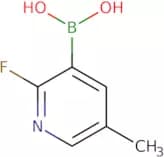
CAS:<p>2-Fluoro-5-methylpyridine-3-boronic acid is a high quality chemical with CAS No. 1072952-45-4 that is a useful building block for the synthesis of complex compounds and speciality chemicals. 2-Fluoro-5-methylpyridine-3-boronic acid is also a versatile building block that can be used in organic reactions as a reaction component for the synthesis of speciality chemicals and other reagents. It can also be used to make fluoroquinolones and related pharmaceuticals, which are used to treat bacterial infections. This compound has many uses in research, including being a valuable scaffold for the synthesis of new drugs.</p>Formula:C6H7BFNO2Purity:Min. 95%Color and Shape:White PowderMolecular weight:154.93 g/mol(2S,4R)-Boc-4-hydroxypiperidine-2-carboxylic acid
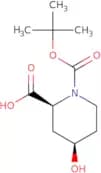
CAS:<p>(2S,4R)-Boc-4-hydroxypiperidine-2-carboxylic acid is a fine chemical that is used as an intermediate in organic synthesis. It has been shown to be a versatile building block for the construction of complex compounds. (2S,4R)-Boc-4-hydroxypiperidine-2-carboxylic acid is also a speciality chemical with many applications in the research field.</p>Formula:C11H19NO5Purity:Min. 95%Color and Shape:PowderMolecular weight:245.27 g/molGly-pro-4-methoxy-β-naphthylamide
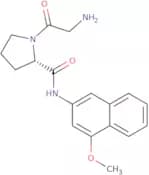
CAS:<p>Gly-pro-4-methoxy-beta-naphthylamide is a synthetic substrate that is used to measure the activity of human plasma phosphatases. Gly-pro-4-methoxy-beta-naphthylamide is synthesized in an organic solvent and then reacted with diazonium salt to form a glycosylated aminophosphonic acid. The product is purified by chromatography and identified by mass spectrometry. Gly-pro-4-methoxy beta naphthylamide has been shown to inhibit the growth of cancer cells in vitro, as well as having antiinflammatory properties. This drug also has been shown to be effective in treating patients with severe hyperbilirubinemia who are undergoing hematopoietic stem cell transplantation.</p>Formula:C18H21N3O3Purity:Min. 95%Molecular weight:327.38 g/mol4-Methoxy-3,5-dimethyl-2-pyridinecarboxaldehyde
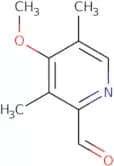
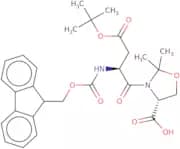
CAS:<p>4-Methoxy-3,5-dimethyl-2-pyridinecarboxaldehyde is a trifunctional molecule that has been shown to suppress the growth of cancer cells in mice. This compound is an inhibitor of acid synthesis and has also been shown to be an antirheumatic drug. 4-Methoxy-3,5-dimethyl-2-pyridinecarboxaldehyde inhibits the activity of three enzymes: synthetase, an enzyme that synthesizes fatty acids; 3-ketoacyl CoA synthase, which synthesizes ketones; and enoyl CoA reductase, which produces fatty acids. The long term efficacy of this molecule has not yet been studied in humans.</p>Formula:C9H11NO2Purity:Min. 95%Color and Shape:Colourless LiquidMolecular weight:165.19 g/molFmoc-Asp(OtBu)-D-Ser(Psi(Me,Me)pro)-OH
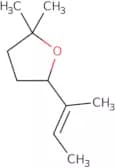
<p>Fmoc-Asp(OtBu)-D-Ser(Psi(Me,,Me)pro)-OH is a high quality, reagent, complex compound, useful intermediate, fine chemical, useful scaffold, and speciality chemical that is used in the synthesis of peptides and other organic compounds. It can be used as a reaction component for the synthesis of peptides and other organic compounds. This building block is versatile with many different functional groups and can be used in a wide variety of reactions. Fmoc-Asp(OtBu)-D-Ser(Psi(Me,,Me)pro)-OH is also a reaction component that can be used to make various drugs or pharmaceuticals.</p>Formula:C29H34N2O8Purity:Min. 95%Color and Shape:White PowderMolecular weight:538.59 g/mol2,2-Dimethyl-5-(1-methylprop-1-enyl)tetrahydrofuran
CAS:<p>2,2-Dimethyl-5-(1-methylprop-1-enyl)tetrahydrofuran is a compound that is used in coatings and foodstuff. It has synergistic effects when combined with other compounds such as citric acid, hydrogen peroxide, or terpineol.</p>Formula:C10H18OPurity:Min. 95%Color and Shape:Clear LiquidMolecular weight:154.25 g/molDL-glutamine
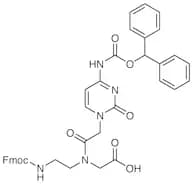
CAS:<p>DL-glutamine is a non-essential amino acid that is needed for protein synthesis, energy production, and the function of gut cells. It is found in many foods such as dairy products and meat. L-glutamic acid is synthesized from DL-glutamine by bacteria in the intestines and can be used as a nitrogen source by other bacteria. Butyric acid is produced as a result of bacterial fermentation of DL-glutamine, which can have effects on the liver cells. The cellular morphology of liver cells changes when exposed to butyric acid.</p>Formula:C5H10N2O3Purity:Min. 95%Color and Shape:White PowderMolecular weight:146.14 g/molFmoc-PNA-C(Bhoc)-OH
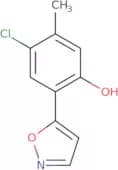
CAS:Formula:C39H35N5O8Purity:>98.0%(HPLC)(qNMR)Color and Shape:White to Light yellow powder to crystalMolecular weight:701.745-(5'-Chloro-2'-hydroxy-4'-methylphenyl)-isoxazole
CAS:<p>5-(5'-Chloro-2'-hydroxy-4'-methylphenyl)-isoxazole is a fine chemical that is an intermediate in the synthesis of other chemicals. It has been used as a reaction component, complex compound and research chemical. 5-(5'-Chloro-2'-hydroxy-4'-methylphenyl)-isoxazole is a versatile building block that can be used to synthesize many different chemicals, including pharmaceuticals, dyes, agrochemicals and pesticides. This compound has been shown to be useful as a reagent in the synthesis of high quality products.</p>Formula:C10H8ClNO2Purity:Min. 95%Color and Shape:PowderMolecular weight:209.63 g/molH-Val-Tyr-OH
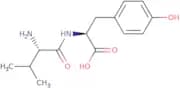
CAS:<p>H-Val-Tyr-OH is an organic compound that is used as a research tool. It has been shown to inhibit angiotensin system and tubule cells in vitro. H-Val-Tyr-OH has also been shown to be active against Proteus aeruginosa, which is responsible for virulent sepsis in humans. The mechanism of action for H-Val-Tyr-OH is not known, but it may involve the hydroxyl group or the proximal tubules. H-Val-Tyr-OH can be synthesized from a variety of chemical reagents, including trifluoroacetic acid and hydrochloric acid. In addition, H-Val Tyr OH can be produced by using biological samples such as wheat germ and human test samples.</p>Formula:C14H20N2O4Purity:Min. 95%Color and Shape:PowderMolecular weight:280.32 g/molAcetyl-L-valine
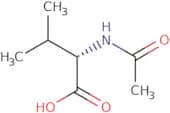
CAS:<p>Acetyl-L-valine is a synthetic amino acid that is used to treat metabolic disorders. It is also used as a model system for the study of enzyme activity and has been shown to have anticancer properties, although this has not been proven in clinical trials. Acetyl-L-valine inhibits copper complex formation, which may be due to its ability to form intramolecular hydrogen bonds with the copper, or by reacting with protonated fatty acids. This amino acid is also a specific treatment for some forms of radiation damage.</p>Formula:C7H13NO3Purity:Min. 95%Color and Shape:PowderMolecular weight:159.18 g/molFmoc-Dap(Z)-OH
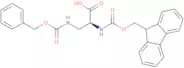
CAS:<p>Fmoc-Dap(Z)-OH is a versatile building block that has been used as a reagent, speciality chemical and useful intermediate. It has also been used in the synthesis of pharmaceuticals, such as anti-inflammatory drugs and antibiotics. Fmoc-Dap(Z)-OH is an important building block for the synthesis of complex compounds with high quality and useful scaffolds.</p>Formula:C26H24N2O6Purity:Min. 98 Area-%Color and Shape:PowderMolecular weight:460.48 g/mol4-Phenyl-3-buten-2-one
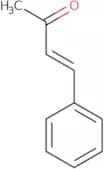
CAS:<p>4-Phenyl-3-buten-2-one (4PB) is a structural analog of benzalacetone, which is an inhibitor of cytochrome P450. It has been shown to inhibit the activities of various cytochrome P450 enzymes in vitro. 4PB can be used as a substrate molecule for chemical synthesis and as a cell specific marker. The basic structure of 4PB has been determined using electrochemical impedance spectroscopy and x-ray crystal structures.</p>Formula:C10H10OPurity:Min. 95%Color and Shape:PowderMolecular weight:146.19 g/molBoc-L-tyrosine N-hydroxysuccinimide ester
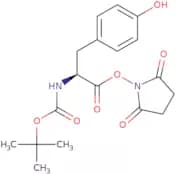
CAS:<p>Boc-L-tyrosine N-hydroxysuccinimide ester is a linker that is used for the synthesis of peptides. It has good solubility in dimethylformamide and can be incorporated into synthetic peptides. Boc-L-tyrosine N-hydroxysuccinimide ester reacts with lysine residues to form amide bonds, which are stable under physiological conditions. It also has a hydroxy group that can be used to conjugate other molecules. This linker has been used in vitro studies and clinical trials, as well as for the preparation of peptidyl conjugates for histological analysis.</p>Formula:C18H22N2O7Purity:Min. 95%Color and Shape:PowderMolecular weight:378.38 g/molBoc-L-alanine benzylester
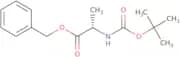
CAS:<p>Boc-L-alanine benzylester is a novel fluorescent crosslinker that can be used to synthesize fluorescent polymers. It is composed of an acid moiety and benzothiadiazole moieties, which are catalytic. The synthesis of Boc-L-alanine benzylester involves the reaction of lysine or tyrosine with an acid chloride to form an amide bond, followed by a ring opening reaction with the corresponding benzothiadiazole. The fluorescein group is then added as a substituent at the N-terminus. This new crosslinker has been shown to have high reactivity in cycloadditions and crosslinking reactions with anthracene, cyclopentadiene, and cyclohexadiene. Boc-L-alanine benzylester has also been shown to be effective in ascorbate oxidation.</p>Formula:C15H21NO4Purity:Min. 95%Color and Shape:PowderMolecular weight:279.33 g/molPyr-Val-OH
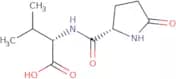
CAS:<p>Pyr-Val-OH is a molecule that is catalysed by the enzyme histone deacetylase. Pyr-Val-OH has been shown to inhibit cancer cell proliferation and growth. Pyr-Val-OH also has been shown to reduce bacterial vaginosis in mice with bacterial vaginosis, as well as nephrology dialysis patients. Pyr-Val-OH is a diagnostic marker for cancer, bacterial vaginosis and nephrology dialysis patients. It can be used to diagnose these conditions by profiling specific metabolic profiles. This molecule may also be used in the diagnosis of bladder cancer, as it reacts with amp-activated protein, which is elevated in bladder cancer patients.</p>Formula:C10H16N2O4Purity:Min. 95%Color and Shape:PowderMolecular weight:228.25 g/mol


![1-Methyl-N-(9-methyl-9-azabicyclo[3.3.1]non-3-yl)-indazole-3-carboxamide](/_next/image/?url=https%3A%2Fstatic.cymitquimica.com%2Fproducts%2F3D%2Fthumb-webp%2FFM137557.webp&w=3840&q=75)