Amino Acids (AA)
Amino acids (AAs) are the fundamental building blocks of proteins, playing a crucial role in various biological processes. These organic compounds are essential for protein synthesis, metabolic pathways, and cell signaling. In this category, you will find a comprehensive range of amino acids, including essential, non-essential, and modified forms, which are vital for research in biochemistry, molecular biology, and nutritional sciences. At CymitQuimica, we provide high-quality amino acids to support your research and development needs, ensuring accuracy and reliability in your experimental outcomes.
Subcategories of "Amino Acids (AA)"
- Amino Acid Derivatives(3,969 products)
- Amino Acid and Amino Acid Related Compounds(3,474 products)
- Amino Acids with Oxygen or Sulphur(168 products)
- Boc- Amino Acids(351 products)
- Fmoc Amino Acids(1,710 products)
Found 38282 products of "Amino Acids (AA)"
Sort by
Purity (%)
0
100
|
0
|
50
|
90
|
95
|
100
[1-(3-Methylpyridin-2-yl)ethyl]amine
CAS:<p>1-(3-Methylpyridin-2-yl)ethyl]amine is a fine chemical that is a useful building block for research chemicals, reagents and speciality chemicals. It is used as a reaction component and as an intermediate in the synthesis of various complex compounds. 1-(3-Methylpyridin-2-yl)ethyl]amine is also versatile and can be used as a scaffold in organic synthesis.</p>Formula:C8H12N2Purity:Min. 95%Color and Shape:Colorless PowderMolecular weight:136.19 g/molN-b-Boc-D-2,3-diaminopropionic acid
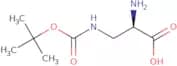
CAS:N-b-Boc-D-2,3-diaminopropionic acid is a chemical compound that belongs to the group of polypeptides. It has been shown to act as a receptor activator in cell-based assays and is capable of binding to taste receptors. N-b-Boc-D-2,3-diaminopropionic acid has also been found to be an effective inhibitor of alpha amylase, which is an enzyme that breaks down starch into maltose and dextrin. This chemical compound could serve as a potential therapeutic agent for type 2 diabetes, obesity, and other metabolic disorders. NBDAPA has also been found in fossilized invertebrates such as squid and urchins.Formula:C8H16N2O4Purity:Min. 95%Color and Shape:White to off-white solid.Molecular weight:204.22 g/molO-(N-Boc-2-aminoethyl)-O'-(N-diglycolyl-2-aminoethyl)hexaethyleneglycol
CAS:O-(N-Boc-2-aminoethyl)-O'-(N-diglycolyl-2-aminoethyl)hexaethyleneglycol is a PEG compound with two different functional groups (also known as heterobifunctional). Unlike homobifunctional PEG compounds (same functional group on both ends), this type of compounds are more versatile as have two different anchor points. O-(N-Boc-2-aminoethyl)-O'-(N-diglycolyl-2-aminoethyl)hexaethyleneglycol is used as a linker and spacer to add a PEG moiety, via pegylation (a bioconjugation technique) to proteins, peptides, oligonucleotides, small molecules and nanoparticles.Formula:C25H48N2O13Purity:Min. 95%Color and Shape:PowderMolecular weight:584.65 g/mol3-Methyl-5-(S)-isopropyl hydantoin
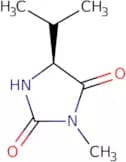
CAS:<p>Please enquire for more information about 3-Methyl-5-(S)-isopropyl hydantoin including the price, delivery time and more detailed product information at the technical inquiry form on this page</p>Formula:C7H12N2O2Purity:Min. 95%Molecular weight:156.18 g/molBoc-D-Tyr-OH
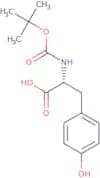
CAS:<p>Boc-D-Tyr-OH is a monomer that is used as a building block for the synthesis of sacubitril. It reacts with chlorides in the presence of a base to form Boc-D-Tyr-Cl, which can be converted to sacubitril by removal of the Boc protecting group. Boc-D-Tyr-OH can also be synthesized by reaction of biphenyl and D-Tyr with trifluoromethanesulfonic acid in the presence of a catalyst. This chemical is fluorescent and can be used as an analytical reagent for chromatographic methods. The synthetic process involves ligation of four molecules of tetrapeptides (which are linked by amide bonds) to biphenyl, followed by Suzuki coupling reaction.</p>Formula:C14H19NO5Purity:Min. 95%Color and Shape:PowderMolecular weight:281.3 g/mol6α-Methyl prednisolone 21-acetate
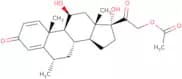
Controlled Product<p>6a-Methyl prednisolone 21-acetate is a corticosteroid that binds to the glucocorticoid receptor, which regulates gene transcription. It has been used as an injection solution for bowel disease, but has also been shown to have anti-inflammatory and immunosuppressive effects. 6a-Methyl prednisolone 21-acetate reduces the production of inflammatory cytokines and may be a useful treatment for patients with inflammatory bowel disease (IBD). 6a-Methyl prednisolone 21-acetate has also been shown to decrease inflammation in experimental models of tissue infection, such as sepsis in mice. This drug may be useful as an adjuvant therapy for the treatment of sepsis in humans. 6a-Methyl prednisolone 21-acetate is not recommended for use in patients with congestive heart failure or severe kidney impairment because it can cause fluid retention and aggravation of these conditions.</p>Formula:C24H32O6Purity:Min. 95%Color and Shape:PowderMolecular weight:416.51 g/mol2-Phenylindole-5-sulfonic acid monosodium salt
CAS:<p>2-Phenylindole-5-sulfonic acid monosodium salt is a fine chemical that can be used as a building block for research chemicals, reagents, and speciality chemicals. It is also used as a reaction component for the synthesis of various complex compounds, such as pharmaceuticals and dyes. 2-Phenylindole-5-sulfonic acid monosodium salt is a versatile building block that can be used in the synthesis of useful scaffolds. The CAS number for this compound is 119205-39-9.</p>Formula:C14H10NO3S·NaPurity:Min. 95%Color and Shape:White PowderMolecular weight:295.29 g/mol[2-(1-Methyl-1H-pyrazol-5-yl)ethyl]amine
CAS:<p>2-(1-Methyl-1H-pyrazol-5-yl)ethyl]amine is a versatile building block that can be used as a research chemical or in the synthesis of complex compounds. It has shown to be useful for the production of N-(2-(1-methyl-1H-pyrazol-5-yl)ethyl)-N'-phenylurea, which has been found to have antihydrotropic properties. CAS Number: 807315-40-8.</p>Formula:C6H11N3Purity:Min. 95%Color and Shape:Colorless PowderMolecular weight:125.17 g/mol2-Anilino-6-dibutylamino-3-methylfluoran
CAS:<p>2-Anilino-6-dibutylamino-3-methylfluoran is a switchable fluorescent dye that has been used to detect and measure biochemically active substances in living cells. The dye is introduced into the cell, where it binds to specific proteins or nucleic acids, causing a change in fluorescence. This change can then be detected using a microscope with an ultraviolet light source. 2-Anilino-6-dibutylamino-3-methylfluoran has also been used to detect bacteria in wastewater samples. An experiment was conducted to determine the effects of temperature on the reaction time of 2AADMF and metal ion concentration. Increasing the temperature resulted in an increase in reaction time, while increasing the concentration of metal ions had no effect on reaction time. 2AADMF also reacts differently depending on whether it is inside microcapsules or not. Microcapsules with 2AADMF reacted faster than those without it when</p>Formula:C35H36N2O3Purity:Min. 95%Color and Shape:White PowderMolecular weight:532.67 g/molN-alpha-Boc-L-2,3-diaminopropionic acid
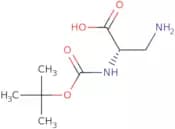
CAS:<p>N-alpha-Boc-L-2,3-diaminopropionic acid is a synthetic amino acid that has been shown to have anticancer properties. The amino acid contains a functional group with two carboxylates and a disulfide bond. It has also been shown to inhibit the nuclear factor kappa B ligand (NFκB) and hepg2 cells, leading to cell death. This agent is a glycopeptide conjugate that inhibits the growth of mammalian cells by preventing protein synthesis. N-alpha-Boc-L-2,3-diaminopropionic acid has been shown to be cytotoxic in vitro against human leukemia HL60 cells.</p>Formula:C8H16N2O4Purity:Min. 95%Color and Shape:White PowderMolecular weight:204.22 g/mol2-Methyl-6-nitroaniline
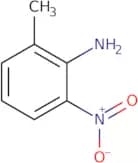
CAS:<p>2-Methyl-6-nitroaniline is a nitro compound with the molecular formula C5H7N3O2. It is a colorless solid that can be obtained by the nitration of aniline, followed by reduction of the nitro group. 2-Methyl-6-nitroaniline can be used as a model system to study how solute molecules interact with gas and liquid phases. The solubility data of this molecule has been published in the literature and has been shown to depend on the presence of amines. This molecule has also been shown to be an environmental pollutant when it reacts with hydrogen sulfate in acidic media, forming sulfonic acid derivatives. 2-Methyl-6-nitroaniline is soluble in hydrochloric acid and acetylated, but insoluble in water or ethanol due to its polar functional groups.br><br>br><br>[[Image:2_methyl_6_</p>Formula:C7H8N2O2Purity:Min. 95%Color and Shape:Brown PowderMolecular weight:152.15 g/mol[3-Methyl-4-(2,2,2-trifluoro-ethoxy)-pyridin-2-yl]-methanol
CAS:<p>[3-Methyl-4-(2,2,2-trifluoro-ethoxy)-pyridin-2-yl]-methanol is a synthetic organic compound that is used in the synthesis of other organic compounds. It can be purified by filtration or gasification and recrystallization.</p>Purity:Min. 95%Color and Shape:PowderBoc-2-nitro-L-phenylalanine
CAS:<p>Boc-2-nitro-L-phenylalanine is a chemical building block that has been used as an intermediate in the synthesis of other compounds. It has been shown to be a useful scaffold for the synthesis of complex compounds and can be used as a reagent in organic syntheses. Boc-2-nitro-L-phenylalanine is commercially available from several suppliers and can be purchased at low cost.</p>Formula:C14H18N2O6Purity:Min. 95%Color and Shape:PowderMolecular weight:310.3 g/molBoc-L-Histidine
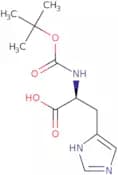
CAS:<p>Boc-L-histidine is a histidine derivative with a boronic acid group that can be used to synthesize imines. It is an organic solvent and can be used in magnetic resonance spectroscopy. Boc-L-histidine has been shown to inhibit the tyrosine activity of tyrosinase, which is involved in melanin synthesis. This compound also inhibits cancer cells by inhibiting the cellular process of protein synthesis and, as such, may be useful for the treatment of cancers.</p>Formula:C11H17N3O4Purity:Min. 98 Area-%Color and Shape:White PowderMolecular weight:255.27 g/molMethyl 3-amino-5-methyl thiophene-2-carboxylate
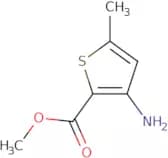
CAS:<p>Methyl 3-amino-5-methyl thiophene-2-carboxylate is a fine chemical that belongs to the group of useful scaffolds, versatile building blocks, useful intermediates for research chemicals and speciality chemicals. It can be used as reaction components in the synthesis of complex compounds. Methyl 3-amino-5-methyl thiophene-2-carboxylate is a high quality reagent with a wide range of applications in organic chemistry.</p>Formula:C7H9NO2SPurity:Min. 95%Color and Shape:PowderMolecular weight:171.22 g/molN-Methyloctylamine
CAS:<p>N-Methyloctylamine is a low energy, organic extractant that is soluble in water and ethanol. It has been shown to be an effective agent for the extraction of adenine nucleotides from acidic aqueous solutions. The hydroxyl group on the molecule enables oxidation reactions with molecules containing aldehyde groups, such as diphenyl ethers and amines. N-Methyloctylamine has also been shown to be an effective catalyst for transfer reactions between particles, such as nanoparticles.</p>Formula:C9H21NPurity:Min. 95%Color and Shape:Clear LiquidMolecular weight:143.27 g/mol2,5-(2-Chlorophenyl)-phenyl-1,3,4-triazole
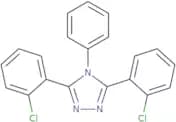
CAS:<p>2,5-(2-Chlorophenyl)-phenyl-1,3,4-triazole is a versatile building block that can be used as a reagent in organic synthesis. It is also a useful intermediate for the preparation of other compounds and an important reaction component for the synthesis of complex compounds. CAS No. 88032-13-7.</p>Formula:C20H13Cl2N3Purity:Min. 95%Molecular weight:366.24 g/molNa-Z-L-histidine methyl ester
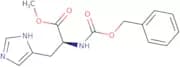
CAS:<p>Na-Z-L-histidine methyl ester is a solvent that is used in the synthesis of peptides. It is a low water, hydrophobic, and thermodynamically stable liquid that is soluble in dimethylformamide. Na-Z-L-histidine methyl ester is also an amide with a trifluoroacetic acid group and can be used to synthesize solid phase peptides. The compound has been shown to have thyrotropin releasing effects on rats when administered intravenously.</p>Formula:C15H17N3O4Purity:Min. 95%Color and Shape:White PowderMolecular weight:303.31 g/molTiglic acid
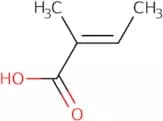
CAS:<p>Tiglic acid is a sodium salt that can be synthesized in an asymmetric synthesis. It is a white crystalline powder with a melting point of 190-191°C. Tiglic acid has been shown to increase the activity of cinchonidine, which is a compound often used to treat eye disorders and chronic arthritis. Tiglic acid also has the ability to bind to fatty acids, which may be due to hydrogen bonding interactions. In vitro assays have shown that tiglic acid's antimicrobial properties are related to its ability to cause cell lysis by interacting with fatty acids on the cell membrane.</p>Formula:C5H8O2Purity:Min. 95%Color and Shape:PowderMolecular weight:100.12 g/molZ-Phe-Tyr(tBu)-diazomethylketone
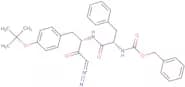
CAS:<p>Z-Phe-Tyr(tBu)-diazomethylketone is a compound that is used in the treatment of cancer and HIV. It was developed as an antiviral therapy for HIV, but it has been found to be ineffective against HIV. Z-Phe-Tyr(tBu)-diazomethylketone has been shown to produce attenuating effects on syncytial virus and may be a potential antiviral drug. This compound is not active against regulatory sequences or tissues, but it does inhibit endoproteolytic processing of n6-methyladenosine, which leads to modifications in rna binding.</p>Formula:C31H34N4O5Purity:Min. 95%Color and Shape:Off-White PowderMolecular weight:542.63 g/mol
![[1-(3-Methylpyridin-2-yl)ethyl]amine](/_next/image/?url=https%3A%2Fstatic.cymitquimica.com%2Fproducts%2F3D%2Fthumb-webp%2FFM121577.webp&w=3840&q=75)



![[2-(1-Methyl-1H-pyrazol-5-yl)ethyl]amine](/_next/image/?url=https%3A%2Fstatic.cymitquimica.com%2Fproducts%2F3D%2Fthumb-webp%2FFM129769.webp&w=3840&q=75)

![[3-Methyl-4-(2,2,2-trifluoro-ethoxy)-pyridin-2-yl]-methanol](/_next/image/?url=https%3A%2Fstatic.cymitquimica.com%2Fproducts%2F3D%2Fthumb-webp%2FFM38829.webp&w=3840&q=75)