Amino Acids (AA)
Amino acids (AAs) are the fundamental building blocks of proteins, playing a crucial role in various biological processes. These organic compounds are essential for protein synthesis, metabolic pathways, and cell signaling. In this category, you will find a comprehensive range of amino acids, including essential, non-essential, and modified forms, which are vital for research in biochemistry, molecular biology, and nutritional sciences. At CymitQuimica, we provide high-quality amino acids to support your research and development needs, ensuring accuracy and reliability in your experimental outcomes.
Subcategories of "Amino Acids (AA)"
- Amino Acid Derivatives(3,969 products)
- Amino Acid and Amino Acid Related Compounds(3,474 products)
- Amino Acids with Oxygen or Sulphur(168 products)
- Boc- Amino Acids(351 products)
- Fmoc Amino Acids(1,710 products)
Found 38282 products of "Amino Acids (AA)"
Sort by
Purity (%)
0
100
|
0
|
50
|
90
|
95
|
100
3-Phenylpropionyl chloride
CAS:<p>3-Phenylpropionyl chloride is an acylating agent with antimicrobial properties. It is used as a precursor in the synthesis of many pharmaceuticals, such as amines and cyclohexane derivatives. 3-Phenylpropionyl chloride is a reactive compound that can undergo an acylation reaction with nucleophilic compounds to form an n-oxide. This reaction can be catalyzed by metal ions or bases. 3-Phenylpropionyl chloride has inhibitory properties against enzymes, such as aminoglycoside acetyltransferase and carbonyl reductase. It also has shown antitumor activity in cancer cells and metabolic disorders in the liver due to its ability to inhibit glycosidic bond formation.</p>Formula:C9H9ClOPurity:Min. 95%Color and Shape:LiquidMolecular weight:168.62 g/mol3-Methyl-5-(S)-isopropyl hydantoin
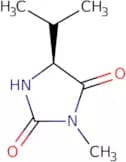
CAS:<p>Please enquire for more information about 3-Methyl-5-(S)-isopropyl hydantoin including the price, delivery time and more detailed product information at the technical inquiry form on this page</p>Formula:C7H12N2O2Purity:Min. 95%Molecular weight:156.18 g/mol6-Methyl phthalazine
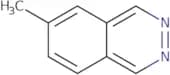
CAS:<p>6-Methyl phthalazine is an organic compound with a molecular formula of C8H6N2. It is the methylated derivative of phthalazine. 6-Methyl phthalazine can be synthesized from 2-bromobenzaldehyde and benzaldehyde in two steps, producing an efficient synthesis of this compound. The first step consists of formylation of the aromatic ring followed by lithiation and cyclization to produce the desired product. The second step involves a sequence that begins with deprotection, proceeds with hydrazine formation, and ends with acetal cleavage to release the product.</p>Formula:C9H8N2Purity:Min. 95%Color and Shape:White PowderMolecular weight:144.17 g/molD-Glutamic acid di-tert-butyl ester hydrochloride
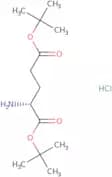
CAS:<p>D-Glutamic acid di-tert-butyl ester hydrochloride is an organic acid that is used as a medicine. It is a covalently conjugated psychotropic drug, which means it contains two molecules of the same type. D-Glutamic acid di-tert-butyl ester hydrochloride has been shown to be effective in the treatment of depression and other mood disorders. This drug has also been shown to inhibit the reuptake of neurotransmitters such as serotonin and norepinephrine, which may account for its efficacy in treating depression. The drug was also found to be effective in the treatment of obsessive compulsive disorder (OCD) by inhibiting serotonin reuptake.</p>Formula:C13H25NO4·HClPurity:Min. 95%Color and Shape:White PowderMolecular weight:295.8 g/mol1-(2-Hydroxyethyl)-4-methylpiperazine
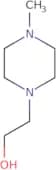
CAS:<p>1-(2-Hydroxyethyl)-4-methylpiperazine is an organic compound with the formula CHN(CHOH)CHNH. It is a colorless, viscous liquid that is soluble in water and has a pungent odor. The chemical is used as a viscosity control agent and as an intermediate in the manufacture of other chemicals. 1-(2-Hydroxyethyl)-4-methylpiperazine can be synthesized by the reaction of ethylene oxide with amines, or by quaternization of diethanolamine with chloroethane. 1-(2-Hydroxyethyl)-4-methylpiperazine is used in industrial applications such as in ion exchange resins and to control the viscosity of drilling fluids. It has been detected at low levels in surface waters and soils, where it may be derived from wastewater treatment plants or atmospheric deposition.</p>Formula:C7H16N2OPurity:Min. 95%Color and Shape:PowderMolecular weight:144.21 g/molBoc-N-methyl-b-alanine
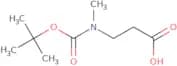
CAS:<p>Boc-N-methyl-b-alanine is a reagent that can be used as an intermediate in the synthesis of complex compounds. It is also a useful building block for the synthesis of speciality chemicals and research chemicals. Boc-N-methyl-b-alanine has been used as a versatile scaffold to synthesize novel chemical compounds. This compound has been shown to be useful in reactions involving the formation of carbon bonds, such as those found in natural products, pharmaceuticals, and other organic molecules.</p>Formula:C9H17NO4Purity:Min. 95%Color and Shape:White To Off-White SolidMolecular weight:203.24 g/molNα-(tert-Butoxycarbonyl)-τ-(p-toluenesulfonyl)-L-histidine
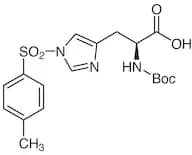
CAS:Formula:C18H23N3O6SPurity:>98.0%(T)Color and Shape:White to Almost white powder to crystalMolecular weight:409.46(S)-3-Amino-3-phenylpropan-1-ol
CAS:<p>The enantiopure (S)-3-Amino-3-phenylpropan-1-ol is a chiral and optically pure amino alcohol compound. It is an antibiotic that inhibits the bacterial enzyme acylase, which catalyzes the hydrolysis of ester bonds in fatty acids. This drug is also an inhibitor of drug substance, as well as an active form of dapoxetine hydrochloride. The (S)-3-Amino-3-phenylpropan-1-ol has been shown to be effective against both Gram positive and Gram negative bacteria, including methicillin resistant Staphylococcus aureus (MRSA) and Mycobacterium tuberculosis.</p>Formula:C9H13NOPurity:Min. 95%Color and Shape:Off-White PowderMolecular weight:151.21 g/mol2-Acetyl-3-methylquinoxaline-1,4-dioxide
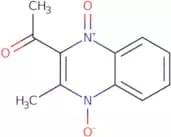
CAS:<p>2-Acetyl-3-methylquinoxaline-1,4-dioxide (2AMQ) is a synthetic chemical with antimicrobial properties that belongs to the group of quinoxalines. It inhibits the enzyme activity of DNA polymerase and RNA polymerase, which are involved in protein synthesis. 2AMQ has been shown to have high resistance against bacteria and other microorganisms. This antibiotic has also been shown to be effective against infections caused by Escherichia coli, Shigella sonnei, Salmonella typhi, Staphylococcus aureus, Proteus mirabilis, Klebsiella pneumoniae, Acinetobacter baumannii, Enterobacter cloacae and Pseudomonas aeruginosa. 2AMQ's pharmacokinetic properties have been studied in humans; it is metabolized by liver enzymes and excreted through the kidneys. The drug is eliminated from the body within 24</p>Formula:C11H10N2O3Purity:Min. 95%Color and Shape:Light (Or Pale) Yellow To Yellow SolidMolecular weight:218.21 g/molMethyl 1-ethyl-3-methyl-1H-pyrazole-5-carboxylate
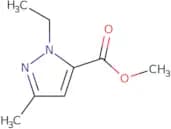
CAS:Methyl 1-ethyl-3-methyl-1H-pyrazole-5-carboxylate is a fine chemical that can be used as a building block in organic synthesis. It has been shown to provide a useful intermediate in the synthesis of other compounds, such as medicinal products and pesticides. Methyl 1-ethyl-3-methyl-1H-pyrazole-5-carboxylate is also a versatile building block for the manufacture of complex compounds. CAS No. 88398–73–6Formula:C8H12N2O2Purity:Min. 95%Color and Shape:Colorless PowderMolecular weight:168.19 g/molDibenzoyl-(+)-p-methoxy-D-tartaric acid
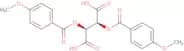
CAS:<p>Dibenzoyl-(+)-p-methoxy-D-tartaric acid is a macrocyclic molecule that has been synthesized as an enantiomer. It has been found to be an effective drug against schistosomiasis in experimental studies. The compound inhibits the growth of Schistosoma mansoni by preventing the formation of eggs, which are released by the female worms into the environment. Dibenzoyl-(+)-p-methoxy-D-tartaric acid also inhibits the development of larval stages and prevents the release of eggs from male worms. This drug is not yet used clinically for this purpose, but it is being researched for use in tropical regions where schistosomiasis is endemic.</p>Formula:C20H18O10Purity:Min. 95%Color and Shape:White PowderMolecular weight:418.35 g/mol3-(2-Hydroxy-5-methylphenyl)pyrazole
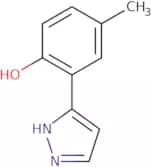
CAS:<p>3-(2-Hydroxy-5-methylphenyl)pyrazole is an organic compound with a pyrazole ring. It is a ligand that can be used to study the interactions between metals, such as copper and iron ions, and transition metal complexes. This compound has been shown to have antiferromagnetic coupling with chloride salts, and it interacts with chloride in the presence of iron ions. 3-(2-Hydroxy-5-methylphenyl)pyrazole is soluble in acetate salt solution and reacts with copper.</p>Formula:C10H10N2OPurity:Min. 95%Color and Shape:PowderMolecular weight:174.2 g/molTrt-cysteamine hydrochloride
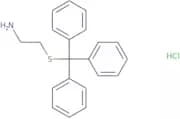
CAS:<p>Trt-cysteamine hydrochloride is a prodrug that is metabolized to cysteamine in vivo. Cysteamine inhibits the production of tumor necrosis factor (TNF) by binding to its receptor and blocking NF-κB signaling pathways. In vitro models have shown that trt-cysteamine hydrochloride has minimal effects on cells, but when used in vivo, it can inhibit oxidative stress and induce cell death. Trt-cysteamine hydrochloride also binds to molecular targets with disulfide bonds, which may be potential therapeutic targets for cancer treatment.</p>Formula:C21H21NS·HClPurity:Min. 95%Color and Shape:White Off-White PowderMolecular weight:355.92 g/mol3-Methacryloxypropyltrimethoxysilane
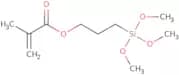
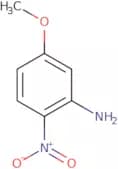
CAS:<p>3-Methacryloxypropyltrimethoxysilane is a silane that has been modified with an acrylic group. It is used as an additive for the production of coatings, adhesives, and sealants. 3-Methacryloxypropyltrimethoxysilane is resistant to hydrochloric acid and other chemicals. It is also stable in water and light exposure. This product has shown to have high adsorption properties, which may be due to its hydroxyl groups. 3-Methacryloxypropyltrimethoxysilane has also been shown to have coupling properties that are advantageous for use with polymers and plastics.</p>Formula:C10H20O5SiPurity:Min. 95%Color and Shape:Colorless Clear LiquidMolecular weight:248.35 g/mol5-Methoxy-2-nitrophenylamine
CAS:<p>5-Methoxy-2-nitrophenylamine (5MN) is a synthetic compound. It has been shown to produce an inhibitory effect on Alzheimer's disease and Leishmania infantum by inhibiting the formation of amyloid beta (Aβ) and leishmanicidal alpha-ketoglutarate, respectively. 5MN has also been observed to stabilize supramolecular structures in magnetic resonance spectroscopy experiments. This chemical is synthesized from 4-amino-3-nitrophenol and methylamine by reacting them in the presence of sodium hydroxide and sulfuric acid under refluxing conditions. The reaction products are analyzed using FTIR spectroscopy, as shown below:</p>Formula:C7H8N2O3Purity:Min. 95%Color and Shape:PowderMolecular weight:168.15 g/mol2-Methyl-5-(prop-1-en-2-yl)cyclohex-2-enone
CAS:<p>2-Methyl-5-(prop-1-en-2-yl)cyclohex-2-enone is a monoterpene that is found in essential oils of many plants, such as caraway, dill, and peppermint. It has been shown to have antimicrobial activity against a wide range of bacteria. 2-Methyl-5-(prop-1-en-2-yl)cyclohex-2-enone has also been shown to be an effective treatment for infectious diseases such as tuberculosis and leprosy. In vitro assays have shown that this compound inhibits the growth of bacteria by lysing the cells of the bacteria. This chemical also minimally affects the locomotor activity in mice and does not cause death at high doses when given orally to rats.</p>Formula:C10H14OPurity:Min. 95%Color and Shape:Slightly Yellow PowderMolecular weight:150.22 g/mol2-Aminothiophene-3-methyl carboxylate
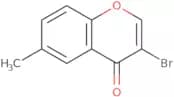
CAS:<p>2-Aminothiophene-3-methyl carboxylate is a hydrogen bond that is derived from the amino acid methionine. It has been shown to have potent antitumor activity and can be used for the treatment of cancer. 2-Aminothiophene-3-methyl carboxylate has a molecular weight of 244.6 g/mol, an isolated yield of 0.68%, and a melting point of 245 °C.</p>Formula:C4H2SCOOCH3NH2Purity:Min. 95%Color and Shape:Yellow PowderMolecular weight:157.19 g/mol3-Bromo-6-methylchromone
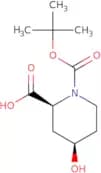
CAS:<p>3-Bromo-6-methylchromone is a versatile building block that can be used in the synthesis of a variety of chemicals. It is an intermediate for the synthesis of 3,4-dimethylbenzaldehyde and is also used as a reagent in research. This chemical has been found to be useful in the synthesis of high-quality compounds with a wide range of applications. The compound is also used as an intermediate for the production of pharmaceuticals and pesticides. 3-Bromo-6-methylchromone can also be used as a scaffold for synthesizing new compounds with interesting properties.</p>Formula:C10H7BrO2Purity:Min. 95%Color and Shape:PowderMolecular weight:239.07 g/mol(2S,4R)-Boc-4-hydroxypiperidine-2-carboxylic acid
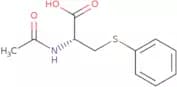
CAS:<p>(2S,4R)-Boc-4-hydroxypiperidine-2-carboxylic acid is a fine chemical that is used as an intermediate in organic synthesis. It has been shown to be a versatile building block for the construction of complex compounds. (2S,4R)-Boc-4-hydroxypiperidine-2-carboxylic acid is also a speciality chemical with many applications in the research field.</p>Formula:C11H19NO5Purity:Min. 95%Color and Shape:PowderMolecular weight:245.27 g/molS-Phenylmercapturic acid
CAS:<p>S-Phenylmercapturic acid is an analytical method that can be used to measure the concentration of guanine nucleotide-binding (GMP) in urine. This assay is a sensitive and specific test for urinary GMP. The linear calibration curve for this assay was determined by plotting the fluorescence intensity of s-phenylmercapturic acid against the concentration of GMP. S-Phenylmercapturic acid has been used as a marker for heart disease, kidney disease, and diabetes mellitus type 2. S-Phenylmercapturic acid also has toxicological studies that show it is not carcinogenic or teratogenic and does not affect fertility or reproduction. The use of s-phenylmercapturic acid as a biomarker for GMP has been validated using matrix effect techniques and solid phase microextraction followed by dispersive solid phase extraction on a column with a fluorescence detector.</p>Formula:C11H13NO3SPurity:Min. 95%Color and Shape:PowderMolecular weight:239.29 g/mol